19 May 2026, 18:43
Amazing South: The New World - the Crimean Paradiso
Ця стаття також доступна українською

A new world. PHOTO: esu.com.ua
Novyi Svet is a resort village in the southeast of the Crimean peninsula. It is located in the picturesque Black Sea bay of Sudak-Lyman. The place is small and quiet, but the incredible scenery around it has made Novyi Svit very famous. Intent continues the Amazing South series with a story about this particular area.
On the edge of civilization
The village of Novyi Svit is secluded, the distance to the nearest town of Sudak is more than 7 km. It is surrounded on all sides by a kind of amphitheater of mountains: Koba-Kaya (Eagle), Kush-Kaya (Falcon), Karaul-Oba, Sikht-Lar. Thanks to these mountains, the bay is protected from cold winds. This creates a unique microclimate in this place. In summer, sunny weather prevails here with almost no precipitation. The sea water warms up in May, and the swimming season lasts until the end of October.
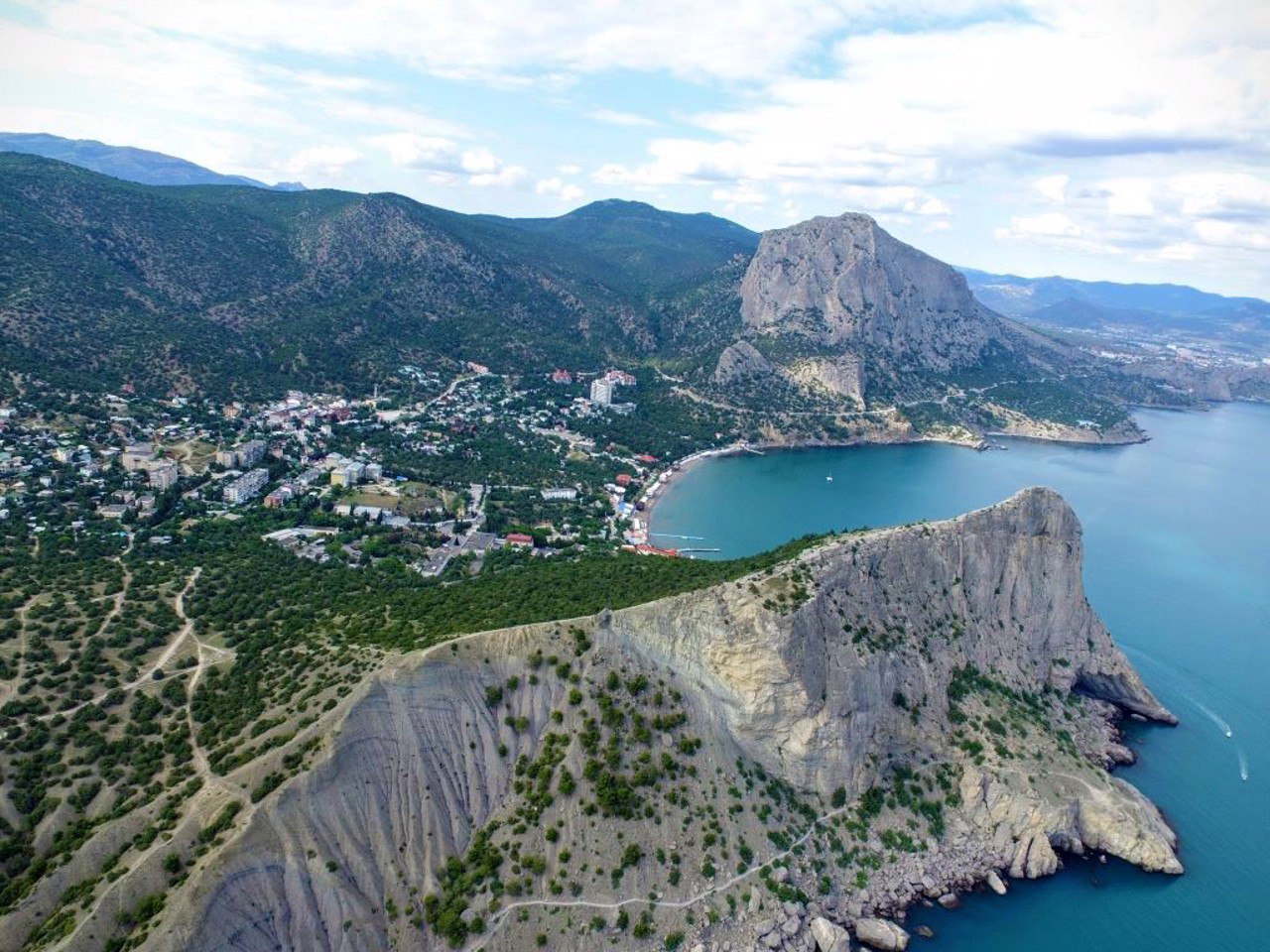
The New World. PHOTO: travels.in.ua
Cape Koba-Kaya and Cape Kapchik divide the bays into Green, Blue, and Blue. Novy Svet is located on the shores of the Green Bay, whose beaches are covered with small pebbles, and the water is completely renewed almost once a day due to the underwater current.
The remoteness of Novy Svet from big cities gives the village many advantages. It is clean and cozy. Before the annexation of Crimea, there were decent trash cans every 30 meters on the streets of this village. And this village is very small. Even at a leisurely pace, you can walk up and down it in just 20 minutes.
It has no major attractions. Except for an old winery and the seaside estate of Prince Lev Golitsyn. The center of the estate is made up of two residential buildings - the manor house ("Big House") and the guest house, also known as the "Castle" or "Guest House". It was built in the center of the modern village. The building was constructed in the Moorish style popular in the pre-revolutionary Crimea and resembles a medieval knight's castle.
The manor house is located closer to the edge of the village, where the mountains approach it. The front facade in oriental style resembles the front of a Balkan basilica, but is complemented by a terrace with carved wood railings. Today the building houses a museum dedicated to Prince Lev Golitsyn and the development of viticulture and winemaking in the New World. The coat of arms of the village is decorated with an image of the prince's guest house.
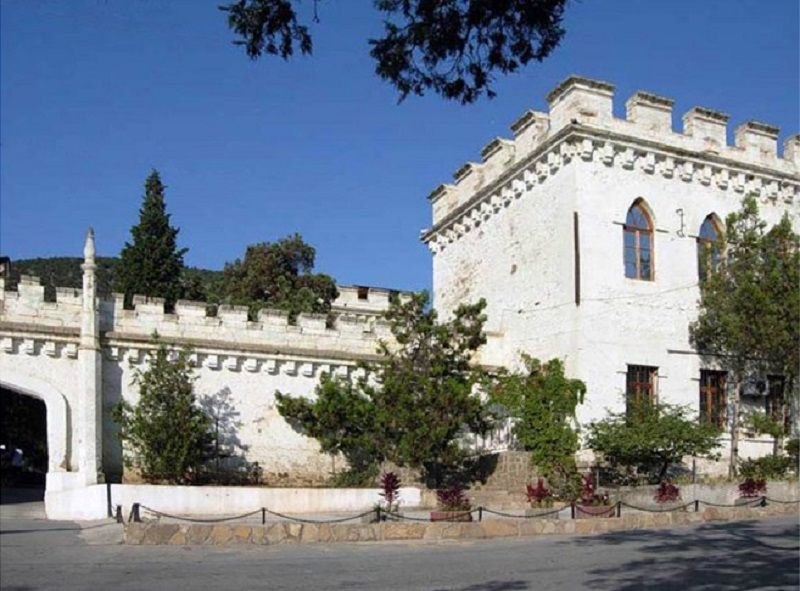
The house-museum of Prince Lev Golitsyn. PHOTO: esu.com.ua
It should be added that Novyi Svit with its picturesque surroundings, together with the mountain ranges that frame the bays and separate them from each other, as well as the natural and historical monuments located in this area, are part of the botanical reserve of national importance with the same name.
History of the paradise
Since ancient times, the neighborhood of the village has been inhabited by people. This is confirmed by numerous archaeological sites: objects of Taurian culture have been found in various places; evidence of the life and work of people of the Stone Age was found in one of the cliffs. In the mountainous area, you can find old trails and roads, the remains of buildings, abandoned quarries, and millstones everywhere.
In ancient times, here, in the southeastern part of Crimea, there was a village called "Paradisio", which means "garden", "park", and in poetic literature - "paradise". As time passed, the names and owners of Paradisio changed along with it. However, the modern history of the village of Novyi Svit is associated with the name of Prince Lev Sergeyevich Golitsyn. In the nineteenth century, the prince founded vineyards on these lands, and in 1878 he established a champagne factory, which is still in operation today.
The village near the juniper grove was renamed Novyi Svit for a reason. Emperor Nicholas II contributed to this decision, who once said in admiration of the local nature and wines: "From now on, I see the world in a new light." Apparently, the wines produced by the prince had miraculous properties.
Golitsyn trail
The famous Golitsyn or Falcon Trail is considered to be the hallmark of the New World, a walk along which allows you to see almost all the sights of this area. It is a must-see for tourists coming to this paradise of the Crimea. The trail owes its name to its creator, Prince Lev Golitsyn, who protected and developed this area in every possible way. This trail was laid and equipped specifically for a solemn event - the visit of Emperor Nicholas II in 1912. According to some historical data, the construction of the trail lasted for two and a half years.
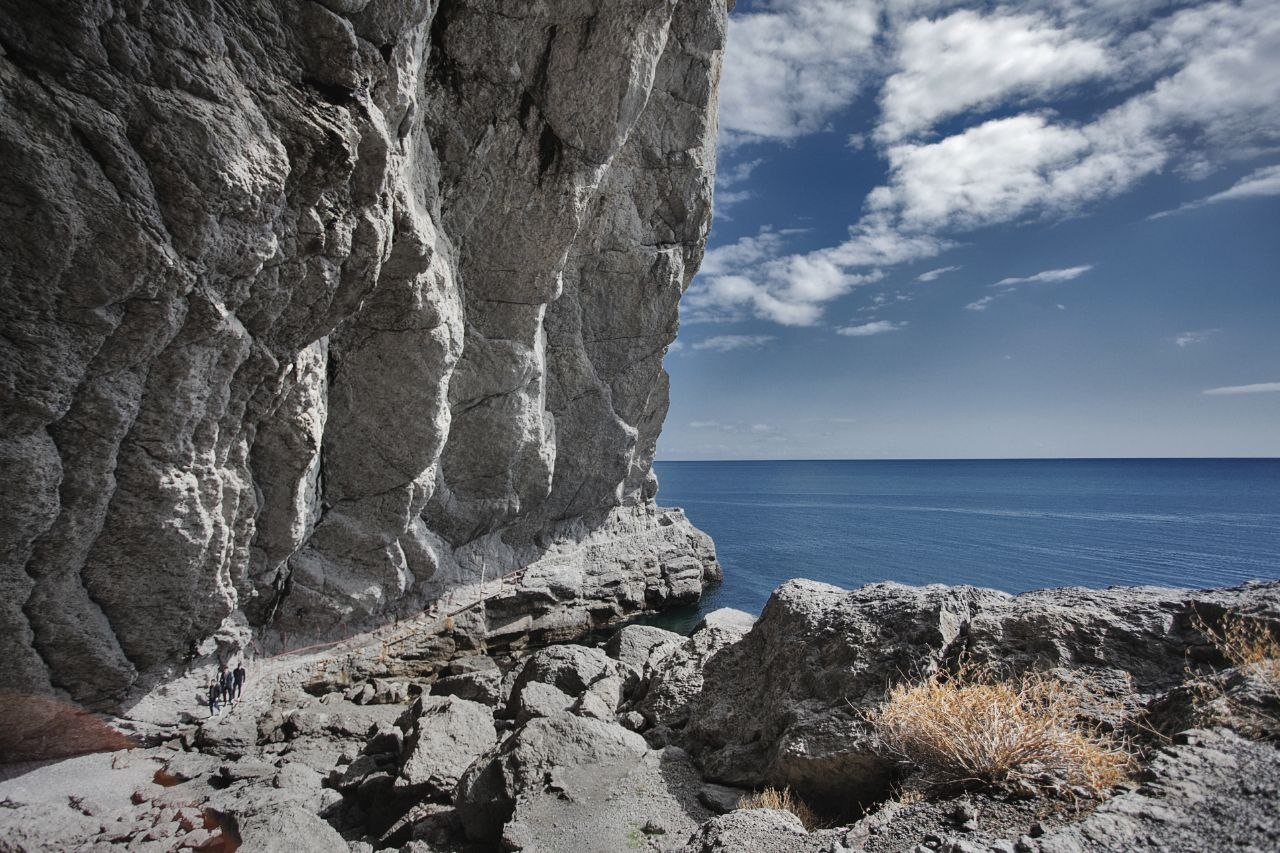
The Golitsyn trail. PHOTO: upload.wikimedia.org
The Golitsyn Trail begins in the New World on the shores of Zelena Bay. Later, it bends around Mount Koba-Kaya and goes along its slope at an altitude of 30 meters above the sea surface. In the bowels of the mountain there is a large spacious grotto about 40 meters high and wide. This grotto is unique in that the air temperature in it remains at +5°C all year round. It was this grotto that Prince Golitsyn used to store his wines. Brick niches were arranged here, and they have survived to this day. The grotto was named after Chaliapin. According to rumors, the famous opera singer once performed in this place. Indeed, Prince Golitsyn organized concerts and birthday celebrations in this grotto. Tables and chairs were set up on the stone terrace, where the prince held wine tastings for his guests.
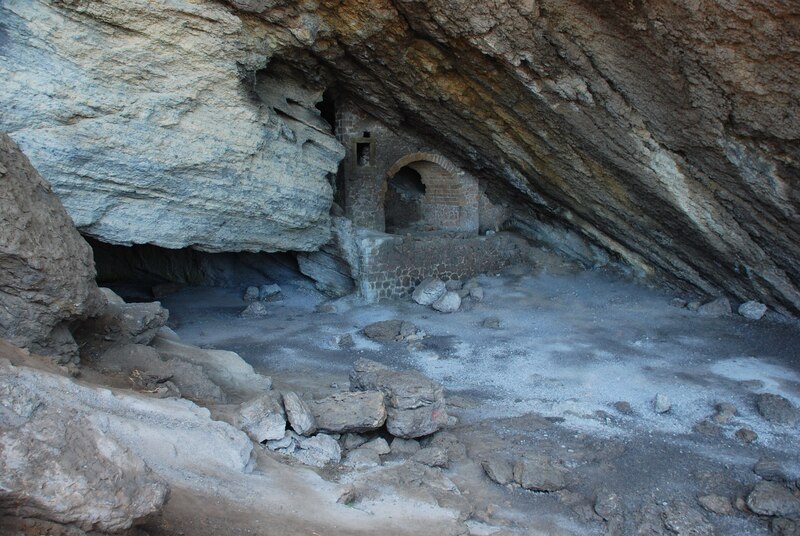
Chaliapin's grotto. PHOTO: upload.wikimedia.org
Further, the Golitsyn trail, passing the grotto, goes to a steep bank, which offers a panorama of the Blue Bay and Cape Kapchik. Local legends say that in the days of the ancient Greeks and Tauri, it was here that pirates hid their treasures, so this bay was also called Pirate Bay.
The trail continues its way and climbs to Cape Kapchyk, which protrudes into the sea for quite a long distance and resembles a giant fairy-tale animal that fell asleep near the shore. From the cape you can see the Blue Bay, which was the choice of Emperor Nicholas II during his visit to this paradise. The bay got its name due to its crystal clear blue-green water and is considered one of the best places for swimming in this region. Nicholas II and his family repeatedly visited the natural beach of the Blue Bay to relax and swim. In honor of the emperor's visit, the beach was named Tsarsky.
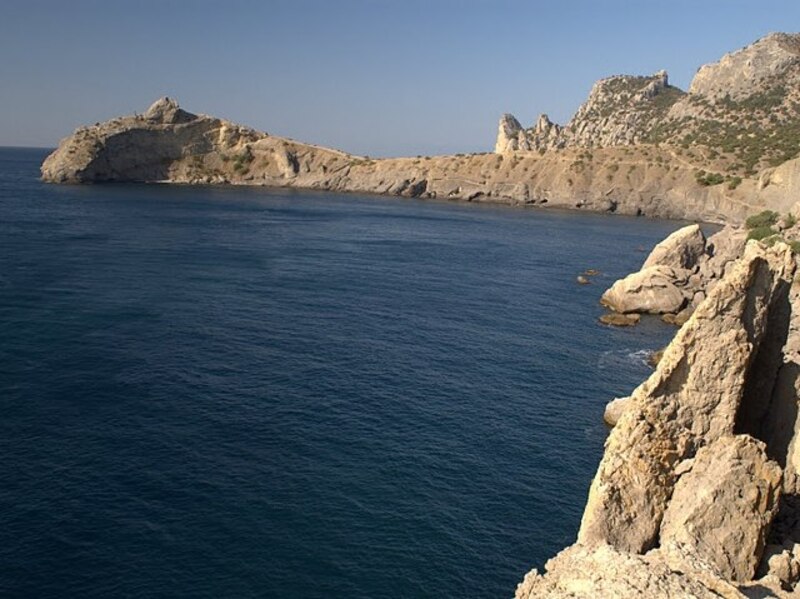
Cape Kapchik and the Blue Bay. PHOTO: o-go-go.com
The Blue Bay is bounded by Mount Karaul-Oba, on the western slope of which the ruins of the Kutlak fortress have been preserved. Researchers believe it to be a border fort of the Bosporus Kingdom during the reign of King Asander (first century BC). Probably, the fortification guarded the port of Athenaeum, which, according to one version, was located on the shore of the Kutlak Bay. The existence of the fortress ceased at the turn of our era: the garrison left the fortification, taking all valuables, after which the building was destroyed.
From Tsarsky Beach, the trail changes its direction and continues to run perpendicular to the coast, leading deep into the relict juniper grove of the New World. Gradually, this grove descends to the village, and the Golitsyn trail ends with magnificent views. Its total length reaches 5.6 kilometers, and the walk can take about 4-6 hours.
Juniper grove
The village has gained the status of one of the most popular Crimean resorts largely due to the relict juniper grove, which is part of a landscape reserve created to preserve relict tree species. Several dozen plants listed in the Red Book grow in the New World. Among the most unique are the Sudak pine, blunt pistachio, fluffy oak, rock oak, maple, ash, and other species.
The most common representative of conifers in this region is the tree-like juniper. It chooses a place to grow only in ecologically clean areas. In Novy Svet, its thickets stretch from Tsarsky Beach to the very center of the village. Walking through the grove, you can meet real old-timers. Some specimens are several hundred years old and have unusual, sometimes bizarre tree shapes.
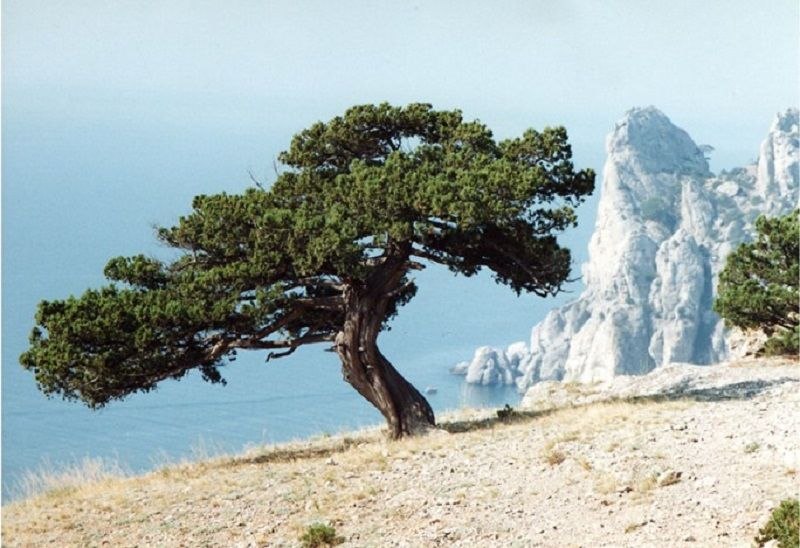
A representative of a juniper grove. PHOTO: esu.com.ua
Useful properties of juniper
Juniper is an evergreen shrub that can take a tree-like shape. In comfortable conditions, this plant turns into a real long-liver, whose age can be almost 3000 years. Due to this feature, in many cultures, juniper is considered a symbol of longevity and eternal life.
The juniper grove in the New World releases a large amount of phytoncides, biologically active substances that destroy bacteria and inhibit the growth of fungi and protozoa. Thanks to this, the air here is considered healthy. These so-called natural antibiotics have a positive effect on the human body.
The antimicrobial effect of juniper has led to its use in the treatment of many diseases: juniper oil disinfects, relieves inflammation and anesthetizes, and preparations with plant extracts help relieve cough symptoms and have an expectorant effect.
Walking in the juniper grove in the New World eases the condition of people suffering from respiratory diseases, and healthy people are given a large dose of nutrients that strengthen the general condition of the body.
Novyi Svit in the cinema
Thanks to its fantastic landscapes, Novi Svit has repeatedly become a movie set for dozens of cult films. Its unique nature often appeared on the screens in the form of alien worlds and exotic resorts.
The most famous films shot in the New World are
"The Amphibian Man (1961). Some sea and coastal scenes of the movie were filmed in the New World area. Underwater filming with the participation of Ichthyander took place here. The rocks were also used to create an image of a mysterious coastline and became the backdrop for the recreation of seascapes in Argentina.
"Three Plus Two (1963). The main scenes of the movie show the audience the beach of Green Bay. The eastern slope of Mount Coba Caye (Eagle) is often featured in the frame. The scenes of the lovers' dates were filmed on the Golitsyn Trail. In addition, the rocks of Cape Kapchyk and Mount Sokil were included in the frame, which served as a backdrop for most of the "sea" scenes.
"Andromeda Nebula" (1967). The rocky landscapes of the New World embodied the unexplored alien spaces of the future on the screen.
"Pirates of the Twentieth Century (1979). Scenes of this legendary Soviet action movie with cliffs and sea battles were partly created against the backdrop of wild beaches and grottoes of the New World. The locations perfectly conveyed the atmosphere of an uninhabited island.
"Sportloto 82 (1982). The movie shows the fashionable car tourism in the USSR. The tent camp of car tourists in the story was located on Cape Kapchik. Picturesque capes of the New World also constantly appeared in the frame: Koba Kaya, Kapchik and Karaul Oba. However, in real life, car tourists are not allowed to stand on Cape Kapchik because it is part of a protected area.
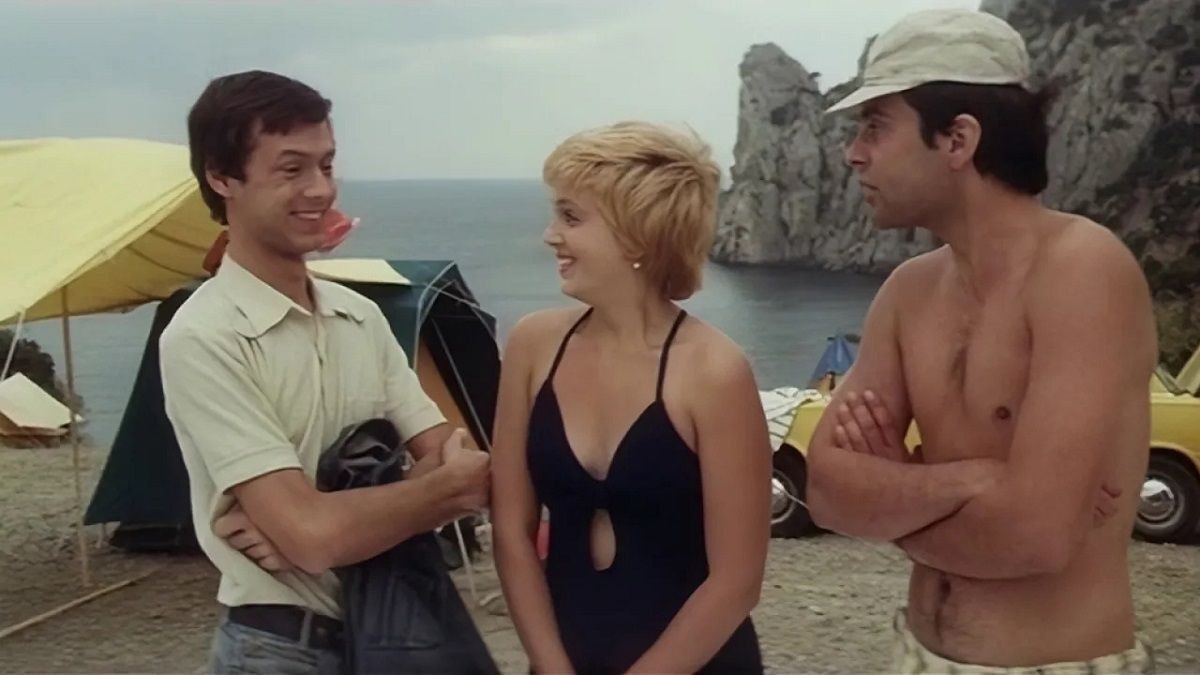
A still from the movie "Sportloto-82"
Before the occupation, the Crimean peninsula was one of the main film sets for Ukrainian, Russian, and international films, where the Yalta Film Studio worked. The diversity of the Crimean nature made it possible to shoot diverse scene shots in one place - steppes, mountains and subtropics.
After the annexation of the peninsula, the possibility of creating high-quality films in Crimea disappeared. Ukrainian and international filmmakers began to look for an alternative to Crimean landscapes on the mainland of Ukraine (Kherson region, Arabat Spit) and in other countries (Georgia, Bulgaria).
Interesting facts
- The mountains surrounding the village of Novyi Svit are a chain of ancient Jurassic coral reefs that rose from the bottom of the ancient Tethys Ocean. Mount Kush-Kaya (Falcon) is the largest fossil coral reef in Crimea and one of the largest in Europe. Its height reaches 474 meters.
- In the Middle Ages, a Christian cave monastery was located in the Golitsyn (Chaliapin) Grotto. Until the nineteenth century, the remains of ancient church paintings and frescoes could be seen on one of the walls of the grotto.
- At the foot of Mount Kush-Kaya (Falcon) from the New World side, there is a small satellite rock called the Small Falcon. According to legend, in the early twentieth century, Prince Lev Golitsyn planned to build a house for one of his daughters on it, but only managed to pave part of the road there. The work stopped there because the prince was having financial difficulties at the time.
- Prince Golitsyn's workers cut through the trail, which was later called the Golitsyn Trail, while suspended in cradles on the steep slope of Mount Orel. Once, when a severe storm arose at sea and no boat could moor to the rock, the workers had to spend several days in these cradles until the storm stopped.
- Some researchers suggest that Homer's famous Odyssey described the grotto in the Koba Kaya rock. From here, in their opinion, Odysseus, captured by the nymph Calypso, looked into the sea.
How to get to the New World
By car. The most comfortable and fastest method. It can take 30 minutes to get from Sudak to Novy Svet.
By bus. Buses to the village depart from the lower platform of the Sudak bus station #2. The bus ride takes 40 minutes one way.
On foot. It takes only an hour and a half to get there, so many people choose this option. Along the way, travelers are accompanied by the sights of this region and unforgettable local landscapes.
By water. The New World can also be reached from Sudak by water, by boat.
Юлія Сичова