25 September 2026, 19:31
Svitlana Bondar: "We're not just getting by in Odesa—we're living here"
Ця стаття також доступна українською

Svitlana Bondar. PHOTO: Svitlana Bondar's Facebook
Booking actors, the lack of professional criticism, debates about decolonization, challenges in the isolated Budzhak region, and the painful search for common ground. Head of the Literary and Drama Department at the Vasyl Vasylko Odesa Academic Ukrainian Music and Drama Theater, curator of the Odesa International Literary Festival, regional coordinator of the Re:Open Ukraine project, ambassador for the Odesa ID project, and cultural manager Svitlana Bondar speaks candidly about how Odesa’s cultural scene is surviving under shelling, why “tolerance” has become a dirty word for patriotic radicals, and why the struggle for meaning is no less important than information hygiene.
Let’s start with the theater. How do you shape your repertoire policy today, when audiences are seeking both reflection on the events of the war and solace?
To be honest, I can tell a beautiful story, or I can tell the truth. In reality, there are a huge number of projects that we’ve discussed, planned, and would very much like to bring to life. But, unfortunately, funding doesn’t allow us to do so. There are certain plays that must be staged either by investing significant funds to ensure they meet the appropriate aesthetic and technical standards, or not at all.
That’s why most of the material we’ve produced during this full-scale war was created literally from whatever we could afford and whatever was at our disposal. Of course, we create some things ourselves, buy others, and for some items, we turn to the people of Odesa. If you follow our page, you’ll see that we sometimes ask residents to help us with props or costume elements. People are happy to bring in items, giving them a second life in the spotlight, and we actively take advantage of this. There are also plays by both foreign and some Ukrainian authors, where copyrights and royalties are very expensive. I won’t beat around the bush—we have to take that into account as well.
What about securing grant or government funding for productions?
We try to take advantage of every opportunity. For example, we submitted three projects to the “Tysiachovesna” grant program. We developed them very carefully, spending a tremendous amount of time and resources on them. But, unfortunately, none of our projects received funding. Only one project made it to the final round—it’s about how women cope with loss during wartime. It’s a play by a contemporary Ukrainian playwright; I won’t mention her name because I really hope we’ll be able to stage it eventually. It has a great combination of elements: an interesting story, a contemporary reflection on war, and a young, exceptionally talented director.
The second play is based on the work of our Odessa native Valery Puzik, *Ghosts in the Branches*, whom I personally hold in very high regard. Last year we did a staged reading of it (directed by Yaroslav Babych), but in reality, it had already gone beyond a simple reading from the script. It was almost a finished production: we had the action, the choreography, well-thought-out costumes and sets—it was just that the actors physically didn’t have time to memorize their lines. We applied for a grant specifically for this production so that we could later present it to students and schoolchildren for free or at the lowest possible cost. Despite the rejection, I’m convinced that we’ll finish it and put it on.
But the third production, the one I probably wanted the most, is our director Denys Hryhoruk’s project, “The Wayward Seamstress.” As you know, last year he received the “GRA” Award for the play *The Lie* at the Puppet Theater next door. He wanted to stage a world classic but present it through the lens of the present day. Set designer Andriy Sustko came up with a stunning concept and costumes; everything was planned down to the smallest detail. As far as I know, the project was rejected precisely because it’s a world classic, rather than a play about a purely Ukrainian character. But it was about us! Reimagining a story that has endured for centuries is much more interesting and impactful. Through this ancient history, the audience sees that the problems we’re facing today were just as painful for people a hundred or two hundred years ago.
Don’t you get discouraged when you submit well-developed projects but get no results?
Honestly, yes, it does. I recently attended an off-site meeting of the Verkhovna Rada Committee on Humanitarian and Information Policy, where the head of the Ukrainian Cultural Foundation cited a statistic: while the Odesa region submits a significant number of applications, only 8% of them receive grants. Think about it: out of 100 applications, only 8 are funded. From what she said, I got the impression that the projects aren’t bad, but they’re supposedly “not formatted correctly.” So, perhaps it would be worth assigning a specialist to help the regions prepare their documentation properly? And when, in those same programs, funds are allocated to national theaters—which already receive substantial government subsidies and have a huge number of projects—it raises a great many questions.
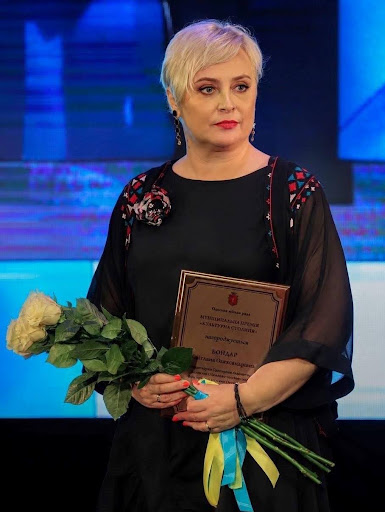
Svitlana Bondar receives the “Cultural Capital” municipal award. PHOTO: Svitlana Bondar’s Facebook
So right now, we’re doing what we can. Drawing on our own resources, we’re preparing a stage adaptation of a novel that’s extremely important to Odesa. I hope we’ll surprise the city very soon. This is a text of fundamental importance to Odesa, one that could then lead to a whole series of other productions on our stage.
I’d also personally love to see a new, grand, beautiful, and vibrant children’s musical added to our repertoire. I’ve seen how much joy such projects bring to children and how adults, when they step into this fairy tale, are transformed right before your eyes. It’s powerful therapy. It pulls you out of the drudgery of everyday life, and for two or three hours, you find yourself in a world of aesthetics and beauty.
Don’t people accuse you of having too much complex and heavy material in the theater these days?
We’re actually often accused of having a repertoire that’s too complex and heavy. I hear this time and again. But I’m deeply convinced that no matter how painful and difficult things may be for us right now, we need to reflect. So many areas around us have become purely about entertainment. But theater shouldn’t just entertain. It’s a place that should stimulate thought, move us forward, and change the world for the better. Perhaps we have the most challenging repertoire in the city, and it’s much harder to make money with it. But for every production, we can say with certainty: none of them are random—they’re all crafted with high quality and a deep love for the audience.
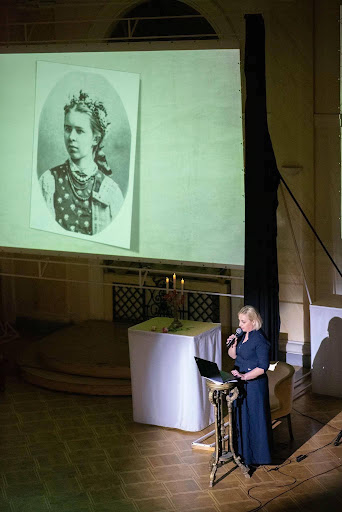
Svitlana Bondar. PHOTO: Svitlana Bondar’s Facebook
Right now, the final rehearsals for the premiere of “All My Sons” by Arthur Miller are underway on stage. He began writing this play in 1943, during World War II, and it premiered in 1947. It’s a classic of American drama about corruption during wartime, in which 21 military pilots die as a result of criminal actions.
And just yesterday, I wrote a review of a novel by our Odessa-based author, based on real events as recounted by a military surgeon. Twenty-two young men died because of substandard, counterfeit tourniquets produced under a government contract. The main character gives his high-quality tourniquet to a young soldier, knowing that the young man will die… Even the number of victims is similar… And after all this, try telling me that anything is changing in the world! Technology changes, but the essence of the cynical person who profits off those who defend them remains the same. A good play is one that leaves the audience feeling at least a little different.
What about comedies or lighter genres? Are they part of the repertoire?
Of course, we also have comedies, including some staged during the full-scale invasion, such as *Neapolitan Passions* and Shakespeare’s *The Comedy of Errors*. We always incorporate live music, which adds a lot to the performance, and it’s all thanks to our wonderful orchestra led by Vadym Besarab. This repertoire didn’t come together overnight. When I first joined the theater in 2019, I clearly understood that everyone in this troupe knew and understood: there is a war going on in the country. Of course, this depends first and foremost on the artistic director—Yulia Pivovarova—who is the one who always sets the direction for the theater’s movement and development. And let’s not forget that our theater in Odesa has been performing in Ukrainian continuously for over a hundred years.
How do Odessa audiences respond to minimalist staging and experimental performances?
People are very different. For example, the “Black Square” theater comes to perform here all the time. Their entire set consists of a table, two chairs, and a bed, and the audience is laughing from the very first second. But some people need flashy, grandiose sets to declare that a performance was a success. For me, the most important thing is the text and how the director tells the story. There’s a joke in the theater world that a good director can stage even a phone book.
We have a wonderful, very powerful play about the current war. In it, four women meet at a bus stop: the first has lost her lover, the second her brother, the third her son, and the fourth went to the front herself, leaving her child with her mother. It’s a performance of tremendous power! But it seems to me that in Odesa, a city of a million people, we’ve already run out of audience members who were willing to come see it of their own accord. To attract others, you’d almost have to drag them in by the hand, because people are exhausted; they don’t have the emotional bandwidth to process painful topics—it’s easier for them to scroll through TikTok or watch TV shows on the couch.
Besides, theater attendance in Odesa depends on the intensity of the shelling. If there was a heavy attack at night, a person—even if they’ve bought a ticket—will simply go home at six in the evening and go to bed; they don’t have the strength to make it to the theater.
Is Odessa different from Kyiv in this regard?
Odessa reacts differently than Kyiv. In the capital, it’s nearly impossible to get tickets for plays by Ivan Uryvsky or Maksym Holenko six months in advance. We have the same directors and high-quality productions, but there isn’t that kind of crazy hype. There have been times when I practically had to drag acquaintances along—people who still harbored prejudices about our theater dating back to the ’90s. They sat in the auditorium and marveled: “Are these your actors? And who designed the sets? Isn’t this a touring company?” And then they’d buy tickets for two or three shows a week until they’d seen the entire repertoire.
Colleagues from Kyiv told me they bought tickets on the black market for *The Witch of Konotop* in the balcony for 7,000 hryvnias. I say: 14,000 for two people?! You could fill up your gas tank, drive to Odesa, see that same Uryvsky at our theater, go to a restaurant, stay the night at a great hotel, watch the sunrise by the sea—and spend less money than on a single trip to the theater in Kyiv!
How did you find your role as curator of the Odesa program for the 11th Odesa International Literary Festival, which took place in Moldova? What challenges did you face?
I curated only the part of the festival that took place in Odesa. The organizers, led by Mr. Ulrich Schrabber, initially didn’t want to hold any in-person events in Odesa at all for security reasons. But I took on that responsibility myself. I told them, “The people of Odesa need to come together! People in Kherson are gathering even under constant shelling. We’re not just surviving here—we’re living here—and we need literary events.”
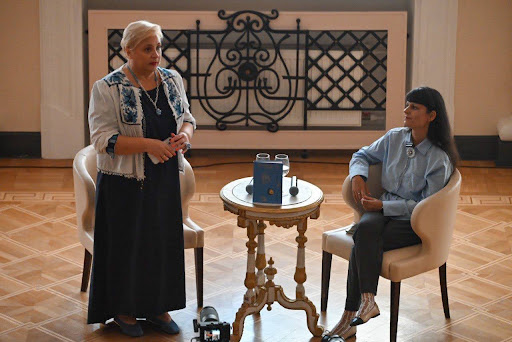
Presentation of Yevgeniya Genova’s book *They Chose Ukraine* at the Odesa International Literary Festival. PHOTO: Intent
Thanks to the informational and technical support from the publication Intent, this became possible. I also enlisted the help of partners, including Gymnasium No. 26, to organize these gatherings.
You are an ambassador for the OdesaID project. How do you assess the results of sociological surveys regarding the identity of Odessa residents?
I wrote an essay on this topic, which will be published shortly in a collection. When OdesaID released a survey showing that 37% identified primarily as Odessans (local identity) and 35% as Ukrainians (national identity), there was a flood of negative reactions online. But we need to understand where we started! In Odesa, the rate of national identity has historically been very low, while local identity reached 56% in 2019. There has been a massive shift toward identifying as Ukrainians.
There’s nothing wrong with taking pride in your city and home first. If you’re doing everything for Odesa, you’re doing it for Ukraine, too. Odesa simply needs time and space for this identity to develop naturally, without pressure.
Why did so many scandals arise around the renaming of streets in Odesa?
Because, unfortunately, communication was a complete failure! Renaming streets is an absolutely correct and necessary step. But it was done without explanation. A comprehensive communication strategy was needed to convey this information to people. When you sit down with elderly or educated people and start explaining to them face-to-face who this activist was and what she did for the city, they agree that there really should be a Nina Strokata Street in Odesa, and when they learn what the figures whose names the streets previously bore actually did—people feel ashamed of their earlier mocking words.
I moderated a discussion at the Odesa Art Museum, where representatives from various “camps” gathered. With those who recognize Ukraine, pay taxes, and work toward Victory, but love Babel or Pushkin, we need to sit down and talk, show documents, and draw parallels. We shouldn’t limit our conversations to only those whose actions fall under the Criminal Code. Everyone else needs to be educated.
You devote a lot of attention to the southern part of the Odesa region—Bujak. Why is this region currently under threat?
I was responsible for southern Odesa Oblast in the Re:Open Ukraine project. Budzhak is an incredible, unique region, but we risk losing it. After the Russians bombed the bridge in Zatoka, the region turned into an isolated island. Transportation now goes through Moldovan territory near Mayak, and that’s a disaster.
The main tragedy is that we’re losing our children there. In some schools, 100% of graduates from many classes leave immediately after graduation to study in Sofia, Bucharest, and, more recently, Istanbul. They’re not staying in Ukraine! To them, Odesa or Kyiv seem foreign and distant, unlike Sofia or Bucharest. The state invests in kindergarten and 11 years of schooling, and then these young people simply leave the country.
Moreover, Russia still exerts enormous informational and religious influence there: satellite dishes receive Russian channels, the Moscow Patriarchate dominates everywhere, and there is no Ukrainian broadcasting. If the government in Moldova changes tomorrow, we could lose land access to this region altogether. The state must immediately build alternative routes and win the mental loyalty of these people.
How did you personally come to understand these information threats, and why did you choose to focus on media literacy?
In 2007, I became interested in media literacy when virtually no one was using that term yet. While working at IREX, we developed programs for teachers and conducted training sessions. In total, over the years, more than a thousand people have attended my lectures and training sessions. Analyzing the Russian media after the 2008 war in Georgia, I could clearly see where things were headed. Before May 2, 2014, in Odesa, the Russians had been shaping the information landscape for two months straight. And after May 2, I asked myself: Did I do everything I could to warn people? From that moment on, I decided to do as much as I could wherever I could help.
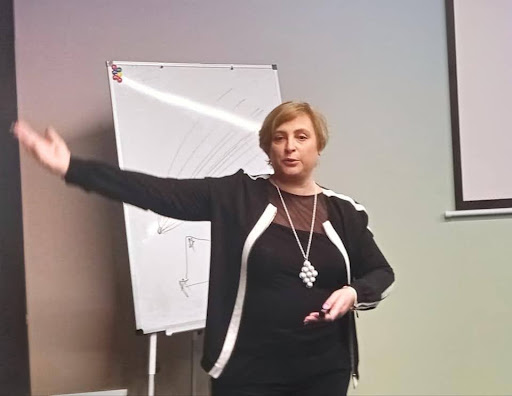
Svitlana Bondar. PHOTO: Svitlana Bondar’s Facebook
What still surprises or outrages you the most about the Odesa community?
It pains me to see how easily we fall out with one another. When people working toward a common goal make their lives harder through squabbles—that’s a crime during wartime. Because I try to listen to different people, I’m often labeled a “tolerant activist.” People reproach me: “Why do you associate with this or that person?”
Is there any professional arts journalism or theater criticism in Odesa right now?
Unfortunately, there’s very little of it. And I’m infinitely grateful to Yulia Sushchenko, Maria Galina, Irina Sichkovska, Tetiana Kosenko, and Maria Gudima, who write about and cover the city’s cultural life, particularly the theater scene. But there’s almost no in-depth, analytical criticism that would stimulate competition and foster discussion. And it’s easy to explain why: because nobody reads that kind of thing. Because it doesn’t generate clicks!
When I was the editor-in-chief of a media outlet, I saw how this works. When a major, landmark interview with Oksana Zabuzhko —76,000 characters long and with 70,000 views (which is actually a good figure) was compared by advertisers to the month’s other top story—a news item about a male genitalia sculpture made out of snow in a courtyard, which garnered 2 million views… For an advertiser, 2 million is more important than 70,000. It’s the same in culture: I consciously create content for those who really need it, even though I know how to generate cheap hype.
What’s the current situation at the theater regarding booking actors?
There are no problems at the moment, since the theater reaffirms its status as a critical infrastructure facility every year. Our actors are booked. But there’s still a catastrophic shortage of men in the troupe—some have gone to the front lines. We recently held auditions, hoping to find new actors, but it didn’t work out.
How does the theater collaborate with touring companies, particularly those from Kherson?
We regularly host other theaters. The Kherson Theater has performed here; we hosted the “Melpomene of Tavria” festival; and veterans from Khmelnytskyi and Sumy have staged performances. But traveling to Kherson right now isn’t advisable for safety reasons. However, people from Kherson who live in Odesa are our regular audience members. That said, touring in general is incredibly expensive right now. What’s more, there are always unexpected expenses when you’re in a foreign city.
But despite everything, we’re continuing our work and planning a tour to Lviv with our project about Lesya Ukrainka; we’re staging premieres, holding book presentations, organizing readings, and keeping things running smoothly.