18 June 2026, 18:41
Boris Lisanevich of Odessa: a personal friend of the King of Nepal
Ця стаття також доступна українською

Boris Lisanevich. PHOTO: dovkola.media
Intent continues its series of articles about outstanding men and women from Odessa. This time, the article will be dedicated to Boris Lisanevich.
Dancer, adventurer, hunter. And this isn’t a story about three friends. These completely opposite personas coexisted in a single individual. It all began quite steadily, like the ticking of a wall clock.
The Childhood of a Future Celebrity
In 1905, a son named Boris was born into the noble Lisanevich family. His father was a military officer and a horse breeder. At the age of nine, Boris was sent to a cadet corps. And, most likely, his fate would have been little different from his father’s.
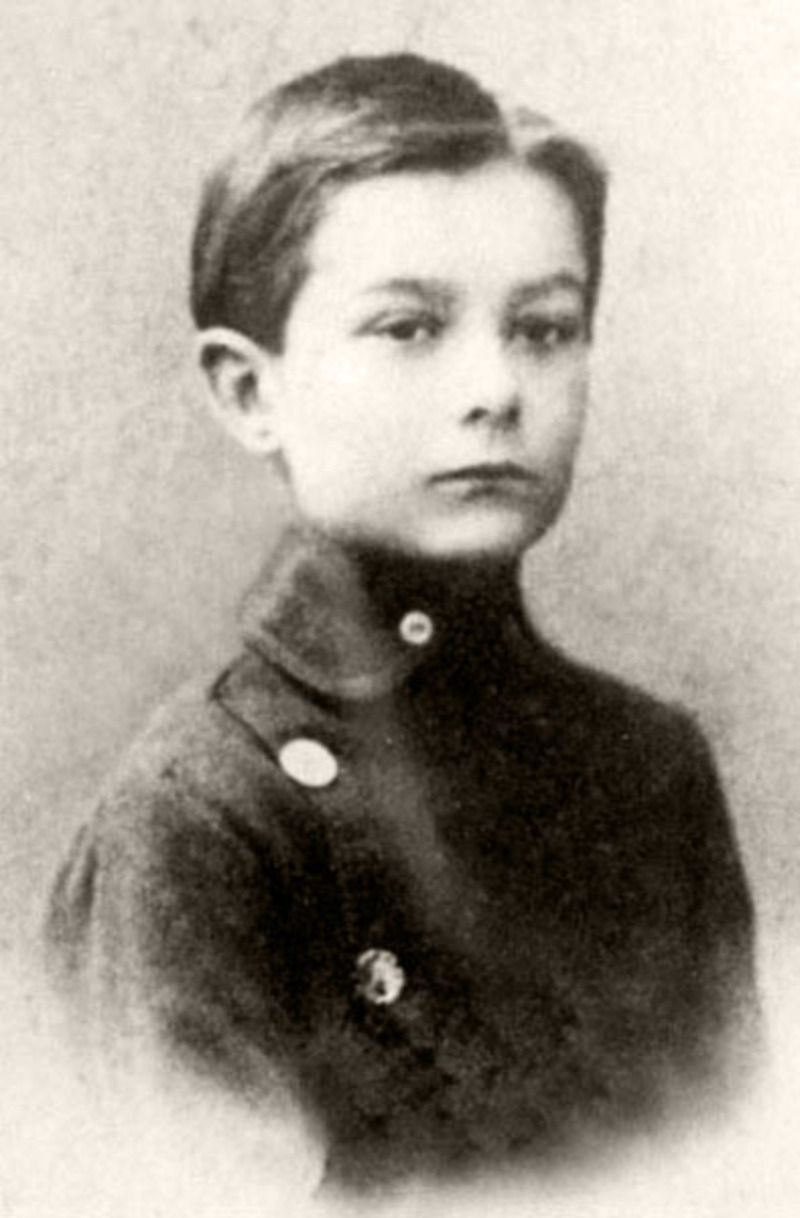
Boris Lisanevich as a child. PHOTO: odessa-memory.info
He would later write about his childhood: “Our family lived in Odessa. I had three brothers; I was the youngest. Our home in Odessa was on the outskirts of the city, between the racetrack and the cadet school. These two places played the most important role in my life in Odessa.”
But in the turmoil of the revolution, his father and older brother chose the wrong side of the barricades. And the future that lay ahead for young Boris lost its bright colors.
From Cadet to Dancer
In 1917, trying to shield the boy from unnecessary trouble, his mother—with the help of a relative who was a ballerina—enrolled Boris in the ballet school of the Odessa Opera House. And a few years later, the talented, handsome young man became a leading dancer in the troupe. But the thousands of opponents of the new regime who had vanished without a trace or starved to death right on the streets led Boris to consider emigrating.
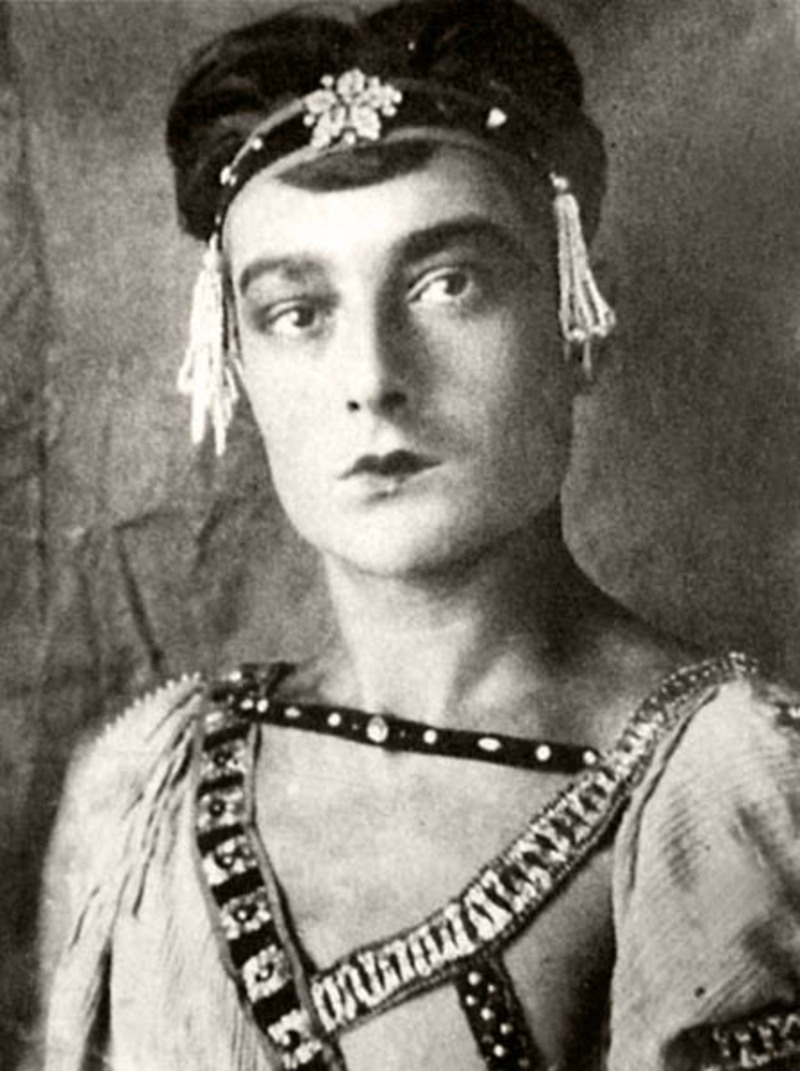
Boris Lisanevich—ballet dancer. PHOTO: odessa-memory.info
The opportunity arose in 1924. Boris left his homeland for good. Later, after great difficulty, his mother and brother Alexander joined him. Boris’s father worked at a horse breeding farm in the Kuban and died of malaria in 1927. His older brother Georgy was shot in 1938.
All Boris had in his pocket was a white Nansen passport (an international document for stateless persons issued from 1922 to 1938) and immense self-confidence. For a short time, Boris Lisanevich worked at the Renault factory, but he quickly returned to ballet and passed the auditions for Sergei Diaghilev’s troupe. However, Diaghilev died in 1929, and Boris found himself looking for work again. He toured Europe with various troupes, making useful connections along the way. Eventually, Lisanevich signed a contract to work in Buenos Aires. But his farewell party ended with his decision not to go to Argentina.
From Argentina to India
At the party, Boris met Kira Shcherbachova, a soloist with the Chaliapin Theater, and in the end, neither of them went anywhere. Thus, a married duo was formed, touring throughout Asia. The young couple was enchanted by the beauty of the East and decided to stay longer than a typical tour would last.
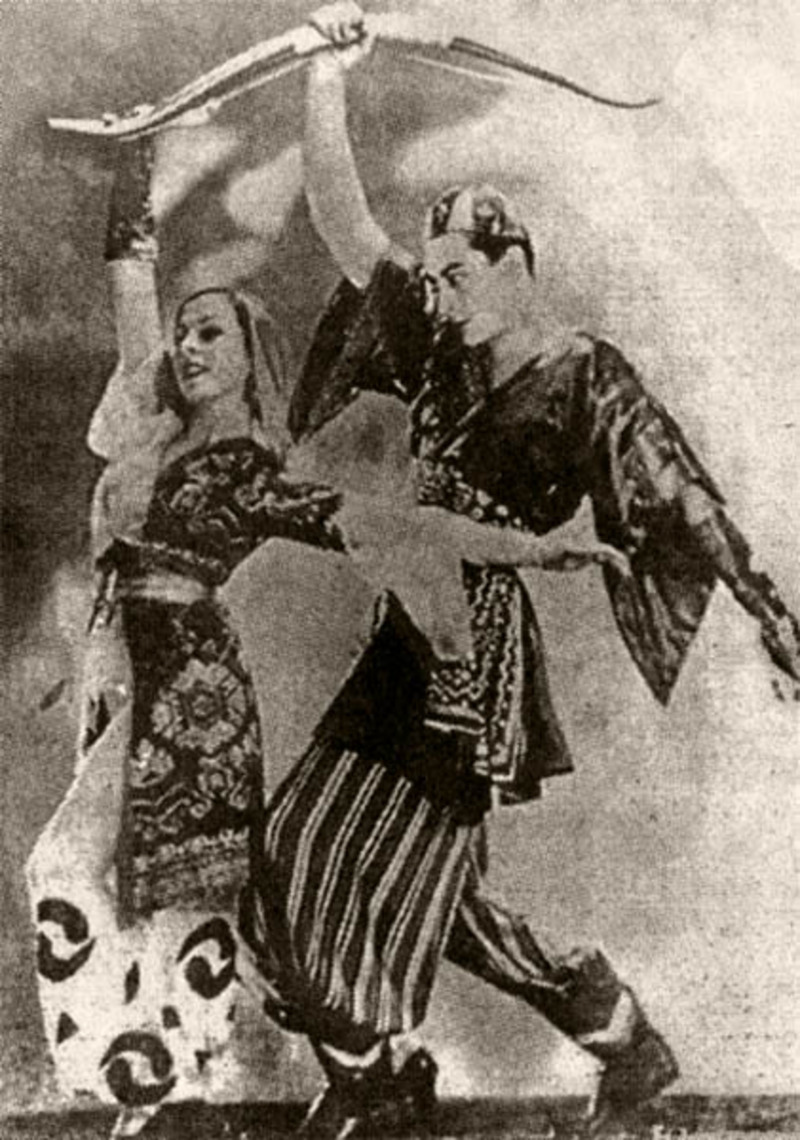
The duo with his wife, Kira Shcherbachova. PHOTO: odessa-memory.info
In the years that followed, Boris Lisanevich made Calcutta, India, his home. It was here that he developed another passion alongside ballet: hunting. It should be noted that in India, hunting is a sacred duty of the aristocracy. Members of the nobility were expected to possess the necessary wealth and courage to protect villagers from man-eating tigers. Man-eaters are, as a rule, old or injured animals. Their attacks on settlements led to tragedies. Consequently, hunters who managed to bag a tiger were accorded honor and respect. During his lifetime, Boris Lisanevich bagged 68 tigers, three of which were man-eaters.
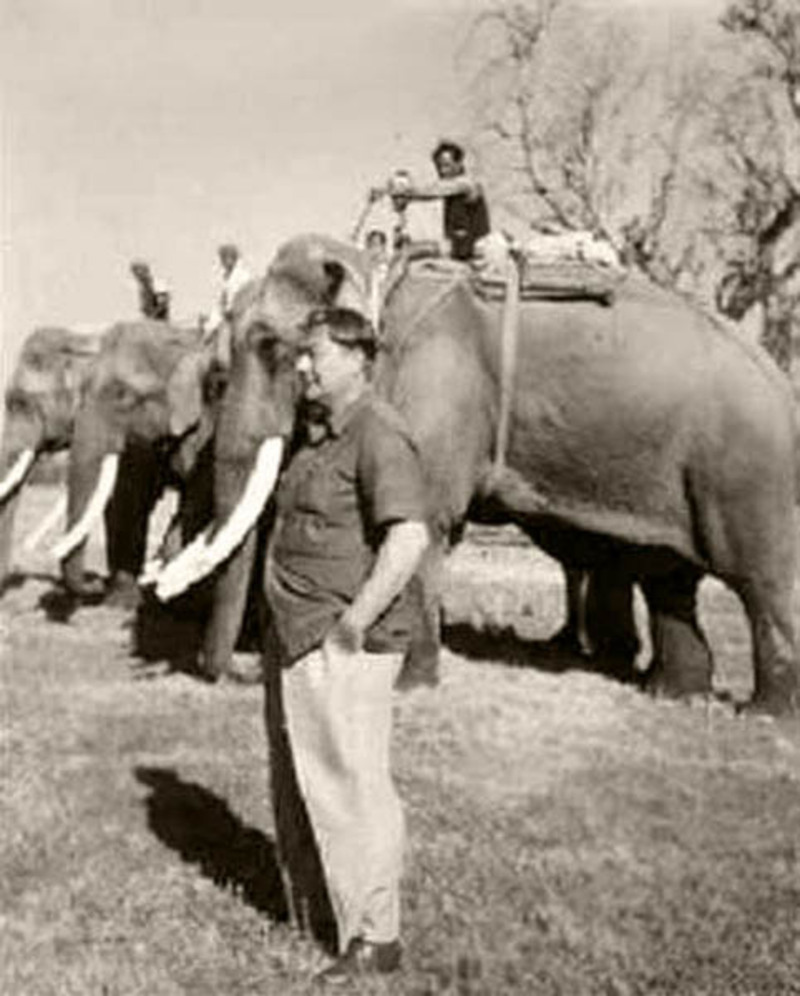
Boris Lisanevich before a hunt. PHOTO: odessa-memory.info
Gradually, the dancer from Odessa began forging useful connections among the Indian and British colonial elites and noticed one interesting detail: there was virtually no communication between the two groups. He came up with the idea of creating a club where such interaction would be possible.
Boris approached the implementation of this idea with Odessa-style grandeur. The magnificent Philip’s Palace was chosen as the club’s venue. It took only 12 days to prepare for the opening. In the future, this experience of working under tight deadlines would prove useful on more than one occasion.
His Own Club and a Meeting with the Monarch
On December 18, 1936, the grand opening of Club-300 took place, welcoming 600 guests. There were no restrictions based on race, gender, or nationality. Importantly, the club operated around the clock—unlike the common practice at the time of closing such establishments at 2:00 p.m. Business at the club was booming, but a storm was brewing on the horizon.
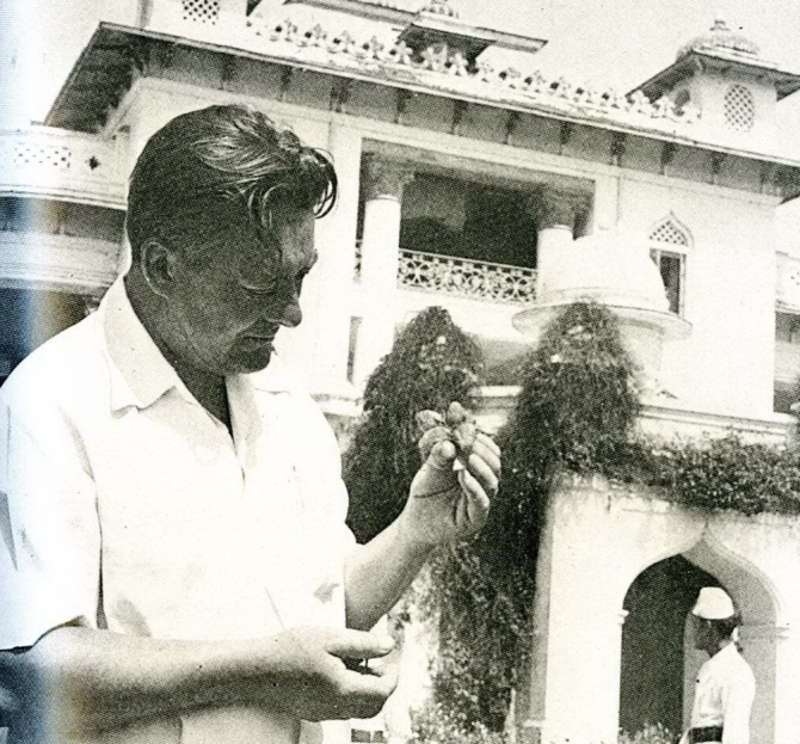
Boris Lisanevich’s Club. PHOTO: dovkola.media
World War II began, but the club continued to operate. Its guests now included numerous American pilots flying cargo missions to China.
During this period, a new, mysterious guest appeared among the visitors to Club-300. Not a pilot, not a British official, and not even an Indian maharaja, but a real king of an enigmatic country. And not just a king, but a deity—that is the status of the ruler in Nepal. Although at that time, all real power in the country belonged to Prime Minister Rana.
Effectively under house arrest, King Tribhuvan would periodically travel to neighboring India for medical treatment. It was there, on the grounds of Boris Lisanevich’s club, that secret meetings took place, which later helped Tribhuvan regain power in the country. This occurred in 1951.
As a token of gratitude for his help, Boris Lisanevich became one of the first Europeans to be invited as a guest by the King of Nepal. By that time, Boris was already married for the second time. His wife was Inger Pfeiffer, a Danish woman.
The couple found themselves in a real fairy tale—in a completely isolated country with a medieval social order and fantastic landscapes, customs, and architecture. There were challenges, too—a near-total lack of infrastructure and a complicated bureaucratic process. But Boris decided to take on the role of a pioneer.
Boris Opens Nepal to the World
Boris managed to convince King Tribhuvan to allow tourists into the country. After that, Lisanevich set about establishing the country’s first hotel in the palace of the former prime minister.
Absolutely everything had to be shipped in via India: from fruits and vegetables to cars. Cargo was delivered either by plane or over mountain passes on the backs of porters. Thanks to Boris Lisanevich, the palace was equipped with a sewage system, electricity, toilets, doorknobs, and bed linens. In 1955, the world-famous travel agency “Thomas Cook” brought the first guests to Nepal.
Finally, the Odessa native’s impetuous nature had found the right outlet, but then tragedy struck—his longtime friend, King Tribhuvan, passed away. His son Mahendra ascended the throne and launched a campaign against his father’s associates. Boris Lisanevich was even imprisoned in a local jail for a short time, becoming the first European prisoner there.
Admittedly, his imprisonment was short-lived. Mahendra needed to stage a grand coronation. It turned out that the only person capable of organizing such a spectacular event was Boris Lisanevich.
It must be said that the preparations were not easy. The ice used to keep the food, the chickens, and the fish frozen—everything was ruined during transport by plane. Instead of 112 guests, 190 arrived. These were just a few moments that could have ended in disaster for Boris Lisanevich, but everything went off brilliantly.
In 1961, Boris reaffirmed his reputation as the finest host —Queen Elizabeth II was a guest in Nepal. Footage of this visit has been preserved on film reels by the Pathé company.
Between Everest and the Jungle
Perhaps Boris’s most important guests were not royalty, but the mountaineers who came to Nepal from all over the world. For some of them, conquering Everest was the pinnacle of their careers; for others, it was a one-way ticket. And it was precisely for these daredevils that the doors of Boris Lisanevich’s hotel were always open. Often, such hospitality led to debts and problems for him.
But his restless nature knew no bounds. He embarked on grandiose projects, including raising pigs and geese, and even filming a movie in the jungle featuring a battle scene with 117 elephants, 200 horses, and 300 soldiers. The filming fell through, and Boris was left with a debt of $20,000.
There are enough stories about this unique man to fill several books. In 1976, The New York Times wrote about Boris.
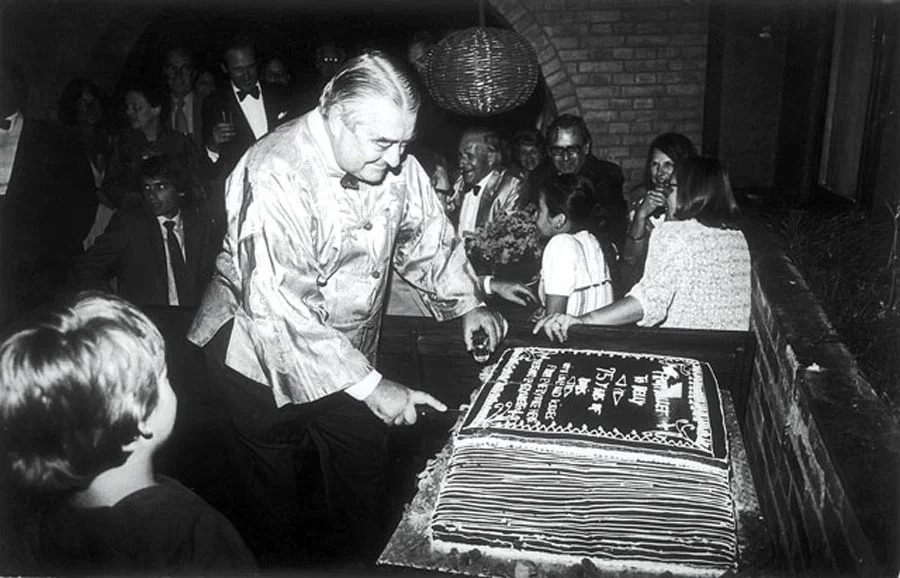
Celebration of Boris Lisanevich’s 75th birthday. PHOTO: wasmedia.b-cdn.net
Boris Lisanevich died in 1985. A native of Odessa, he was buried at the British Embassy cemetery in Kathmandu. His wife, Inger, died in 2013. She devoted the last years of her life to preserving Nepal’s architecture, which, ironically, had suffered devastating damage due to the growth of tourism in the country.
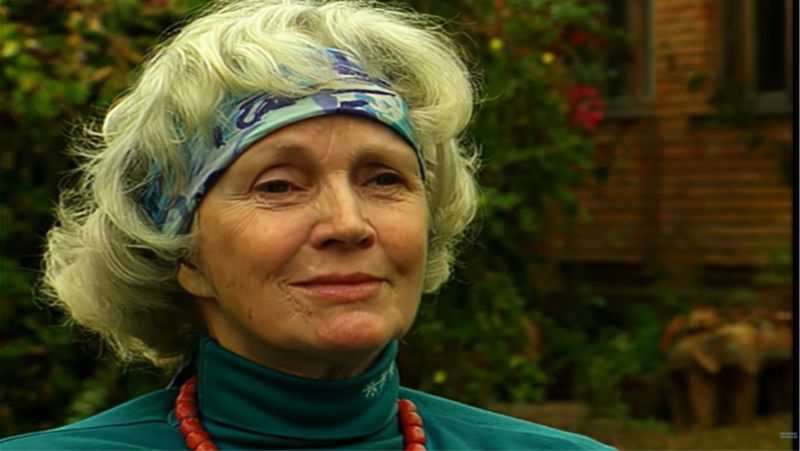
Inger Lisanevich. SCREENSHOT from an interview on YouTube
Boris Lisanevich himself once said: “There is only one thing in the world that truly matters. It is how many people you can make happy.”
Віолетта Дідук