20 April 2026, 22:29
"Every animal should know love": the story of sisters who created a shelter for cats
Ця стаття також доступна українською

Volunteer sisters Sasha (left) and Lisa (right) Shostak. PHOTO courtesy of the interviewees
Childhood in the 90s, where yard animals were either shot and drowned or sold for soap, forever determined the fate of the Shostak sisters, Sasha and Lisa. Today, at their Yoko Adoption shelter, cats roam the rooms freely, and the dying and most difficult ones are taken to a family - to their parents or to Oleksandra's apartment. She admits that every month there is a financial crisis, when it seems that everything is over. Find out how they cope and why they keep going in our big interview.
How did your shelter come about? How did it all start?
Sasha: It all started a long time ago, in the summer of 2014, and the shelter itself appeared only four years ago.
Lisa and I grew up in a military unit, and there were always animals there. We had dogs: all the girls were named Jessie, and the boys were named Bonya. Since it was the 90s, the issue of regulating the number of animals in the city was dealt with very harshly. These Jesse and Bonnie appeared and then disappeared. Dogs were shot, taken for soap.
Lisa: For me, it was also a very traumatic experience. I remembered how these dogs looked like, and I didn't understand: how can this be? What do you mean, "taken for soap"? There used to be a car that used to drive around and take them away. Basically, there was a "kennel" in Odesa where they were poisoned, burned, and whatever else they did. The moments of death were very cruel.
Sasha: And the idea that something was wrong in the world came to me very early on. And then, because we had a good home and our family cared about these animals the most, we solved their problems as they came: surgeries, giving away puppies. Later, when we learned about humane methods, we started sterilizing them to prevent uncontrolled growth of their numbers. So everything developed systematically, and I gradually realized how animals and people should be treated in this world.
I started volunteering when I was sixteen years old. Our regular Jessie, perhaps our most important Jessie, went missing for several days. I started looking for her, connected social media, wrote posts and shared them. And while I was doing this, I came across a lot of volunteer groups and pages and generally saw what was going on.
I remember helping one girl who was organizing trips to the Ark shelter. They needed hands for repair and cleaning work. That's where it all started, with finding Jesse and the first trip to Kovcheg. I went there once and started going on a regular basis every weekend.
Do the "booths" still exist?
Sasha: No, they don't. Now there are municipal services. Now their task is to catch, sterilize and release the animal back. They can release it in another place. This is not always the case, but it happens. That's why you need to keep an eye on it and keep in touch with the municipal service representatives.
Lisa: Yes, this dog was taken care of somewhere and released to a place where no one wants it. But fortunately, there are no more such cruel killings by municipal services as before. Although, of course, radical methods of solving the problem still exist in our society.
You talk about dogs all the time, but you have a cat shelter.
Sasha: Because it's easier with cats. It's easier to find premises. A dog shelter should be located outside the city, at a certain distance from residential buildings. This is a completely different financial component.
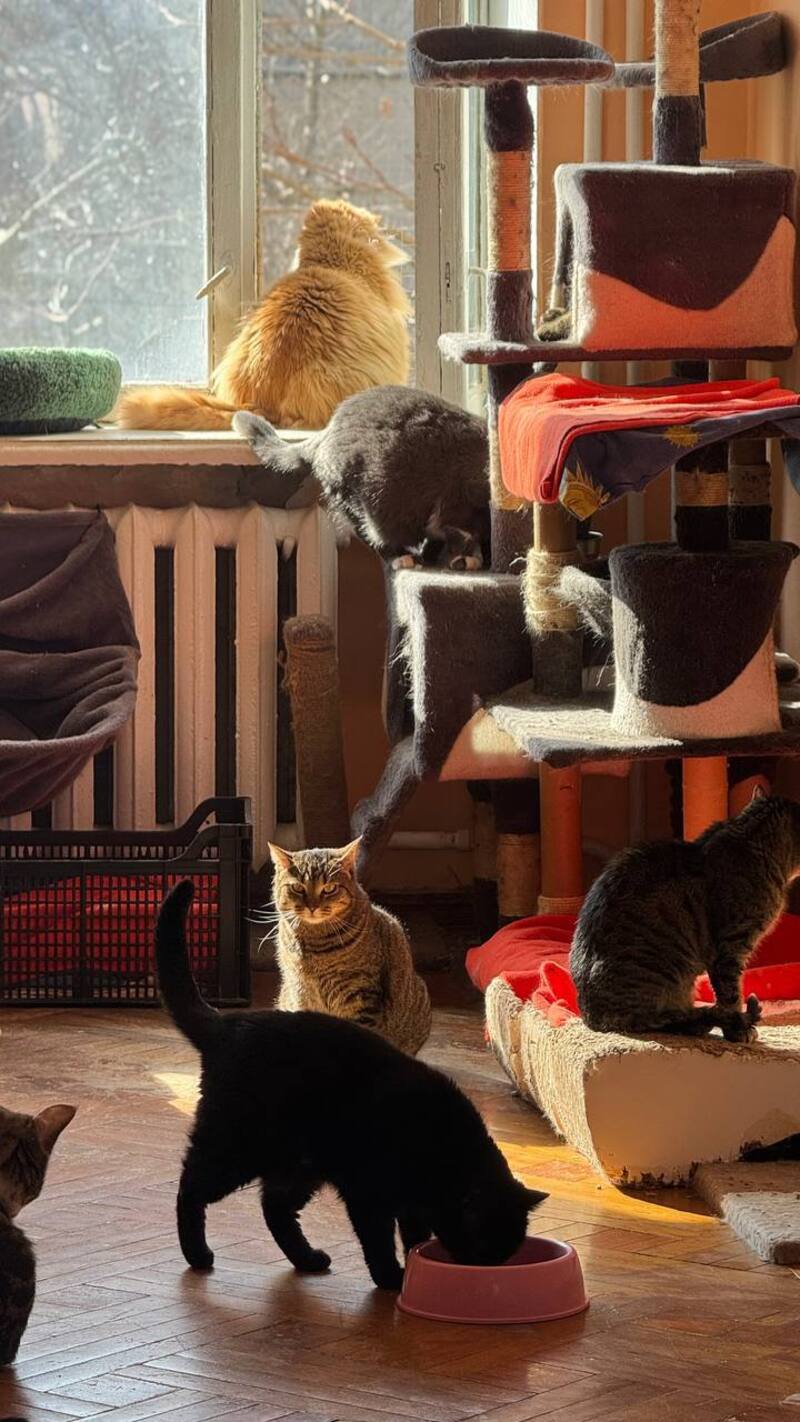
The shelter. PHOTO courtesy of the interviewees
In general, I have a dream to make a shelter for horses or cows. On my birthday, we went to a shelter in Busha, Vinnytsia region. About ten cows live there. It is very expensive both in terms of resources and finances. That's why they don't accept anyone anymore, and only take care of those they rescued earlier. It's a magical experience. There you can pet a cow, talk to it, and see a completely different life.
I also love pigs. They are incredibly cool animals, but unfortunately, people don't realize this. The other day, a pet pig ran by, and then there were silly jokes from people around me about which part of the pig they loved the most.
Lisa: We love animals very much and we help everyone. This applies to everyone, not just cats and dogs. That's why we still have a cat shelter, because it's more financially realistic. It's hard for me to choose who I love more. A dog, for example, is more empathetic, but it is also more trouble. Dogs are loud, they need to be walked, and it requires more people. That is, it is much more expensive both in terms of money and physical labor. And cats are easier: they don't need to be walked, and they're not as loud.
Do you remember your first rescued cat?
Lisa: Stepa?
Sasha: Yeah, Stepan, a street cat. I went to my grandmother's house. She lived near Odesa, and no one sterilized anyone there. Firstly, my grandmother put the dogs on a chain, and secondly, she was always giving birth to kittens, which then fell into the well.
I arrived and there were two kittens. I took the one that was not doing well. The other one was strangled by a neighbor's dog.
Lisa: At that time, we already had a purebred cat at home. I got it as a birthday present.
Sasha: But everything changed with Styopa. It was with him that I started to change our family thinking.
How old were you then?
Lisa: I was seven years old, seven years younger than Sasha.
Sasha: Stepa's eyes were glazed over, and he wouldn't eat by himself. I took him for injections every day, gave him pills, kept him in a dryer in a carrier, I think. I fed him from a bottle - I still remember it.
Lisa: I remember that too. His ears stuck out like that when he ate. We thought we were going to take him out and give him somewhere.
Sasha: We never saved one of his eyes, it remained blind. The other eye was good. In the end, he lived with us for about 15 years.
Lisa: Yes, he died only a couple of years ago. So he lived a pretty long life.
Sasha: He had liver cancer.
At what point did you realize that this was no longer just a matter of helping, but a matter of life?
Sasha: I started doing this more intensively when the full-scale war started. At the same time, I lost my job. I think it was my way of escaping from reality. I saw that people were bringing their pets to the monastery, to the shelter. I ran to help. At that time I had about ten permanent pets - I was paying for them, looking for homes.
I read a lot of posts about abandoned animals. I started to pick them up and treat them. And then I realized that paying for overstays is very expensive. And that it would be easier for me to rent a place and organize something of my own. So that I could always have a place to put the animals I picked up and be responsible for them myself. Otherwise, I had to go to ten places to visit them and bring food.
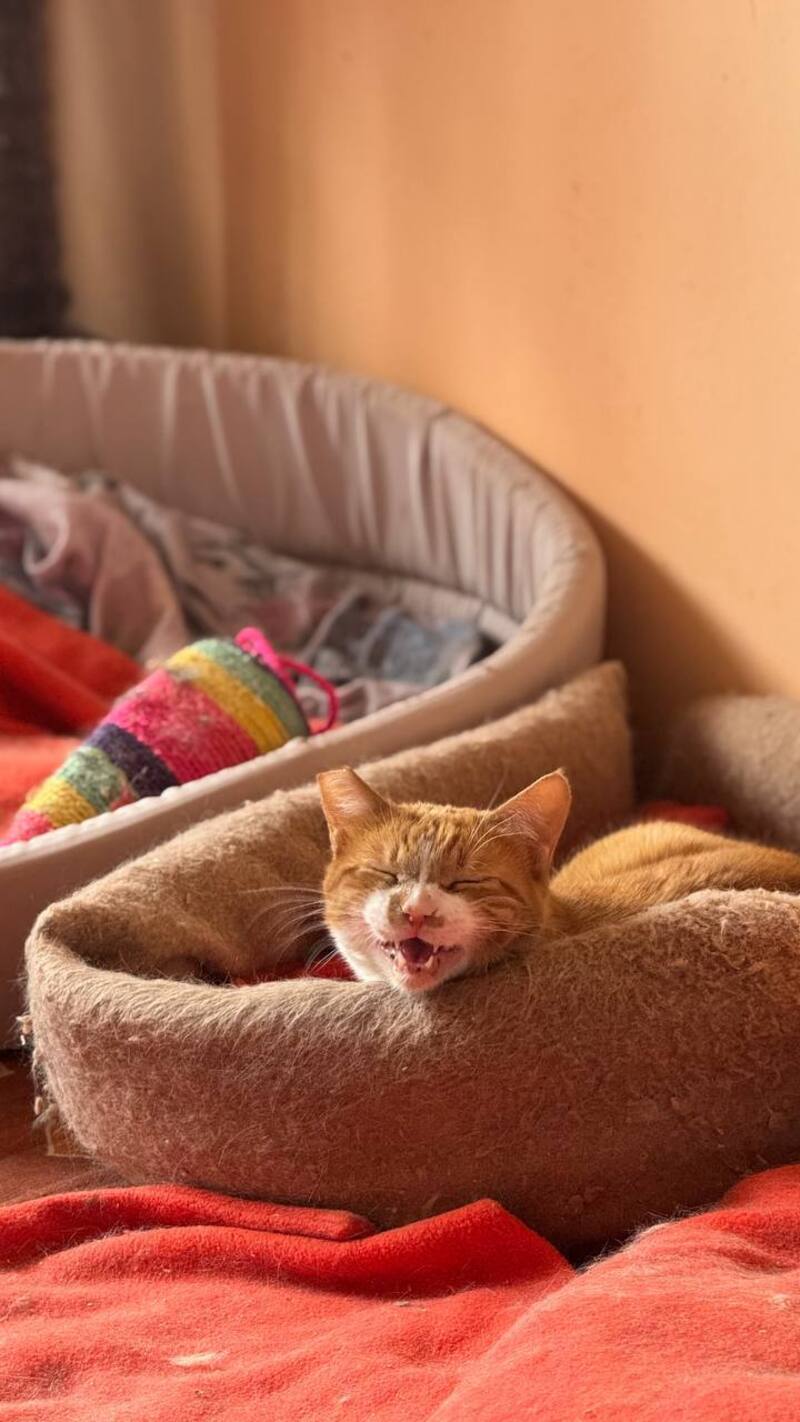
The shelter. PHOTO courtesy of the interviewees
And I also realized that if I did it, no one else would do it. That is, how, in my opinion, it should be good. Because in most overstays, cats are kept in cages. Of course, they are let out for a walk, but at night they are put back in cages. I don't like this format, I don't accept it. In my understanding, animals should have free movement. After all, many cats may not find a home for seven years. And sitting in a cage most of the day for so many years is too much.
Lisa: I think it was when the war started that we realized that such care is forever.
Tell us, how many animals are currently in the shelter?
Sasha: There are 36 cats in the shelter now.
Lisa: We try not to exceed 40.
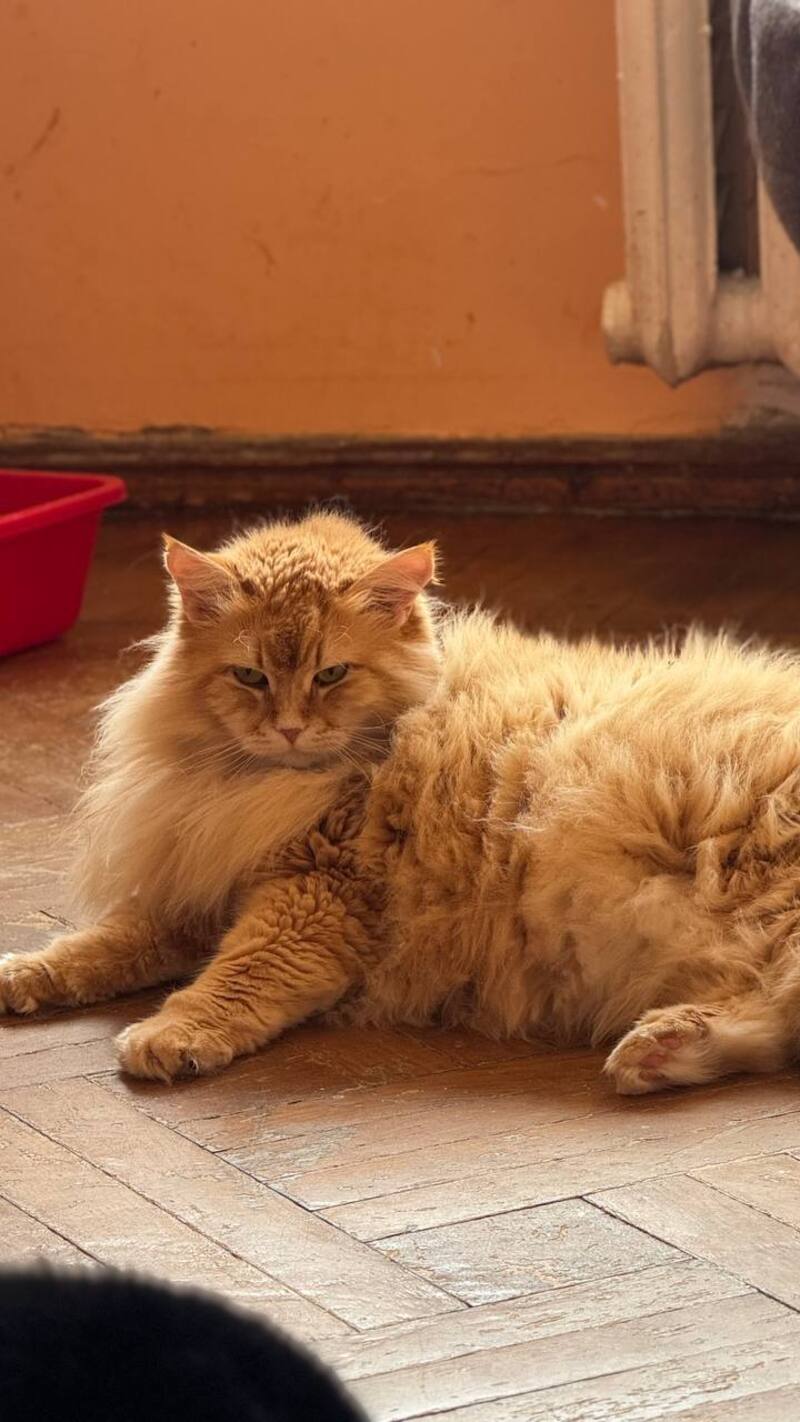
The shelter. PHOTO provided by the interviewees
Sasha: At one point, I had forty animals, but my apartment is three rooms. It's not that it's hard for me, it's that they are uncomfortable. The point is to change them: I picked them up, cured them, rehomed them, and then took a new one. Animals should be comfortable, so that they don't sit on each other's heads and have at least some minimal corner of their own.
Does it happen that you get attached to a cat and then find it hard to give it up?
Lisa: Yes, of course. I get very attached.
Sasha: I did at first, too, but then it went away. We can't give them the love that everyone needs. Before, when there were few of them, I was very attached. Now I have more than a hundred cats in my city, and I'm happy when I give them away.
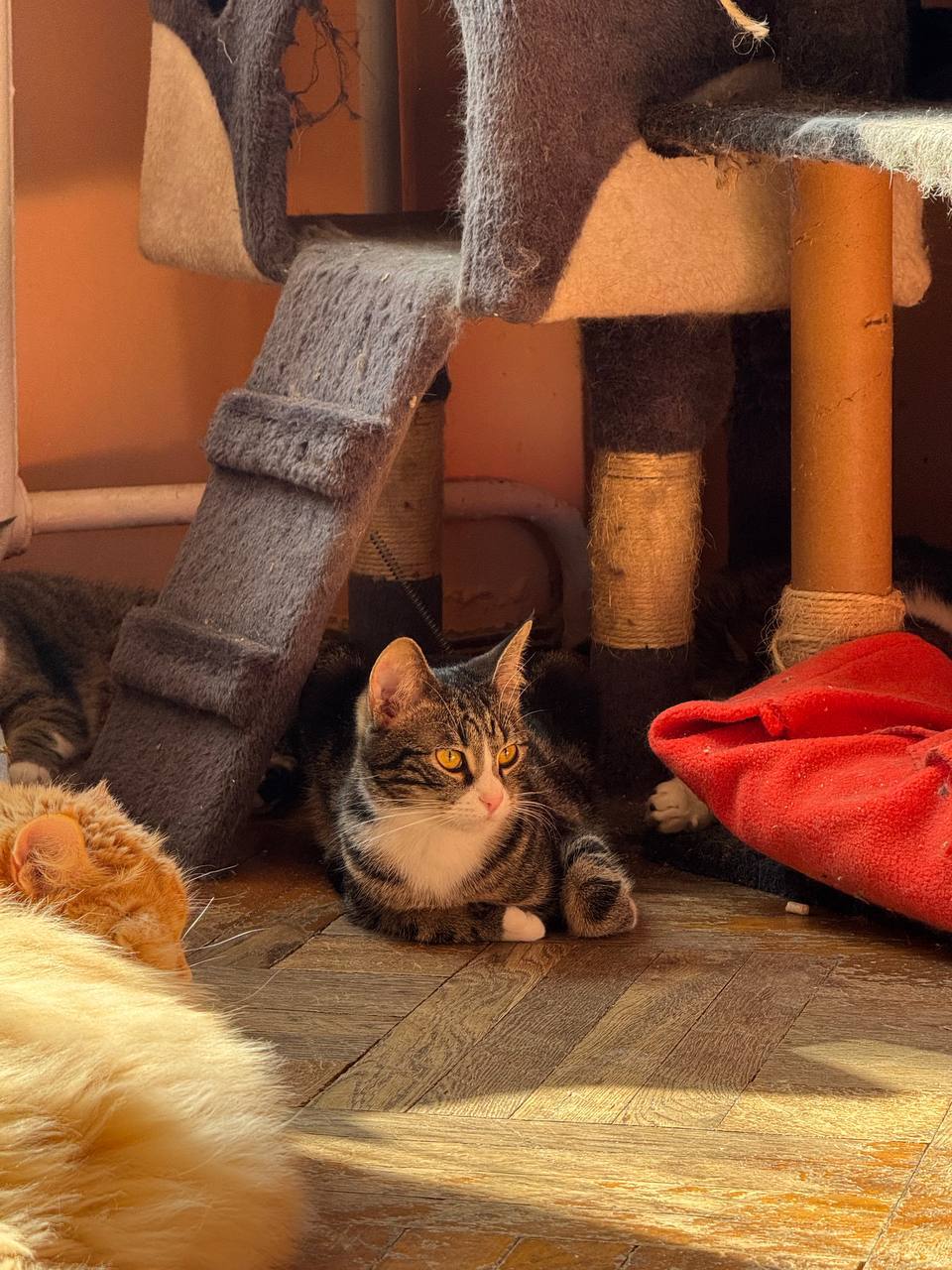
The shelter. PHOTO provided by the interviewees
People often want to take their animals to a shelter, and I keep trying to explain that this is not okay for an animal. It is uncomfortable for life. As a temporary measure - yes, but as a permanent solution - no.
What are the main reasons people give you animals?
Sasha: We have stopped now and do not take anyone to the shelter. Because the task is to give away at least a quarter of the animals we already have. The financial side is sagging, and this is hundreds of thousands of hryvnias. And as a result, the quality suffers: you only think about where to get money.
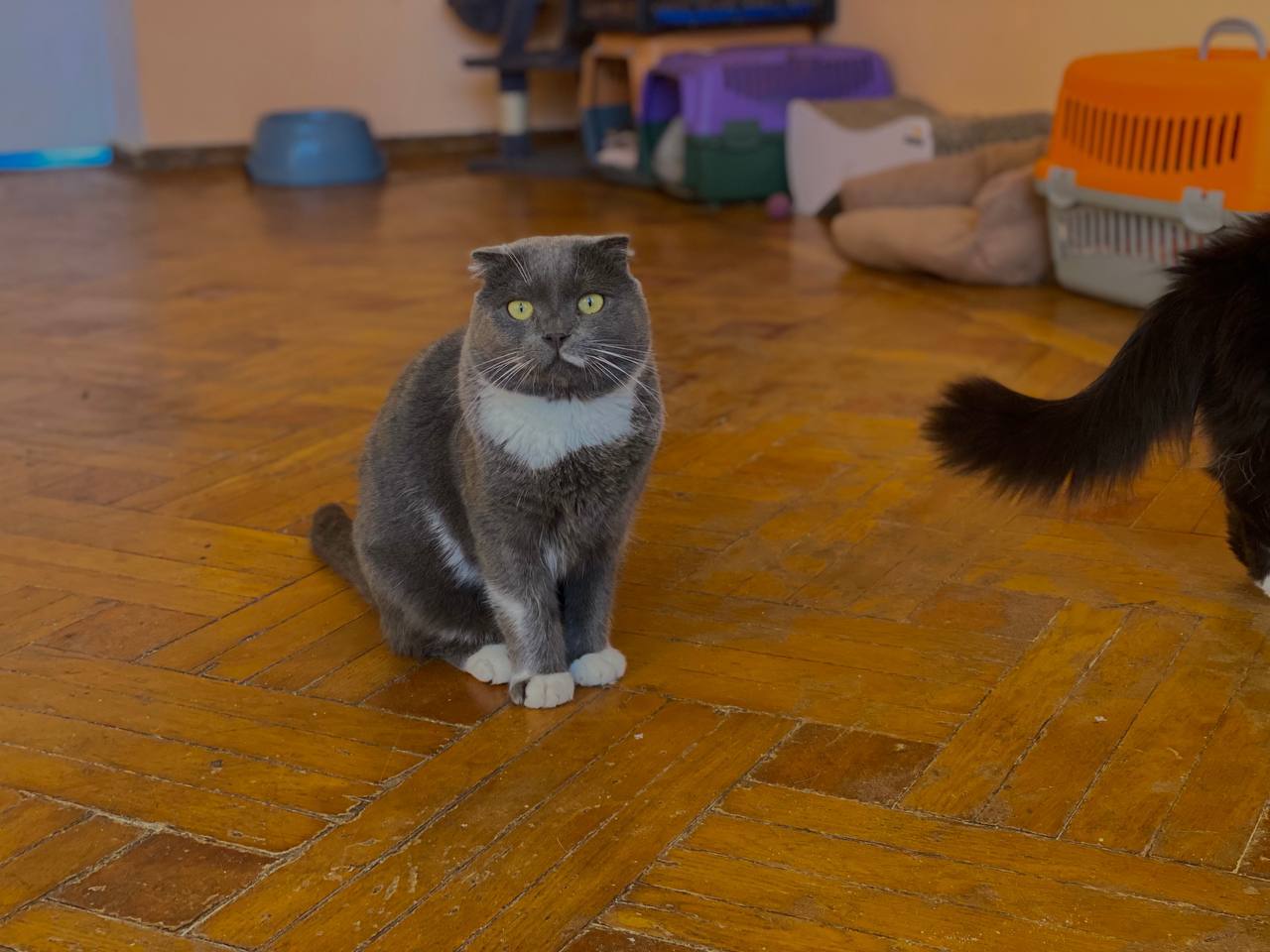
A shelter. PHOTO provided by the interviewees
There are a lot of volunteers in Odesa, and I finally realized that I don't have to do everything alone. To maintain quality, I have to stop and take care of those who are already under my care. Although I think that every week someone definitely wants to adopt an animal. Most often, this is due to people leaving for Europe.
Lisa: Well, or the animal gets in the way, peeing in the bed, for example. That is, the person is just uncomfortable and doesn't want to cope with the difficulties caused by the pet.
I understand that you have animals not only in the shelter. How many of them are in your apartment?
Sasha: Right now I have eighteen of them. At the moment, I have nine disabled cats who cannot go to the toilet on their own. They need help plus constant treatment. There are four more dogs and several senior cats - they also need special care.
Lisa: And we have fifteen animals at home, I live with my parents.
Sasha: For example, we have one cat dying in the shelter right now. We took her to our parents so that she could spend the last months of her life in comfort. My dad puts in an intravenous drip every day, he consciously cares for the dying animal. All these years, I have either taken dying animals from the shelter or to my parents. Now it's hard to take them to my place, so my father and mother help me a lot.
It's emotionally demanding.
Sasha: It's easier now. At the beginning, of course, it was harder. Now you just understand the situation better.
I remember how two years ago I took in a disabled cat to live out his life. It was an overstay. In general, I started working with disabled cats because of my old ward, a disabled cat who was always in a cage on overexposure. And six months before the war, I thought: maybe I should learn how to suck the urine and take the cat to me? So she wouldn't have to stay in a cage. Why did I save her then, so that she could spend four years behind bars? I came, tried it once, then again. Then I brought her home. It took me a couple of days to experiment: I was looking for the bladder with my hands, learning - and eventually it worked.
And a couple of years ago, from the same overexposure, one cat came to the clinic with kidney failure. I went to him, looked into his eyes and wrote to the curator: "Let me take him to my place. It is clear that he has not long to live, but I will take care of him for the next couple of months."
It was very hard. When I was carrying him to put him to sleep, I was crying all the way to the 7th Fontana. I had become so attached to him over the months. The hardest part was realizing that he had never had anything like what I gave him in his life before. We slept together every night. That was the point. I wanted to give him this because, in my understanding, every animal needs to know love. And not only an animal, but every person, every living being.
Lisa: I don't even kill cockroaches. It's their life. In general, when I come to Odesa and live with my parents, it's a little easier for me: I'm at a distance from these problems. But when I go through this process myself, it's hard every time. Right now, I try not to let the animals get so close. I treat them more like a doctor treats patients. I have to teach myself the ability to distance myself.
Who helps you? Do you have a team?
Sasha: There are five of us: me, my sister Lisa, the girl Lisa worked with at the coffee shop, the girl who is constantly getting sick cats thrown into her yard, and her boyfriend, who agreed to help us.
Lisa: And somehow it happened that we are all vegetarians.
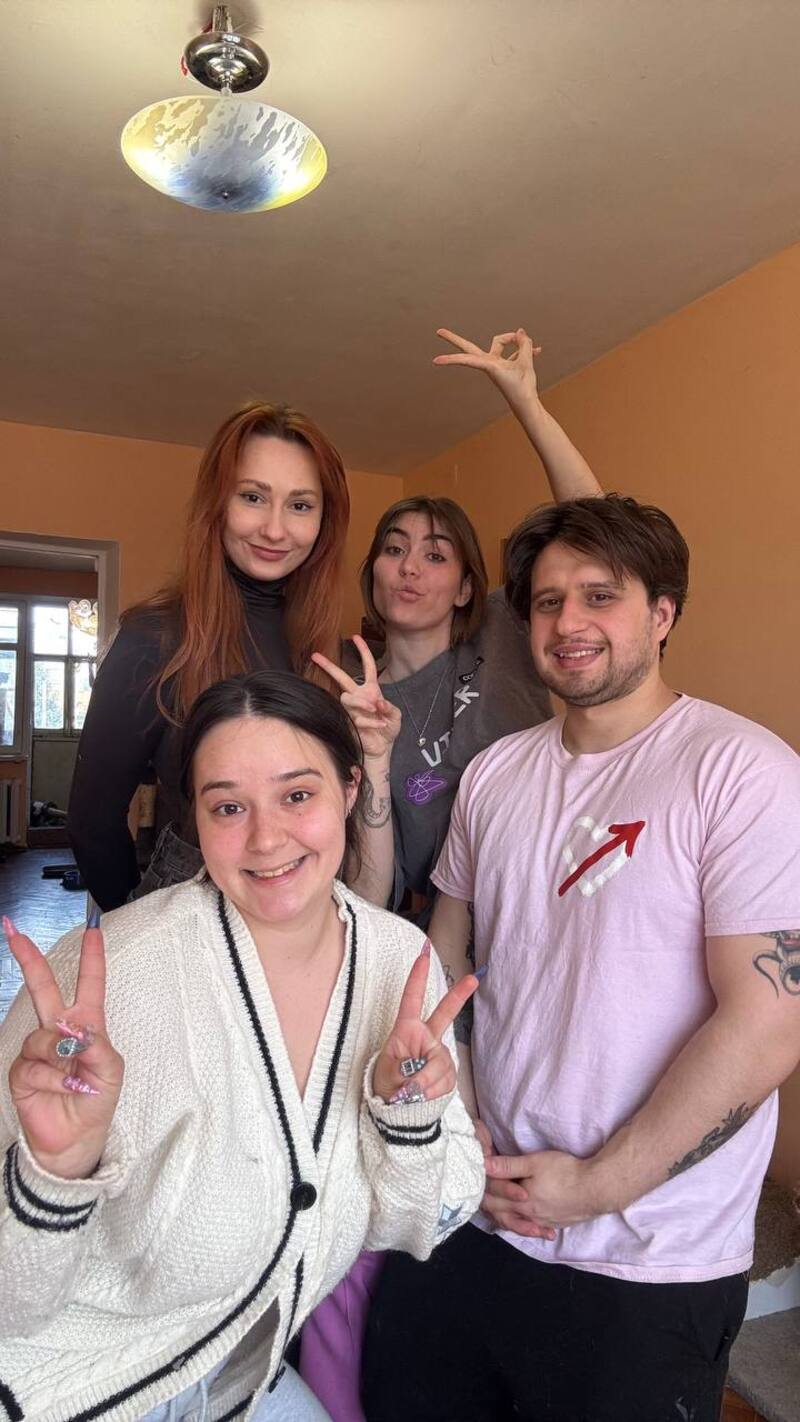
The team of volunteers at the shelter. PHOTO provided by the interviewees
What does a typical day look like for you?
Sasha: In the morning, I walk the dogs. Then I have to urinate the cats, wipe their butts, clean up, and then feed them all - in different places. On the days of my shifts at the shelter, I go there.
In the evening, after work, everything is repeated again. I cannot spend the night anywhere - I need to be at home all the time. Every weekend I'm at the clinic: I visit, treat, vaccinate, sterilize my wards and pay bills.
What injuries do animals most often come to your shelter with?
Sasha: These are animals hit by cars. In second place, I think, are viral diseases - a lot of people get sick on the street. We also often come across those who have been shot.
Do you face the fact that animals are getting lost more often because of shelling, alarms and drones?
Sasha: Yes, of course. And the mortality rate of animals has increased, because, unfortunately, many of them are heart animals. Such stress can be fatal for them. And the number of animals getting lost has really increased.
Who most often takes animals from the shelter?
Sasha: Each volunteer has his or her own audience. Young people from 18 to 35 take animals from me. Sometimes - from 30 to 50 years old.
Lisa: There are generally more girls than boys.
Have there been any stories that you call a real miracle?
Sasha: About six months ago, there was a dog with a very serious illness. It was picked up in Bilhorod-Dnistrovskyi. It was covered in thorns, with only one eye sticking out. It was a small dog, and its head was constantly shaking. They brought it to put it to sleep.
The doctors took pity on him, cleaned him up and wanted to let him back out. And local volunteers started looking for someone to take him. I volunteered to take him to Odesa to find out if something could be done about it here, with better opportunities.
Lisa: He had hydrocephalus, I think.
Sasha: Yes. We performed a costly surgery for fifty thousand hryvnias - we installed a pin to drain the fluid. And he began to live a normal life. Moreover, he was taken in by an incredible family. He has his own separate room, lots of beds, soft floor, special bowls, special food. He doesn't go for walks yet - they are going to move to a quieter place, and he will start walking there. For now, he has to be taken outside. He just stands there, he doesn't know how to walk on his own yet.
Lisa: This dog is like an autistic child. He needs to be taught to communicate. In six months, he started asking for affection - he can come up and pull your pant leg. He is already showing emotions and desires, and before he was just lying in one place. If you look at the first video and the one now, it's something incredible. He has changed the life of this family.
Sasha: This is despite the fact that you need to take care of him every day. He still has seizures, he can shake his head, he needs to be sedated. The family looks after him as if he were a special child. They are very nice people who have their own lives, but they don't see a problem in giving the animal such special care.
What financial difficulties are you facing now?
Sasha: There are three main expenses: food, overstaying animals that don't live in my shelter, and the clinic, where you constantly need to treat someone. Most often, animals have some kind of chronic disease: cystitis, something viral, or stomach problems.
Have there been moments when you thought you couldn't cope?
Sasha: It happens to me every month. Every month there is a moment when money is not collected, and someone needs to be treated. Or there's no feed for tomorrow, and we need to solve this urgently. There comes a peak moment when you sit in despair, crying and thinking: "This is probably the end of the line." But usually you somehow manage to pull through. You just need to get past this moment of despair and get back into action, not suffering.
What kind of help do you need now?
Sasha: Both options are possible: either money or just asking what exactly you need. Because very often people buy the wrong thing. It's awkward to say, "Sorry, we're not going to feed this food." So it's better to ask, and I'll write down a list of what kind of medical food is needed, what kind of everyday food is needed.
Lisa: You can actually come yourself.
What would you like to say to our readers?
Sasha: I would like to say about the importance of sterilization of both pets and street animals. To reduce their number in a humane way. Because we still have schemes like drowning or taking a box with kittens and puppies somewhere on the street, in a park, at a bus stop. And then volunteers deal with all this. Although it is possible to solve the problem in advance and much easier. It is clear that you cannot take everyone off the street, but you can control the number. But people are too lazy to do this, it's easier to throw them away and not be responsible for the consequences.
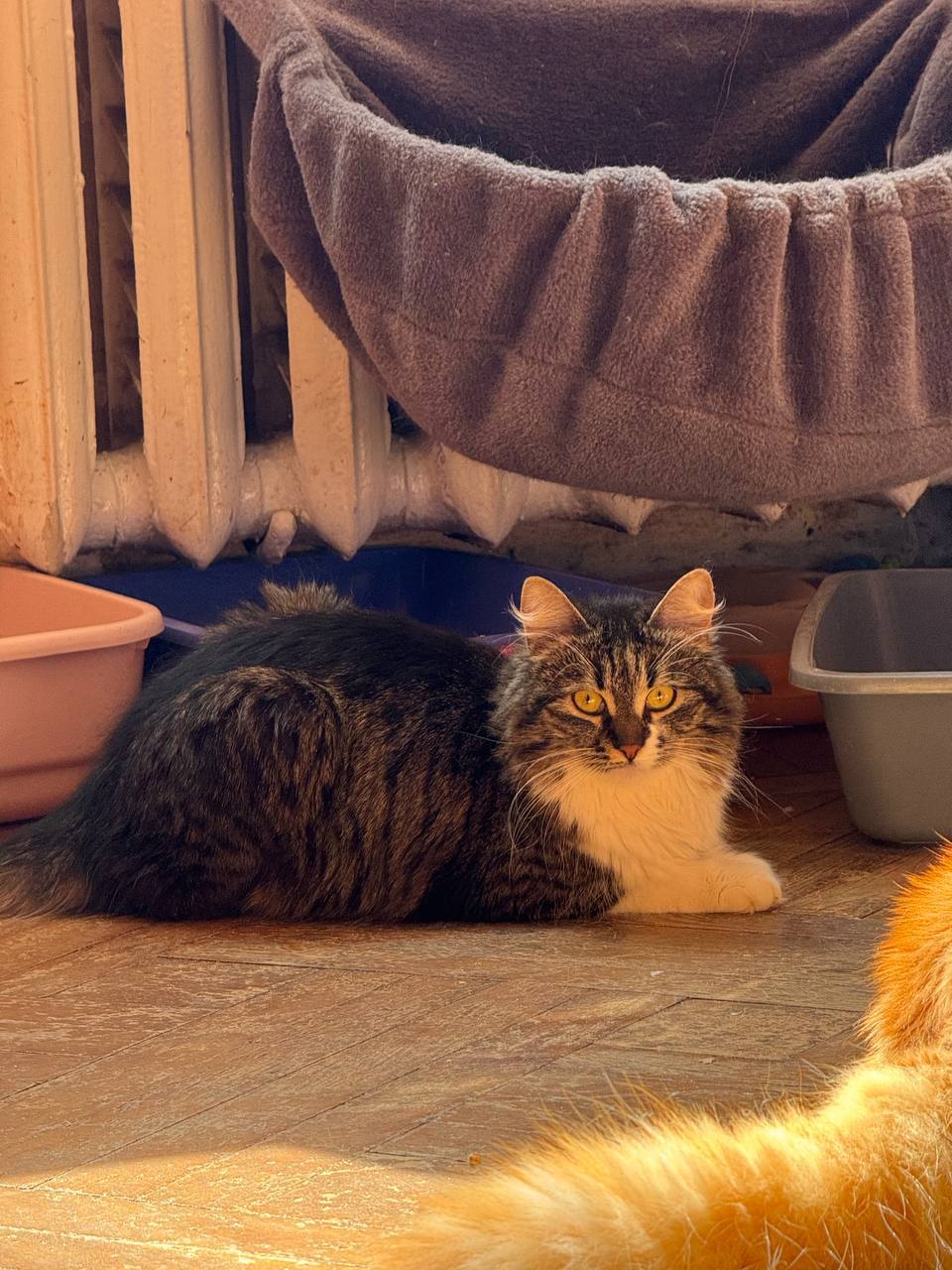
A shelter. PHOTO provided by the interviewees
When it comes to pets, people think that if a cat or dog lives at home, you can give it pills to stop it from screaming. But whether you give them pills or not, constant hormonal surges in ninety percent of the hundred lead to cancer sooner or later. And I see that I have to explain to everyone: your animal will get cancer if you don't sterilize it.
Lisa: Another very important thing: if a cat is frolicking at home, you don't need to scold it, take it to a shelter, or throw it out. Most often, this is a signal that health problems are beginning. If it starts peeing on the couch, it's most likely time to visit the vet. The cat is not feeling well, it shows that it is in pain. If the animal is behaving strangely, go to the vet, have it examined, and see if there is a problem. But, unfortunately, it is often easier for people to get rid of an animal than to figure out what is going on with it. Sometimes antidepressants are indeed needed if the behavior is caused by stress, but only on the advice of veterinarians. And sometimes it can be, for example, cystitis. The animal behaves atypically because it is trying to show that something is wrong.