Меню
Соціальні мережі
Розділи
March 4, 2026, 6:46 p.m.
From the history of the Akkerman region
This article also available in English35

The settlement of Budzhak. PHOTOS: War for the past
Due to its short existence (August 7-December 7, 1940), the Akkerman region left an inconspicuous mark on the history of the modern Odesa region. However, its functioning had a significant impact on modern Ukrainian-Moldovan relations and the problem of border delimitation. The Akkerman region was the first experiment in introducing a certain degree of economic autonomy in the Soviet Bujak, given its ethnic diversity and geopolitical value. This publication is devoted to the activities of this "least Ukrainian-speaking region of the Ukrainian SSR".
On October 12, 1924, as part of the all-Soviet national and cultural policy of indigenization, the Moldavian Autonomous Soviet Socialist Republic (MASSR) was created as part of the Ukrainian Soviet Socialist Republic (USSR) with its capital in the village of Balta, and since 1929 in Tiraspol. The MARSSR mostly occupied the ethnic Ukrainian lands of Podnistrovia and Podillia. In the future, it was planned to liberate the Moldovan lands of Bessarabia and establish the Moldovan Soviet Socialist Republic there. On June 28, 1940, the Workers' and Peasants' Red Army began a campaign to the former lands of the Bessarabian province of the Russian Empire occupied by Romania in January 1918. Within a few days, with almost no serious opposition, it seized the lands of the former Bessarabian province. There was no longer any need for the MARSSR to exist as part of the Ukrainian SSR, and on August 2, 1940, the MARSSR was reorganized into the Moldavian Soviet Socialist Republic (MSR). The newly formed Moldavian SSR immediately called for the inclusion of the Izmail district, arguing that the majority of the population here were ethnic Moldovans (32.5% of the population). The young republic also needed its own access to the Danube and the fertile lands of the Danube region. The Moldovans appealed not only to the relative numerical superiority of the Moldovan population, but also to historical information. Allegedly, the Moldavian principality had access to the Danube and the Black Sea in the late 14th to mid-15th centuries. At the same time, the Ukrainian SSR somehow forgot that Transnistria had never belonged to the Moldovan principality and that no historical map shows the location of Moldovan possessions beyond the Dniester. But they did not want to give up Tiraspol at all.
The position of the Moldovan "comrades" was negatively perceived in the Ukrainian SSR. The chairman of the Supreme Soviet of the Ukrainian SSR, Mykhailo Hrechukha, noted that Ukrainians and Russians together accounted for almost 44% of the county's population, and the republic already had its own river and sea fleet. He emphasized: "It is not expedient to divide the Danube infrastructure among the republics, neither from an economic nor a strategic point of view," citing the existence of the Dnipro River Shipping Company, which later took an active part in the creation of the Soviet Danube Shipping Company.
On August 2, 1940, when the Ukrainian SSR was formed, the Akkerman and Izmail districts were transferred to the Ukrainian SSR by a resolution of the Supreme Soviet of the USSR. Already on August 7, 1940, the Supreme Soviet of the USSR amended Articles 13, 23, 48 of the USSR Constitution to establish the Akkerman region. The region included 13 districts, including: Artsyz, Bolhrad, Borodyn, Kilia, Liman, Novoivaniv, Reni, Sarat, Starokozach, Suvorov, Tarutino, Tatarbunary, Tuzla, with the cities of Akkerman, Bolhrad, Izmail, Kilia, and Reni. The government of the Ukrainian SSR drew up the boundaries quite quickly, and already on August 13, 1940, the resolution of the Council of People's Commissars of the Ukrainian SSR "Reorganization of Public Education in the Newly Formed Akkerman and Chernivtsi Regions" clearly identified Izmail district as part of the Akkerman region. According to the decree, education in the Ukrainian language was introduced here, and the Romanian "ghost" primary school system was reformed according to Soviet standards, with the mandatory provision of textbooks from the Ukrainian SSR. Theological seminaries were liquidated. Pedagogical colleges were established (each with 160 students) with Ukrainian as the language of instruction in Akkerman and Russian in Izmail. The resolution also provided for the establishment of a Teacher's Institute (330 students) in Akkerman. On September 15, 1940, the first inter-district teachers' conference was held in Kilia. With these educational resolutions, the Ukrainian SSR finally legally secured the new lands, in fact without the consent of the Moldovan SSR.
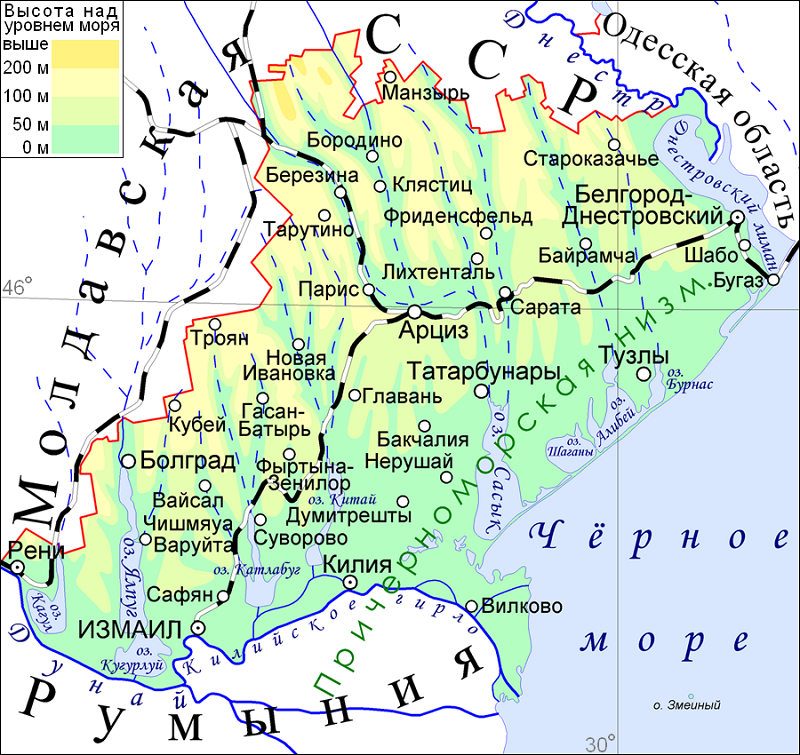
Akkerman region. IMAGE: Wikipedia
The new region had an area of 12,400 square kilometers with a population of over 600 thousand people. The MSSR received only the northwestern part of the former Izmail district with a predominantly Bulgarian population, but the access to the Danube near the village of Giurgiulesti was never annexed: the river was 800 meters from the Moldovan village. Moldovan officials repeatedly raised the issue of this "unfair division". In 1946. Gerasim Rud, Chairman of the Council of Ministers of the MSSR, appealed to Joseph Stalin at the Plenum of the CPSU Central Committee to revise the borders between the republics. However, the First Secretary of the Central Committee of the Communist Party of Ukraine Nikita Khrushchev did not support this initiative, stating: "These are administrative borders. We still live in the same country." Subsequent attempts by the Chairman of the Council of Ministers of the MSSR also did not receive the support of the Soviet leadership. Thus, the territorial disputes with the MSSR were finally resolved and the Ukrainian SSR received the "least Ukrainian region."
In addition to education, it was equally important to organize the economic and tax systems. The reforms were carried out by the Presidium of the Supreme Soviet of the USSR, which indicated the direct interest of the Soviet government in conducting relatively mild Sovietization in the region.
The Presidium's resolutions of August 15, 1940, nationalized land, along with mineral resources, forests, and other natural resources, as well as private enterprises that employed more than 20 workers or at least 10 workers with a mechanical engine with a capacity of more than 10 horsepower. In addition, commercial establishments with an annual turnover of more than 600 thousand Romanian lei, power plants, tramways, oil storage facilities, printing houses, etc. were subject to nationalization.
Social benefits were introduced in accordance with Soviet standards. In particular, an 8-hour working day was established instead of the 12-14-hour one that existed under private Romanian owners, regular vacations were granted, payment for downtime and strikes was provided, higher wages for night and overtime were paid, and state insurance for workers was introduced. Social guarantees were introduced retroactively (from August 1, 1940), which made it possible to make the relevant payments in the first month of the region's existence.
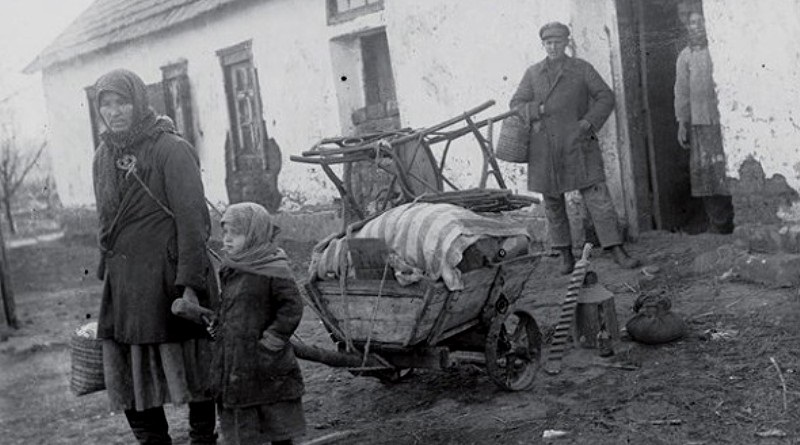
Tatarbunary villagers. IMAGE: bessarabiainform.com
On August 22, 1940, the Council of People's Commissars of the Ukrainian SSR adopted a resolution on taxes and fees for the population, providing for a number of concessions to strengthen loyalty in the region. In particular, residents were exempted from arrears and debts incurred during the Romanian period, as well as from the tax on unmarried persons. On August 1, the Soviet tax system was introduced: the income tax for private enterprises with an annual income of up to 25 thousand rubles was reduced by 25%, an industrial tax was introduced, and the introduction of local taxes was postponed until January 1, 1941. For farms with a profit of 1-2 thousand rubles, the tax was 60 rubles and an additional 7 kopecks for each ruble over 1000 rubles. If the profit ranged from 10-20 thousand rubles, a fixed tax of 1810 rubles and 45 kopecks for each ruble over 10,000 rubles was set. Owners with a profit of more than 20 thousand rubles paid 6310 rubles and 55 kopecks for each ruble over 20,000 rubles. Thus, the popular opinion about almost instant collectivization in the region was somewhat exaggerated.
Indeed, the Resolution of the Council of People's Commissars "Cooperative Organizations in the Akkerman and Chernivtsi Regions of the Ukrainian SSR" of August 27, 1940, was in effect, but it focused more on "the creation of consumer cooperative societies with consumer credit functions for rural and urban consumer societies, with the transfer of property and premises previously owned by credit unions in Romania."
The delay in the process of forming local authorities in the region may seem rather unusual. The final structure and composition of the governing bodies were approved only on August 20, 1940, by a resolution of the Central Committee of the CP(B)U, and published on September 1 in the newspaper "Prydunayska Pravda". Probably, the leadership of the Ukrainian SSR considered this issue to be secondary to the economic and educational transformations designed to secure the region's status as a Ukrainian territory. Mykhailo Kuznetsov was elected first secretary of the Akkerman regional committee (obkom), and Hryhorii Kulikov was elected chairman of the regional executive committee. Both leaders were not ethnic Ukrainians, which was explained not only by a certain slowdown in Ukrainianization in the Ukrainian SSR, but rather by a significant number of ethnic Russians who were suspicious of cultural and linguistic innovations.
Thus, only in early September 1940 was the reorganization of economic and political life in the region completed.
The local leadership focused on improving the economic situation in the region. On August 23, 1940, the Akkerman regional committee decided to conduct a census of livestock by December 1 and invite 25 zootechnicians to study the state of livestock production and improve the introduction of cattle breeding. District departments were ordered to ban the slaughter of breeding cattle and young animals and to organize animal breeding units. A 150-head livestock farm was set up at the Izmail meat processing plant. The meat slaughter capacity was increased from 1500 to 3000 kg. A sausage shop was set up. Thus, the leadership preserved the imperial tradition of perceiving Budzhak as a predominantly livestock region.
In September 1940, the Izmail district committee reported on the improvement of the city's amenities. For 50 thousand rubles, the bridges in the town and the dam were repaired, and Bolhradska Street was paved with bricks. A new 650-seat cinema was built and the winter cinema was repaired. 20,000 ornamental trees were planted along Bolhradska Street and another 5,000 were planted on other streets of the city. RUB 80 thousand was allocated for school repairs, and an orchard with 200 trees was set up outside the city. In total, more than 110 thousand rubles were allocated for the arrangement, which is almost 4 times more than the Romanian administration. In October 1940, the staff of the Tatarbunary Cloth Factory noted that thanks to the new equipment, fabric production increased from 7800 meters (for the whole of 1939) to 4900 meters in September-October 1940.
The resolution of October 3, 1940, of the Akkerman Regional Committee on the allocation of land to small farmers was controversial. The action was part of the Sovietization of the region and the policy of collectivization. Surplus land in farms with an area of more than 20 hectares was transferred to small farmers. Thus, in the village of Khadzhi-Kurdy, they received more than 355 hectares of former land of wealthy owners, and in the Tatarbunary district, 582 farms received 6,000 hectares. Most of the land was taken from the German colonists of the Akkerman region and transferred not only to local small-scale peasants, but also to the families of 6,000 immigrants from western Ukraine. The German colonists were confiscated 51.2 thousand hectares, the immigrants received 18.5 thousand hectares, collective and state farms received 121 thousand hectares, and more than 6,000 hectares were transferred to machine and tractor stations and other organizations. Collective and state farms also received a significant portion of livestock and machinery: more than 3,800 horses, 33,000 sheep, 1,300 pigs, 35 of 38 tractors, 3,100 out of more than 3,800 reapers, and all three blacksmiths' blades.
In order to "correctly" cover this and other actions of Sovietization, in October 1940, district periodicals were organized, and all newspapers were published in Russian. Thus, in Tatarbunary, the newspaper "On the Stalinist Way" was published with a circulation of 5000 copies, in Tarutino - "Red Banner" (3000 copies), in Kilia - "Banner of Communism" (3000 copies), and in Izmail - "Danube Pravda" (5000 copies). The newspapers were tasked with covering the atrocities of the former Romanian government and glorifying Sovietization. For example, the report of Vasyl Horb, the first secretary of the regional committee, stated that the Akkerman railroad workers exceeded the plan by 130-150% of the norm, and the workers of the Bairamchi mill by 127-237%.
The promise of the villagers of Kairi to fulfill the grain supply to the state looks quite funny. Kairy is a village founded by Roma who did not want to farm at all. Therefore, the question of where the Roma got the grain for the state remains open.
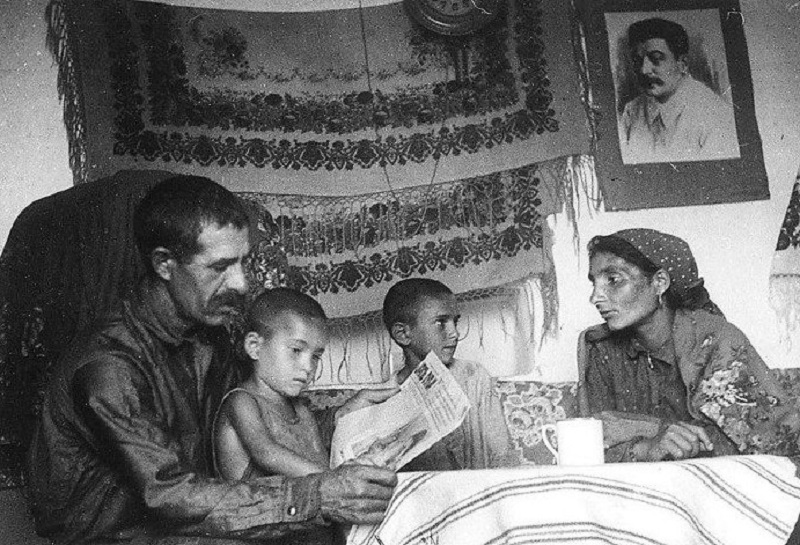
Roma collective farmers. IMAGE: perito.media
The newspaper Znamya Sovetov reported that in early 1940, the Romanian Primaria collected 375 rubles from the residents of the village of Saryary for the arrangement of the road, but the repairs were not carried out. To help tuberculosis patients and the disabled, 5 rubles were allocated per year, while 644 rubles were allocated annually for stationery for the gendarmerie. The newspaper itself reported that the Soviet government had already allocated 40,000 rubles for school repairs and would additionally provide another 9,060 rubles for teacher salaries. We do not argue with the newspaper on this point. On October 14, the Akkerman regional committee ordered the organization of cafeterias, canteens, hot breakfasts and the production of children's shoes and winter clothing for schoolchildren. An orphanage for the homeless was set up in Izmail.
Equal attention was paid to medical care and leisure. In the Tatarbunary district, medical expenses amounted to 70 thousand rubles in August-October 1940. 105 thousand rubles were spent on 17 village clubs and 19 circles. Thus, the regional administration did take decisive steps to improve the lives of ordinary citizens, especially in rural areas.
The policy of repression and deportation of the population remains a black spot in the history of the Akkerman region. As early as July 11, 1940, the German consul in Chernivtsi arrived in Tarutino and reported to the head of the People's German Administration in Bessarabia, Dr. Otto Bronesske, on the resettlement of colonists to Germany. The deportation was carried out in September-November 1940, and more than 93 thousand German colonists were resettled in East Prussia and Poland. The residents of the village of Shabo were resettled in France. As a rule, their farms and property remained and were transferred to local collective and state farms. After the deportation of the German colonists, more than 11436 buildings remained, of which 5200 were transferred to collective and state farms, and 3700 to immigrants from Western Ukraine and the landless.
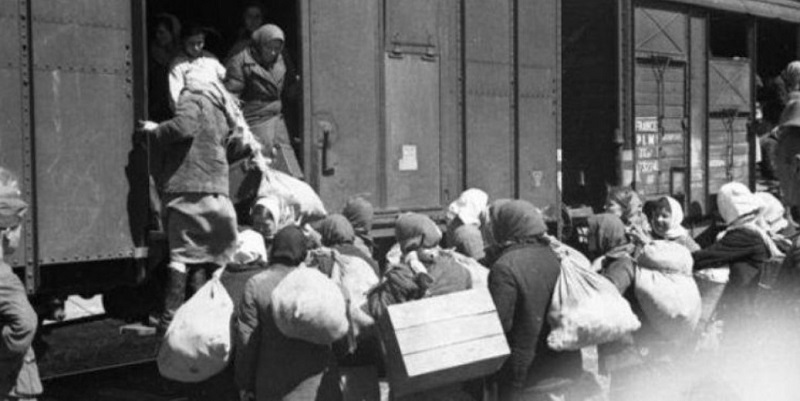
The deportation of German colonists from Budzak. IMAGE: bessarabia.ua
In addition to the Germans, Jewish industrialists were subjected to repression. Jews owned 13 of the 30 mills in the Izmail district. As part of nationalization, their property became state property. According to Soviet decrees of 1940, 11 logging enterprises (5 in Izmail and 6 in the raion) were subject to nationalization, of which 7 or 64% were owned by Jews. One of the large woodworking enterprises was the Karpaty plant, located in Izmail and owned by Jewish entrepreneurs G. Eidelman, Z. Morgeshtern, and Y. Mordkovych.
Here are some facts about the fate of these wealthy owners:
- Mordkovych Gersh Abramovich, a Jew born in 1885, lived in Izmail, and was engaged in logging in the region. On July 11, 1940, he was arrested by the NKVD in the Akerman region as a "particularly socially dangerous element." On April 26, 1941, a special meeting of the NKVD of the USSR sentenced him to 5 years in prison for so-called "counterrevolutionary activities."
- Kitsis Konrad Solomonovich, a Jew, was born in 1900 in Romania. In Izmail, he worked as a director of a cooperative. On July 22, 1940, he was arrested by the Izmail NKVD operative group, and in June 1941, he was sentenced to 8 years in labor camps for "counterrevolutionary activity."
- Wilderman Mykhailo Abramovych, born in 1874, a Jew, a resident of the town of Reni, where he owned a mill. Like his predecessors, he was arrested in July 1940 and sentenced to 8 years in prison in June 1941 for "counterrevolutionary activity."
- Friedel Solomonovich Fishman, a Jew, born in 1880, lived in Izmail. Until 1940, he was the owner of a grocery store in the Izmail market. He was non-partisan. He was arrested before the official nationalization decree on July 22, 1940. He was under investigation until early June 1941. On 05.06.1941, a special meeting of the NKVD sentenced him to 8 years in labor camps for "counterrevolutionary activity."
- Berfeld Usher Berkovych, a grain trader from Izmail, born in 1892, a Jew. On July 22, 1940, he was arrested. After several months of torture, in early May 1941, a special meeting of the NKVD announced a sentence of 8 years in prison for "counterrevolutionary activity."
People were arrested not only for their nationality but also for their political and religious beliefs. Thus, the victims of the anti-church campaign were: Fr. Georgii Munteanu, a priest of the church in the village of Nerushai, a teacher at the Izmail Theological Seminary, who was arrested in July 1940 by the NKVD's KGB task force, along with many representatives of the Bessarabian intelligentsia (he was sentenced under Article 54-13 of the Criminal Code of the Ukrainian SSR to 8 years in labor camps). From July 6 to August 1, 1940, the Bolhrad NKVD operative group arrested 12 members of the Tsarist Party (peasant party), mostly parishioners of Orthodox churches in Bolhrad. Among the church activists, Vasyl Agura, the regent of the church choir, was also imprisoned.
However, the vast majority of them were repressed in the first months of Soviet rule in the region, when state bodies had not yet been formed and power actually belonged to the military administration. Of course, this practice continued in the Akkerman region in the following months.
On December 7, 1940, by a resolution of the Presidium of the Supreme Soviet of the USSR, the regional center of the Akkerman region was moved to Izmail, and the region itself was renamed Izmail. The state structure, administration, and leaders remained unchanged.
The decision to move the regional center to Izmail was explained by its strategic location and better control over trade communications on the Danube, the concentration of the Danube naval flotilla, and more effective interaction between the military and civilian administration in the event of war. In addition, Izmail had symbolic significance as a "city of Russian military glory" and was ideologically important for propaganda. Akkerman was inferior to it both logistically and economically, serving as a pilot project for the Sovietization of the Budzhak.
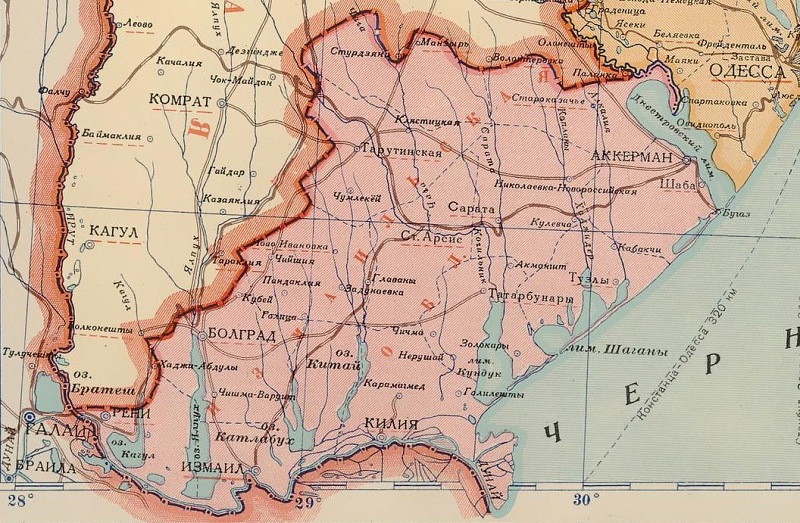
Izmail region. MAP OF THE REGION: Wikipedia
The Akkerman region, which existed only from August 7 to December 7, 1940, left a limited mark on the history of Odesa Oblast, but its activities significantly influenced Ukrainian-Moldovan relations and the administrative delimitation of borders. It became Budzhak's first experiment in Sovietization, combining economic, educational, and social reforms with collectivization and nationalization, while also being accompanied by repressions against German colonists, Jewish entrepreneurs, and church leaders. The oblast cemented the control of the Ukrainian SSR over the region and created the basis for the further development of the Izmail oblast.
Андрій Шевченко