24 September 2026, 21:16
Anna El-Tour: How Music Saved an Odessa Heiress After the Revolution
Ця стаття також доступна українською

Anna El-Tur. PHOTO: odesa-memory.info
A young woman from a well-respected Odessa family. That alone was enough to ensure a comfortable life. And if you’re also talented and beautiful, that’s practically a guarantee of happiness.
Intent continuesits series of articles about people whose lives are connected to Odessa. Today we’ll be talking about Anna El-Tour.
Born with a silver spoon in her mouth
That’s exactly how life began for this Odessa native with the surname Isakovich—a name that speaks volumes about our city. Anna’s father, Samuel Isakovich, came from a Karaite family originally from Crimea. He inherited not only houses in the city center and a dacha on what would later become French Boulevard, but also a profitable family business—a “hydropathic establishment,” or bathhouse. At a time when not every apartment had running water, it was the bathhouses that helped entire generations of Odessans maintain not only cleanliness but also good health, as these establishments also provided medical services.
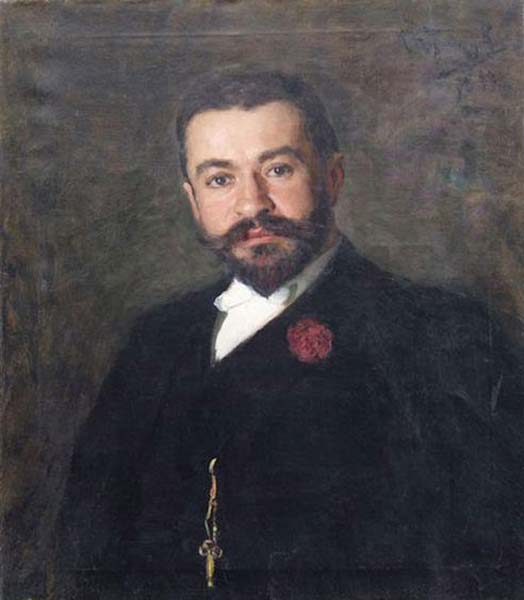
Samuil Isakovich. IMAGE: odesa-memory.info
Here is how the bathhouses were described in one of Odessa’s guidebooks: “Isakovich’s hydrotherapy facility was founded in 1867, and in 1892, on the occasion of its 25th anniversary, it was completely rebuilt... From a medical standpoint, the facility ranks among the best institutions of its kind in Europe and is equipped with all manner of apparatus and devices necessary for the successful use of hydrotherapy. Full-time physicians. A female physician has been invited to treat female patients. Consultations with medical specialists are available. Showers: mantle, Scottish, column, circular, filiform, etc. Treatable conditions: gastritis, enteritis, neuralgia, neurasthenia, spinal and brain disorders, rheumatism, syphilis, and many others... Saunas, hydrotherapy, baths, and the Isakovich pool. Ten separate departments. Rooms with a bathroom and steam room. First-class communal baths (Russian baths). Showers. Public baths. Cleanliness and comfort! Rates range from 10 kopecks to 1 ruble 25 kopecks per person.”
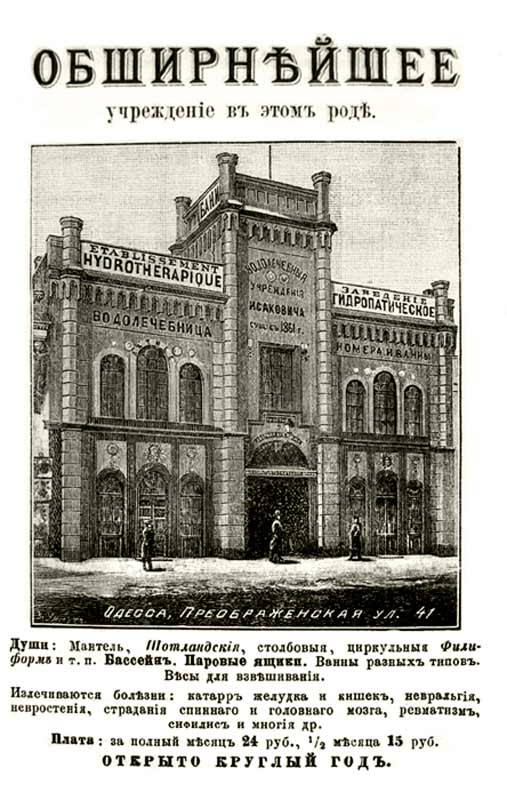
Advertisement for Samuil Isakovich’s bathhouses. PHOTO: odesa-memory.info
In addition to his business, Samuil Isakovich was also involved in civic and political activities. He served as a member (i.e., deputy) of the city council, a trustee of the Odessa Karaite School, and one of the founders of the Karaite Charitable Society. For his contributions to the city, he was awarded the title of Honorary Hereditary Citizen of Odessa. Furthermore, it was Samuil Isakovich who was one of the organizers of the World Trade and Industrial Exhibition, which took place on the grounds of what is now Shevchenko Park in 1910. And it was this very event that proved fateful for the Isakovich family. On September 3, 1910, while returning from the exhibition in a horse-drawn carriage, Samiilo Isakovich was involved in an accident and died.
The Revolution That Shattered Their Old Life
Samiilo Isakovich’s heirs were his wife, Rachel Semenovna (née Mangubi), and their two children: their son Alexander-Daniel and their daughter Anna. Rachel Semenovna was every bit as generous as her late husband in her charitable contributions to Odessa and its residents. She was the founder of the Odessa Karaite Charitable Society and later the Odessa Karaite Women’s Society, which she chaired until 1920.
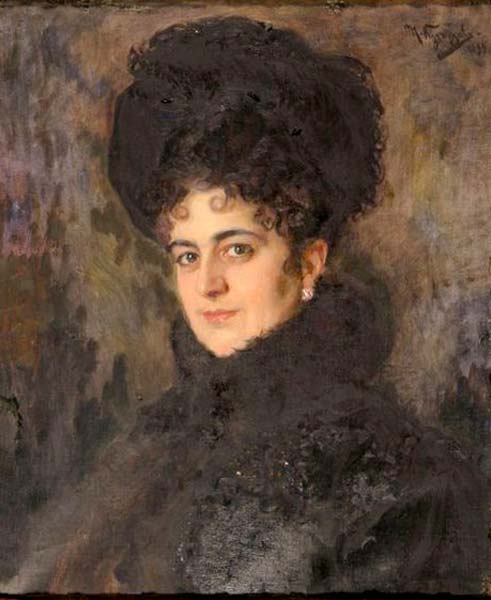
Rachel Isakovich. IMAGE: odesa-memory.info
Alexander-Daniel became a biologist at what was then Novorossiysk University. It was he who successfully took over the family business after his father’s death. He also continued to expand the family library, which numbered about 3,000 volumes before the 1917 Revolution.
But the family was stripped of all this after the revolution. For some time, Academician Filatov sheltered members of the Isakovich family in his apartment at 9 Gogol Street. Later, the first buildings of the Filatov Clinic would be erected on the grounds of the former family dacha. Oleksandr was arrested and executed in 1938.
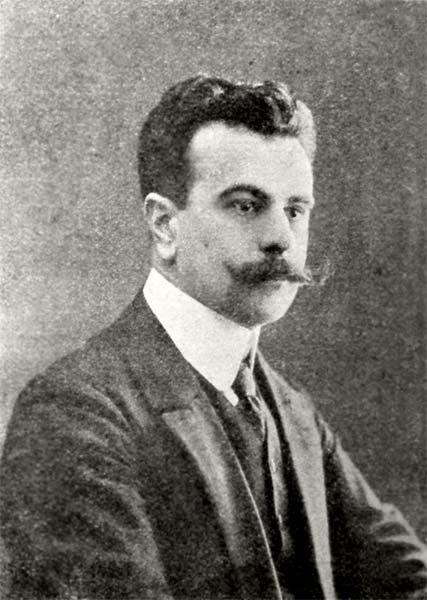
Alexander Isakovich. PHOTO: odesa-memory.info
The fate of men during those turbulent years was generally unenviable. It was somewhat easier for women to survive. For example, they could get married and change their last name. Or, after overcoming difficulties, they could leave the country.
Anna managed to escape the clutches of the new regime by leaving the country. Not everyone could afford such a luxury back then. Who, then, was Anna Isakovich?
Music as a Chance for Salvation
She receivedher secondary education in Odessa. She then enrolled in the St. Petersburg Conservatory and graduated with degrees in voice and piano. Music became both her profession and her ticket to freedom. She continued her musical education in Leipzig. And by 1908, she was already giving concerts in London. It was there that she adopted the stage name by which she became known—Anna El-Tour. That same year, audiences in fourteen cities across England heard her perform alongside violinist Jan Kubelik. The young performer was warmly received by both her professional peers and audiences at home and abroad.
During another overseas tour in 1920, the 34-year-old Anna El-Tour settled permanently in Europe. Anna El-Tour toured not only Europe. Her tour of the East lasted two years, during which she performed in China, Burma, India, and the Philippines. Following this tour, for the next three years, from 1922 to 1925, Anna taught at the New Conservatory in Berlin.
The next 23 years of her life were spent in Paris, where she taught at the International Conservatory. In Paris, she married Georgy Kalantarov, a lawyer, writer, and former member of the Kornilovist movement. It was in Paris that one of her students was Evgenia Davidson—the future American singer known by the stage name Jenny Turrell. It is worth noting that the stage name reflects the teacher’s influence on her student.
Anna El-Tour also taught at the Paris branch of the Sherwood Music School. This school, affiliated with Columbia College Chicago, began operations in 1895 and served as an institution that awarded diplomas to musicians, a center for distance music education, and a community music school offering lessons and programs for musicians of all ages.
From Paris to Amsterdam
In 1942, Anna became a widow. Her husband was tragically killed in a car accident.
In 1948, Anna El-Tour moved to the Netherlands and taught at the Amsterdam Conservatory. The Odessa native died on May 30, 1954. Dutch newspapers published obituaries dedicated to the singer. And a few months before her death, the newspaper Het Parrol published a short interview with Anna El-Tour. “If a gypsy had predicted to me when I was 17 and had just started singing, ‘You will end your life in Holland on the water,’ I would have laughed out loud… She couldn’t have foreseen such a rich life. And now I’m on the water in Holland, and my houseboat was built in Zaandam… Odessa wasn’t a city of music. It was an opera city. And opera was very popular among young people and adults alike… Born in a city of opera, I nevertheless became a singer. And now I’m in a country where opera is least appreciated. Why? Have serious musicians from the North forgotten that all music comes from singing? Or have singers forgotten that bel canto exists only in opera? Perhaps I love opera just as much as I love songs because I was born in Odessa. I no longer sing myself, but I love both kinds of music and pass this love on to my students.”
Anna El-Tour is buried at the Westerveld Cemetery in the north of the Netherlands. And in Odessa, a building on Preobrazhenskaya Street—which has long since lost its famous domes—serves as a reminder of the once-magnificent Isakovich family.
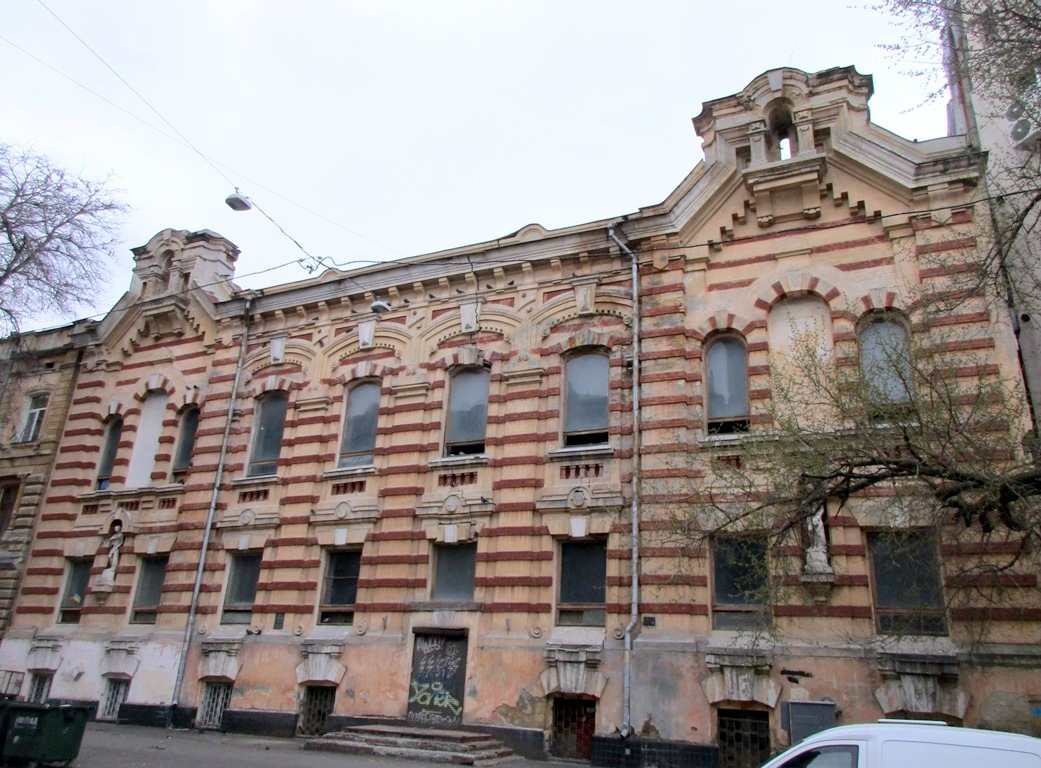
The Isakovich Bathhouses. PHOTO: odessa-life.od.ua
Віолетта Дідук