28 September 2026, 18:45
"In terms of numbers, we're on par with regiments," said the battery commander with the call sign "Houston."
Ця стаття також доступна українською
At the end of summer and the beginning of fall, the “Sloboda” airspace defense unit of the 11th Brigade of the National Guard of Ukraine topped the rankings of all Defense Forces in terms of the number of drones destroyed. In just one month, National Guard troops shot down 270 aerial targets, and on peak nights, they shoot down several dozen. The commander of the anti-drone battery, call sign “Houston”—a former IT specialist who rose through the ranks from soldier to officer—told Intent about the work of remote crews in bunkers, the first trophies captured in the Kursk region, and how quality and innovation overcome the enemy’s numerical superiority.
What did you do in civilian life before joining the military?
I was a programmer, working in IT at a large company in Odesa. Our products are still on the market. You probably use one of our products every day. I won’t name names.
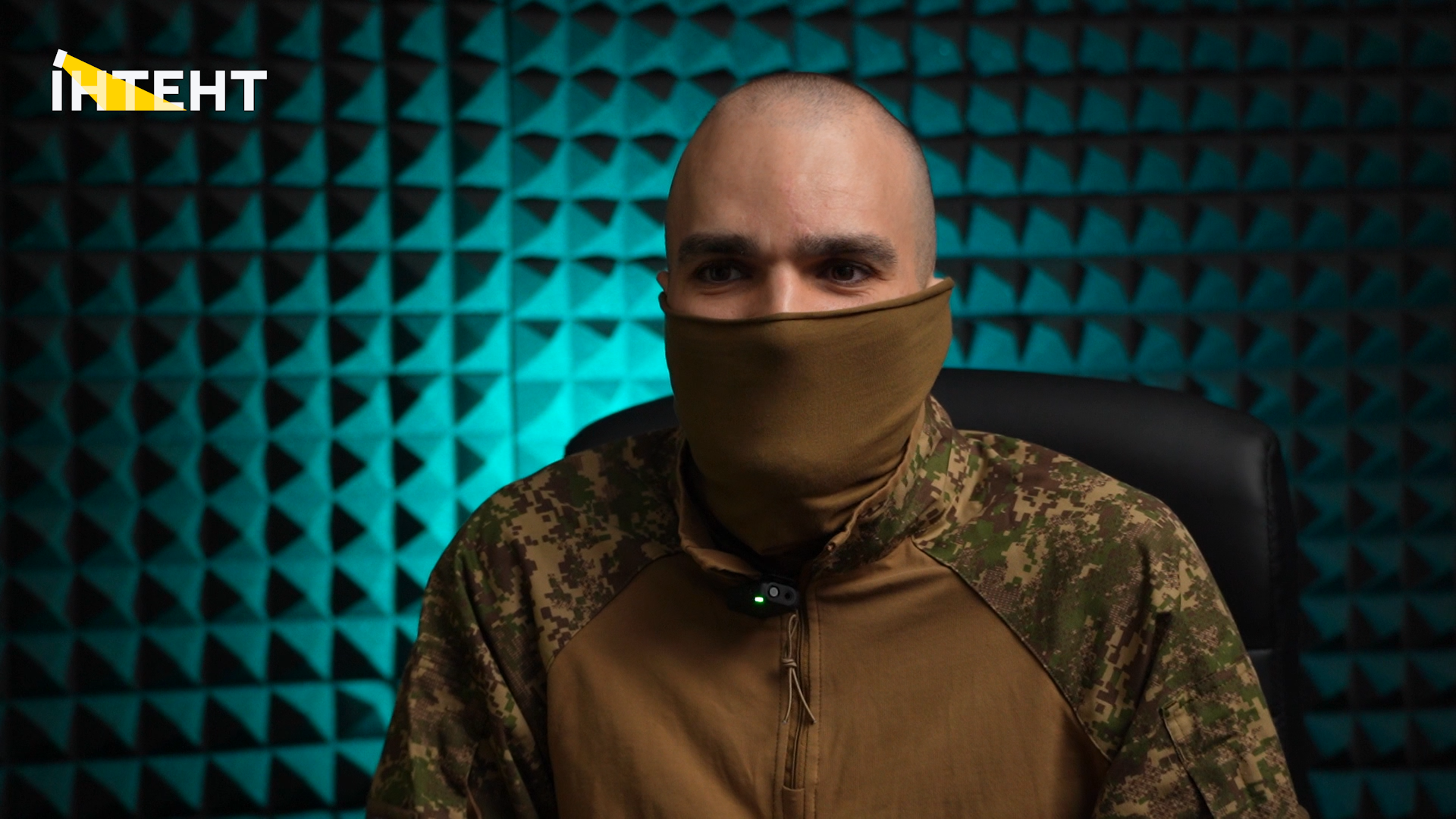
SCREENSHOT: Intent’s YouTube channel
What was your experience like on February 24, 2022?
On February 24, I woke up to the sound of explosions. I remember that Telegram was overloaded for the first few days. I was gathering information from everywhere, calling friends and my parents. I think it was the same for everyone. No one knew what to do or where to go. Then things sort of settled down.
What changed in your life after that February 24?
Everything changed. I joined the Defense Forces on March 10, 2022. This is army life.
What were you most afraid of at the start of the full-scale war? And do you still feel that fear today?
Dying, like everyone else, I suppose. Losing my home, my family, my friends. I think I’ve adapted to it now, just as most people have gotten used to this feeling.
But only fools aren’t afraid, right?
That’s right.
How did you join the army? Do you remember the day you decided, “That’s it, I’m going—I need to be there too”?
Of course. From the very first days, I was calling the Territorial Recruitment Center. They were in constant contact with me and summoned me to a meeting. They said there were no openings. Then on March 9, they called and said there was a recruitment drive for the Territorial Defense Forces. I went to see them. They asked if I wanted to join. I said, “Of course, I do.” I went to the Territorial Recruitment Office, but they took me to the National Guard. As it turned out, I ended up in the 11th Brigade of the National Guard. By chance.
But you don’t regret it?
No, I don’t regret it.
Houston, how did you choose your call sign?
It’s in honor of my favorite basketball team, the “Houston Rockets.” I’m a huge basketball fan.
So we don’t have any problems, Houston?
Sometimes.
How did you become the commander of an anti-aircraft UAV battery?
It was a path from soldier to officer. I didn’t attend a military academy. I was offered an officer position, and I accepted. Gradually, I worked my way up from platoon commander to company commander. The command trusts me.
How does a military career differ from a civilian one?
There’s almost no difference. There’s a hierarchy of officers, noncommissioned officers, and enlisted personnel. But if you work hard, deliver results, and give it your all, people notice, and they rely on you. And just like in civilian life, you move up the ranks. You gain useful skills and apply them where they’re needed.
What are your responsibilities as a commander?
I currently have two batteries, one company, and two separate platoons under my command. My task is to work with the personnel. I mainly focus on my battery and manage the crews. There’s paperwork, just like everywhere else in the army—there’s no getting around it. My deputies help me, but the responsibility falls on me.
Did you have any leadership experience in civilian life?
No, I haven’t. I have two degrees: one in engineering and one in economics (with a specialization in business management). So I studied this, but I didn’t have any practical experience.
In August, your brigade ranked first among all Ukrainian Defense Forces in the number of “Shaheds,” “Gerbers,” and other “Shahed-type” drones shot down—270 aerial targets destroyed in a month. How does that number look from the commander’s perspective?
Even now, as of the time of filming on September 17, we’re still number one in the rankings. This isn’t our first or second shootdown. When you’re getting your first shootdowns, there’s euphoria, new sensations—you get nervous. Now it’s just routine. We understand that a lot depends on this, but this mindset also helps—you’re no longer nervous, you don’t have any jitters. You’re just doing your job. That’s all.
What enabled “Sloboda” to achieve such results in August and September?
Teamwork. Starting with the brigade commander, the chief of staff, and the commander of our unit. He takes care of everything for us and is fully engaged 24/7. Anyone can call him at any time. Everyone—from the cook and the driver to the detachment commander—works nonstop. That’s why we achieved such results.
Do you work on correcting mistakes afterward?
Of course. We review our mistakes every day. If we’re not with the guys on the job, we always have access to live streams showing how they’re operating. First, we watch everything online and analyze it as it happens. After combat operations, once the mission is over, we analyze it again. We look at how we can improve, what we did wrong, where we missed the target, and where we took off too late. We can’t get anywhere without this.
On August 27, the unit struck 34 targets in a single day. What happens to the people within the unit on a night like that?
Everyone’s on high alert; everyone’s gathered together, helping out, working—there’s noise and commotion. It’s a working atmosphere. When there’s a raid like this, it’s a bit tough, but we manage.
And we’re incredibly grateful to you for that. You’re currently second in Ukraine in terms of the number of “Shaheds” shot down in 2026. For the fighters, is this a source of pride, or, on the contrary, additional pressure?
Of course, it’s a source of pride. But if someone else shoots down 500 more “Shaheds, ” then, by all means, go ahead and do it. We’re working together, after all. Second place is a high achievement. We emphasize this to our personnel; we’re proud of it, and it also motivates us to keep up the standard. Our result comes from a single battery. This ranking includes battalions, regiments, and brigades. Here, too, is another reason to be proud. Because in terms of numbers, we’re on par with regiments—even at the company level. We make up for it with quality.
The “Sloboda” unit shoots down enemy drones over the South. Please explain how this works technically.
As for my area of responsibility, I can explain how our crews operate. It’s either working from a van—that is, as a mobile unit. Everything is there: equipment, Starlink, EcoFlow, a remote control, the system, and the drone. Or it’s remote control. Remote control is what makes this possible. The pilot and navigator are in cover, in a bunker. All they need is high-speed internet; everything else is at the operating site. The person in charge of charging has an internet connection and works from a remote location. In other words, you can control a drone located anywhere in the world from a safe place.
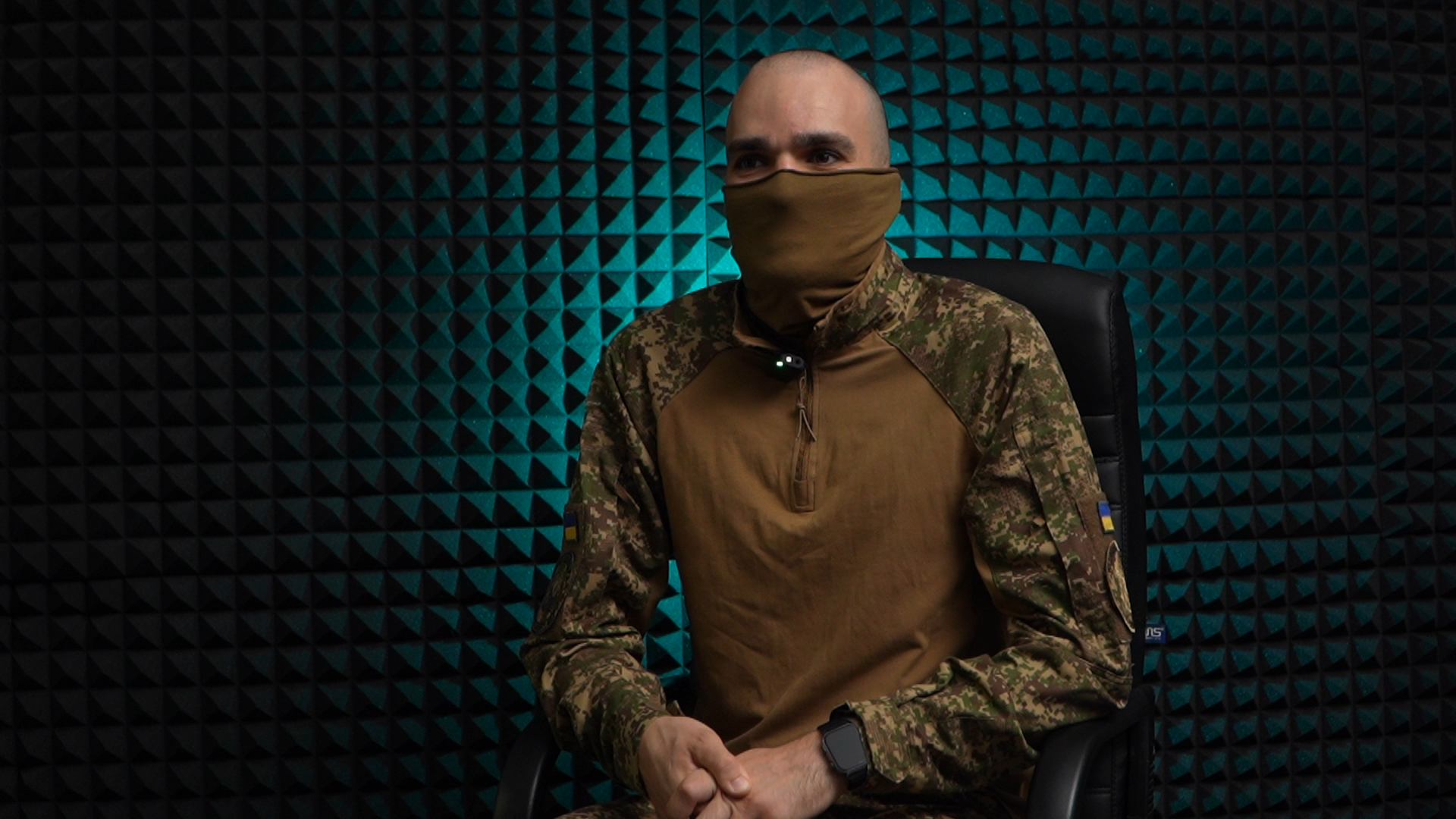
SCREENSHOT: Intent’s YouTube channel
What are the challenges when shooting down “shahids”?
When you see a “shahid” drone flying into the city, you start fretting in your head: what if I don’t make it in time, what if I do something wrong, what if I blow up the drone sooner or later—then there’ll be trouble. Of course, when you’re taking down your first targets, there’s always some nervousness. Then you start to adjust. But even so, that nervousness always lingers to some extent. And you have to fight it, find a way to calm yourself down. It’s a battle with yourself.
What types of drones are the Russians launching over southern Ukraine?
“Shahed,” “Gerbera,” decoys, reconnaissance drones, and jet-powered “Shaheds.” I don’t know if “Banderole” counts as a drone. “Lancets” sometimes fly in—they’re a nasty little thing, too. If we’re talking about the south, then in Ochakiv and Kherson, it’s not just “Molniyas”—there are FPVs and the whole range of types.
Do you remember your first trophy—a downed “Shahed”?
I was put in charge of a platoon when I was a pilot. In other words, they took me off pilot duty. I didn’t get a chance to work on the “Shaheds” because we didn’t have the resources back then—that field wasn’t developed yet. I targeted enemy reconnaissance drones, strike drones, “Lancets,” and so on.
My first trophy was abroad, in a neighboring region. It was a ZALA reconnaissance UAV. There was euphoria and excitement as I locked onto the target; my hands were shaking a little, and when it was blown up and we received confirmation of the shootdown, there was euphoria. It’s like when you’re hunting or fishing and you reel in a 100-kilogram fish.
Can you tell us where this happened? You say it was a neighboring region across the border. That’s a very interesting way of putting it.
The Kursk region, the city of Sudzha. I took part in the “Sudzha operation,” the liberation of the Kursk People’s Republic.
Why do you now have to train fighters in things that weren’t even part of the curriculum a year ago?
You can see how intense the enemy’s attacks have become—they’ve increased significantly. Medical training always comes first. We teach everything. There’s a greater emphasis, of course, on unmanned systems. Everything is by the book. We train pilots, navigators, engineers who work with explosives, and drivers. It’s a standard course. What has changed? Aside from the intensity, there are new weapons. I think we’ll soon see new tools for countering jet-powered “suicide drones.” First and foremost, this involves improving personnel’s skills in operating UAVs and implementing certain innovations.
Watch the full version of the interview on the Intent YouTube channel
Are you constantly improving your technical skills?
Yes, we don’t stand still, because if we don’t keep improving, we won’t be able to defeat the enemy. The enemy isn’t standing still either, unfortunately.
Who does “Sloboda” need most right now, and what civilian skills could be useful in the unit?
The main thing is for a person to be level-headed and quick-witted. We’ll teach them everything else. Of course, if there’s a gamer who’s skilled with their hands—good at controlling and manipulating things—they’ll be a pilot. If someone is knowledgeable about cartography, can navigate well, and is sociable, they’ll be a navigator. Regular staff handling paperwork, communicative people, drivers, and engineers. An engineer needs to be a calm person who can work with explosives without harming anyone—especially themselves. Regular analysts and programmers. Overall, our R&D department does a lot of the work; our techies implement new technologies. In other words, we also need skilled people who can program a drone or handle software. We need everyone.
Ольга Лопатюк