22 October 2026, 18:45
Vladimir Khavkin: A Man from Odessa Who Taught the World How to Fight the Plague
Ця стаття також доступна українською

PHOTO: uk.wikipedia.org
When describing 19th-century Odessa, virtually all travelers mentioned the local quarantine. It was intended to protect the city from the “Black Death.” That’s what the plague was called back then. But despite strict quarantine rules, epidemics periodically claimed the lives of the city’s residents.
Summing up the terrible plague epidemic of 1812, the Polish traveler Edward Racinski wrote: “It remains a sad fact that no cure has yet been found for such a terrible disease.” Thus, for Odessa, the phrase “Black Death” was no empty phrase.
Intent continuesits series of articles about people whose lives are connected to Odessa. In this article, we’ll tell you about the outstanding scientist Vladimir Khavkin.
The Turbulent Odessa Youth of the Future Scientist
Later, it would be this native of Odessa who would make a significant contribution to the fight against this disease. On March 15, 1860, the future scientist Vladimir Khavkin—known abroad as Valdemar Mordechai-Wolf Khavkin—was born into the family of Aron Khavkin, a teacher at a state-run Jewish school. In addition to him, there were eight other children in the family. For some time, the family lived in Berdiansk, where the boy received a traditional Jewish education and graduated from the local gymnasium.
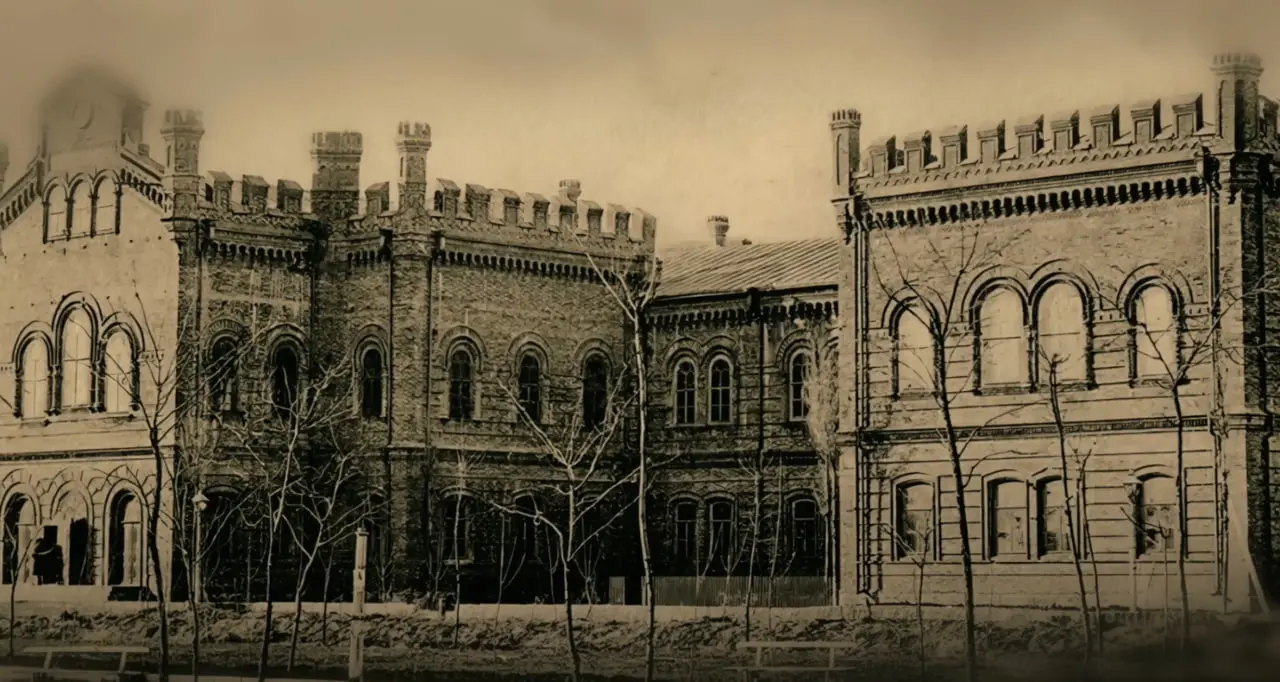
The Berdyansk Boys’ Gymnasium, where Vladimir Khavkin studied. IMAGE: www.brd24.com
When the time came to continue his studies, Odessa reappeared in the young man’s life. But his studies in the natural sciences department of the physics and mathematics faculty at what was then Novorossiysk University were far from peaceful. Khavkin was a good student, but there were numerous complaints about his behavior. Vladimir Khavkin took part in student unrest and later became close to members of the revolutionary organization “Narodnaya Volya” (People’s Will).
Members of this very organization carried out a daring terrorist attack in Odessa. On March 18, 1882, General Strelnikov was assassinated on what was then Nikolayevsky Boulevard (now Primorsky Boulevard). A year earlier, Emperor Alexander II had been killed by a bomb set off by members of “Narodnaya Volya.” After the emperor’s assassination, pogroms against Jews broke out in Odessa. Local students took an active part in defending the Jewish community against the rioters. Among these concerned students was Vladimir Khavkin, who was even imprisoned in Odessa and later expelled from the university.
In 1883–1884, “Narodnaya Volya” was crushed by the tsarist government. The disgraced student nevertheless graduated from the university and even defended his dissertation. But with such a turbulent past, a decent job was out of the question.
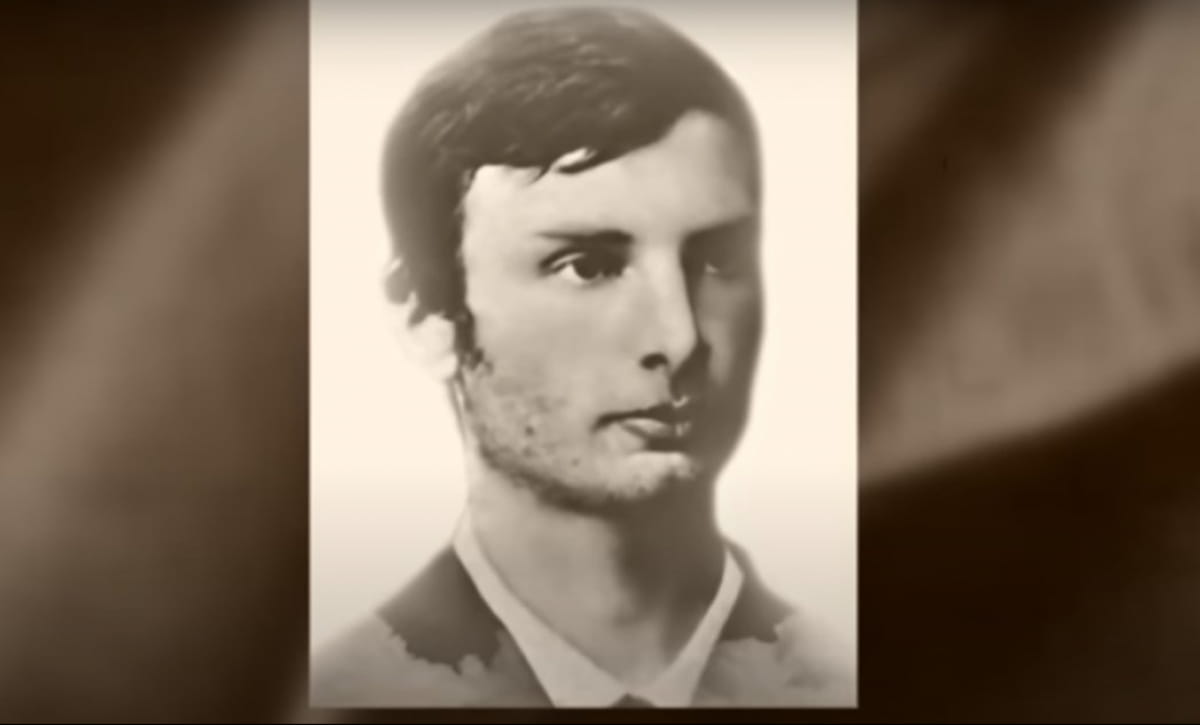
Vladimir Khavkin in his youth. IMAGE: www.5.ua
First Steps in European Science
Vladimir Khavkin took a minor technical position at a local zoological museum. Such a position offered little promise for a future scientific career. Volodymyr accepted an offer from the German physiologist Schiff and worked for a time at the University of Geneva. But the work turned out to be not interesting enough.
It was at this time that his former professor, Ilya Ilyich Mechnikov—who was by then working at the Louis Pasteur Institute in Paris—recalled his talented former student. Admittedly, even there, the only position available for Volodymyr Khavkin was a modest one as a librarian. But what mattered was that he was allowed to work in the laboratory during his free time.
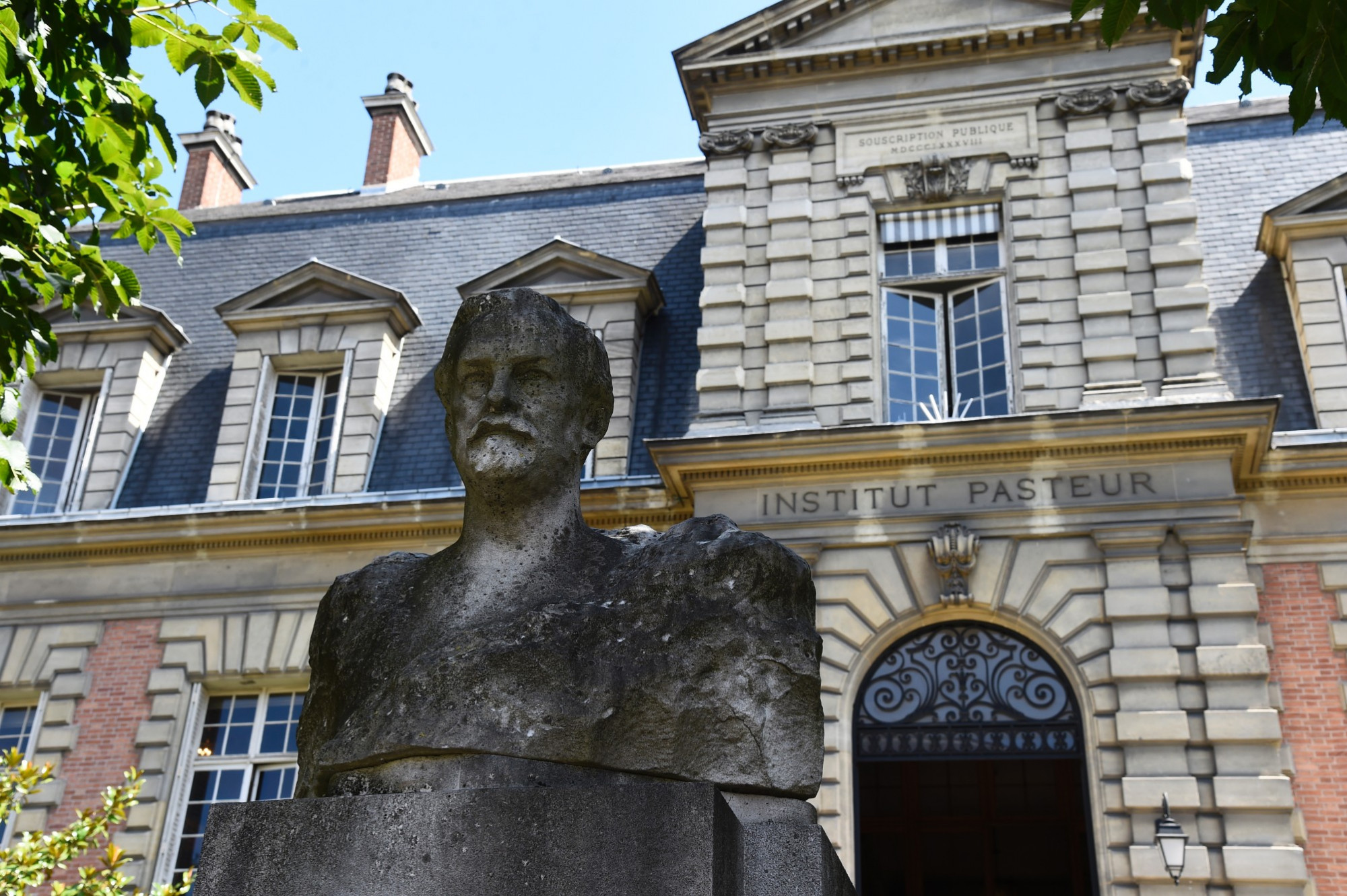
The Louis Pasteur Institute in Paris. PHOTO: images.rtl.fr
Khavkin might well have remained a librarian had it not been for one particular event. At the Pasteur Institute, he was given the opportunity to work alongside the renowned microbiologist Émile Roux and became his assistant. It was there that he began working on a vaccine against cholera—a disease that claimed thousands of lives every year. India suffered the most from it, but the epidemic had also reached Europe.
Successful Trials of the Cholera Vaccine and Departure for India
In 1892, Hawkin successfully tested the cholera vaccine he had developed on the first volunteers, among whom was the scientist himself. Attempts to create a cholera vaccine had been made before, but Havkin’s development and its subsequent trials marked an important step in the advancement of vaccination against bacterial infections.
The news quickly spread throughout both scientific circles and the general public. But European governments were in no hurry to adopt this innovation, which promised to save millions of lives. The opportunity to conduct large-scale trials came from the British authorities, since it was their colony, India, that suffered the most from this disease, which was sometimes called the “Indian plague.”
This is how Vladimir Khavkin’s acquaintance with this distant Asian country and its people began. The work was extremely difficult. In addition to mistrust and hostility from the locals, he also had to contend with bouts of malaria. But Dr. Khavkin patiently held discussions with the local population and publicly administered vaccinations to himself and his assistants to prove the sincerity of his intentions. And gradually, his tactics began to bear fruit.
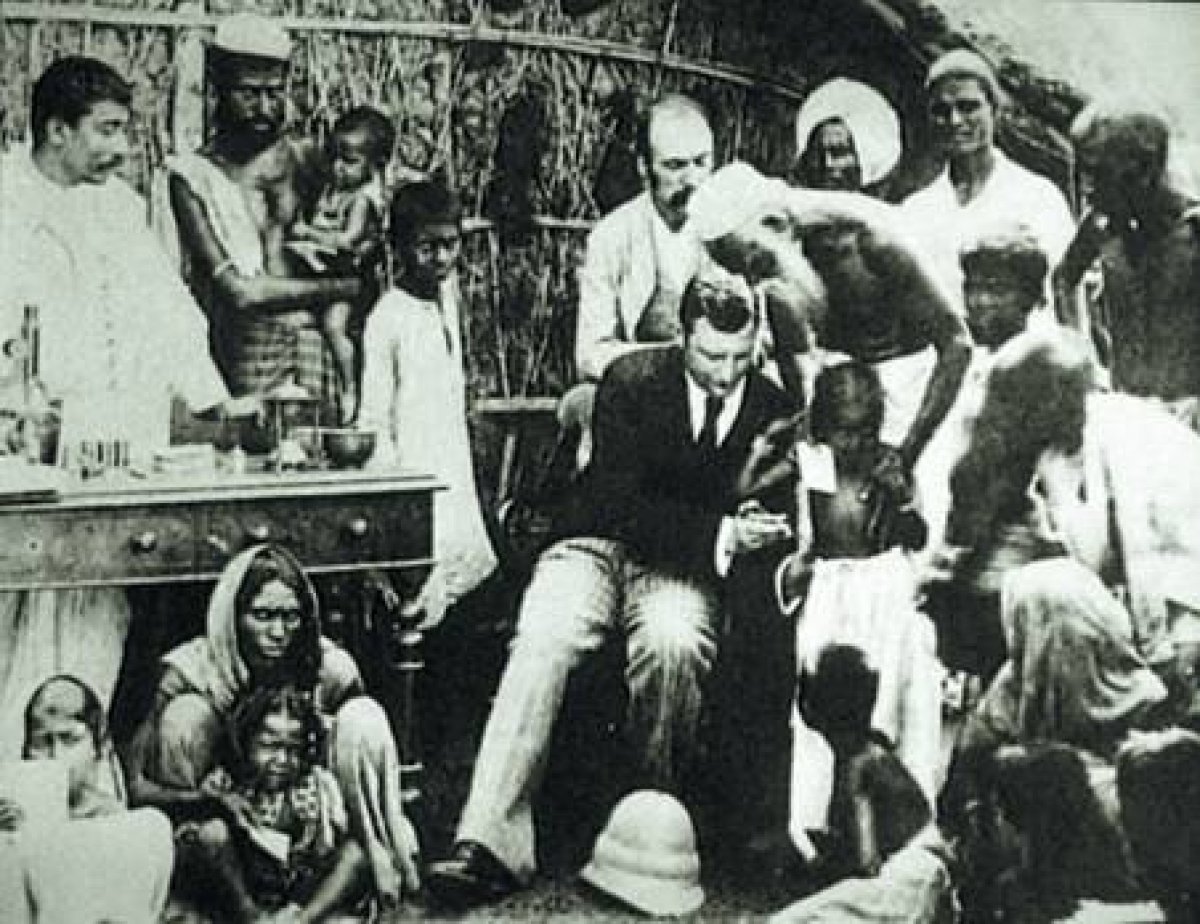
Vladimir Khavkin while working in India. IMAGE: th.bing.com
Unfortunately, cholera was not the only disease plaguing humanity. By the end of the 19th century, scientists had already identified the pathogen responsible for the “Black Death,” but an effective vaccine against the plague did not yet exist. One of the pioneers of vaccination, Louis Pasteur, said before his death that one of his students would surely find a way to overcome this disease.
A Vaccine Against the “Black Death”
And one of those who set out to find such a method was Vladimir Khavkin. In January 1897, he tested the anti-plague vaccine he had developed on himself. And on January 30, the first trials were conducted on volunteer prisoners. According to the initial observations, only one of the vaccinated individuals fell ill, and he soon recovered. The doctor was in a hurry, as yet another epidemic was spreading across India.
Here is what Vladimir Khavkin’s colleague, the Bombay scientist Professor Kanalkar, wrote about his tireless work: “The epidemic was growing ever larger. Dr. Khavkin was in a great hurry. While preparing the vaccine, he gave numerous lectures to practicing physicians on combating the plague. This reserved and taciturn gentleman became surprisingly eloquent when it came to teaching others the basics of plague control. He worked 12 to 14 hours a day. One of his assistants developed a nervous breakdown. Two others quit, unable to withstand the strain of the work and the fear.”
At the same time, Khavkin led an ascetic lifestyle, living in a single room attached to the laboratory. He walked everywhere, having also donated his horse to the laboratory’s needs.
Despite opposition, the scientist’s work gradually bore fruit, and “Khavkinization” (as the plague vaccination was called) became widespread in many regions of India. The vaccine helped reduce the incidence and mortality rates of bubonic plague. Dr. Hawkin himself was awarded the Order of the Indian Empire.
Plague vaccinations quickly gained widespread use. Over the following decades, Havkin’s vaccine was administered in millions of doses, becoming one of the first effective means of preventing this dangerous disease.
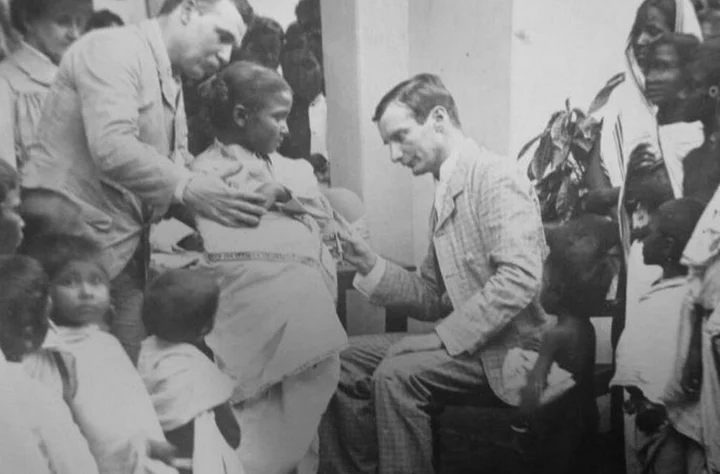
Vladimir Khavkin at work. PHOTO: zaxid.net
During World War I, Vladimir Khavkin joined British military doctors in their efforts to introduce preventive vaccinations against paratyphoid fever among soldiers.
After completing his work in India, the scientist settled in France, in the city of Boulogne-sur-Seine. He spent the last years of his life in Lausanne, Switzerland.
Honoring the Memory of “Mahatma” Khavkin
The scientist died on October 26, 1930. The news of his death caused great sorrow in India, where Vladimir Khavkin was called a “mahatma,” meaning “great soul.” Shortly before his death, the scientist directed that a significant portion of his estate be used to establish a fund to support Jewish religious educational institutions, primarily in Eastern Europe.
The laboratory in Mumbai where the eminent scientist worked later became the Khavkin Institute of Bacteriology. A monument to the scientist has also been erected in Mumbai, and there is a museum dedicated to his work.
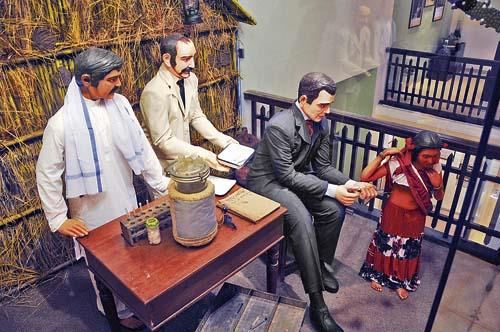
An exhibit at the Khavkin Museum in Mumbai. PHOTO: www.haffkineinstitute.org
The National Library of Israel in Jerusalem houses the scientist’s archive, including his correspondence and the diaries he kept over many years.
There is a Khavkin Street in the Slobodka neighborhood of Odessa. And on the building at 36 Pavlo Zelenyi Street, where the scientist lived during his student years, generous Odessa residents installed a commemorative plaque and “awarded” him the Nobel Prize.
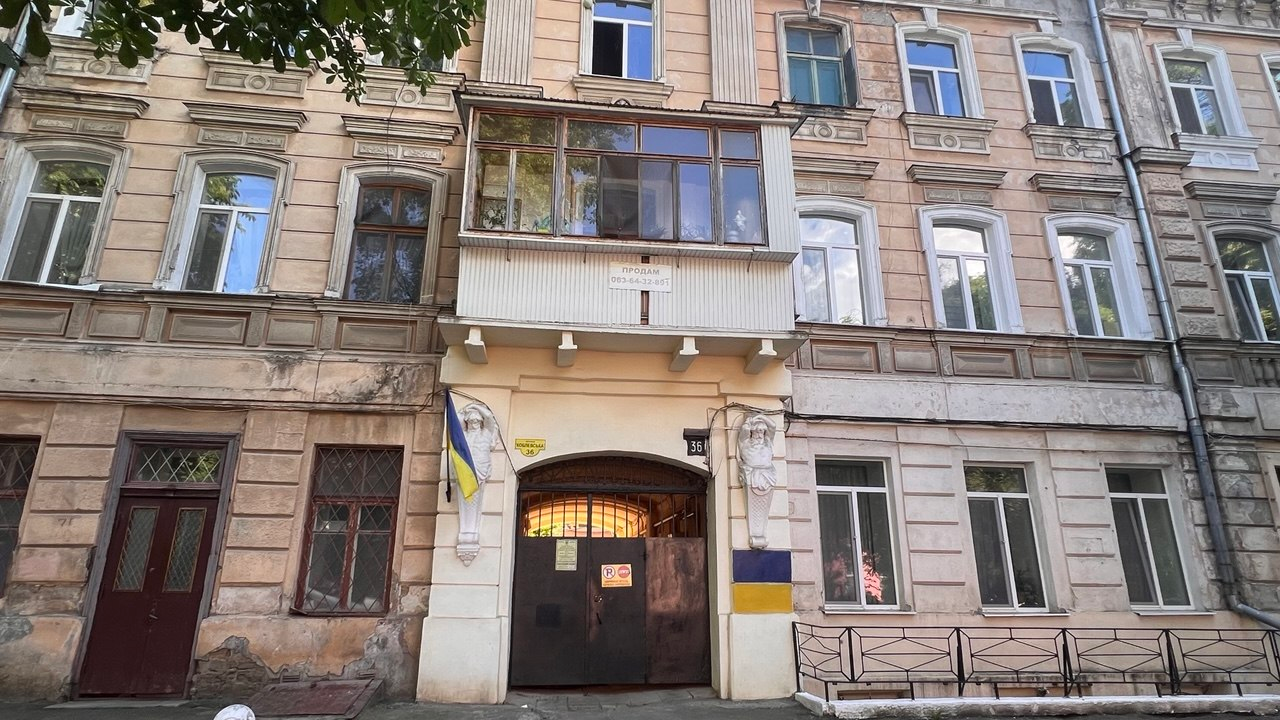
The house in Odesa where Vladimir Khavkin lived. PHOTO: Violetta Diduk
Vladimir Khavkin never officially received such an award. But his contribution to saving humanity is worth far more than any possible prize.
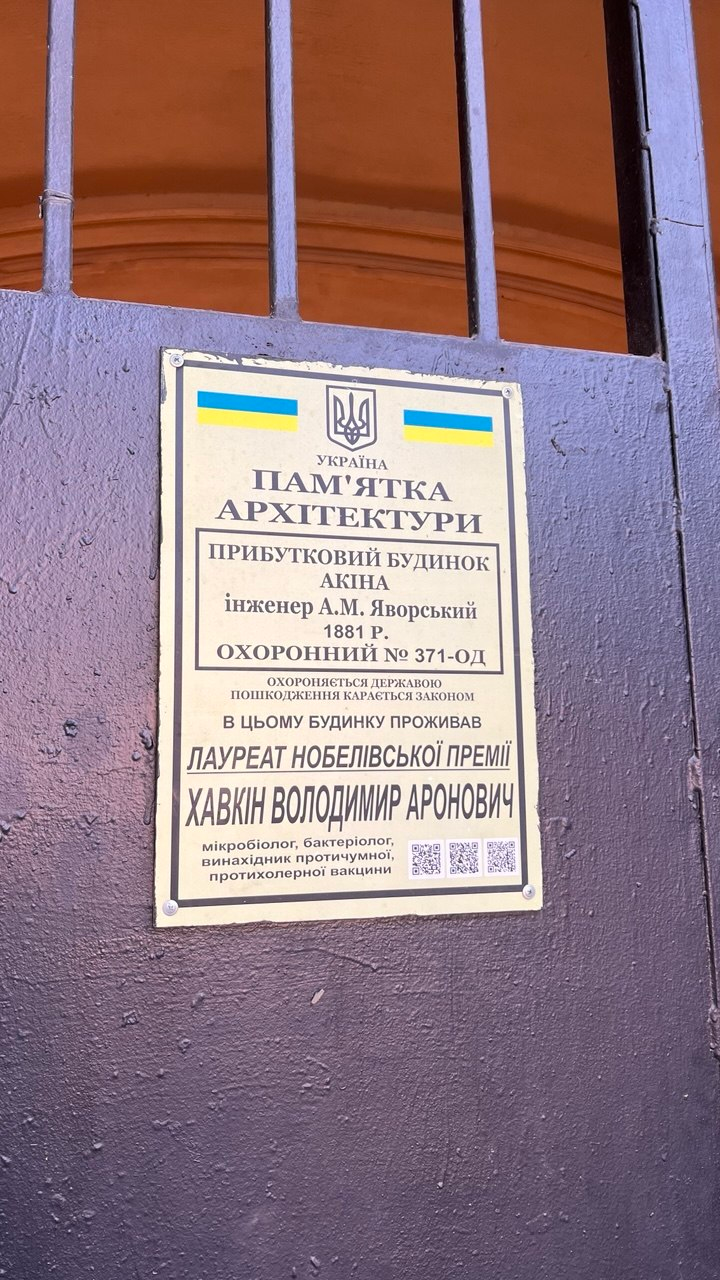
A commemorative plaque on the gate of the house. PHOTO: Violetta Diduk
Віолетта Дідук