22 May 2026, 18:51
Edith Halpert: an Odessan who sold American art to America
Ця стаття також доступна українською

Edith Halpert in the Downtown Gallery surrounded by artists. PHOTO: thejewishmuseum.org
Jewish, female, immigrant - not the best set of characteristics for an artistic career in the early twentieth century, even if the setting is New York. Yet Edith Halpert succeeded. She not only created art, but, more importantly, she knew how to sell it properly. Perhaps because she was born in Odesa.
Difficulties of American life and first steps in art
Edith Fivusiowicz was born on April 25, 1900, into a Jewish family. It was fated that in five years they would survive the terrible Jewish pogrom and leave the then Russian Empire forever. Since her father died of tuberculosis in 1904, her mother would bear the entire burden of emigration with two children.
The girl goes to a regular municipal school and very soon becomes the best student. She was especially good at the exact sciences. Little Edith could test the validity of scientific principles in her mother's small shop, where she helped sell snacks and trinkets.
One of the products was bags of nuts, which had to contain exactly 14 pieces. If there were fewer nuts, it would irritate customers; if there were more, it would reduce the store's profits. Then Edith came up with a brilliant idea. She continued to put in the required amount of nuts, but at the same time, she inflated the transparent bag a little. It looked like there were much more nuts than the competitors offered. The bags were prominently displayed in the window, and sales tripled.
In addition to the hard sciences and survival lessons, Edith was fond of art. At the age of 14, she enrolled in classes at the National Academy of Design, convincing her teachers that she was already 16. According to the rules of the time, only men were allowed to work in studios with nude models. Women painted in the corridors with plaster models. Edith found a way out of this situation by drilling a hole in the studio door. She prudently did not show her sketches to the strict professors, who were not very favorable to the girl. By her behavior, Edith undermined the foundations of the Academy, where one work was supposed to take weeks to complete, and the impudent student encouraged her friends to make a large number of quick sketches. In addition to the Academy, Edith attended the Whitney Studio Club. Here she was allowed to paint from the nude and work in mixed groups of men and women.
Along with these classes, Edith worked part-time at Bloomingdale's and Macy's department stores. This was also a challenge to society, as only 8% of women worked in America at the time. Very quickly, the talented girl went from a regular store operator to an illustrator in the advertising department.
"I got married with the feeling that I was marrying American art"
That's when she met her future husband, the American artist Samuel Halpert. More precisely, Edith first became acquainted with his work. In one of the New York galleries, she sees a painting by Samuel and declares that she will marry the man who painted it. Later, Edith would say: "I married with the feeling that I was marrying American art." And art, like beauty, requires sacrifice.
In 1918, Edith married Samuel Halpert, almost twice her age. As is often the case, her husband's art could not feed the family at all. But at that time, Edith had no financial problems. From 1920 to 1925, she worked as a financial analyst and consultant at S.W. Straus & Co. where she later became a member of the board of directors. However, her husband demanded that she quit her job. On the advice of a psychoanalyst, Edith quits and moves to Paris with her husband for a year. In the end, this did not help save the marriage, and they divorced in 1930. But it was her stay in the capital of world art that allowed Edith to establish important connections and acquaintances.
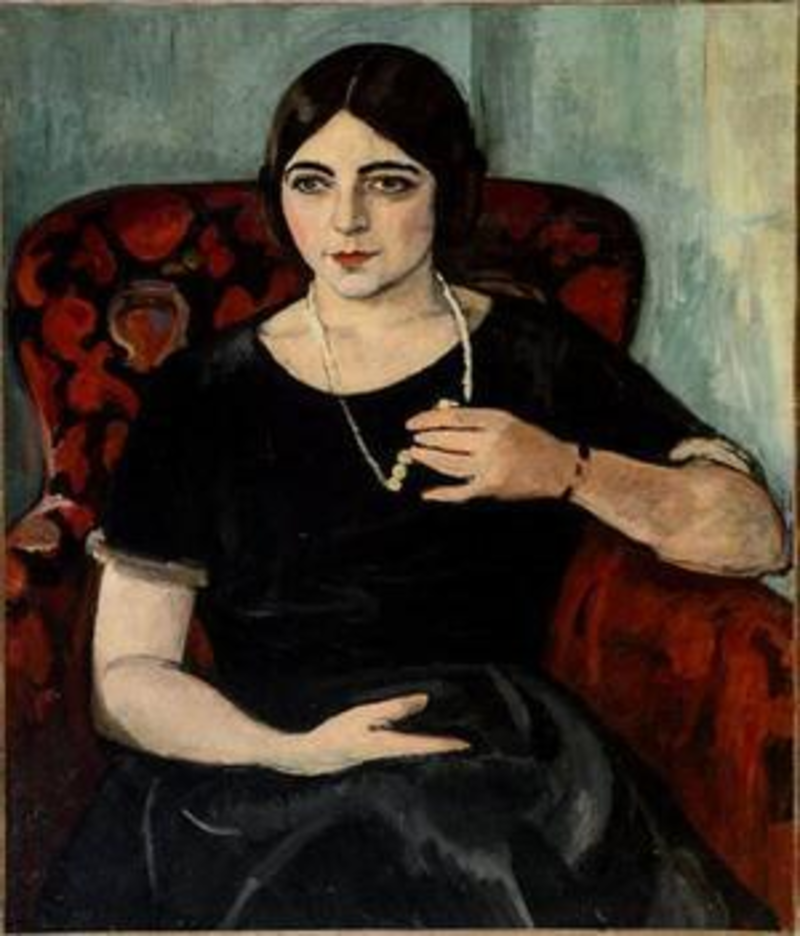
"Portrait of Edith Halpert". Artist Samuel Halpert
After returning home, Edith and her friend Kroll Goldsmith opened their first art space, called Our Gallery. This space was radically different from what the refined New York public was used to seeing. First, the location of the gallery itself was a challenge. Not the elite Uptown, but the democratic Downtown (later the gallery itself was renamed Downtown Gallery). The paintings were not hung in antique frames on bare walls, but were integrated into modern home interiors. That is, buyers had the opportunity to evaluate whether a painting would fit their home. This was a revolutionary discovery by Edith Halpert. Ordinary people could come to the gallery to just look at art, without any obligation to buy anything.
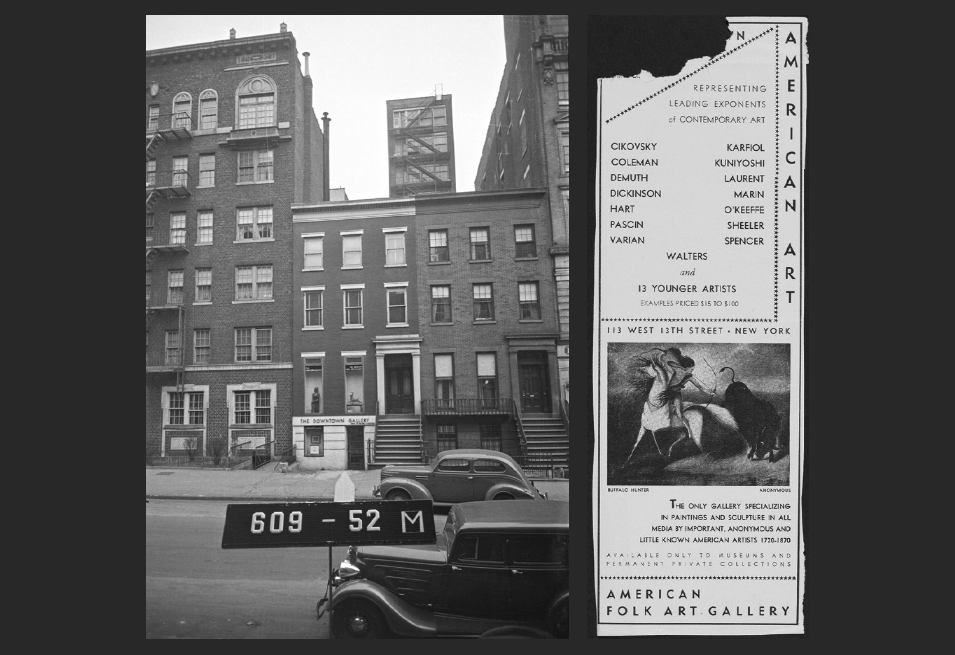
Downtown Gallery, 1940. PHOTO: media.villagepreservation.org
Revolution in the American art market
What revolutionary changes did Edith Halpert bring to the American art market? First, she changed the very concept of the consumer. Before her, collecting art was the prerogative of a very small number of American elites, but Edith gave this opportunity to literally everyone.
She was convinced that even people with average incomes could afford to buy art. Her galleries sold many small, inexpensive works worth several hundred dollars. In an interview on the occasion of her 25th anniversary, Edith said: "We never had anything for 50 thousand dollars..."
In addition, Edith Halpert was the first American gallery owner to introduce an installment system. It was she who introduced the practice of paired paintings: "for him and for her". It was Edith who launched an advertising campaign in American supermarkets with the slogan: "Give not bracelets and perfume, but art."
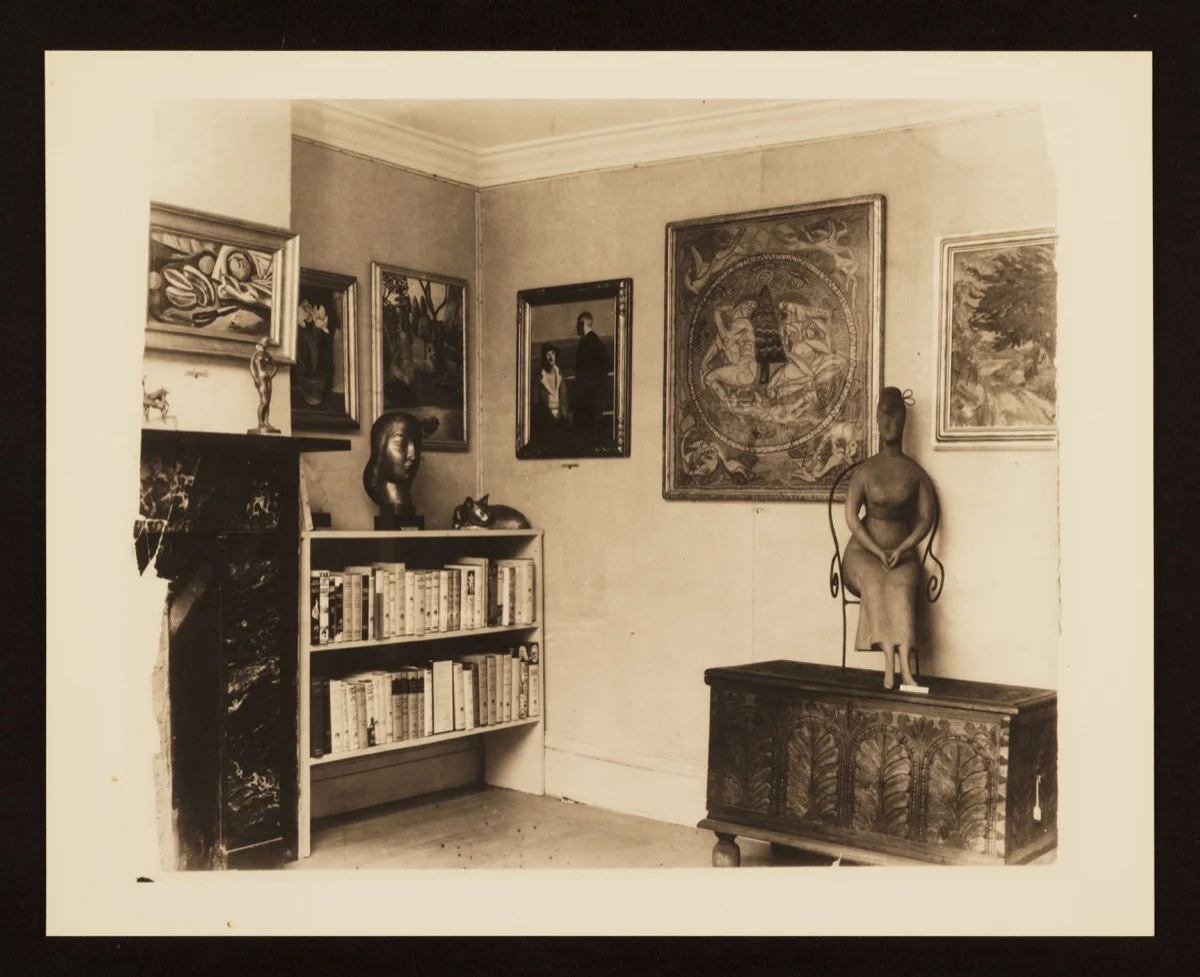
The first exhibition at the Downtown Gallery, 1926. PHOTO: d7hftxdivxxvm.cloudfront.net
After the Second World War, Edith claimed that more than half of her customers were first-time buyers of art. Buying art became fashionable and affordable.
Thanks to Edith, some Americans became loyal supporters of national art for life. For fifty years, the couple Milton and Helen Kroll Kramer bought small paintings in installations. They collected 150 works, which they later donated to the collection of the Cornell University Museum. At the same time, they spent no more than $50 a month on their hobby.
But Edith Halpert's merit lies not only in the fact that she opened the world of art to ordinary Americans. Edith saw her main task as supporting American authors, because at that time European artists dominated the salons of her colleagues. In her opinion, American art was not an automatic continuation of European art and had its own authentic features and traditions, regardless of the artists' race, religion, or gender.
Edith Halpert provided a platform for women's, immigrant, Jewish, African American, and Native American art. She skillfully combined the works of young artists, masters and forgotten authors of the eighteenth and nineteenth centuries. Edith Halpert introduced Americans to the works of Georgia O'Keeffe, Stuart Davis, Charles Schiller, Jacob Lawrence, Ben Shahn, Horatio Pippin, and Yasuo Kuniyoshi, who became icons of American modernism.
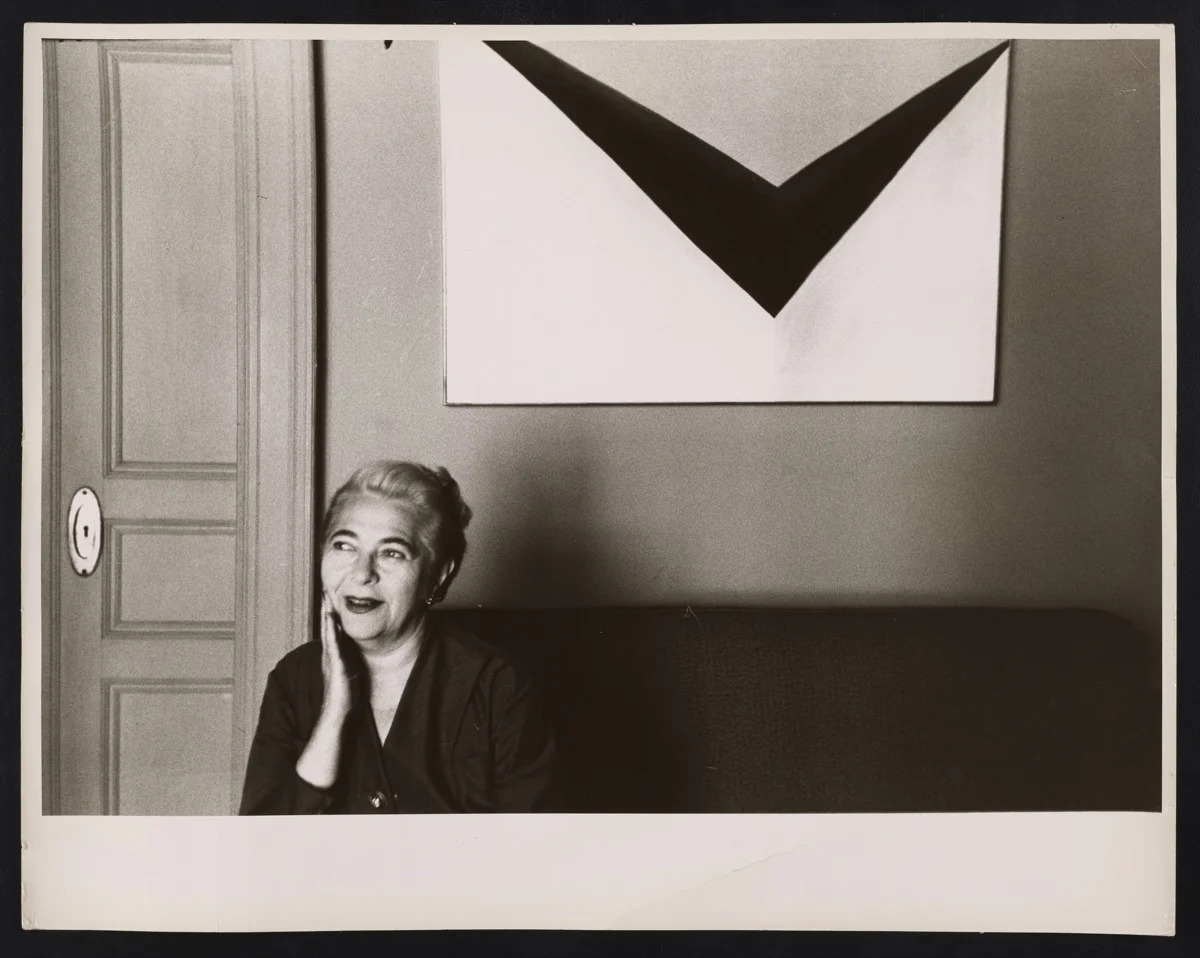
Edith Halpert next to a painting by Georgia O'Keeffe. PHOTO: d7hftxdivxxvm.cloudfront.net
Halpert not only sold the works of her clients to others, but also bought many paintings, figurines, and small sculptures herself to support artists in difficult times. Over the course of her life, the gallery owner amassed a collection of over 500 works. In 1973, this collection was sold at auction for $3.95 million.
A separate page in Edith's biography is her collaboration with the famous collector and art connoisseur Abby Rockefeller. In 1929, Abby co-founded the Museum of Modern Art, donating about two thousand works from her collection. Approximately 500 of them were purchased from Edith Halpert.
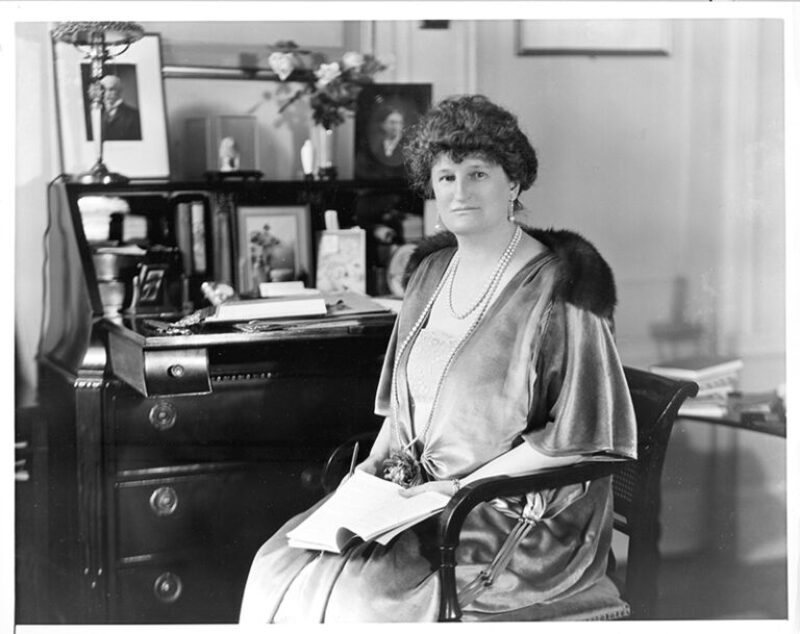
Abby Rockefeller, 1922. PHOTO: www.themagazineantiques.com
In 1952, Edith created a foundation that provided assistance and funding to universities for research on contemporary American art. In 1960, the gallerist received the Distinguished Service Award for her work, and in 1968, the Distinguished Contribution to the Arts Award.
Edith Halpert passed away in 1970. The American artist of Lithuanian origin William Zorach said about her: "Edith Halpert was always full of ideas and projects. She didn't need to depend on anyone. She did not follow in the footsteps of others. She didn't choose the easy way to promote and sell European art, where the path was clear and well-trodden. She set out to promote American art because she believed in it and realized that if there was ever going to be art in this country, it had to come from American artists. She set a goal for herself and has stuck to it ever since with unwavering dedication. American art owes her a great debt of gratitude."
Edith Halpert herself spoke of her work as follows: "We are as necessary as freezers, although I feel that we provide warmth."
Віолетта Дідук