25 June 2026, 18:45
The Five Gods of Severynivka
Ця стаття також доступна українською

View of Severynivka from Bogova Mountain. PHOTO: Dmytro Zhdanov
Recently, Intent published an article on the history of Illinka and Avgustivka—settlements in a picturesque area between two rivers. Today, we continue to explore this mysterious region and head further along the Starobalt Road to the village of Severynivka.
On the map of the Odesa region, Severinovka is not just a geographical point, but a place where Oleksandr Kozachynsky’s literary myth intertwines with the multi-layered history of our region. Behind the well-known scenes of the cult classic *The Green Van* lies the real life of an Odesa village that has spent centuries shaping its unique character, one that extends far beyond the boundaries of cinematic sets.
The Potockis’ Severynivka: The Road, the Estate, and the Churches
The Starobalt Road, which connected Odesa and Balta in the 19th century, was a true “artery” of southern Ukraine. Interestingly, estates belonging to immigrants from Poland lined the road like a string of pearls, each shaping the unique character of this steppe region. Severinovka, founded by Count Severin Potocki, became one of the key hubs of this network, where European traditions of governance met the picturesque and bountiful nature of the Ukrainian steppe.
Severin Potocki received lands between Kuyalnik and Khadzhibey in the late 18th century. As early as 1800, construction began on religious buildings, which forever changed the architectural appearance of this settlement. The first to be built, in 1800, was the Roman Catholic Church of St. Severin. The following year, it was consecrated by Bishop M. Serakovsky.
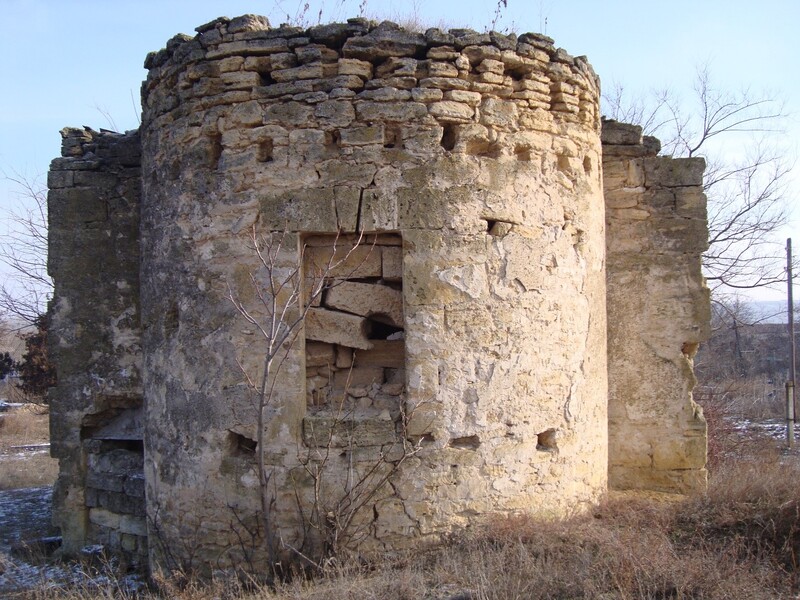
St. Severin Church. PHOTO: Dmytro Zhdanov
In that same year, 1800, construction also began on an Orthodox church—the Church of St. John the Theologian. Interestingly, all sources indicate 1800 as the start of construction, but the date of its completion varies: the preservation plaque lists 1806, the work “Historical and Chronological Descriptions of the Churches of the Kherson and Taurida Dioceses” lists 1805, and the documents of the Kherson Ecclesiastical Consistory list 1803. The church, built of limestone using egg-white mortar, is shaped like a ship. In 1806, Father Fedir Dukhnovsky celebrated the first service in the church. In 2012, a monument to Severin Pototsky was erected near the church.
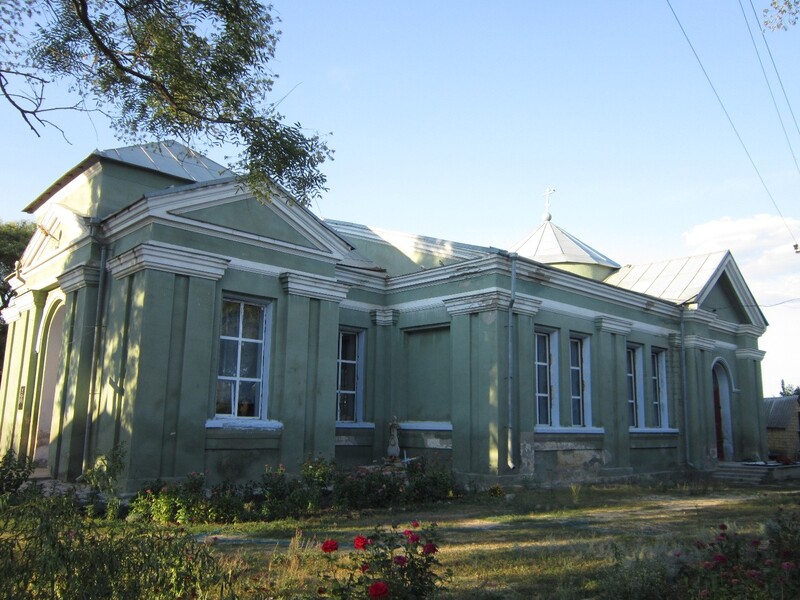
Church of St. John the Theologian. PHOTO: Dmytro Zhdanov
There was also a synagogue in Severynivka. Unfortunately, neither information about its construction nor the building itself has survived—it has long since vanished into oblivion. However, people still find tombstones from the Jewish cemetery in their gardens, and several of them have been kept within the fence of the Church of St. John the Theologian for many years.
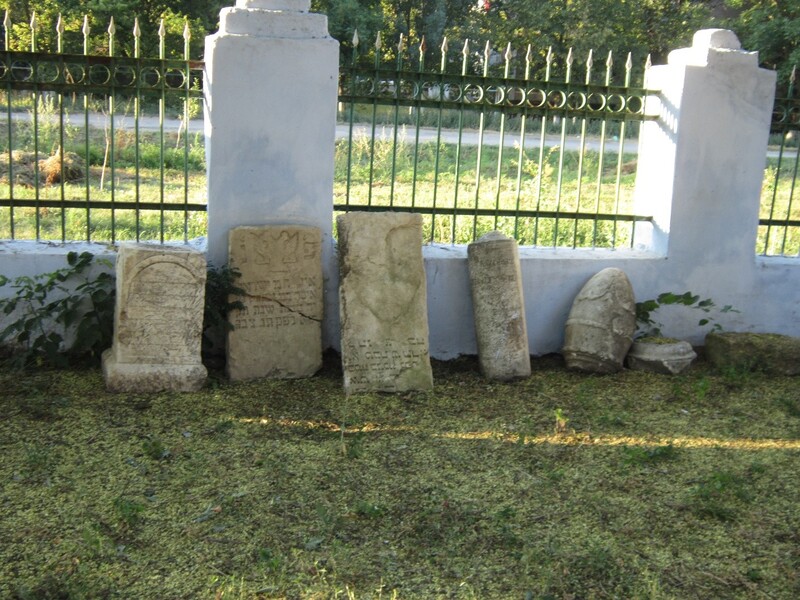
Jewish gravestones in the courtyard of the Church of St. John the Theologian. PHOTO: Dmytro Zhdanov
Be that as it may, the settlement developed very rapidly, and by 1806, it had already become a small town. Even back in the days of the Cossacks, an important trade route—originally established by the Chumaks—ran along Severinovka. And in the 19th century, this route became the Starobalt Road, which we wrote about in our article on Illinka.
Toward the end of his life, Count Severin Osipovich Pototsky, a senator and Privy Councilor, decided to settle at his estate in Severinovka. He lived there until the end of his days. Unfortunately, Potocki’s estate has not survived. A school now stands in its place.
Severin Pototsky is buried in the cemetery near the church. There are records indicating that a small chapel once stood on Pototsky’s grave in Severynivka, where a candle burned constantly. However, the chapel no longer exists, and the exact location of the count’s grave has been lost.
About 15 years ago, the local history group ODESA INCOGNITA discovered an ancient crypt in this cemetery. After the vault collapsed, the interior of the structure became visible through the opening. It is quite likely that this crypt is the lost grave of Count Pototsky.
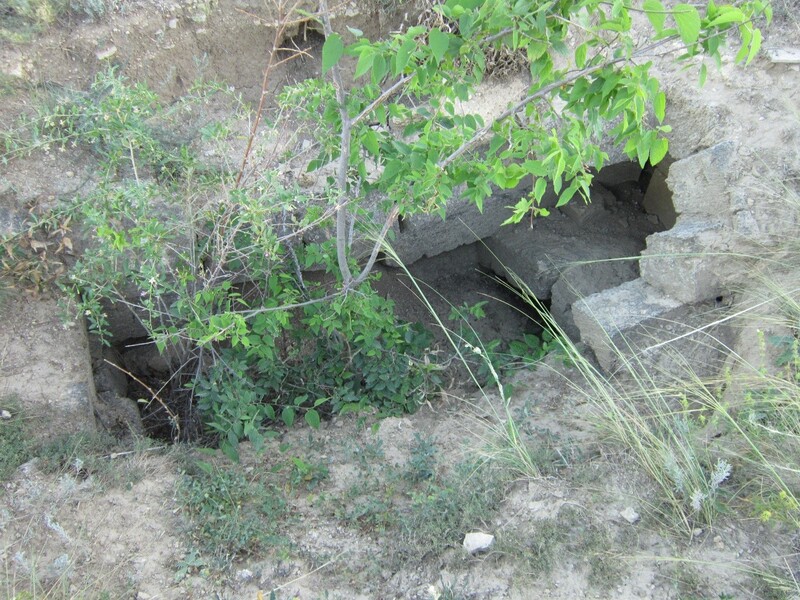
The probable crypt of Count Potocki. PHOTO: Dmytro Zhdanov
Interestingly, there used to be many stone crosses in the cemetery, but today almost all of them have been toppled. According to local residents, at the beginning of the Soviet occupation, the people of Severynivka deliberately toppled the crosses so they would not be visible from the road. Those that could not be toppled were covered with haystacks—in this way, the residents tried to preserve an important part of the village’s history.
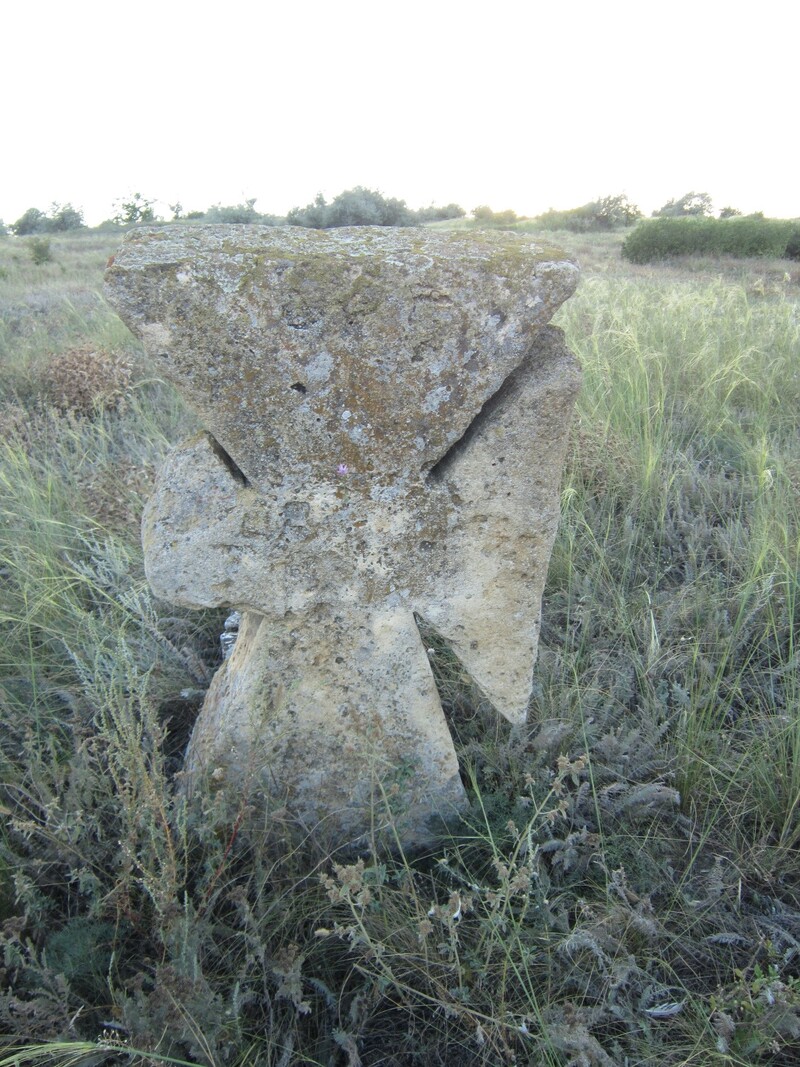
A stone cross from the old cemetery. PHOTO: Dmytro Zhdanov
A similar situation occurred with the church: Soviet officials decided to demolish it. However, the night before a special team arrived to blow up the church, the village council chairman ordered it to be filled with grain, turning the building into a granary. Thanks to this, the church has survived to this day intact.
The Catholic church was less fortunate—it was turned into a warehouse, lost its tower, and its original roof was replaced with a mundane single-slope roof, like that of any dilapidated shed. Today, the Catholic church has turned into pitiful ruins that threaten to collapse on any unwary visitor.
Bogova Hora: A Hospital, a Forest, and Stone Quarries
After Severin Potocki’s death, his lands were inherited by his son, Lev Severinovich Potocki. After Lev Pototsky’s death, his daughter inherited the lands. But since she lived in Poland, the estate was sold in 1866 to the Romanian prince Efrussi.
In the second half of the 19th century, two medical buildings were constructed on the estate’s grounds; they stand on a picturesque slope known to locals as Bogova Hora. In reality, it is merely the slope of a river valley, but by local standards, it is perceived as a real mountain.
For a long time, the Severinivka Hospital also served as a tuberculosis sanatorium. One of the treatment buildings stands with its doors firmly shut, while the other fell into disrepair many years ago. Interestingly, for a long time, a misconception was widespread among local historians that Count Potocki’s estate had been preserved. Even now, during guided tours, the hospital is passed off as the count’s mansion.
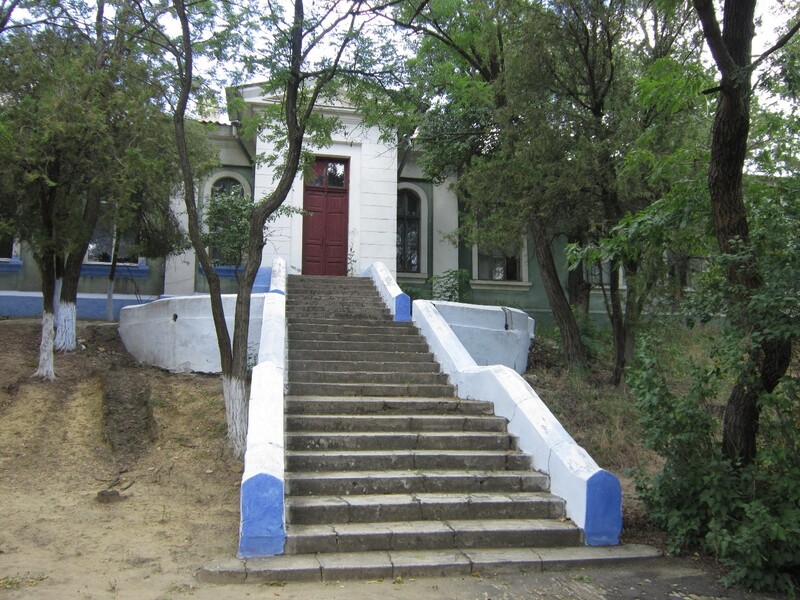
The hospital in Severynivka is often mistaken for the count’s estate. PHOTO: Dmytro Zhdanov
A forest grows on the hill, home to several springs. From the hilltop, a panoramic view opens up over Severynivka and the former riverbed of the Velykyi Kuyalnyk. This forest is a remnant of the estate’s successful economic activity, as timber was once grown here for sale. Furthermore, in the mid-19th century, salt was mined near Severinovka, which provided additional income for the estate’s owners.
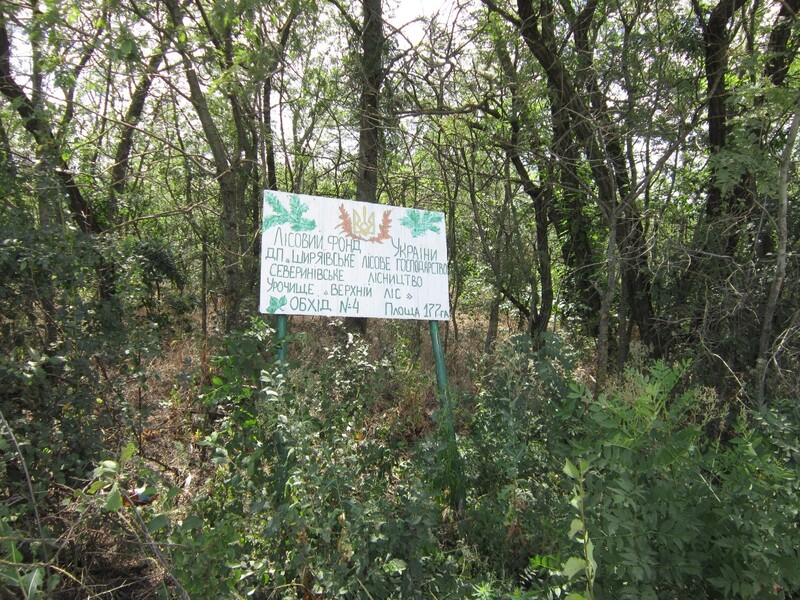
The “Upper Forest” tract. PHOTO: Dmytro Zhdanov
Remains of quarries where limestone was once extracted have also been preserved on the plateau near Severinovka. Currently, for safety reasons, they are closed, as they have become structurally unsound and could collapse at any moment. However, I once explored these sites—they are inhabited by Austrian long-eared bats, which are quite common in this area.
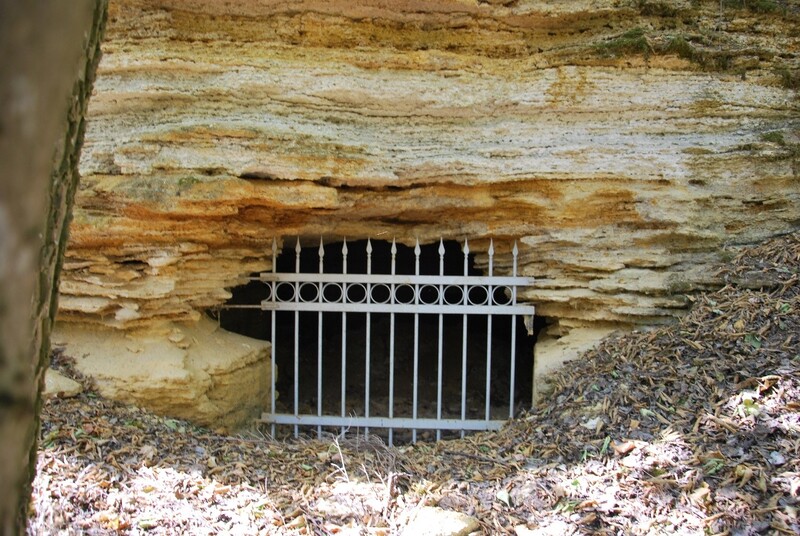
The Severinovka Catacombs. PHOTO: Dmytro Zhdanov
The Five Springs of Bogova Hora
It remains to tell you about the “gods” of Severynivka. As already mentioned, there were several springs in the vicinity of Severynivka (to be precise, there were five). And each of them has the word “God” in its name: “First God,” “Second God”… The most famous is “Third God,” located in a rather picturesque corner of the large plateau.
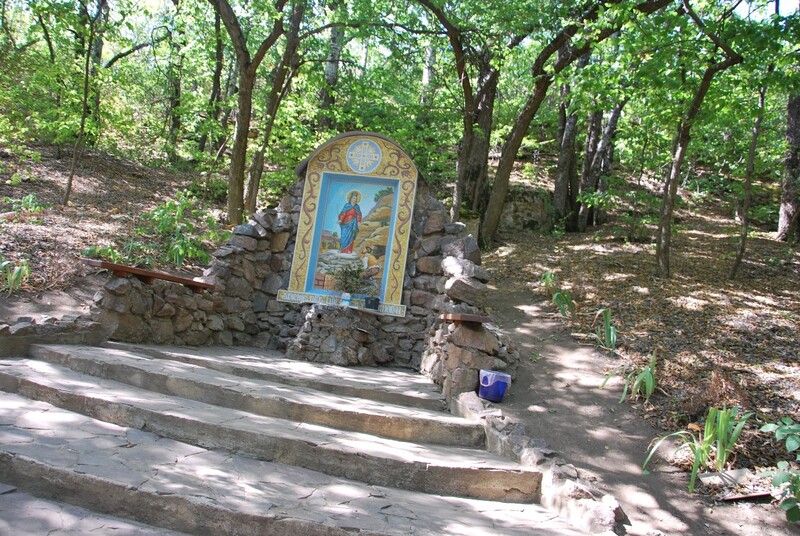
The “Third God” spring, 2025. The water is gone. PHOTO: Dmytro Zhdanov
This place used to be an important part of the village —almost all the festivals were held here. People came here from all over the country because the “Third God” spring was a very famous place of worship. Unfortunately, by last year, the water in the spring was already gone…
Why were these places called “God’s” in the first place? Local residents tell two legends about the origins of the springs, which are very similar to one another. It seems that one of them is merely an addition to or an embellished version of the other.
According to the shorter version, one of the residents had a prophetic dream in which he saw a spring on a mountain. Upon waking, the man set out for the indicated spot, but at first found nothing. However, according to other accounts, thanks to a flash of insight or an inner voice, he eventually found his way to the water. The water turned out to be exceptionally clean and fresh—a true treasure for the steppe town of Severynivka, where drinking water was often salty and unsuitable for consumption.
The second version dates back to a time when the Velykyi Kuyalnik River was navigable and Turkish galleys sailed along it. According to legend, one of them, loaded with gold, sank. Years passed, the river shallowed, and the galley was buried in silt. Many adventurers—both visitors and locals—tried unsuccessfully to find this cargo. Later, one of the residents had a prophetic dream in which the Mother of God showed him the way to the sunken ship. The man woke up and, following the vision, set out on a search. Although he did not find the galley itself, he did discover several spring water sources. He did, in fact, find his gold, for in our steppes—especially in the 19th century—clean water was a treasure. From that time on, the mountain where these springs flow came to be called “God’s Mountain,” and the springs themselves were called “God’s Springs” or “Gods.”