17 June 2026, 22:15
Most residents of the Odesa region supported the use of the Ukrainian language in church
Ця стаття також доступна українською

PHOTO COLLAGE: unian.ua
Residents of the Odesa region largely support the use of the Ukrainian language in church and believe that the state should take action against the activities of religious organizations if they threaten the country’s security. At the same time, most respondents reported freedom of religion and the absence of persecution based on their religious beliefs.
This was discussed during the presentation of the sociological study “Assessment of the Religious Situation: Odesa Region,” conducted by the sociological group “Rating.” Intent co-organized the event.
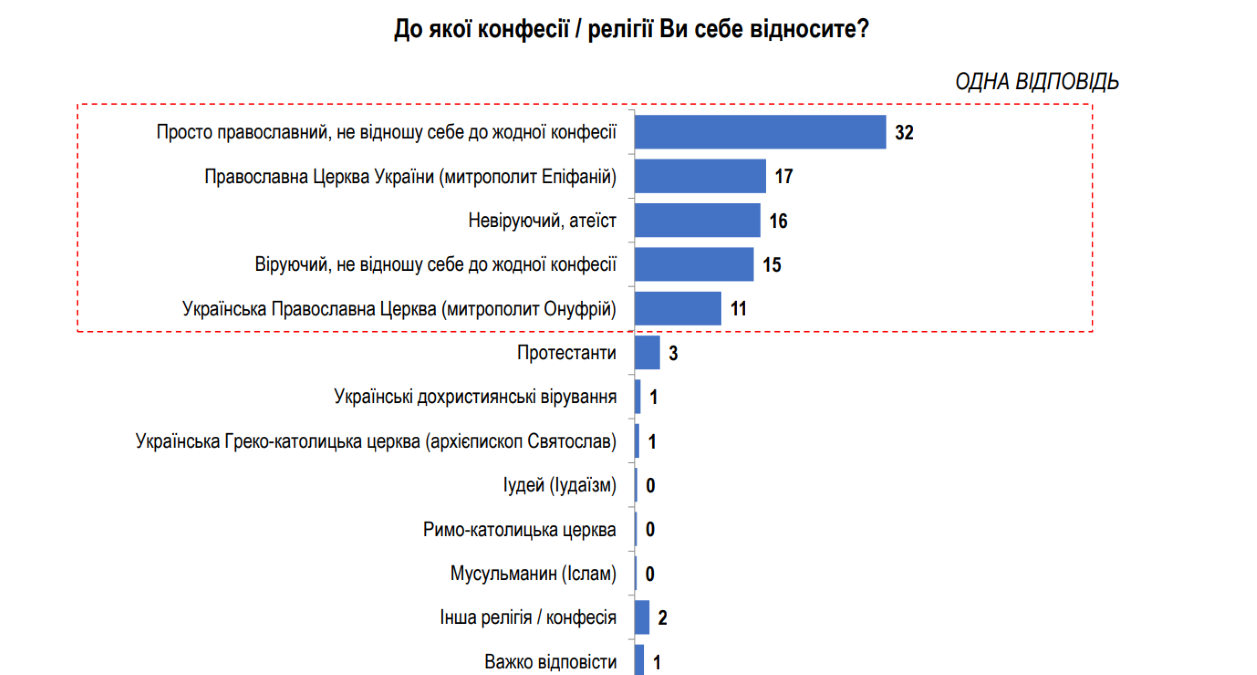
The results of the survey by the “Rating” sociological group, conducted May 4–12, 2026, among 1,100 residents of the Odesa region, show that the most trusted religious leader is the Primate of the Orthodox Church of Ukraine, Metropolitan Epiphanius—41% of respondents trust him. The lowest level of trust was recorded for Patriarch Kirill of the Russian Orthodox Church—only 6%.
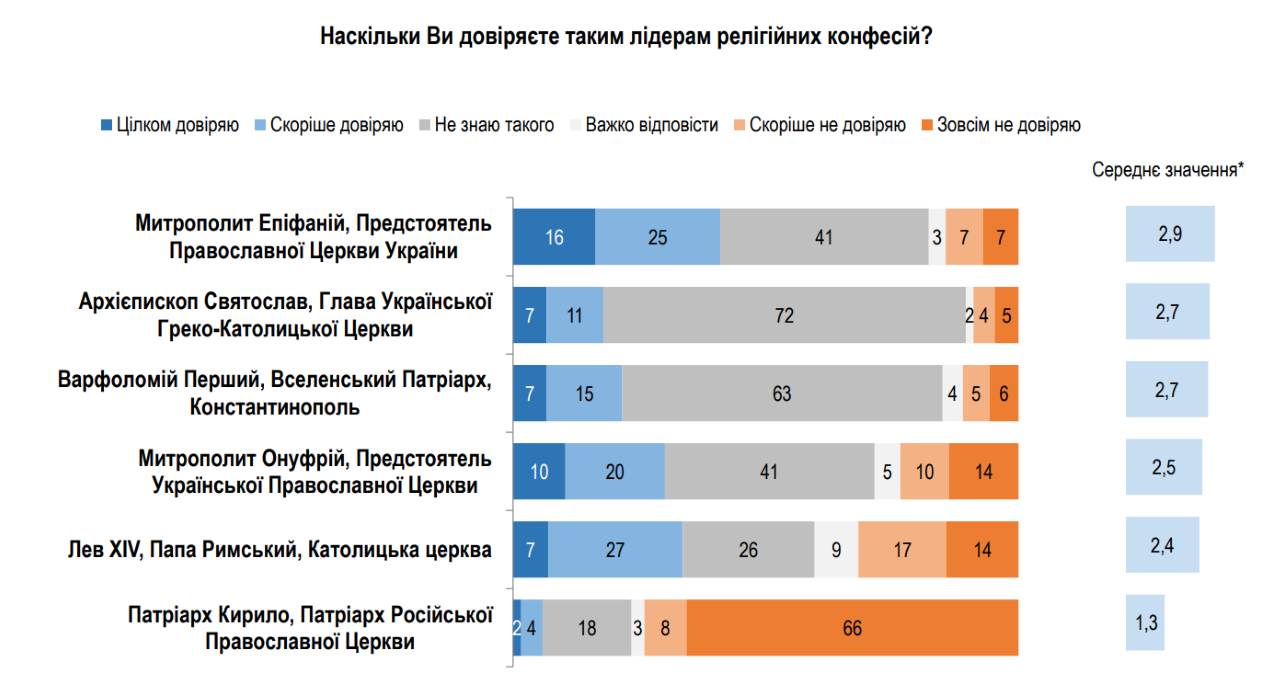

Among those surveyed, 32% identified as Orthodox but did not affiliate with any specific denomination. Another 17% identified with the Orthodox Church of Ukraine, 11% with the Ukrainian Orthodox Church, 16% described themselves as atheists or non-believers, and 15% identified as believers without denominational affiliation.
Most residents of the region continue to celebrate Christmas: 32% on December 25, the same percentage on January 7, and 27% celebrate the holiday according to both calendars.
Regarding religious beliefs, 55% of respondents stated that they have no doubts about the existence of God. Another 19% believe in God, although they sometimes have doubts. At the same time, 25% of those surveyed do not share traditional religious beliefs or believe only in higher powers.
INFOGRAPHIC: “Rating” Sociological Group
The most common religious practices among the region’s residents are wearing religious symbols (41%) and praying at home (33%). Only 10% of survey participants reported regularly attending religious services.
About 65% of respondents believe that Ukraine guarantees a high level of religious freedom, and 89% stated that they have not faced discrimination because of their religious beliefs.
More than half of those surveyed support holding religious services in Ukrainian. Additionally, 60% believe that the church should be separate from the state, and 78% are convinced that the state should intervene in the activities of religious organizations if they violate the law or pose a threat to the country’s sovereignty.
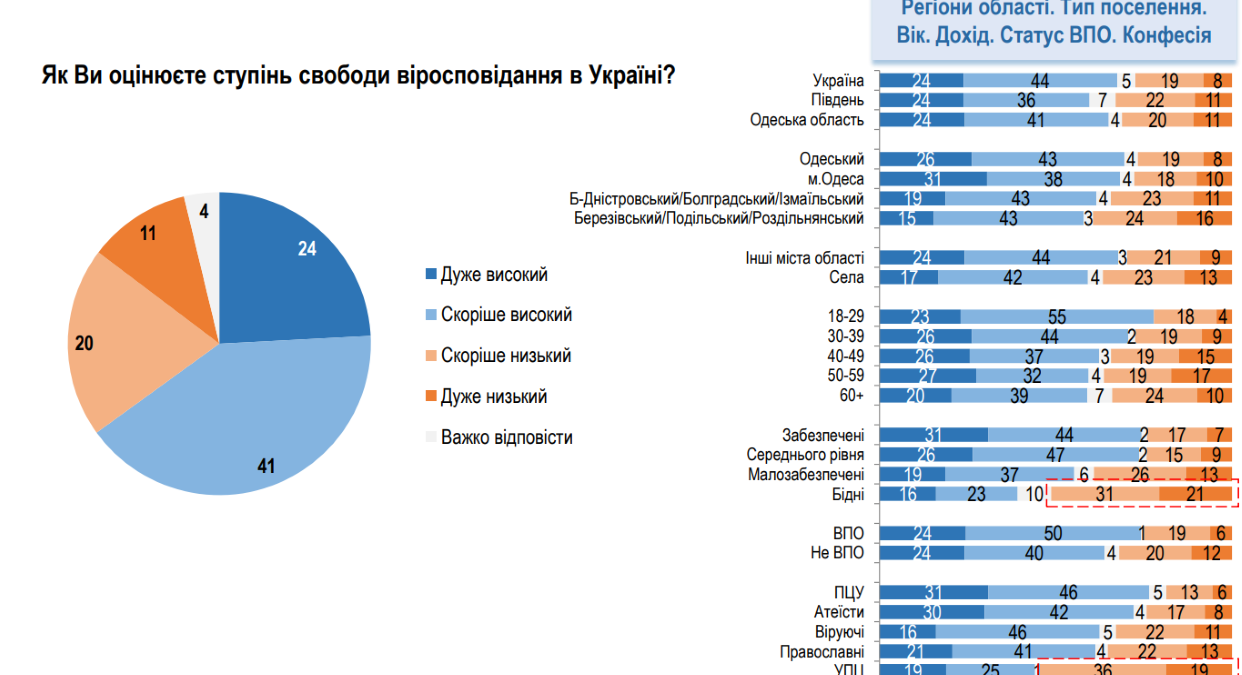
Furthermore, nearly half of the residents of the Odesa region supported banning the Ukrainian Orthodox Church (UOC) due to its ties to the Russian Orthodox Church. There is a growing demand in the region for religious organizations to distance themselves from the aggressor country and to take greater responsibility for issues of national security.