18 October 2026, 07:08
The Amazing South: "Svyatoslav's White Coast"—a protected area teeming with wild orchids
Ця стаття також доступна українською

"Svyatoslav's Biloberezhzhya" National Nature Park. PHOTO: nikvesti.com
The "Sviatoslav's White Coast" National Nature Park is one of the most fascinating natural areas in the Mykolaiv region, where, within a relatively small territory, sandy steppes, coastal meadows, salt lakes, floodplains, and woodlands. This protected area is the focus of the latest installment of the“Amazing South” series.
The park encompasses part of the Kinburn Peninsula and the adjacent waters of the Dnipro-Bug Estuary, the Black Sea, and the Yagorlytska Bay. Its main feature is the extraordinary diversity of natural habitats. Here you’ll find sandy steppes, dune systems, coastal meadows, salt marshes, lakes, wetlands, and forested areas. This combination creates the conditions for the existence of numerous plant and animal species, including rare ones.
History of Biloberezhzhia
The territory of the modern park and the surrounding lands were inhabited long before the emergence of today’s settlements. Over the centuries, the Northern Black Sea region was a place of interaction between various peoples and cultures. At various times, the steppes of the region were inhabited by the Cimmerians, Scythians, and Sarmatians, while ancient Greek settlements emerged along the Black Sea coast as early as the 7th–6th centuries BCE, becoming centers of trade and cultural exchange with the local population.
During the era of Kievan Rus’, the mouth of the Dnieper was linked to the trade route “from the Varangians to the Greeks,” which connected northern Europe with Byzantium. The routes of the Kievan princes’ campaigns to Constantinople also ran through these waters. At the end of the 15th century, the Kinburn Peninsula became part of the Crimean Khanate, and later the influence of the Ottoman Empire grew here, as it built the Kinburn Fortress. In the 16th–18th centuries, these lands and the adjacent estuaries were also important to the Zaporizhian Cossacks, who undertook maritime expeditions and engaged in fishing in the lower Dnieper.
The historical name “Biloberezhzhia” is associated with the sandbars at the mouth of the Dnieper, particularly the Kinburn Sandbar. The origin of the name is usually explained by the distinctive appearance of the coastline from the sea: light-colored sands and small shells created the impression of a white shore glistening in the sun. The name Biloberezhzhia appears in Old Russian written sources, although the exact boundaries of the territory referred to by this name remain a subject of historical research.
The second part of the park’s name is associated with the Kyiv prince Sviatoslav Igorevich. According to chronicles, in the winter of 971–972, while returning from a campaign in the Balkans, the prince and his army stopped in Biloberizhzhia because the Pechenegs had blocked the route through the Dnieper rapids. In the spring of 972, Sviatoslav continued his journey but was killed in a skirmish with the Pechenegs near the rapids.
Many centuries later, these lands gained significance for nature conservation. The need to protect the natural ecosystems of the Kinburn Peninsula from excessive economic exploitation became the impetus for the creation of protected areas. One of the foundations of the future national park was the “Kinburn Spit” Regional Landscape Park.
On December 16, 2009, the “Sviatoslav’s White Coast” National Nature Park was established by decree of the President of Ukraine. Following a boundary adjustment in 2019, its area now exceeds 35,000 hectares, of which approximately 25,000 hectares are water areas of the Dnipro-Bug Estuary, the Yagorlytsia Bay, and the adjacent part of the Black Sea.
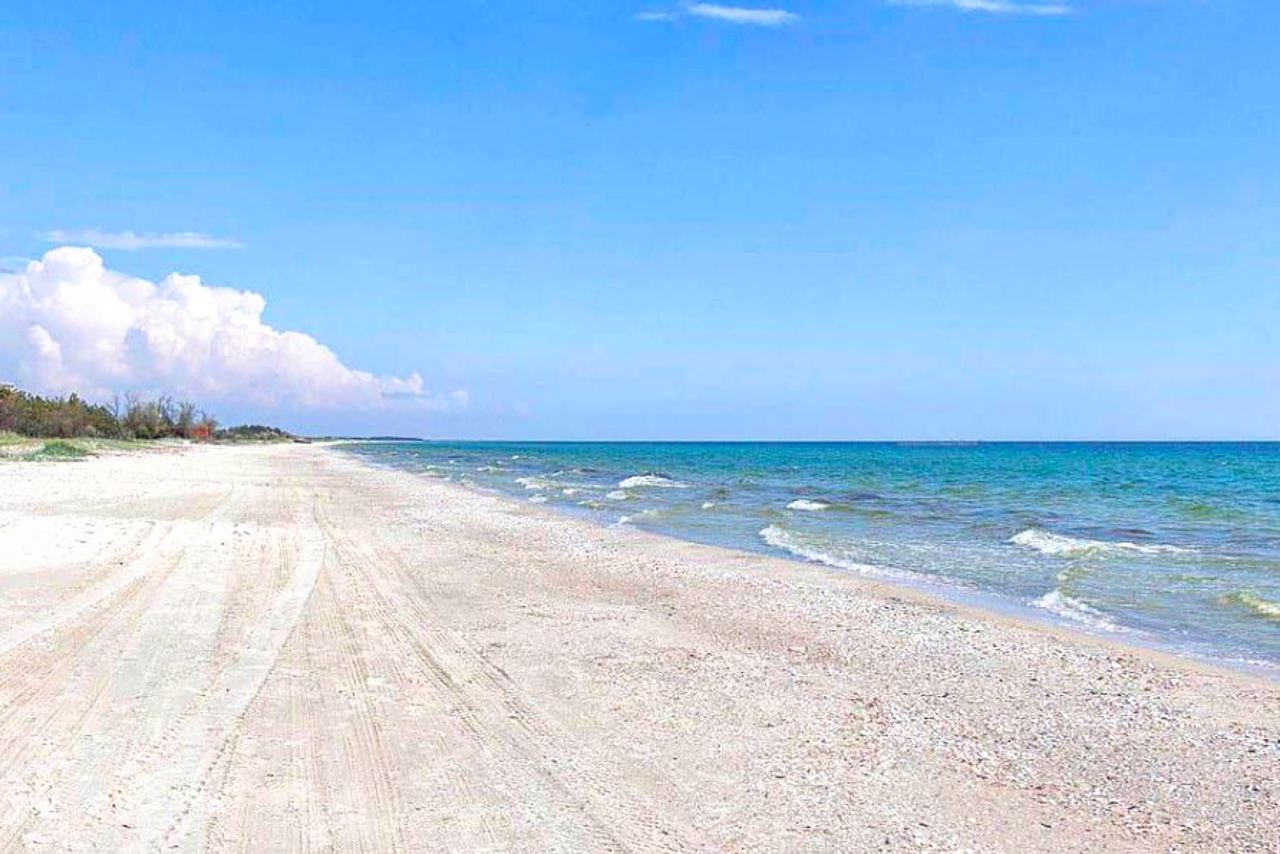
The coastline of the “Sviatoslav’s White Coast” National Park. PHOTO: travels.in.ua
Sandy spits and dunes
Among the park’s most famous natural features are the Kinburn Spit, which we’ve already discussed, and the Pokrovska Spit. The latter is a narrow strip of sandy land that stretches along the shallow Yagorlytska Bay and separates it from the more open waters of the sea.
The Pokrovska Spit is composed mainly of sand and marine shell rock. Its shape gradually changes under the influence of waves and wind. The spit is part of the “Yagorlytska Bay” wetland complex of international importance and is vital for birds that nest here, winter here, or stop over during seasonal migrations.
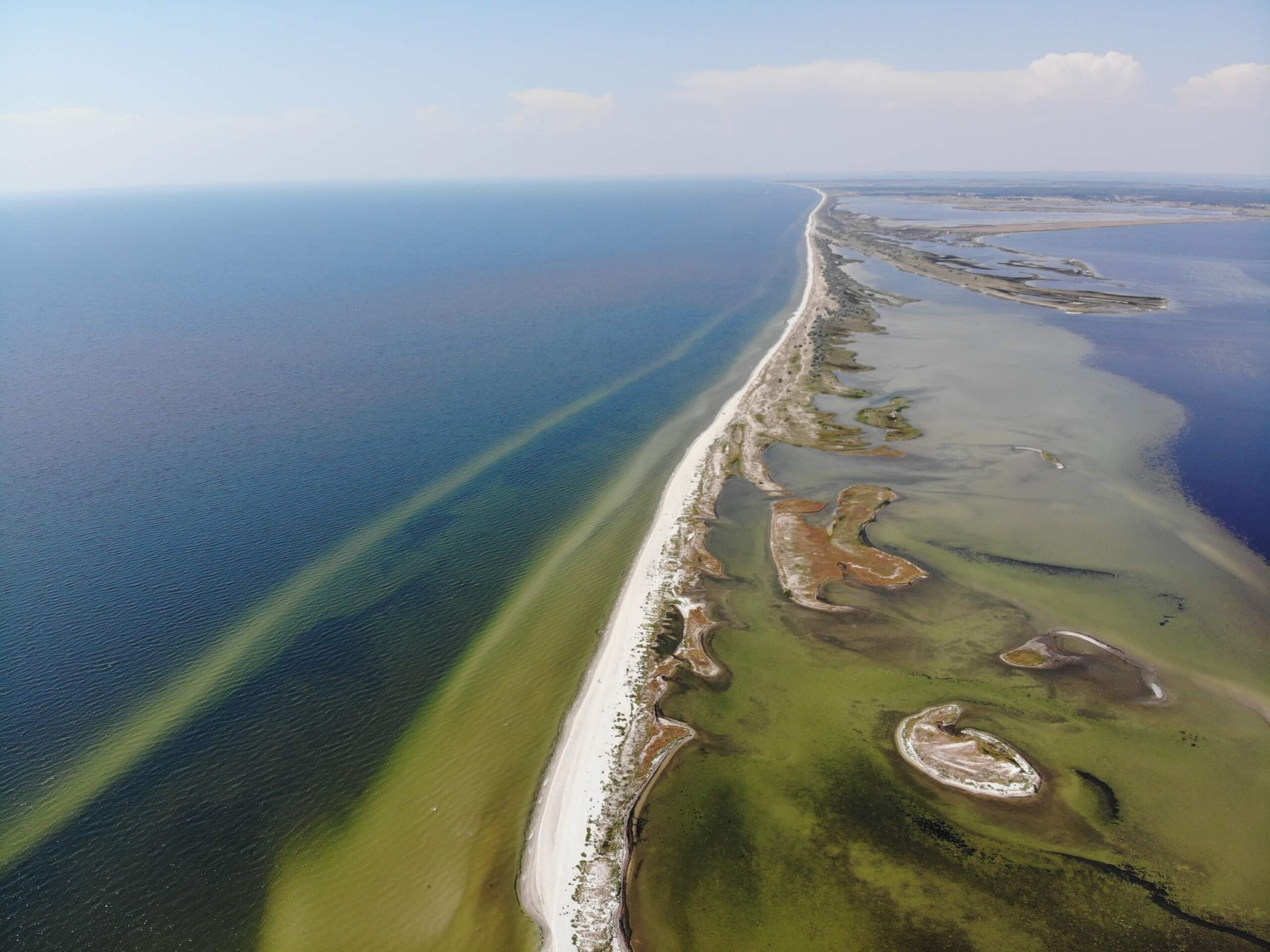
Pokrovska Spit. PHOTO: wownature.in.ua
Another unique sandy landscape in the park is the Sagaydachny Sand Dunes. This is a system of sandy hills and dune ridges formed by the wind. Their appearance is constantly changing: the sand shifts, the slopes reshape, and the vegetation gradually stabilizes individual areas with its root system. Such landscapes create unique conditions for plants adapted to low moisture levels, shifting sands, and significant temperature fluctuations.
Pokrovsk Orchid Field
One of the most interesting natural features of the Kinburn Peninsula is the Pokrovsk Orchid Field, located near the village of Pokrovka amid coastal meadows, between Lakes Chernino and Cherepashino.
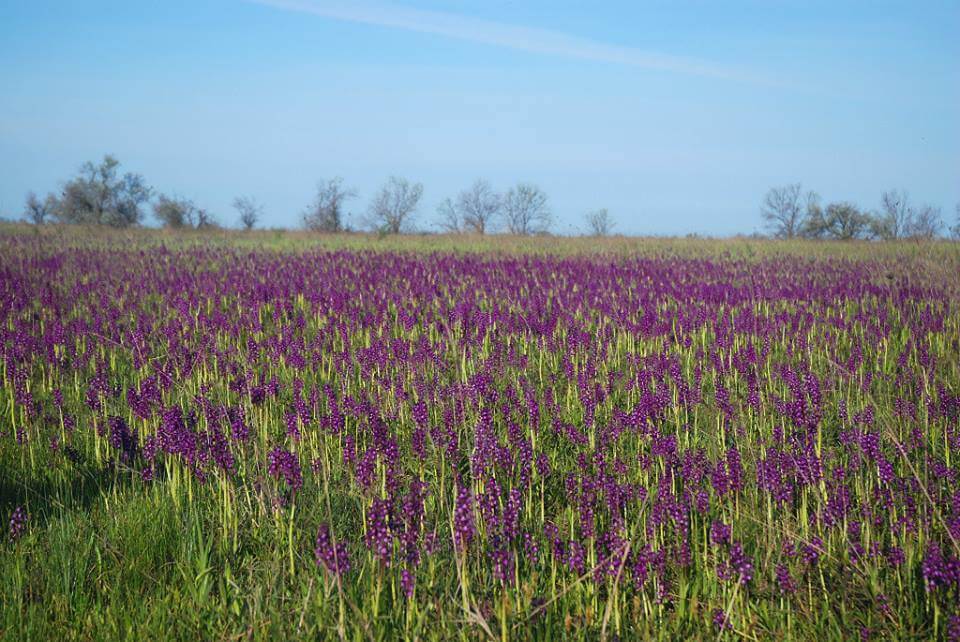
Orchid Field. PHOTO: wownature.in.ua
According to pre-war descriptions, the orchid field covered an area of about 63 hectares. It is considered one of the largest natural habitats of wild orchids in Europe. Five species of orchids were found here: the painted orchid, the flea orchid, the marsh orchid, the salep orchid, and the fragrant orchid. These rare plants are protected in Ukraine.
A distinctive feature of this area is the numerous clusters of orchids, which, when in bloom, cover sections of the meadows with pink, lilac, and purple inflorescences. Blooming usually occurs in the spring, particularly in late April and the first half of May, although the timing depends on weather conditions.
The existence of the orchid field is linked to the characteristics of the soil cover and the water regime of the coastal meadows. Microscopic soil fungi also play an important role in the life of these plants. Orchid seeds are extremely small and contain almost no nutrient reserves, so they require interaction with specific fungi to germinate. This is one of the reasons why preserving natural conditions is so important for the reproduction of wild orchids.
Floodplains and Lakes
Wetlands are an equally important component of the park’s natural ecosystem. Among them, the Bienko Floodplains stand out—a system of shallow waters, channels, reed beds, and marshy areas. Unlike the dry sandy dunes, this area is characterized by moist soils and dense riparian vegetation.
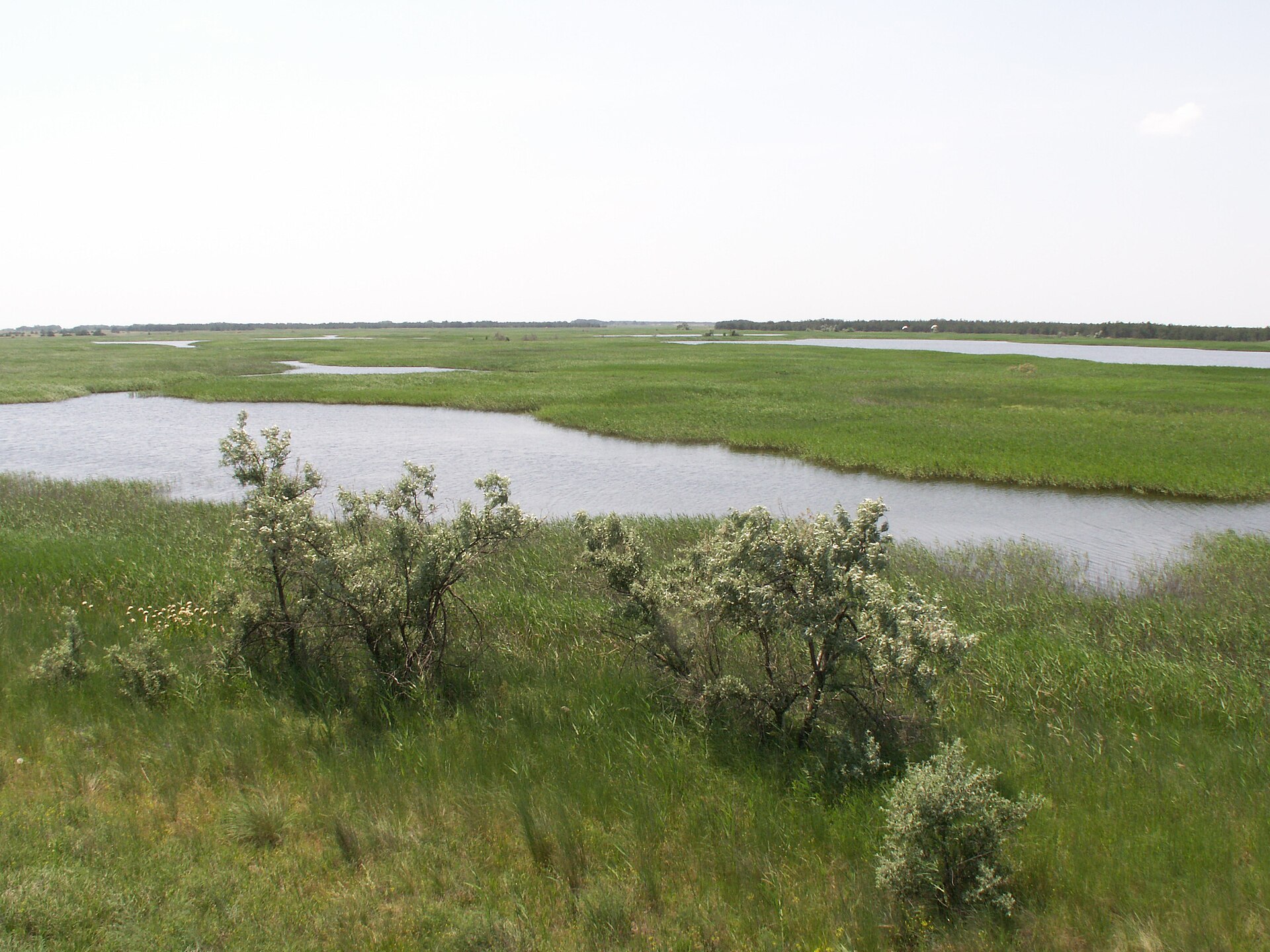
Bienko Floodplains. PHOTO: thumb.wikimedia.org
The reed beds provide shelter for birds, while the shallow waters create favorable conditions for fish to spawn. In particular, the Bienko Floodplains are known as an important natural spawning ground for carp.
The lake systems of Biloberizhzhia are also diverse. The bodies of water differ in origin, depth, salinity, and shoreline vegetation. Some contain fresh or slightly brackish water, while others have a high concentration of salts due to intense evaporation and limited water exchange with the sea.
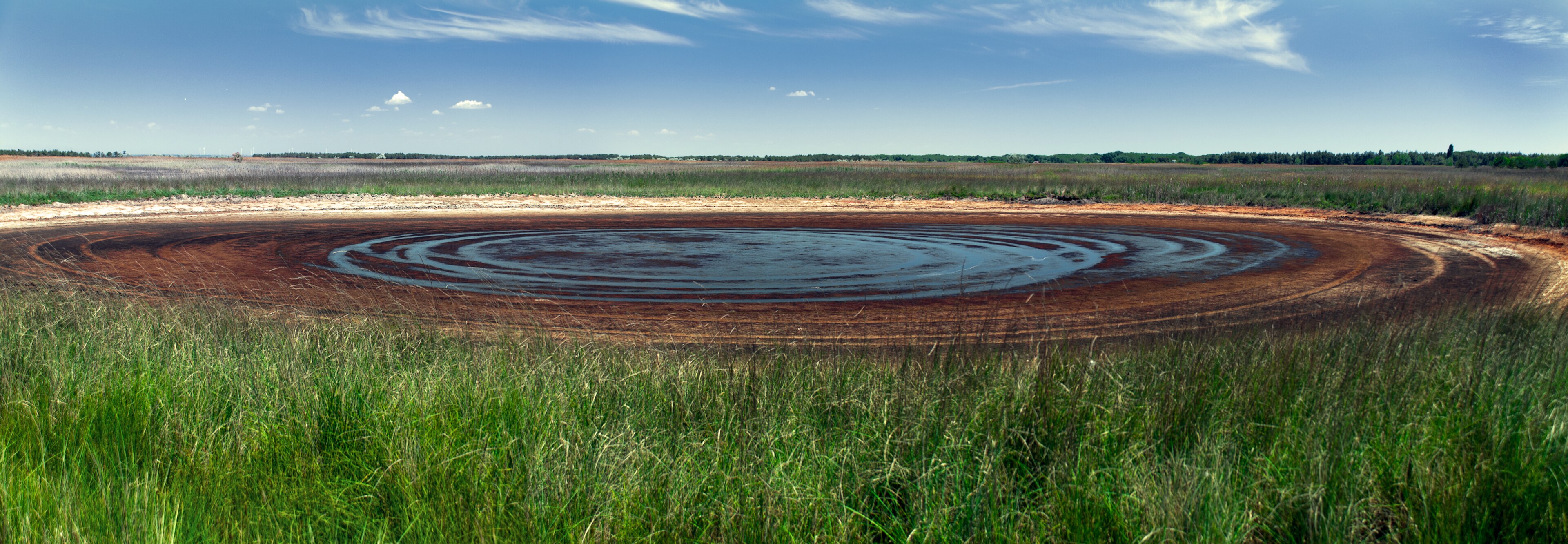
A lake in the Bienkov Floodplains. PHOTO: A. Shebaldina
Lake Solonets-Tuzly, located between the villages of Tuzly and Rybakivka in Mykolaiv Oblast, holds a special place among them. This is a salt lake of the estuarine type, part of which is included in the “Sviatoslav’s Biloberezhzhia” National Nature Park. In 1984, the “Salty Lake” hydrological reserve of local significance was established here. The conservation value of this area stems from its wetlands, mineralized muds, and importance to birds.
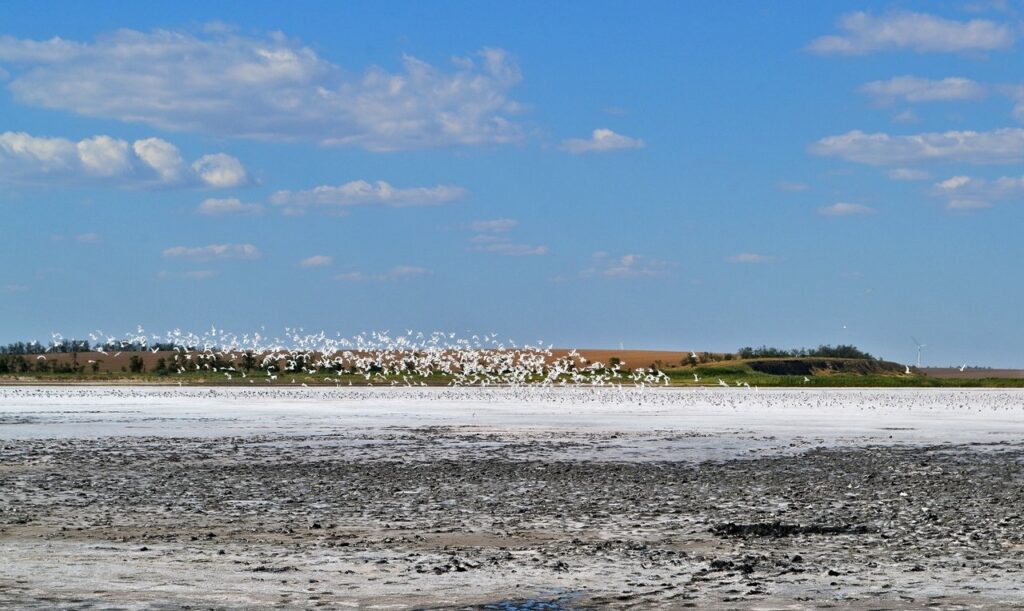
Lake Solonets-Tuzly. PHOTO: www.belosvyat.com.ua
Solonets-Tuzly is characterized by a variable water regime. During hot and dry periods, water evaporates rapidly, its level drops, and salt deposits form on the exposed bottom and shores. Under certain conditions, the water and salt take on a pink or even reddish hue. This coloration is associated, in particular, with the microalgae Dunaliella salina and tiny crustaceans of the genus Artemia, which live in bodies of water with high salinity.
Plants adapted to the excess of salts in the soil grow on the lake’s saline shores. Among them is the herbaceous saltwort, which has succulent, jointed stems and is capable of withstanding high salt concentrations.
In the past, salt production was one of the economic activities in this region. The body of water is also known for its deposits of mineralized silt mud, which are of interest for balneological research.
Flora and Fauna
The diversity of the park’s natural conditions is reflected in the richness of its flora. Drought-tolerant species grow in the sandy steppes, including Dnieper thyme and Dnieper yellowwort. Coastal areas are characterized by plants adapted to strong winds and saline soils.
In some parts of the peninsula, there are oak groves and pine forests, some of which were planted. Reeds and other moisture-loving plants are widespread in floodplains and wetlands. The vegetation plays an important role in stabilizing the sand, protecting the soil from erosion, and providing a habitat for many animals.
The park is particularly important for birds that nest here, overwinter, or stop over during seasonal migrations. In the floodplains and shallow waters, gray, red, and yellow herons and pelicans have been observed, while various species of waders and ducks can be found in the coastal areas.
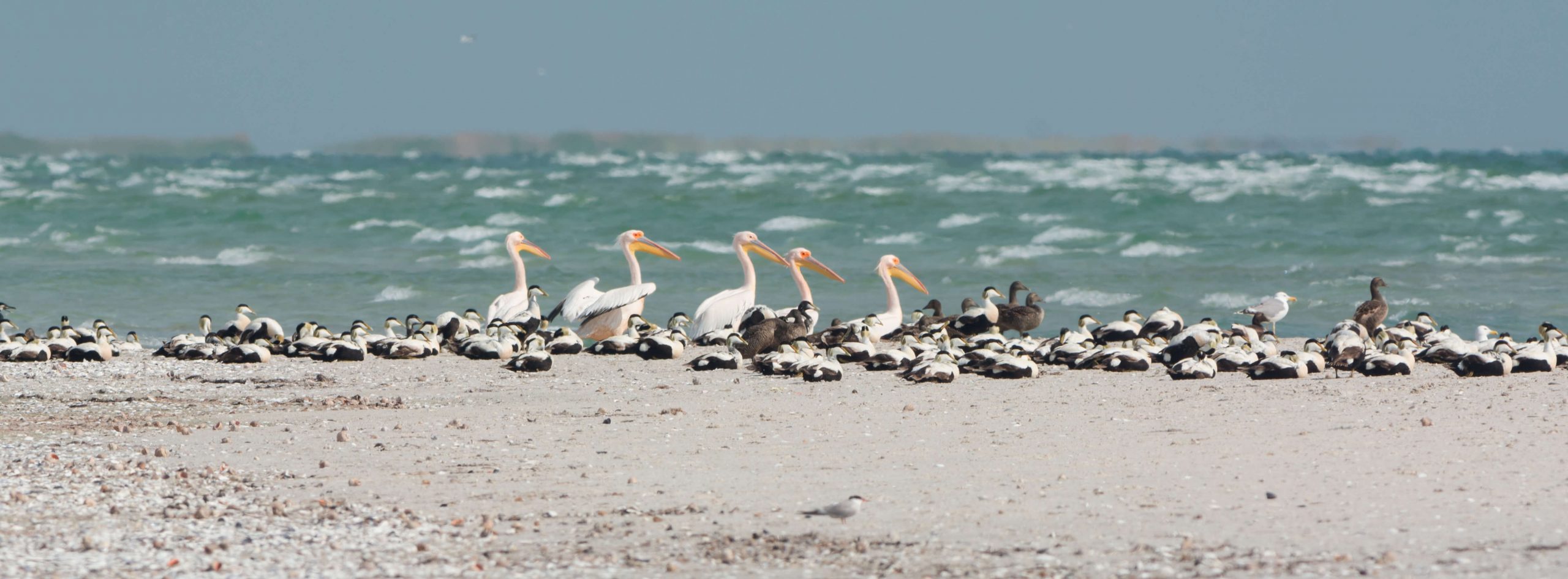
Pink pelicans and eiders on the coast of the national park. PHOTO: S. Ryzhkov
The steppe and forest areas serve as habitats for hares, foxes, and small rodents. Reptiles, including the steppe viper, inhabit the open sandy expanses.
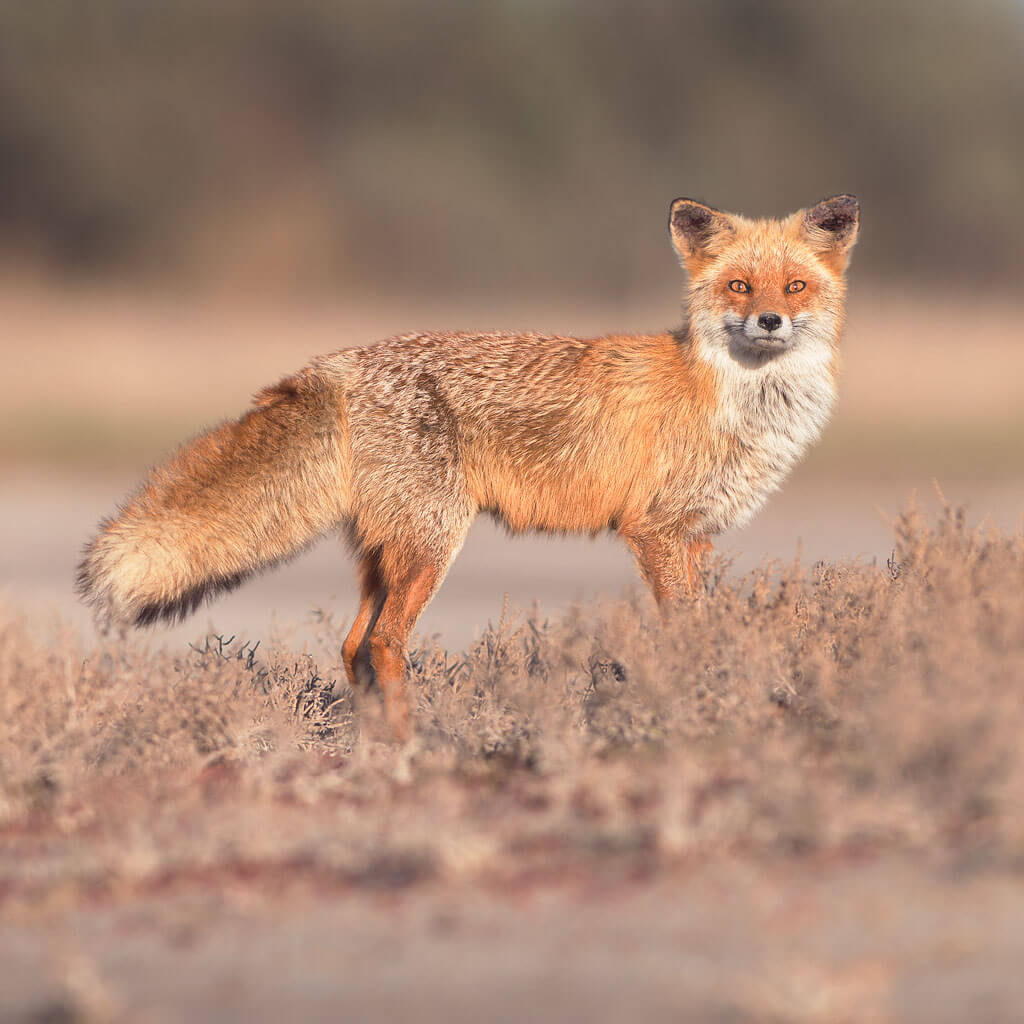
A red fox in the park. PHOTO: S. Ryzhkov
Among the rare representatives of the local fauna is the steppe grasshopper, one of the largest grasshoppers in Ukraine. This predatory insect is distinguished by its unusual method of reproduction: its females are capable of producing offspring without fertilization. The steppe grasshopper is listed in the Red Book of Ukraine.
Consequences of Russian Aggression
Since 2022, the territory of the “Sviatoslav’s Biloberezhzhia” National Nature Park has been under Russian occupation and has suffered severe consequences from the hostilities. Numerous fires have caused particularly extensive damage to natural ecosystems. According to published estimates, as of the summer of 2024, fires had engulfed approximately 96% of the park’s land area. Forest stands, steppe vegetation, and the habitats of many animal species have been affected.
Landmines, unexploded ordnance, damage to the soil cover caused by military equipment, and potential contamination of soil and water bodies with fuel and lubricants pose a serious threat to the environment and the park’s future restoration. It is not yet possible to fully assess the extent of the environmental damage. Due to the occupation and the danger of hostilities, scientists are unable to conduct comprehensive field research and are forced to rely largely on satellite imagery and other remote sensing methods.
The restoration of the Biloberezhzhia natural complexes after the end of hostilities will require long-term research, demining, and conservation measures. Only once safe access to the territory is restored will it be possible to fully determine what changes its ecosystems have undergone and what measures are needed to preserve them.
Юлія Сичова