Меню
Соціальні мережі
Розділи
Aug. 15, 2025, 10:43 p.m.
The Danube Sich and its Cossack heritage
This article also available in English649

Photo: Viktor Kovalev - The Last Council at Sich
The Danubian Sich, the successor to the Zaporozhian Sich, became a unique center of Cossack autonomy and military prowess on the Danube, combining Cossack traditions with political and strategic intrigues between the Russian and Ottoman Empires. In the second part of its history, we will tell about freedom, adaptation to new conditions, and the struggle to preserve the Cossack way of life in a changing geopolitical environment, as well as how the Danube Sich became a center for the restoration of the state-building traditions of the Ukrainian Cossacks.
An important fact that testifies to the status of the Katyrlezhskaya Sich is the presence of married Cossacks and children born in the Sich lands. Most married Cossacks lived in dugouts, engaged in fishing and crafts at the mouth of the Danube, and were hired as laborers. In the Katyrlezhskaya Sich, most of the Danube people came from the former Zaporozhian Sich, preserved its military experience, free spirit, and traditions, and elements of non-Cossack origin usually did not play a prominent role.
During the Russo-Turkish War of 1806-1812, the Danube Cossacks served under the command of the Braila nazir Akhmet Pasha and the Koshovyi Hnat Koval, stationed in the fortress of Braila and other cities, as well as in the Turkish river flotilla. They were distinguished by their combat effectiveness and knowledge of the Danube crossings. They were replenished both centrally and through the recruitment of individual fugitives from Ukrainian lands. At the same time, there were cases of Cossacks defecting to Russia, such as Ataman Trokhym Haydabura with 103 men.
The success of recruitment prompted the Russian command to create the Ust-Danube Budzhak Cossack Army (approved on February 20, 1807) with centers in Kilia and Halak. It bore an outward resemblance to the Zaporozhian Army, but was fully subordinated to the Russian authorities: its officers were appointed, not elected. It accepted Cossacks, Black Sea people, and other residents of the region, whose identity was confirmed by the oath of witnesses.
Rumors about the creation of a "New Sich" on the Danube raised hopes among Ukrainian peasants for the revival of the Cossacks and led to massive escapes, which led to the liquidation of the army. Some Ust-Danube residents fled across the Danube or stayed in Bessarabia.
The Treaty of Bucharest in 1812 annexed Bessarabia to Russia and established the border along the Kilia, and from 1817 - along the Sulyn estuary. The islands of Leti and Chetal became a neutral zone, and Zaporizhzhia fishermen were relocated to unsuitable places. The locals and Cossacks resisted, destroying the border fences.
At the end of 1813, the Danubians occupied the village of Verkhniy Dunavets in Nekrasivka, where they founded the Sich (which existed until 1828). Its core was made up of experienced Cossacks who preserved traditions and carried out orders from the Turkish authorities; a significant part of the population was made up of fishermen with limited Cossack status.
For the most part, the new organization retained the peculiarities of the Zaporozhian Sich in social and military life. The Danubian Sich, like the Zaporozhian Sich, did not have serfdom. This was one of the main reasons for the frequent escape to the Sich of serfs from Ukraine and Russia, soldiers, Black Sea Cossacks who did not want to move to the Kuban, etc. The bulk of the Sich's population was made up of middle and poor Cossacks. According to various sources, the population under the jurisdiction of the Dunavetska Sich ranged from 15 to 20 thousand people.
Near the Dunavetska Sich there were settlements of married Cossacks and other family settlers who did not legally belong to the Cossacks. These settlements were called the Cossack rayon, similar to the entire Christian population of the Ottoman Empire, which paid taxes. The rayon included the villages of Rayia (Cossack), Karaorman, Saranasuv, Katyrlez (Sfintu Gheorghe), Ozaklia, Iglytsia, Lower Dunavets, Gorga, Murugil, and others, each with 150 to a thousand yards.
The Sich itself had huts for unmarried Cossacks (2-5 people in each), a titarnia with clergy, and a palanka with a kosh's house, storerooms, office, and cellar. Some of the Cossacks were working or traveling.
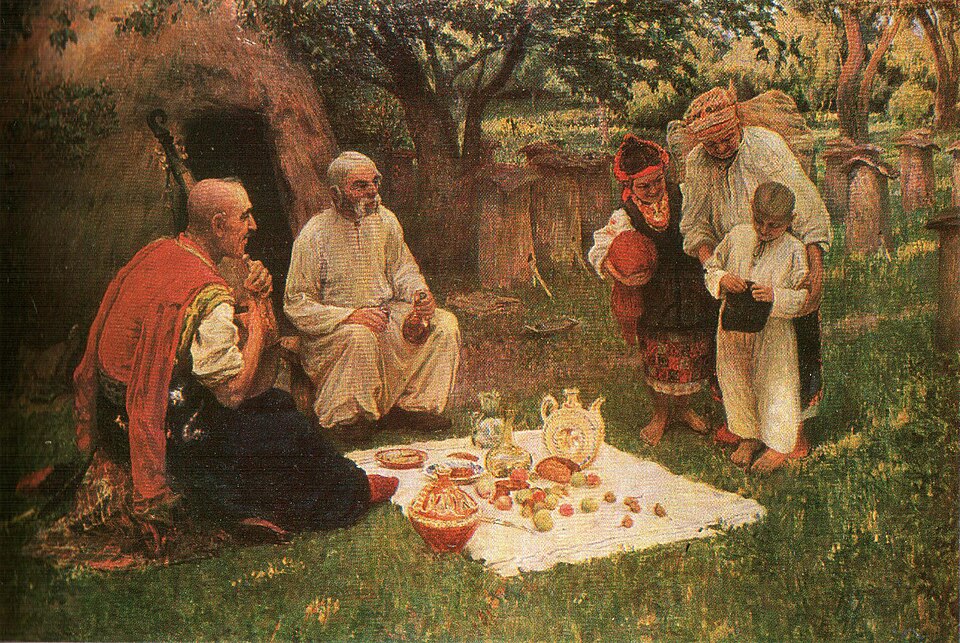 Photo: Photii Krasytskyi - Guest from Zaporizhzhia
The Sich enjoyed autonomy: the land was exempt from taxes and duties, except for military service. The Cossacks were engaged in agriculture, cattle breeding, fishing, and trade. Kosh's possessions included the islands of the Danube Delta, a part of Dobrudzha between the Svyato-Yurskoye estuary and Lake Hasan, and settlements between the Danube and the Tashaul River. Moldovans, Greeks, Bulgarians, Serbs, Nekrasovians, and Lipovans lived here alongside the Cossacks. The land remained under Ottoman jurisdiction, but the Cossacks were subordinate to their own Kosh.
The Sich accepted anyone, regardless of past, class, or faith, except for Muslims, who were banned by the Ottoman government. The traditions of governance and life were preserved: administrative, judicial, military, and economic power was exercised by elected officers. The re-election of atamans surprised the Turkish authorities: the unsuccessful one could be deposed and punished, and another could be elected in his place.
The officers included a koshovy, a clerk, a sergeant, and a tolmach. According to Turkish regulations, the koshovy had the rank of two-bunched pasha and communicated with officials only through a dragoman, speaking Ukrainian. He had a Turkish representative with him to transmit decisions, supervise, and collect taxes outside the Cossack lands. The koshovyi was subordinate to the Silistryn or Tulchyn pasha (Cossack bashi).
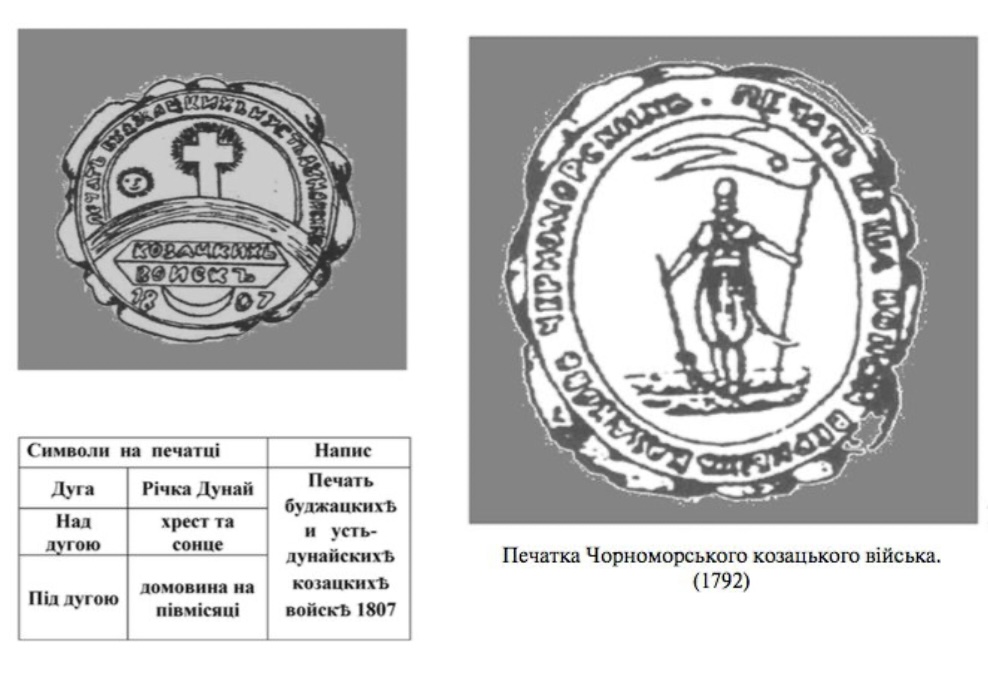
The Sich had about 40 kurens, most with names like those of the Zaporozhian Sich, and two, Bulgarian and Serbian. The kurenods consisted of bunchuk, pernach, topuz, and seal. The scribe and dragoman conducted correspondence and issued tickets to the Cossacks for crafts: at the end of the Sich's existence, the dragoman was the Tulchyn ayan Huseyn-Efendi.
The Ottoman government provided "fodder money" - salary, provisions (1200-1400 ok for a kuren), 200-300 levs, tithes from the profits of subordinate farmers and fishermen, as well as lentils, vinegar, oil, gunpowder, and lead.
Minor violations of Cossack customs were dealt with by atamans in kurens or by the community in districts, while serious violations were dealt with by the kosh ataman or the Sich society. Punishment included fines ("dzhereme") and whippings for theft or illegal raiding: serious crimes could result in the death penalty or a trial in Brail or Halak.
The Danubian Sich irritated the Russian government, which sought to resettle the Danube people, while the Ottoman Porte granted benefits and amnesty, which divided the Cossacks into pro-Russian and pro-Turkish.
During the War of 1812 with France, Russia developed a project to restore the "Free Danube Cossack Army" in Bessarabia. It was supposed to include former Cossacks, people from across the Danube, and free subjects. The army would have received the lands between the Danube and the Dniester, and would have been organized like the Black Sea Cossack army, with Cossack self-government and borders on the Danube and the Black Sea coast.
This project was submitted to the commander of the Danube Army , Admiral Pavel Chichagov. He generally approved the project, based primarily on military needs. However, the local administration, headed by the Bessarabian civilian governor Scarlat Sturza, strongly opposed the restoration of the Cossacks in the region. He strongly rejected the project, citing the experience of the formation of the Ust-Danube Army, which led to the activation of the peasant movement.
Interested in the rapid settlement of the border area between the Dniester and Danube rivers, the Russian government officially allowed the Cossacks to settle in Bessarabia. According to some reports, more than 1,300 Ust-Danube, Danube, and Black Sea Cossacks already lived there. The organization of their settlement was entrusted to the former elders of the Ust-Danube Cossacks, the aforementioned regimental ensign Roman Sogutchevsky and badge comrade Havrylo Varenyk, who were given the right to gather Cossacks from all over the region. With this measure, the government administration hoped to attract the Danube Cossacks to the side of Russia. On August 30, 1814, the government issued a manifesto that granted amnesty to the Danube Cossacks and allowed them to settle together with the former Ust-Danube Cossacks. In July 1816, it was extended. In an attempt to further encourage the exodus of the Danube people to Russia, they were granted the rights of foreign colonists in 1817.
All these measures had a significant impact on the Danube Cossacks. Moreover, the government actively used the Ust-Danube officers for this purpose. During 1815-1817, several groups of Cossacks crossed the Danube into Bessarabia. Among them were 70 Cossacks led by the kuren ataman of the Popovychiv kuren, Pylyp Dobrovolskyi, who was soon followed by another 600 people led by the kuren ataman of the Pashkiv kuren, David Novytskyi. This was not the first time that Pylyp Dobrovolsky crossed the border. Before that, he enlisted in the Ust-Danube Budzhak army, and then returned to Braila to join the Danube Cossacks. Another group of 670 Cossacks received land in the Izmail district, where they settled in the village of Drakulia (now Trudove village, Kiliya district, Odesa region) in 1818, together with the Ust-Danube Cossacks.
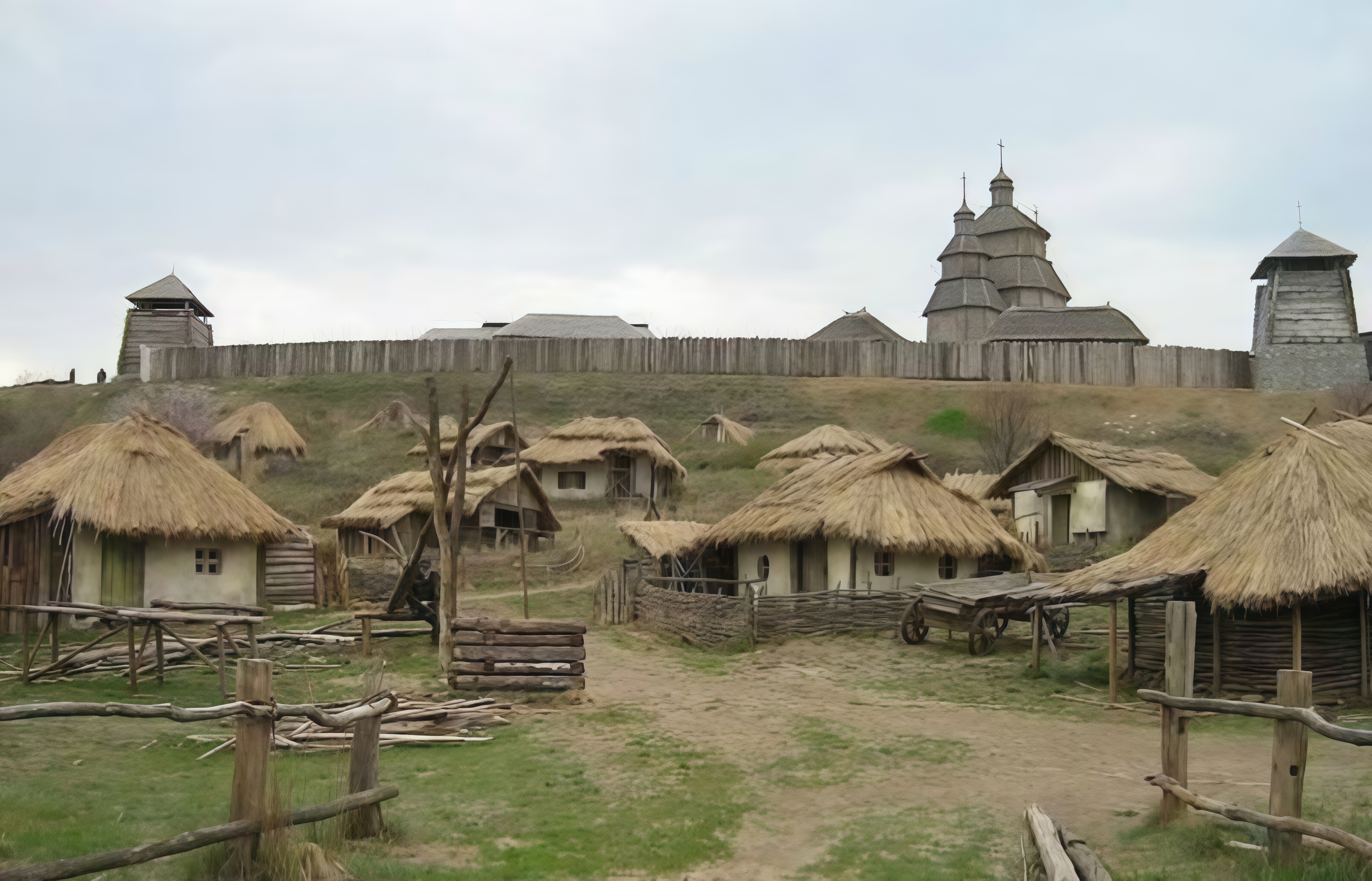
Photo: mukachevo.net
In 1820, another group of the Ust-Danube Cossacks and the Danube Cossacks, despite the resistance of the Zemstvo police, settled in the Akkerman district, founding the village of Akmangit. Among those who settled were the Danube elders - regimental sergeant major Roman Sohutchevskyi, badge comrade Havrylo Varenyk, and others. The new settlers of the villages of Drakulia and Akmangit refused to pay taxes and perform duties, resolutely seeking the creation of a Cossack army in Southern Bessarabia. According to their project, its territory was to cover the lands between the Danube and the Dniester. The Kish and Sich were located in the village of Akmangit. The Cossacks demanded exclusive rights to land use and fishing, and the establishment of their own self-government bodies. In exchange for these benefits, the army had to carry out border guard service on the Danube and the Black Sea coast at their own expense. The local authorities did not consider it possible to create a separate army from the Cossacks who settled in the Danube steppes, among other things, because they were "not reliable for the border guard" because "their fellow countrymen are in Turkish possessions near the border."
In the mid-1920s, the attitude of the tsarist administration toward the Cossacks in Bessarabia changed significantly. In 1824, a mass exodus of Cossacks from the Danubian Sich to the Russian borders began, which was caused by the Ottoman Empire's attempts to use the Danubians to suppress the national liberation movement in Greece. The agitation of the Ust-Danube people, in particular, the comrade-in-arms Ksavelii Cherniavskyi, also played a role. The overwhelming majority of immigrants settled in Bessarabia together with the Ust-Danube Cossacks, refusing to be subordinate to the department of foreign colonies.
This created some tension in the borderland. In an effort to stimulate further exodus of the Danube Cossacks and in view of preparations for war with the Porte, the Russian government in February 1827 allowed the Danube Cossacks to settle alongside the Ust-Danube Cossacks. The former were exempted from taxes, military service, and other duties for 10 years; resettlement to foreign colonies was not mandatory, and they were granted 30 desks of land per family. The latter were exempt from paying taxes for three years and from military service for 10 years.
The transition of the Cossacks lasted until the outbreak of the Russo-Turkish War of 1828-1829. Due to the increase in population in Akmangit, some Cossacks moved to a new place in Akkerman district, where they founded the village of Starokozache (now Bilhorod-Dnistrovskyi district of Odesa region).
The transitions of the Danube Cossacks to Russia were caused not only by the agitation of pro-Russian officers and promised benefits, but also by dissatisfaction with the situation in the Ottoman Empire. Military service was burdensome: Cossacks had to participate in the campaigns of Turkish troops, including punitive expeditions against Bulgarians, Greeks, and Serbs. Not all of them went on campaigns-many were engaged in agriculture, crafts, or fishing, especially in the grueling fisheries. This testified to the presence of the poor among them, the "holokolinchiks" and "bezpantsy" who often had nothing but rags.
The property stratification deepened the contradictions between the wealthy elite ("dukes", "sriblianyky"), who wanted to return to Russia, and the poor and old burlaks who preferred to stay beyond the Danube, fearing to lose their freedom. The Cossack element, which adhered to Zaporozhian traditions, gradually diminished, changing the very essence of the Sich's existence.
In the 1820s, the sultan's government, due to the crisis in the empire and the tense international situation, planned to relocate the Sich to remote Anatolia, which caused anxiety among the Cossacks. Meanwhile, Russia was preparing for war with the Porte. Since 1821, the General Staff had been developing routes for the army's movement to the Danube and the Balkans, and in 1826, plans were intensified because of the Greek issue.
One of the problems for the Russians was the small number of ships on the Danube and the lack of experience in navigating its floodplains and straits. Instead, the Danube Cossacks had light seagulls and oaks and knew the area well, which, as part of the Turkish army, could have seriously hampered Russian operations. This was recognized by Chief of the General Staff Ivan Dibich in his correspondence with Governor-General Mikhail Vorontsov. Dibich asked to develop measures to eliminate or relocate the Danube people in the event of war. Vorontsov replied that he had influential people among the Turkish Cossacks and would try to use them to bring the Cossacks back under Russian rule.
Thus, on the eve of the new war, both Russia and the Ottoman Empire tried to subjugate the Cossacks by various means (peaceful and non-peaceful). The Ottoman government increased the Cossacks' salaries and increased their supervision. The Russian government intensified its efforts to win over the Danube Cossacks. Through the mayor of Izmail, General Serhiy Tuchkov, secret negotiations began with the kosh ataman Vasyl Nezamayivsky and then with the new kosh ataman Yosyp Hladkyi about the possibility of the Danube Cossacks' defection. One part of the Cossacks accepted the offer to go over to the Russian side. But the majority was convinced that during the war Russia would seize the Sich lands, so they had to move to another place.
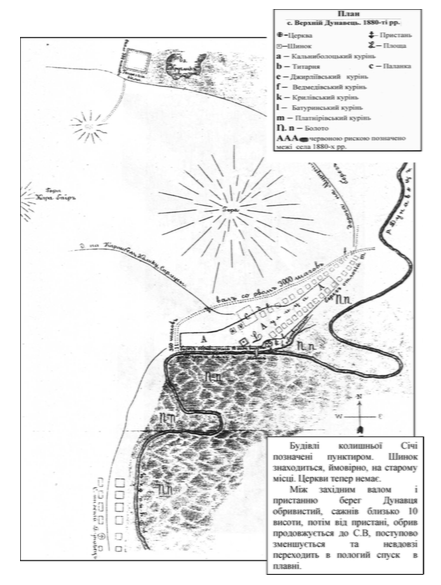
The plan of the Danubian Sich
The kosh atamans fully understood the complexity of the situation and its consequences for the population of the Danubian Sich. Ataman Semen Moroz had already noted that if they tried to escape to the side of the Russians, the Turks would destroy not only the Cossacks but also the rest of the Christian population of the region. Only the Cossack ataman Yosyp Hladkyi decided to take a decisive step. The attitude to this man among contemporaries and the assessment among scholars is ambiguous: from negative - an adventurer and a rogue - to legendary and outstanding for the Cossacks. He was not a representative of those "old" Cossacks who adhered to the traditions of Sich life. In his election to the position of koshovy, a significant role was played by Cossacks from the rayia, i.e. the Cossack peasant population that joined the Danube Cossacks in the first decades of the nineteenth century, mostly married Cossacks who did not have Cossack customs. While wandering around for work in southern Ukraine, he met some Danube people who had returned to Russia, but in Izmail he crossed the Danube. Posing as a loner (although he was already married and had four children), he enlisted in the Danube Cossacks, participated in the campaign near Missolunga, and received awards from the Turkish government. In October 1827, he was elected kosh ataman. Iosyp Hladkyi kept his plans to defect to the Russian side a secret, because, as before, such intentions were punishable by death in the Sich.
At the beginning of the war of 1828-1829, the Sultan's government mobilized the Danubians, sending about two thousand of them to Silistra, mostly supporters of the Turkish side. In May 1828, the Cossack leader Yosyp Hladkyi transferred the rest of the Cossacks across the Danube to the Russian army, taking the military office, church, treasury, flags, and kleinodes, which symbolized the transfer of the entire Cossack. This endangered the Ukrainian population that remained in the Danube region.
Some of the Danubians settled in the towns and villages of Dobrogea or served in Turkish fortresses. The Cossacks in Silistra were disarmed by the Turks and imprisoned in Adrianople and Constantinople, later released and returned to the Danube Delta. Later, some of the former Danubians from Russia became disillusioned and returned back across the Danube.
The Danubian Sich, having lived for decades in Turkish possession, preserved the military organization and traditions of the Zaporozhian chivalry, remaining a symbol of independent brotherhood for Ukrainians under Russian rule. Its activities were included in dumas, songs, and legends, and inspired Semen Hulak-Artemovsky to create the opera Zaporozhets Beyond the Danube. In Verkhniy Dunavets (Romania), a memorial sign was erected on the site of the Sich and the Church of the Intercession, named after the Cossack Church, is in operation. The local residents, descendants of the Danubians, still preserve their language, culture, and traditions.
Олена Бачинська