16 October 2026, 18:52
Oleksandr Naboka: "I was one step away from failure and disaster"
Ця стаття також доступна українською

Oleksandr Naboka. PHOTO: Oleksandr Naboka's Facebook page
A Doctor of Historical Sciences and head of the Department of Ukrainian History at Taras Shevchenko Luhansk National University, he has been evacuated twice: in 2014, he left occupied Luhansk, and in 2022, he left Starobilsk, where the university had relocated. Oleksandr Naboka experienced firsthand what it’s like to lose his home twice, pass through enemy checkpoints on the brink of repression, find new footing, and save his own department.
In this interview, the researcher discusses the challenges faced by Ukrainian educators and his own methods for combating depression—from working in the garden to immersing himself in icy water. Naboka also debunks academic myths about the “eastern territories,” explains how he creates an alternative history of the Luhansk region in his literary works, and analyzes contemporary U.S. geopolitics through the lens of his own research.
Background
Oleksandr Naboka is a Ukrainian historian, regional studies scholar, Doctor of Historical Sciences, and professor. He heads the Department of Ukrainian History at Taras Shevchenko Luhansk National University and serves on the board of the Regional Branch of the Ukrainian Society of Regional Studies. After the occupation of Luhansk in 2014, he relocated with the university to Starobilsk, where he lived in a dormitory with other faculty members and contributed significantly to the development of history and local studies in the Starobilsk region. As a result of the full-scale invasion, his family had to start over for the second time, settling in Zakarpattia. He runs the YouTube channel “Kohve Prokhvesora,” dedicated to researching contemporary national movements in the post-Soviet space. Oleksandr Naboka is the author of over 70 scholarly works and the novel “Red, Black, and Red Again,” as well as a co-author of the book “Essays on the History of Luhansk Region,” published in 2023.
The first forced departure is usually a shock and a time of uncertainty, while the second is already a bitter experience. What did those “tipping points” look like for you personally—the moments after which staying at home became deadly dangerous—both in Luhansk in 2014 and in Starobilsk in 2022?
The first time, the trigger was purely pragmatic—my wife’s pregnancy. Although in both 2014 and 2022, I had absolutely no desire, from a worldview or ideological standpoint, to remain under occupation. What was happening there had nothing to do with me. I couldn’t see myself there at all.
In Starobilsk, I was a fairly well-known and respected figure; I headed the Department of Ukrainian History at Luhansk National University. There was a very real fear of repression. As journalist friends told me, this fear was entirely justified: the occupiers simply hadn’t gotten around to me yet, but my time was inexorably approaching. Staying there and doing anything was ideologically unacceptable. I couldn’t imagine going to work at any institution under occupation, whether in Luhansk or Starobilsk.
Of course, there were moments of weakness, but the turning point came when Zhanna Marfina visited our dormitory in Starobilsk. She had defected to the occupiers’ side and taken the helm of the fake “Luhansk State Pedagogical University”—an occupation clone of our university.
She issued an ultimatum: in four days, all our faculty members were to appear at a meeting of the city council to decide the “future of the institution.” This stance taken by our colleagues—who, without exception, refused to serve the new authorities—inspired the entire staff to make a collective decision to leave.
You left Starobilsk on one of the carrier’s last trips, and just a few days later, a similar bus on that very same route was shot at. How does it feel to realize that your life depended on a matter of days or even hours?
The weeks leading up to that departure were pure horror. But once the process began, everything was driven by basic survival instincts—my body went into full-scale mobilization. Even when you see the aftermath of shelling or drive through fields across the de facto front line, instead of reflecting on it, you switch to iron-clad composure and a clear sequence of actions.
The realization of the mortal danger didn’t sink in until a few days later. I recalled the rude remarks from Russian soldiers at the checkpoints; I had to make things up and explain why, with a Luhansk residence permit, I was traveling to Kharkiv. Only later do you realize: you were literally a step away from failure and disaster, but at the very moment the events unfolded, you acted with absolute inner calm.
You’re a professor and a scholar, but in Zakarpattia you worked in the garden, doing ordinary physical labor. Didn’t that become a way to regain a sense of reality and control over your life?
For the first year or year and a half, I really did a lot of farming. Tomatoes, potatoes—they brought me comfort, kept my mind occupied, and allowed me to escape depression for at least a few hours of normal perception of the world. Later on, more exotic activities entered my life, such as diving into cold water. The rush of endorphins pushed the negative thoughts aside. Then I remembered my bike and going for walks. For me, it’s very important to find ways to carve out pieces of a normal life from the depressive state we’re all in.
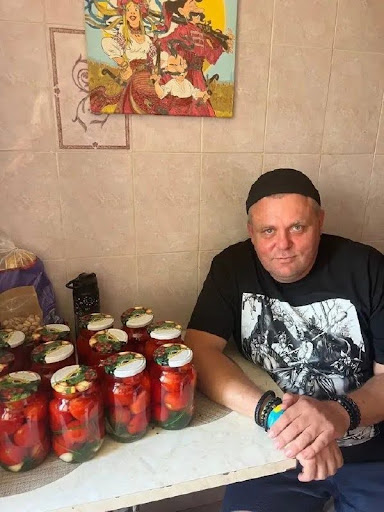
PHOTO: Oleksandr Naboka’s Facebook
How difficult is it to cope not only with the loss of a home but also with the loss of one’s familiar professional environment?
I’ve managed to preserve my professional environment. I’m looking out for my colleagues, keeping a close eye on the university and my department, and I’ve also discovered a new passion for teaching at a high school, where I advocate for high-quality online education and meaningful interaction with students.
However, what worries educators the most right now is the demographic crisis caused by the war and the power outages, which the enemy is using to disrupt the educational process. Compounding this is the threat of job cuts and low salaries, which is causing people to take leave amid complete uncertainty. This is the main challenge to the psychological well-being of the educational community. Educators are doing everything they can to teach children and certainly deserve not to live in constant fear for their future.
You once said that it really annoys you when people from safer regions start lecturing those who have lived through the occupation. Who most often acts as these “teachers”?
At the start of the full-scale war, even here in Zakarpattia, it was clear that people didn’t fully understand what a state of war entailed. Against this backdrop, there were instances when people tried to lecture us on life, saying, “It’s your own fault that you lost everything.”
But today, this hardly ever happens. Moreover, we must give credit to our internally displaced persons: in many ways, they are true passionates. This group of people is focused on survival and often achieves successes that one wouldn’t expect from people without such experience. This reality forges an iron will. We grow only through stress and by overcoming challenges.
How do you see Luhansk Oblast today: as a specific territory, as a memory, as a culture, or as a community of people?
First and foremost, it exists as a community of people—active displaced persons, students who continue their studies in online schools, teachers, professors, and journalists. This is my community. As Soviet propaganda used to say about White émigrés, these are the ones who rail against the Soviet regime in Parisian café-chantants.
The second aspect is memories and academic depth. I became an active, deeply committed Ukrainian only after 2014 and 2022. Now I recall my native village, the site of the old zemstvo school, where the Hetmanate’s guard post once stood. I recall the cemetery, neglected by the Soviet authorities, where the victims of the Holodomor were buried and where wooden and stone crosses lay toppled. Back then, I didn’t fully understand the significance of these artifacts, but now I would very much like to visit that place and see it all with my own eyes. I began my local history research not out of pragmatism, but out of a feeling described by an American researcher of the Holodomor: “The dead turned to me.” I would like to see with my own eyes the tangible echoes of the voices of those who are gone and cannot be brought back.
As for the gulf between those who left and those who have been living under Russian propaganda for over ten years, I recently received a verbal “scolding” from Serhiy Zhadan. I told him that he is an apologist for soft power, while I advocate for a tougher stance against “vatnost.” Zhadan replied that I’m speaking out of momentary vengeance and that one must rely on the law, not on one’s own emotions. Perhaps he’s right. But I no longer have any desire to prove anything through soft power. Overall, Ukrainian identity is primary there, while Russian IPOs and projects are secondary. In fair competition, the primary always triumphs over the secondary.
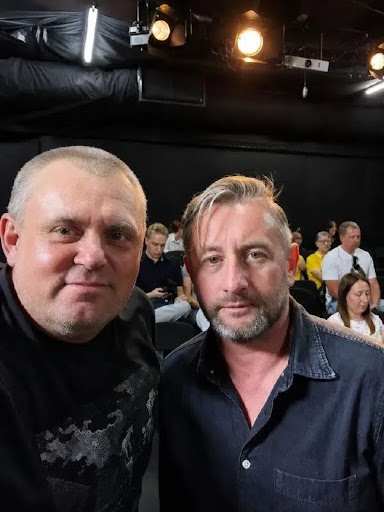
Oleksandr Naboka and Serhiy Zhadan. PHOTO: Oleksandr Naboka’s Facebook
Do you feel that Ukraine itself hasn’t done enough to address the history of the Luhansk region?
Probably, yes. Back then, there was no narrative at all about the need to develop the Ukrainian history of the Luhansk region. No one was interested in it, except for a group of enthusiasts. Our university tried to preserve the memory of its repressed professors from the 1920s and 1930s, such as Serhiy Hrushevsky and Nataliia Mirza-Avak’yants. But for most people, promoting Ukrainian culture was the domain of a few oddballs. I remember the titans among the professors of Ukrainian language and literature—in that social context, they seemed like eccentrics in their embroidered shirts. The context itself pushed Ukraine-centered humanities to the margins.
But we shouldn’t pin all the blame on Ukraine alone. We must take into account the powerful influence of Russia, which operated like a planned special operation. It could not be countered by scattered teachers in rural schools who were forced to set up ethnographic corners with spinning wheels for free. Ukraine has always lacked the funds for this.
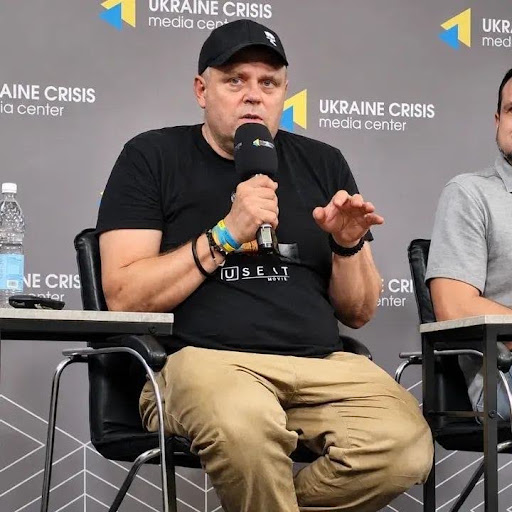
PHOTO: Oleksandra Naboka’s Facebook
My personal fault lay in being overly tolerant and failing to understand that the promotion of Russian culture is a means of establishing geopolitical influence. At first, it seemed like a normal cultural presence. I didn’t see the threat.
Today, Ukrainian scholars face a dilemma: on the one hand, there is a desire to break away from the Russian academic sphere; on the other, in many fields, fundamental research or primary sources exist in Russian. Do you feel this problem?
Of course, I do. I don’t understand why, in my research findings, I should have to conceal or disregard the historical and statistical descriptions of the Kharkiv or Katerynoslav dioceses written by 19th-century Russian authors. How can one write about the urban development of Odesa or the colonization of our region without these sources?
Often, the only source of information about the founding of a particular village or church by the “Little Russians” is the works of 19th-century Russian Orthodox priests. For them at the time, the fact that the settlements were founded by Cossacks posed no contradiction. So why should I hide this? This calls for a strong stance. Dmytro Bahalii, for example, wrote his works in Russian because such were the conditions of the time, but he researched the Ukrainian region.
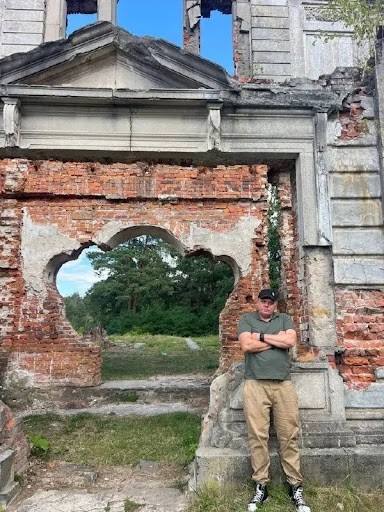
PHOTO: Oleksandr Naboka’s Facebook
Of course, we must take into account the ideological clichés of Russification and not accept the claims about “Don Cossacks” as truth. That is precisely why the classical critical method of scientific research exists. A competent, Ukraine-oriented scholar is capable of distinguishing between objective facts and ideological fabrications.
Let’s talk about your novel *Red, Black, and Red Again*, which was adapted into a play by the *Wild Theater*. Why was it important for you to tell the story of the Luhansk region from 1917 to 1921 specifically through a work of fiction?
Because there were no popular texts about this period in the Luhansk region at all. “Red, Black, and Red Again” should be viewed as an explosive mix of “The Good Soldier Švejk” and Kurt Vonnegut’s “Slaughterhouse-Five.” Behind its esoteric and absurdist form lies an extremely relevant theme—post-traumatic stress disorder among soldiers.
Soviet regional literature wrote about these events in a straightforward and overly ideological manner. As for works of fiction, there was perhaps only Volodymyr Sosyura with his *The Third Company*. We, however, wanted to create something based on local material through the lens of the absurd. Imagine the Kuryachiv region, where the first Soviet “star gatherings” are held in the local church, an occult pentagram is drawn, Satan is inadvertently summoned, and a zombie apocalypse is triggered. It was a bold experiment as part of the “Pirate Bay” project (an independent creative collective comprising artists, screenwriters, and authors—ed.).
In 2023, the book *Essays on the History of the Luhansk Region* was published, which you wrote together with your colleagues (and in 2025, a second, expanded edition was released). How did you work on it while the region itself was under occupation?
It was precisely the fact of the occupation that inspired us to write this book. As I’ve already said, we began by “letting the dead speak.” We came to realize that imperial splendor is nothing but tinsel. Far more valuable evidence of the region’s Ukrainian identity is, for example, earthenware jugs of a certain design and durability, crafted by local artisans, rather than the palaces of the nobility. The fundamental point is that it was the Ukrainians who settled this wild East and laid the foundations of civilization here, while the empire merely added its own gloss.
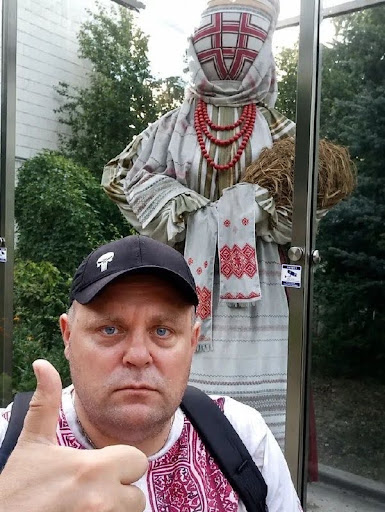
PHOTO: Oleksandr Naboka’s Facebook
In the book, we uncovered incredible layers of history, such as the European influence on the industrialization of the Donbas. We’re talking about the Belgian businessman Ernest Solvay, who built a soda ash plant in Lysychansk and introduced generous social benefits for workers, lowered food prices, and allocated land for vegetable gardens. Against this backdrop, the Bolsheviks were completely outmatched. They later smeared his memory, but the facts remain. Or take the village of Kalmykivka, where in 1929 the villagers pooled their money and bought their first tractor on credit. Stalin’s violent collectivization was unnecessary—the peasantry was recovering on its own and investing in industry. We have brought local history studies back from chronic marginalization into the mainstream, where it is widely appreciated.
Your doctoral dissertation focused on U.S. foreign policy in East Asia in the 19th century. How does this historical experience help us assess the current U.S. strategy regarding the war in Ukraine?
In the second half of the 19th century, the U.S. developed its own unique strategic vision of international politics, which differed radically from European colonialism. Instead of seizing territory, the Americans proposed an “open-door policy”—the creation of a global commercial system where goods, capital, and services could move freely. They opened up Japan and China precisely for the sake of free trade, believing that mutual enrichment makes war unprofitable.
Today we see this logic in the rhetoric of Trump himself: “Why don’t we all sit down, come to an agreement, and do business together?” He puts it bluntly, but that is the essence of the American approach: aggressive war destroys business, investment, and shared prosperity. U.S. policy was built on this approach both after World War I (investments in Germany) and after the Cold War with regard to Russia (turning it into the world’s gas station so that everyone would get rich and no one would go to war).
But this system has one vulnerability: dictators perceive compromise and the pursuit of mutual trade as weakness. Hitler, Putin, and now Xi Jinping attribute their countries’ economic prosperity to their own “wisdom,” begin to isolate themselves, brandish weapons, and grow increasingly brazen. American business says, “Give us independent courts to protect capital,” while the dictator shouts, “You’re undermining our stability!” This is the main contradiction of the global system, the foundations of which were laid back in the 19th century.
Where is your academic and creative research headed now?
My scientific research is entirely focused on further exploring the history of the Luhansk region and the Donbas. The Luhansk region is rich in true historical mysteries and forgotten Ukrainian heroes. Young people have now picked up on this trend; my ideas and storylines are already being actively used for TikTok videos, which is very gratifying. We’re preparing new popular science publications.
Creative projects are on hold for now; one of the members of our “Pirate Bay” is currently serving in the Armed Forces of Ukraine. But our previous project, “Carpathian Western,” is enjoying great success on stage at the Vasyl Vasylko Ukrainian Theater in Odesa. Combining scientific regional studies with artistic creativity—that is my main ambition at this stage.