13 July 2026, 11:06
In the Odesa region, 37 FOPs have been blacklisted by antitrust authorities
Ця стаття також доступна українською

PHOTO: Generated by AI
The Antimonopoly Committee of Ukraine has blacklisted 37 individual entrepreneurs from the Odesa region, 30 from the Mykolaiv region, and seven from the Kherson region.
This was reported in a study by analysts at the OpenDataBot platform.
Entrepreneurs are blacklisted if the AMCU finds them guilty of collusion while participating in government procurement. This refers to situations where several bidders merely create the appearance of competition but, in reality, agree in advance on who will win. As a result, the government may end up overpaying for goods, works, or services, while other bidders lose the chance to win the tender fairly.
Being placed on this list has consequences: for three years following the AMCU’s decision, such entrepreneurs may be barred from participating in public procurement. That is why contracting authorities regularly check this list before determining the winning bidder.
As of the end of June 2026, there were 797 FOPs on the AMCU’s blacklist in Ukraine. The number of offending businesses is growing year over year. While 242 decisions regarding business entities were issued in 2024, that number rose to 306 in 2025. This is the highest figure in the last 10 years. Another 186 entrepreneurs, whom the committee found to have engaged in anti-competitive concerted actions, were added to the list this year.
The largest number of sole proprietors on the blacklist are registered in Lviv Oblast—95 entrepreneurs, or nearly 12% of the total. Next are Dnipropetrovsk Oblast (81 sole proprietors), Kyiv (78), Vinnytsia Oblast (52), and Ivano-Frankivsk Oblast (39).
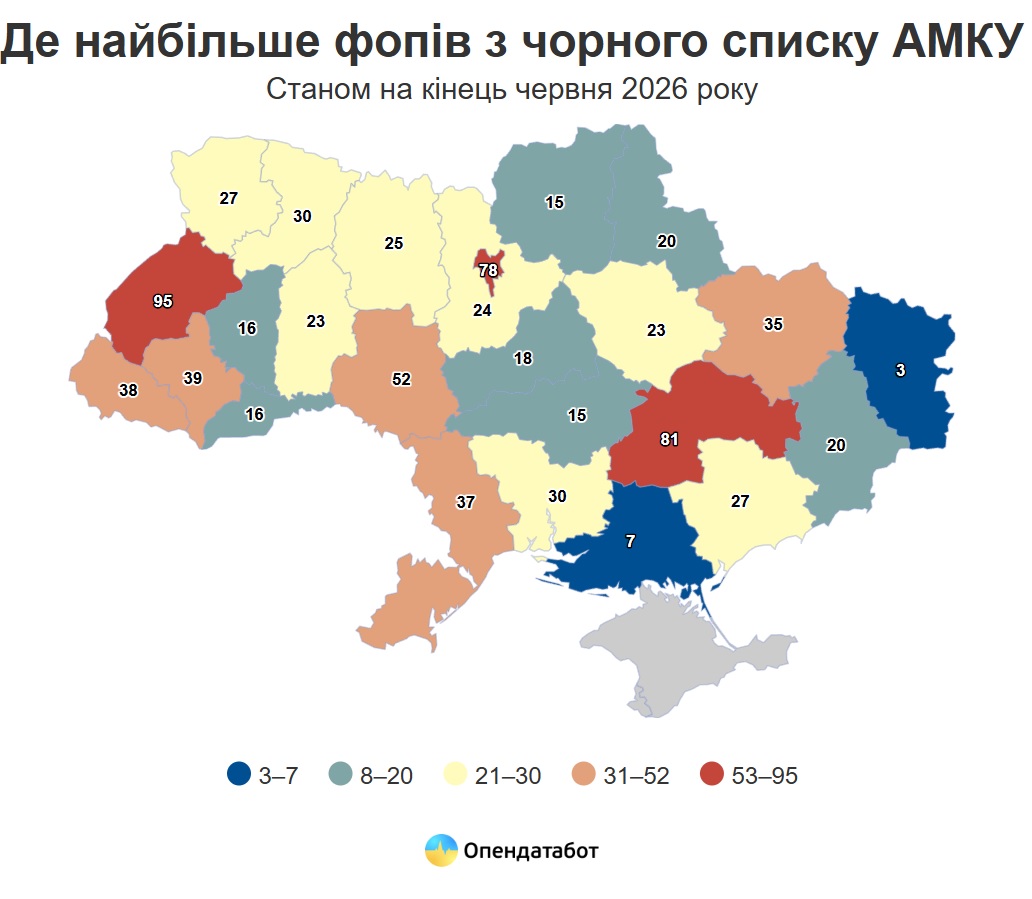
PHOTO: OpenDataBot
Nearly one in three of these entrepreneurs works in wholesale trade—there are 231 such sole proprietors. Another 139 entrepreneurs are engaged in retail trade. Also among the violators are representatives of the food service industry (47), specialized construction work (33), and building construction ( 32).