Меню
Соціальні мережі
Розділи
June 4, 2023, 7:11 p.m.
The UN International Tribunal for the Law of the Sea: an authoritative arbitrator or a legal advisor
This article also available in English5998

Tugboat Yany Kapu, IBAC Nikopol and Berdiansk
On November 25, 2018, near the Kerch Strait, Russia seized 24 Ukrainian sailors, the tug Yany Kapu and small armored artillery boats Nikopol and Berdiansk with the use of weapons. On May 25, 2019, the UN International Tribunal for the Law of the Sea ordered Russia to release the sailors and return the ships. The sailors returned home only in September, and the ships almost a year later on November 18, 2019. At the same time, Putin's spokesman Peskov denied that the return of the sailors was related to the Tribunal's decision. What kind of organization is the UN International Tribunal for the Law of the Sea in the material of Intent.
General characteristics of the UN
General description of the UN International Tribunal for the Law of the Sea
General characteristics of the United Nations
The United Nations consists of 193 states. All sovereign countries can be found among the UN member states, except for the Vatican. Such a respectable representation potentially allows to consider and resolve any issues of global or regional level. In particular, the UN is able to extinguish armed conflicts, as it was repeatedly demonstrated in the XX century (Iraq, the former Yugoslavia, Somalia).
The organization is headquartered in New York. The UN also has additional offices in Vienna, Geneva, Nairobi and The Hague. The organization uses six official languages: Arabic, Chinese, English, French, Russian and Spanish.
The UN structure includes six main bodies: The General Assembly, the Security Council, the Economic and Social Council, the Secretariat, the International Court of Justice and the Trusteeship Council. However, the latter body has been formally suspended since 1994. The chief official of the UN is the Secretary-General. Since January 1, 2017, this position has been held by Portuguese politician and diplomat Antonio Guterres.
General characteristics of the UN International Tribunal for the Law of the Sea
The United Nations International Tribunal for the Law of the Sea (the "Tribunal") is an intergovernmental judicial organization that considers legal disputes relating to the interpretation or application of the Convention on the Law of the Sea (the "Convention"). The Tribunal has 168 parties that have acceded to the Convention. Among them are 167 countries and the European Union. The organization is headquartered in Hamburg. The working languages of the Tribunal are English and French. The organization's budget for the 2023-24 fiscal year is EUR 23 million 443 thousand 900. The Tribunal was established in 1982, but the first session was held in 1996.
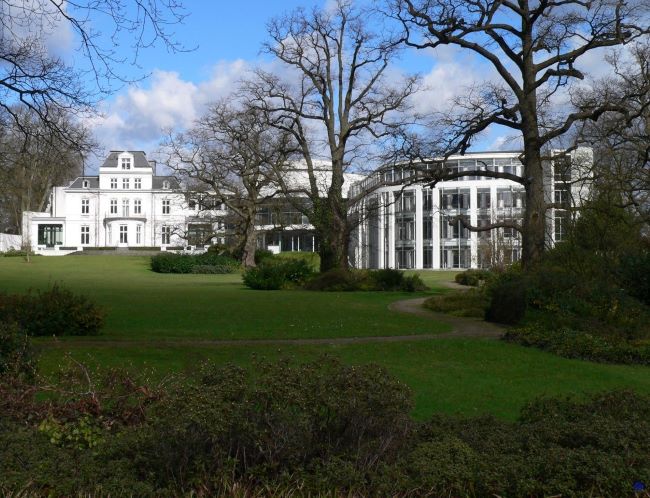
The headquarters of the Tribunal. Photo: Wikipedia
The jurisdiction of the Tribunal extends to disputes in the field of the law of the sea, but has certain limitations:
- Parties to the Convention can resolve various disputes in the field of the law of the sea through the Tribunal.
- Countries that are not parties to the Convention may, by mutual agreement, refer to the Tribunal a dispute that falls within the jurisdiction of any other agreement recognizing the competence of the Tribunal.
- In the event that the jurisdiction of the Tribunal is in doubt, it is the Tribunal that shall decide on its own jurisdiction.
- The Tribunal may impose provisional measures to prevent negative consequences in the development of the case.
- The Convention requires the parties to immediately release the detained vessel and its crew. If this does not happen, the case may be referred to the Tribunal by the country whose vessel and crew were detained.
- When acceding to the Convention, a country may specify the provisions to which the jurisdiction of the Tribunal will not apply.
The Tribunal consists of 21 members elected by secret ballot by the parties to the Convention. Each party may nominate two candidates with a high reputation in the field of the law of the sea. At the same time, each country may have only one member of the Tribunal. All major legal systems of the world should be represented in the Tribunal. In addition, each geographical region established by the UN General Assembly (Africa, Asia, Eastern Europe, Latin America and the Caribbean, Western Europe and other countries) must be represented by at least three members. The members of the Tribunal are elected for 9 years, with one third of the judges re-elected every 3 years.
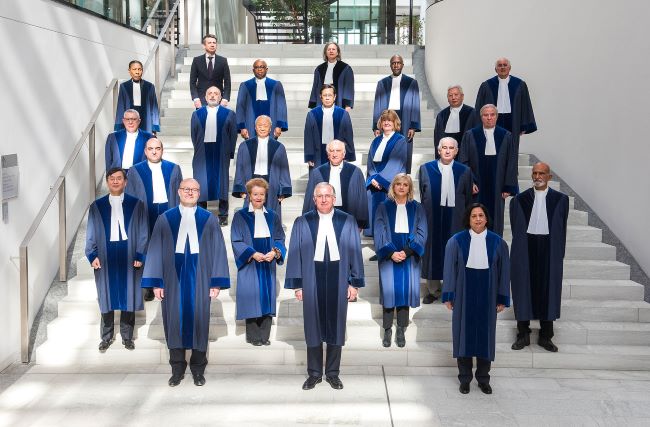
Members of the Tribunal. Photo: Tribunal
From among its members, the Tribunal elects a chairperson and a vice-chairperson for 3 years. The President manages and directs the work of the Tribunal and represents the Tribunal in its relations with the participants. The President shall attend all meetings of the Tribunal. In the event of a tie during the voting, the President shall have a casting vote. Since October 2, 2020, the position of President of the Tribunal has been held by South African Judge Albert Hoffmann.
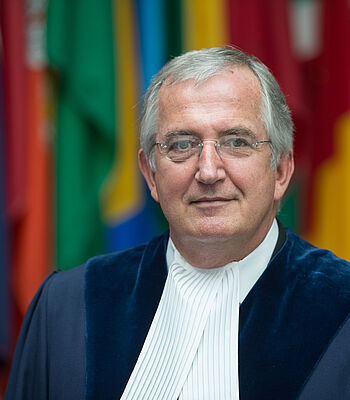
President of the Tribunal Albert Hoffmann. Photo: The Tribunal
All disputes are resolved either by the Tribunal or by chambers composed of the Tribunal's judges. Some chambers function on a permanent basis, but an ad hoc chamber may be established to resolve a particular dispute.
The Tribunal has registered and opened 32 cases. The first case was opened in 1997 and concerned the application of the State of Saint Vincent and the Grenadines regarding the seizure of its vessel by Guinea. The last case was heard in April 2023. The tribunal decided to establish a special chamber to resolve the dispute between the Marshall Islands and Equatorial Guinea over the tanker Heroic Idun and its crew.
A significant part of all the cases under consideration concerns the demand for the immediate release of the detained vessel and its crew. In particular, such disputes include the case of Panama v. France regarding the release of the Camouco and its crew, the case of Seychelles v. France regarding the release of the fishing vessel Monte Confurco and its crew, and the case of Russia v. Australia regarding the release of the Russian vessel Volga and its crew for illegal fishing in the exclusive economic zone of Australia. In 2013, the Netherlands filed a claim against Russia with the Tribunal, demanding the release of the Arctic Sunrise vessel and its crew, who were detained near a Russian drilling platform. It should be noted that the Tribunal fully satisfied the Netherlands' claims.
A quarter of all cases are related to the need for provisional measures. In particular, such disputes include the case of New Zealand and Australia v. Japan. The countries applied to the Tribunal because Japan, instead of taking measures to conserve southern bluefin tuna, fished for it in 1998 and 1999. We can also mention the case of Ireland v. the United Kingdom, initiated in 2001. Ireland appealed to its neighbors, and later to the Tribunal, to suspend the activities of the MOX plant in Sellafield and to stop the international movement of radioactive materials related to the plant's activities.
Three times the Tribunal has considered cases concerning the delimitation of maritime boundaries. For some time, it was believed that such disputes were within the competence of the International Court of Justice. The first such case was considered by the Tribunal in 2009. The dispute over maritime boundaries in the Bay of Bengal between Bangladesh and Myanmar was resolved in favor of the former in 2012. Two other boundary disputes took place between Ghana and Côte d'Ivoire in the Atlantic Ocean in 2014 and between the island of Mauritius and the Maldives in the Indian Ocean in 2019.
The Tribunal has twice been asked for an advisory opinion. In particular, in 2010, the International Seabed Authority applied to the Seabed Disputes Chamber of the Tribunal to clarify the extent of responsibility of the countries party to the Convention, which act as guarantors for private companies planning to develop the oceans.
Ukraine became a party to the Convention in 1999. In 2011, Ukrainian international lawyer Markiyan Kulyk became a member of the Tribunal. In 2020, he was re-elected for the next 9 years.
On November 25, 2018, Russian border guards seized the Ukrainian tugboat Yany Kapu and small armored artillery boats Berdiansk and Nikopol, which were moving from Odesa to Mariupol, near the Kerch Strait. 24 Ukrainian sailors were sent to prison. In response, Ukraine appealed to the Tribunal for the immediate release of the ships and crew. russia emphasized that it did not recognize the jurisdiction of the Tribunal in this case, citing the restrictions it had imposed when signing the Convention.
The Tribunal initially recognized its jurisdiction in the case, and on May 25, 2019, ordered Russia to immediately return the ships and release the imprisoned sailors. However, the sailors returned to Ukraine only on September 7, 2019, as part of a prisoner exchange with Russia, and the ships only in November. At the time, Putin's spokesman Peskov said that the return of the ships had nothing to do with the Tribunal. In turn, Russia's Deputy Foreign Minister said that the transfer of the seized Ukrainian boats and tugboat was allegedly not connected to the upcoming meeting in the Normandy format (scheduled for December 9, 2019 - ed.).
Return of sailors and political prisoners from Russia. Video: DW in Ukrainian
The Tribunal is a relatively young, but quite reputable organization. The fact that 167 countries and the European Union are members of the organization, i.e. virtually all countries of the world, speaks to the authority of the Tribunal. The Tribunal's jurisdiction extends to the entire range of issues addressed in the Convention, i.e., it actually covers the entire law of the sea.
On the other hand, several criticisms can be made of the Tribunal's functioning. Firstly, despite the wide range of provisions set out in the Convention on the Law of the Sea, it is quite obvious that the Tribunal is mainly used to resolve a narrow range of issues - the immediate release of the ship and crew and the introduction of provisional measures. For more complex issues, countries tend to turn to other organizations, such as the International Court of Justice and the Arbitral Tribunal at the Permanent Court of Arbitration in The Hague.
Secondly, the Tribunal apparently has no effective mechanism to compel the parties to the Convention to comply with the organization's decisions. This shortcoming was clearly demonstrated by Russia in the case of the release of Ukrainian sailors. Thus, the de jure potential of the Tribunal does not correspond to the de facto potential. We believe this is a serious enough reason to make changes to the organization's work.