Меню
Соціальні мережі
Розділи
May 8, 2023, 9:10 p.m.
International Grains Council
This article also available in English4863

Image: world-grain.com
Representatives of the UN, Ukraine, and Turkey failed to reach an agreement with Russian representatives on a grain deal on May 5, 2023. The Kremlin continues to blackmail the world by stopping food exports from Ukraine. Why do we not hear the voice of the International Grains Council in these circumstances? What kind of organization is it and what role does it play in the global economy - in the material of Intent.
General description of the International Grains Council
General description of the International Grains Council
The International Grains Council (hereinafter referred to as the IGC) is an intergovernmental organization that promotes cooperation in global grain trade, contributes to the stability of the grain market and the security of the global food system. The IRZ analyzes data on grains, pulses, rice and oilseeds and provides information to governments, private organizations and international bodies. The organization also administers two international treaties: The Grain Trade Convention and the Food Aid Convention. The headquarters of the IRS is located in London. The official languages of the organization are English, French, Russian and Spanish. The budget of the MRZ in the fiscal year (July 2022 - June 2023) amounted to 1.74 million pounds sterling.

The headquarters of the MRZ in London. Photo: farmtario.com
In the 30s of the twentieth century, a number of conferences were organized to discuss problems in agriculture and to coordinate grain trade issues. In 1933, the first International Wheat Agreement was signed and the Wheat Advisory Committee (the predecessor of the MRA) was established to facilitate the implementation of the agreement. Subsequent events showed that the agreement was ineffective. In 1942, the International Wheat Board was created to take over the duties of the Advisory Committee. In 1949, the multilateral International Wheat Agreement was concluded, which laid the groundwork for cooperation in the industry.
In 1968, the International Grains Agreement was signed, consisting of two separate treaties. The Wheat Trade Convention established minimum and maximum prices, as well as the rights and obligations of the parties to the agreement. The Food Aid Convention ensured annual grain supplies of more than 4 million tons to developing countries.
In 1995, the Grain Trade Convention was agreed upon, covering wheat and all feed grains. The IRZ acted as the administrator of the Convention. In 2009, the Grain Trade Convention was amended to include rice in the definition of "grain" within the agreement. In 2013, the definition of "grain" was expanded to include oilseeds. In 2021, the IGC agreed to include pulses in the definition of grain.
Any country that has acceded to the Grain Trade Convention becomes a member of the Grain Council. The organization currently has 30 members, including the Vatican and the European Union. As stated in the IRZ's report for the 2021-22 fiscal year, the organization held membership talks with Bangladesh, Brazil, and Mexico.
The members of the MRA are divided into exporters and importers according to their international grain trade activities. Exporters and importers receive 1,000 votes each in decision-making. Each of the groups distributes votes among its representatives depending on the country's share in the global trade in grains, pulses, rice and oilseeds. No member can have more than 333 votes.
Each member may withdraw from the organization if it submits a written request no later than 90 days before the end of the fiscal year. This is exactly what Egypt did when it submitted its application in March 2023. According to representatives of the Egyptian Ministry of Foreign Affairs, the country's membership did not provide it with any benefits.
A member of the IGC may be expelled from the organization if its activities contradict the tenets of the Grain Trade Convention. The issue of expulsion is decided by voting. If the vote is successful, the member ceases to be a part of the organization after 90 days.
Structurally, the IGC consists of the Council, a number of subsidiary committees and the Secretariat. The Council holds two regular sessions each year, which are attended by representatives of all the members of the IRH. The body elects a chairman and a deputy chairman to lead the work of the body throughout the year. The Council is authorized to make decisions by voting, but tries to resolve issues by consensus. The main functions of the Council include electing the Executive Director, monitoring the implementation of the Grain Trade Convention, discussing the current state of the grain market and its development prospects, monitoring changes in national grain policies of different countries and assessing the impact of such changes on the global market.
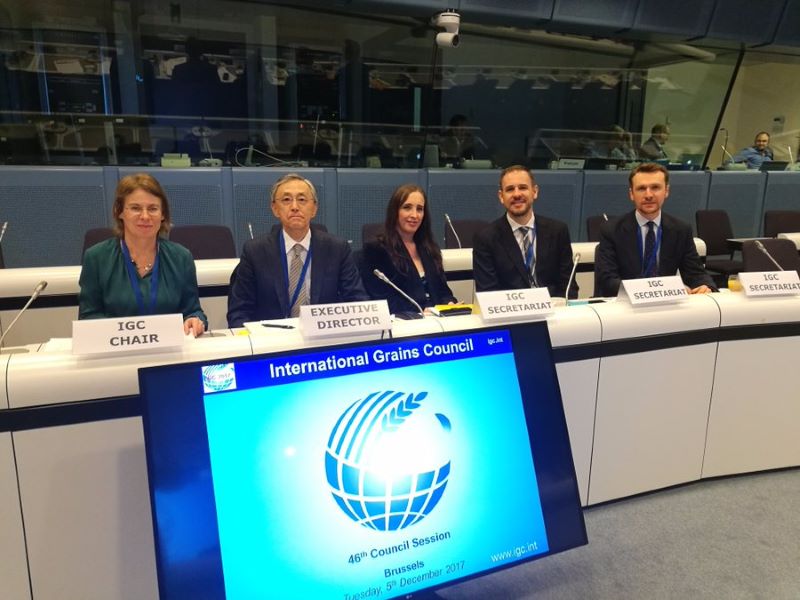
A session of the IGC in December 2017. Photo: Twitter of the MSC
The Market Conditions Committee monitors the situation on the global grain market and examines the prospects for its development. The Committee also analyzes the implementation of the work program and monitors ocean freight rates. The body meets twice a year.
The Administrative Committee consists of a maximum of 16 members, with members with 50 votes automatically joining the body. Vacancies are filled by those elected by the Council. The Committee meets twice a year to discuss administrative and financial matters and to make recommendations to the Board.
The Budget Committee is composed of a maximum of 10 members and performs a preliminary analysis of the budget proposal made by the Secretariat for the new fiscal year.
The Food Aid Committee is composed of 16 members who are signatories to the Food Aid Convention. The Committee is a forum for discussion and exchange of information on the nutritional needs of countries around the world, especially in critical and crisis situations.
- Read also: International Criminal Police Organization
The Secretariat consists of the Executive Director, who is the chief executive officer of the organization, and a staff of staff appointed by him to support the work of the Council and committees. The responsibilities of the Secretariat are to administer the Grain Trade Convention and the Food Aid Convention; to ensure the effective management of the IGC; to prepare for dissemination to members, subscribers and the general public information on world markets for grains, pulses, rice and oilseeds; and to promote cooperation between governments and industry. The Executive Director is elected for a term of up to 5 years. He/she can be re-elected for another term. Since February 2018, the position of the Executive Director has been held by the French functionary Arnaud Petit.
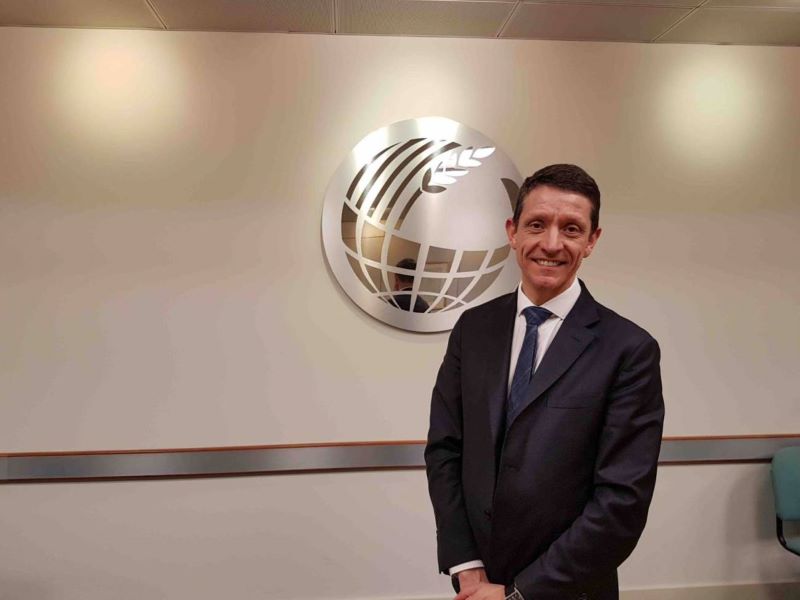
Arnaud Petit, Executive Director of the MFA. Photo: tradefinanceglobal.com
The main activity of the MRA is to monitor the markets for grains, pulses, rice and oilseeds on a daily basis. Based on this monitoring, the organization creates daily reports and provides information services on its official website. The information on the website is divided into that which is freely available and that which can only be obtained through a subscription. The information in the public domain includes the Grains and Oilseeds Index, supply and demand ratios, and forecasts for a number of countries and commodities. More detailed market analysis and statistics are available through subscription in the form of weekly and monthly reports and other information services. Daily export price quotes, market reports, and extensive databases are available to MRZ members. Members of the organization can also exchange information at meetings of the Market Conditions Committee and at Council sessions.
The MSC cooperates with a number of international organizations: International Sugar Organization, FAO, WTO and the Organization for Economic Cooperation and Development. Starting in 2018, the MRA also established relations with regional organizations such as the Eurasian Economic Commission and the Institute for the Development of Agricultural Cooperation in Asia.
As part of the London Grain Week, the International Grain Conference is held annually as a global forum for discussing important issues and an opportunity to bring together international buyers and sellers, agricultural representatives and senior officials. The conference takes place over two days. The first day is devoted to discussing risks and opportunities in global trade, and the second day is devoted to workshops. The 2022 conference brought together more than 300 participants from 62 countries.
Ukraine has been a member of the IRZ since 1998 as an exporting country. Since then, Ukraine has been participating in the work of the Council and committees of the organization. In 2021, Taras Kachka, the Trade Representative of Ukraine, became the first Ukrainian to be elected to the position of the Chairman of the IRZ.
- Read more: International Criminal Court
In April 2022, the NRC held an extraordinary meeting to condemn Russian aggression. For the first time in the history of the Grain Council, a declaration was adopted by vote, in which the actions of one of its members were recognized as incompatible with the provisions of the 1995 Grain Trade Convention. Adoption of such a declaration could activate the Convention's clause on Russia's expulsion from the organization, which for some unknown reason has not happened yet.
Trade in grains, pulses, rice and oilseeds is an important component of the world's food supply. Therefore, the activities of the Grain Council to collect and disseminate information on grain markets should be recognized as significant. The organization has only 30 members, but they include the United States, Canada, the United Kingdom, the European Union, India, and the vast majority of other key grain exporters and importers. On the other hand, Brazil and China are not members of the MRA, and Egypt, a major grain importer, is trying to leave the organization. Thus, not everyone in the world considers membership in the organization necessary.
It can be said that the MRA has two main functions. First, the organization is a forum for discussing global issues on the grain market; second, it accumulates databases of useful information about these markets. In other words, the IGC has no mechanisms to directly influence the global market and its pricing policy, and its decisions are not binding. Moreover, in 2022, the organization recognized Russia's aggression against Ukraine as incompatible with the provisions of the 1995 Grain Trade Convention, which, according to the text of the document, should have led to Russia's dismissal from the ranks of the MRA. Thus, the strengths of the IGC are not related to making important decisions. Rather, it is a hub for discussions and information exchange.