Меню
Соціальні мережі
Розділи
July 23, 2023, 9:32 a.m.
European Union: how long will Ukraine remain in the friendship zone?
This article also available in English5366

European Commission President Ursula von der Leyen hands Volodymyr Zelenskyy a questionnaire on EU accession. Photo: elle.ua
On June 23, 2022, Ukraine received the official status of a candidate state for the European Union. However, the question of how long the path from this status to full membership is still unanswered. It is unlikely that Ukraine can expect to repeat the experience of Sweden and Finland, which went from applying to receiving the status in three years. On the other hand, experts believe that the example of Turkey, which has had candidate status since 1999, is also not for us. Read Intent's article on whether the EU is a union of states or a state.
General characteristics of the European Union
General description of the European Union
The European Union (EU) is an economic and political union of some European countries. The EU has features of an international organization, as it includes a number of countries. On the other hand, the EU has the characteristics of a separate state, as it forms foreign and security policy as a whole, has a common internal market, a parliament, diplomatic missions in countries around the world, etc. The euro is the official currency in twenty EU countries. The organization has 24 official languages. The EU budget is formed at the expense of the member states. The EU budget for 2021-27 is 2.018 trillion euros.
In 1951, Belgium, Italy, Luxembourg, the Netherlands, Germany, and France founded the European Coal and Steel Community. In order to deepen economic integration, the same countries founded the European Economic Community in 1957, which is the predecessor of the EU. The new organization was established by the Maastricht Treaty, which was signed in 1992 and entered into force on November 1 of the following year.
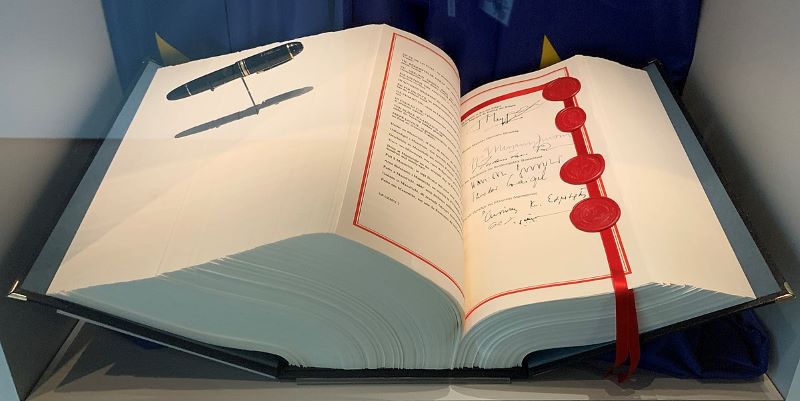
The Maastricht Treaty, which established the EU. Photo: Photo.
EU membership
The EU currently has 27 member states. Croatia was the last to join the organization in 2013. In 2020, the UK left the EU. Also, 8 countries currently have the status of candidates for accession to the organization: Albania, Bosnia and Herzegovina, Moldova, North Macedonia, Serbia, Turkey, Ukraine, and Montenegro. Georgia and Kosovo have applied to join the EU in 2022.
It is believed that the process of accepting a new member into the EU is based on the provisions specified in two documents - the Maastricht Treaty and the Declaration of the European Council adopted in Copenhagen in 1993. Article 49 of the Maastricht Treaty states that any European state may apply for membership. On this basis, Morocco's application was rejected and the impossibility of full membership for Israel was pointed out. The candidate country must also comply with political requirements: democracy, the rule of law, respect for human rights, and respect and protection of minority rights. In addition, the country must meet the economic criterion, i.e., have a well-developed market economy capable of withstanding competition in the EU internal market. Finally, it is necessary to make the legislation compliant with the principles of European law.
Despite the general clarity of the criteria for accepting new members, it is worth emphasizing their formal vagueness. That is, if necessary, it is easy for member states to reject the application of an "undesirable" candidate.
Main EU bodies
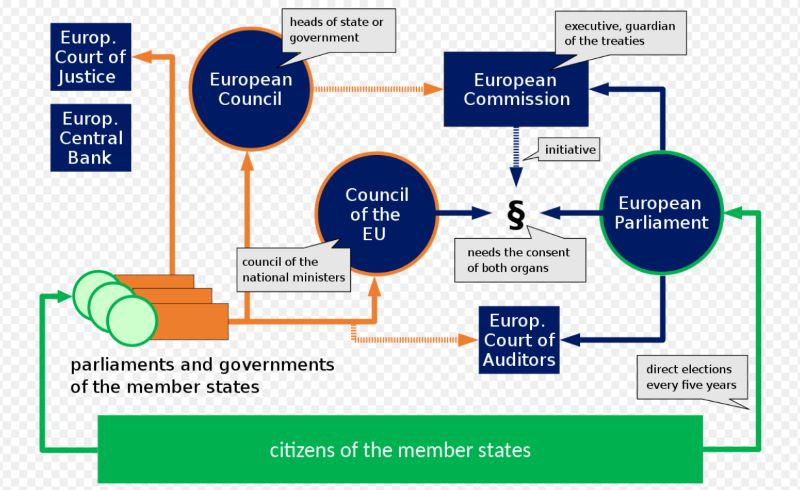
Diagram of the relationship between the main EU bodies. Infographic: Wikipedia
The European Council sets the overall policy direction and priorities of the EU and serves to make key decisions. The European Council meetings are attended by the heads of state and government. The European Council usually meets 4 times a year in Brussels. The European Council determines foreign and security policy, appoints candidates for high positions in the organization.
The European Council is headed by a president who is elected for 2.5 years and can be re-elected once. The President represents the EU on the world stage. Since December 1, 2019, the European Council has been headed by Belgian politician and statesman Charles Michel.
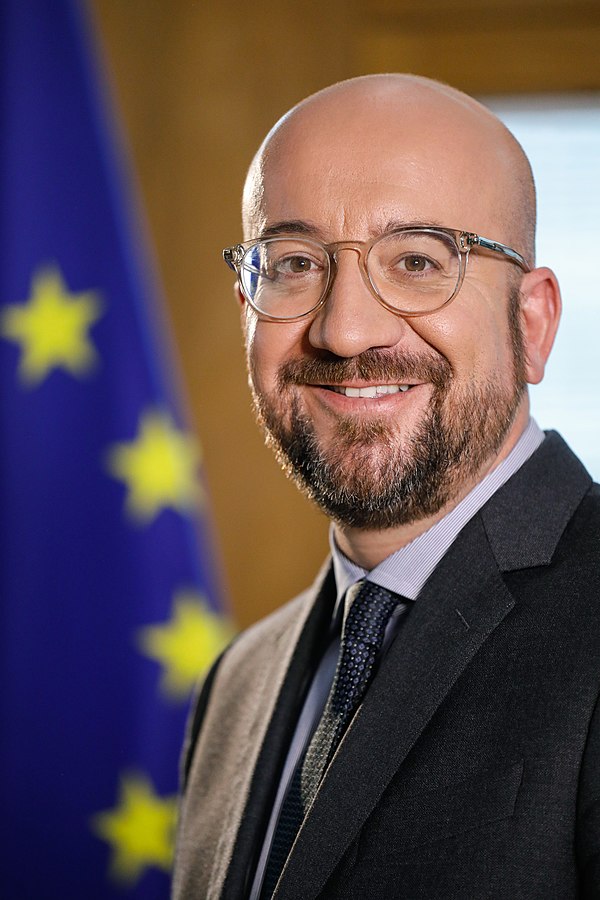
President of the European Council Charles Michel. Photo: Photo.
The European Parliament is the legislative body of the EU. Members of the European Parliament are directly elected by EU citizens for a 5-year term. The body has 705 members. The European Parliament meets in Strasbourg, Brussels and Luxembourg. The main functions of the European Parliament include: adopting new laws, making decisions on the admission of new members to the EU and on the conclusion of international agreements, and adopting the budget together with the Council of the EU.
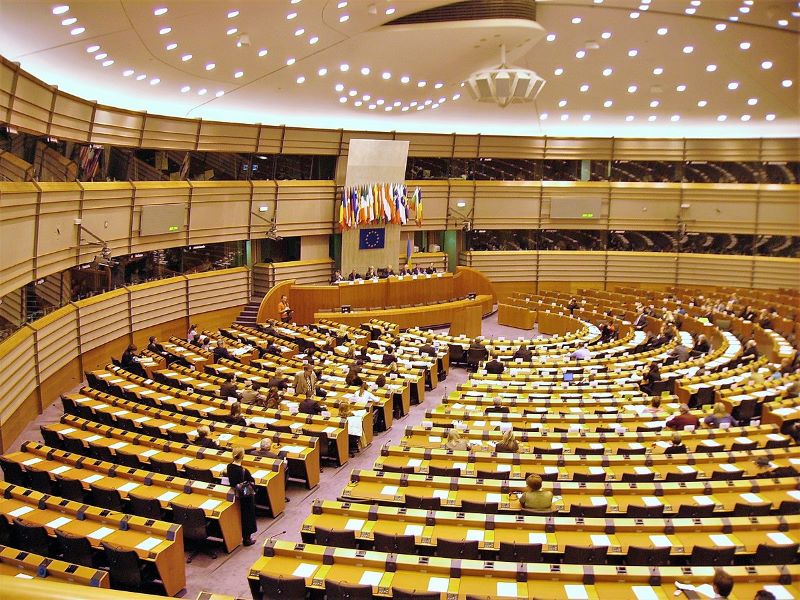
A session of the European Parliament. Photo: Photo.
The Council of the EU is composed of ministers of the governments of the member states. Depending on the topic of the meeting, the ministers of the relevant sectors represent the governments. The EU Council meets to coordinate policies, as well as to discuss and adopt new laws and amend existing ones. EU Council meetings are held in Brussels and Luxembourg.
The European Commission is the main executive body of the EU. It consists of 27 members, each representing a different country and responsible for a particular policy area of the organization. The body meets in Brussels. The European Commission comes up with legislative initiatives and then controls their implementation, monitors the spending of money, and draws up the budget.
The EU Court of Justice monitors compliance with EU laws and ensures that these laws are applied equally across member states. Companies, organizations, and individuals who believe their interests have been harmed by EU bodies may apply to the Court. The Court of Justice meets in Luxembourg.
The European Central Bank manages the euro exchange rate, monitors price stability and implements the EU's economic and monetary policies. The Bank is headquartered in Frankfurt.
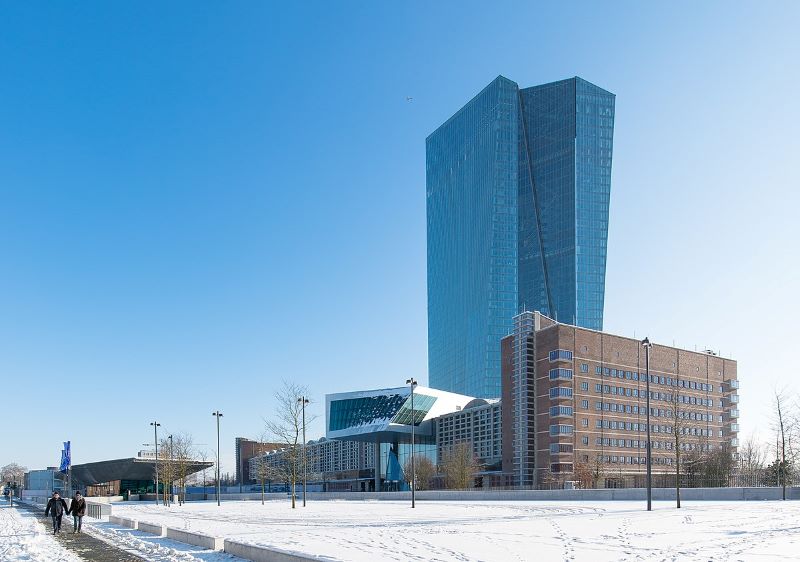
The headquarters of the European Central Bank in Frankfurt. Photo: Wikipedia
EU activities
The EU has proclaimed the concept of a single market - a space where the free movement of goods, services, capital, and people is ensured. The EU is currently working on the digitalization of the single market. It should be noted that the idea of the single market faces certain difficulties at the level of legislation of individual countries, in particular, in the areas of taxes, e-commerce, energy, transportation, etc.
EU agricultural policy covers a wide range of issues. The EU financially supports farmers and encourages sustainable and environmentally friendly practices, as well as makes direct investments in agricultural regions. EU bodies develop farming strategies, implement them, and subsequently evaluate them. National and local authorities implement the laws agreed by the EU. The organization also monitors how the laws are applied and how effective they are, making necessary adjustments.
The EU establishes rules for equal competition in the business sector, creating conditions for the development of small businesses. The European Commission monitors examples of anti-market practices, takeovers, and cases of state aid, ensuring that buyers have a right to choose and a fair price. The European Commission can impose a fine on large companies for using dumping.
The EU makes efforts to preserve European cultural heritage, supports the arts and creative industry in Europe, cooperating with governments and international organizations. The EU is a partner of film festivals, exhibitions, concerts, conferences, and art awards. With the support of the EU, several cities are chosen as European Capitals of Culture every year.
The EU supports the efforts of member states to provide young people with quality education. The assistance is provided through a number of programs and projects. In particular, under the Erasmus+ program, the EU provides funding, resources, and equipment to individuals and organizations. The European Solidarity Corps program provides young people with opportunities to volunteer or work on projects in their own country or abroad.
The EU is actively lobbying for the transition to clean energy. The EU provides financial assistance to regions and individual companies to implement energy projects. In the international arena, the EU works with countries and international organizations to solve energy problems and create a competitive Europe in the energy sector.
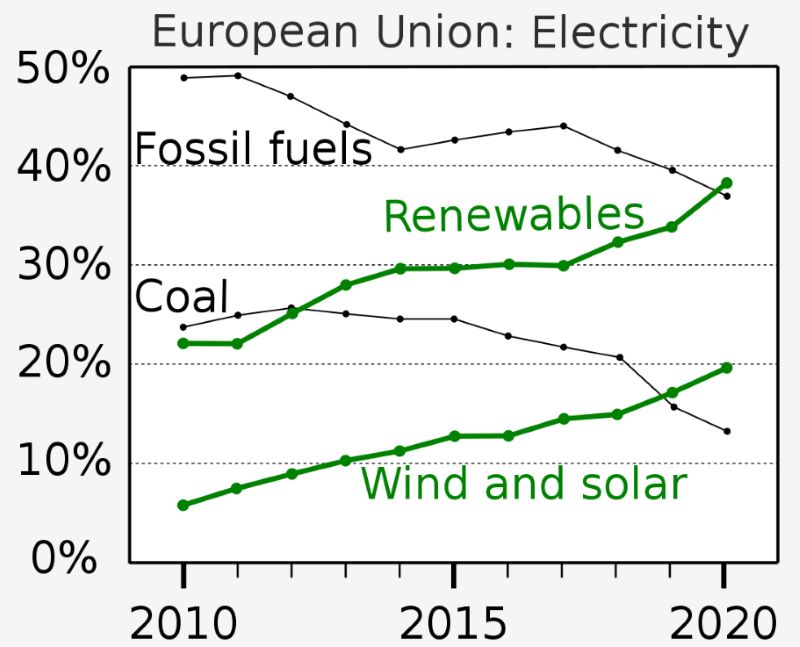
Renewable energy sources are gradually replacing fossil fuels in the EU. Infographic: Wikipedia
The EU maintains partnerships with all influential powers in the world and in particular regions. The EU does not have a regular army, so it relies on forces that can be provided by member states if needed. The EU sends missions to problematic areas of the world to restore order or provide humanitarian assistance. There are more than 140 EU diplomatic missions around the world that defend the interests of the organization.
The EU monitors the observance of human rights not only within the organization, but also around the world. The key document in this area is the EU Charter of Human Rights, which was signed by the Presidents of the European Parliament, the European Commission and the Council of the EU in 2000 and became binding after the signing of the Lisbon Treaty in 2009.
The EU has a Schengen area, a space within which EU citizens and tourists can travel freely across the borders of individual countries. The Schengen area includes almost all EU countries except Bulgaria, Ireland, Cyprus, and Romania, with Bulgaria and Romania in the process of joining Schengen. Among the non-EU countries, the Schengen area includes Iceland, Liechtenstein, Norway, and Switzerland.
The EU is not directly involved in collecting taxes and setting specific tax rates. However, the organization monitors national tax systems to ensure that: 1) taxation does not contradict the concept of the single market; 2) businesses in one country do not gain an unfair advantage over competitors in another; 3) taxes do not discriminate against workers and customers from other EU countries. To overcome these difficulties, the EU countries decided to harmonize their taxation rules. At the same time, some industries benefit from the agreements (taxes on energy products, electricity, tobacco, and alcohol).
The EU has one of the largest outward-looking economies in the world. From 1999 to 2010, EU foreign trade doubled and now accounts for more than 30% of the organization's GDP. The EU is responsible for the trade policy of its member states and concludes agreements on their behalf. When concluding agreements, the organization primarily takes into account the interests of its member states, but also pays attention to the interests of external partners. With the help of the organization, European businesses get access to foreign markets and fair conditions. Foreign companies receive useful information from the EU on how to access the European market.
Transport is an important component of the EU economy, helping to implement the single market concept. Transport accounts for over 9% of the gross added value of the EU economy. In 2016, the transport industry provided jobs for about 11 million people. The EU's transport policy is aimed at developing modern infrastructure to speed up travel and make it safer and more convenient.
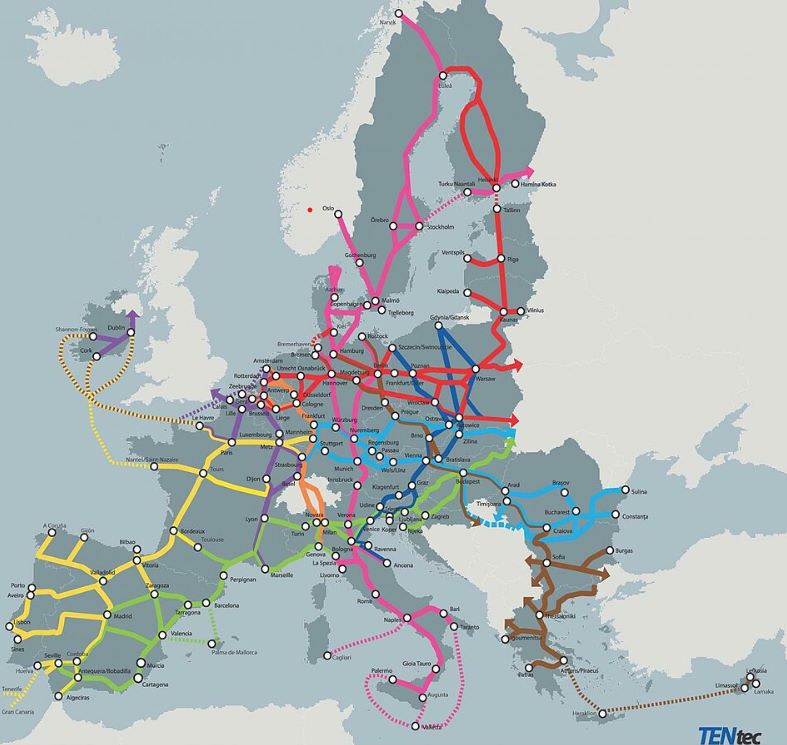
Map of the Trans-European Transport Network. Infographic: Wikipedia
The EU and Ukraine
The first treaty governing relations between Ukraine and the EU was the Partnership and Cooperation Agreement of 1994. After winning the 2005 election, President Viktor Yushchenko declared that EU membership was the goal of Ukraine's foreign policy. The president was supported by almost all factions of the Verkhovna Rada. In 2007, the European Parliament also supported Ukraine's desire to join the EU. Negotiations began on signing a new agreement, the EU-Ukraine Association Agreement.
During the presidency of Viktor Yanukovych, relations between Ukraine and the EU became more complicated. Ukraine was accused of violating civil rights, deteriorating the situation with freedom of speech, persecuting the opposition, etc. In November 2013, the government announced the suspension of the preparation of the EU-Ukraine Association Agreement, which resulted in the Euromaidan and the Revolution of Dignity.
Shortly after the start of Russian aggression, Ukraine signed the political part of the Association Agreement on March 21, 2014, and the economic part on June 27. On January 1, 2016, the EU-Ukraine Free Trade Agreement entered into force. In 2017, the visa-free regime between Ukraine and the EU came into effect. In October 2021, Ukraine and the EU signed the Common Aviation Area Agreement.
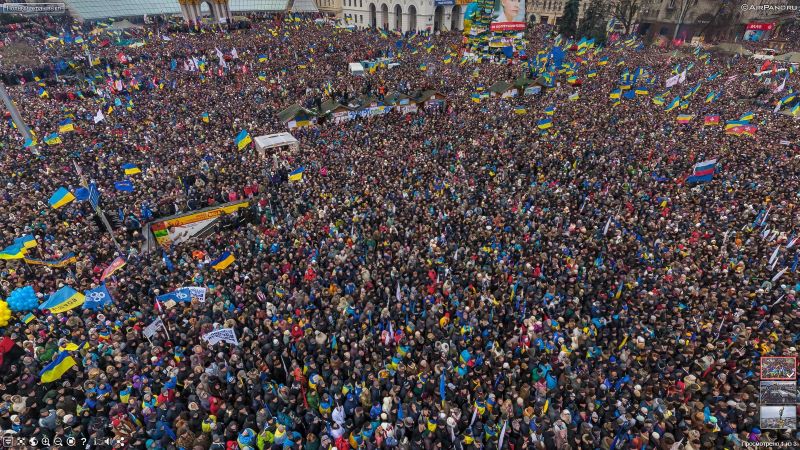
Euromaidan protesters in Kyiv in December 2013. Photo: UP
The EU reacted quickly to the Russian invasion of Ukraine in 2022. As early as February 24, the attack was condemned, and the next day the first package of sanctions against Russia was created. On February 27, EU countries approved the first delivery of military equipment to Ukraine. In May 2022, the EU launches routes for the export of agricultural products from Ukraine. On June 23, 2022, at the EU summit, Ukraine is granted candidate status for membership in the organization. During the full-scale war, the EU has provided over €67 billion in aid to Ukraine. About 4 million Ukrainians have taken refuge in EU countries.
Conclusions.
The EU was born in the early 1990s, when globalization trends reached their peak. The moment for creating a powerful new organization was also quite good because the USSR had recently collapsed. That is, firstly, the power in Europe that could have fiercely opposed the emergence of such an organization disappeared, and secondly, many countries that could be of interest to the new entity left the socialist camp. The EU is sometimes referred to as the "United States of Europe," i.e., the European equivalent of the United States. One of the reasons for the emergence of the EU is precisely that the European leaders of the Western world wanted to create an organization without US participation in which they could realize their geopolitical ambitions. Something like NATO without the North American countries.
The EU is both an economic and a political entity. The EU looks economically attractive because it provides access to a single market with broad opportunities. Moreover, through the EU's authority, a member state gains access to global markets on favorable terms. Of course, we should not forget about the political ambitions of the countries that are considered the leaders of the organization. It was assumed that Germany and France would dominate the EU. Germany, as a country with a super-powerful economy and industry, in the second half of the twentieth century was looking for opportunities to increase its geopolitical influence, but this was hampered, first, by the division of Germany into two parts, and, second, by the fears of other countries after the two world wars. After World War II, France also sought geopolitical realization. President Charles de Gaulle tried to prove that the country had an independent political weight and was not a mere executor of the US will in Europe. For this reason, France even withdrew from the NATO military structure. Thus, there was an opinion that Germany would act as the economic engine of the EU, while France would take political leadership and somewhat temper Germany's political ambitions.
Undoubtedly, the EU is a powerful and reputable organization, but in the twenty-first century it has had to face a number of problems and contradictions.
First, the EU had a difficult time surviving the global financial crisis of 2007-08. The crisis caused significant difficulties for the economies of Ireland, Spain, Portugal, and even Italy and France had problems. The crisis hit Greece the hardest, as it was regularly on the verge of defaulting over the next 7 years and repeatedly threatened the EU with the possibility of leaving the organization.
Secondly, the EU faced significant difficulties in connection with the flows of refugees that flooded into Europe in the 2010s due to a number of armed conflicts in Asia. Serious disagreements arose among EU countries over who should accept immigrants and in what numbers.
Third, the coronavirus has hit the EU economy. Finally, the UK's withdrawal from the organization has seriously damaged the EU's credibility.
The problematic point for the EU is its intermediate position between the status of an international organization and a federal state. Obviously, the EU has a number of features of a state, but it does not have a government, nor does it have a common financial and tax policy. The decision-making body in the EU is the European Council, but the leaders of the countries do not always reach a consensus. The contradiction lies in the fact that the leader of the conventional Hungary was elected not by EU citizens, but by Hungarians. Therefore, he should defend the interests of his own voters, not those of citizens of an abstract Europe.
It is quite obvious that the EU is a way to gain access to new economic opportunities, but under no circumstances is the organization an economic Eldorado. History shows that new opportunities make the rich richer, but rarely help the poor. The experience of Greece in the EU is quite illustrative in this regard. At the current stage, Ukraine's accession to the EU may have negative consequences for the economy.
First, Ukrainian goods will enter the competitive European market, where in most cases they will lose in terms of quality. Secondly, domestic Ukrainian producers currently have a certain advantage in the form of cheap labor, which should automatically disappear under the EU's fair competition rules. This, in turn, will increase the price of non-competitive Ukrainian goods and finally destroy most Ukrainian producers, leading to total import dependence.
On the other hand, the EU is hardly in a hurry to grant Ukraine membership, as the Ukrainian economy will have to be pulled along by powerful financial injections at least on the level of Greece. Moreover, as in Greece, Ukraine has a high level of corruption. Granting Ukraine candidate status should be seen more as a political move in the context of the Russian invasion. The granting of candidate status does not oblige the EU to speed up the accession process. Turkey, for example, has had candidate status since 1999, and its prospects for membership do not appear to be clear.