Меню
Соціальні мережі
Розділи
June 11, 2023, 7:11 p.m.
Council of Europe: a citadel of European values or just politics?
This article also available in English10445

The Russian flag is lowered near the Palace of Europe. Photo: Wikipedia
In response to Russia's aggression against Ukraine in 2014, the Parliamentary Assembly of the Council of Europe imposed sanctions against Russia. In particular, Russians were deprived of the right to vote, banned from holding leadership positions and participating in PACE observer missions. On February 25, 2022, the Council of Europe suspended Russia's membership in the organization over the invasion of Ukraine. On March 16 of the same year, the Committee of Ministers decided to immediately expel Russia from the Council of Europe. So why was Russia expelled? About the Council of Europe in the material of Intent.
General characteristics of the Council of Europe
Symbols of the Council of Europe
Members of the Council of Europe
Main bodies of the Council of Europe
Activities of the Council of Europe
General description of the Council of Europe
The Council of Europe is an international organization that promotes cooperation between European countries in the fields of human rights and freedoms, democratic development and the rule of law. The organization helps member states fight corruption and implement necessary legal reforms. To date, the Council of Europe has developed 224 international agreements that have replaced tens of thousands of bilateral treaties between different countries. One of the key treaties is the European Convention on Human Rights, developed and signed by the Council of Europe member states in 1950. The organization is headquartered in Strasbourg in the Palace of Europe, built in 1977. The official languages of the Council of Europe are English and French. The organization's budget for 2023 is 479 million euros. The Council of Europe was founded in 1949.
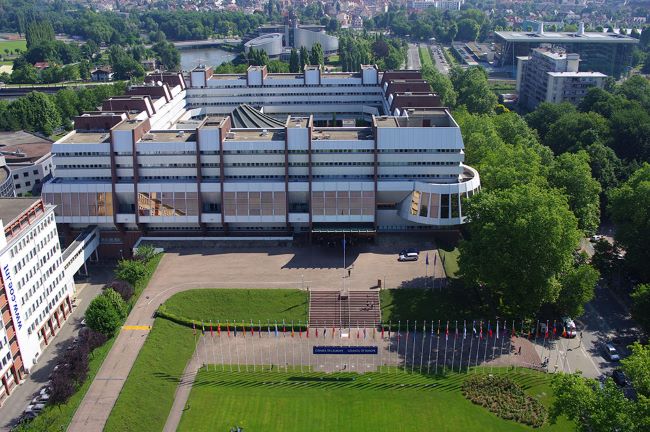
The headquarters of the Council of Europe. Photo: Council of Europe
Symbols of the Council of Europe
Flag. Since the founding of the organization, the need for a symbol with which the people of Europe could identify has been discussed. In 1955, the Parliamentary Assembly adopted the Council of Europe flag, a circle of 12 golden stars on a blue background. Blue or blue is traditionally associated with Europe (for example, the blue circle on the IOC flag). The circle formed by the stars symbolizes the unity of European countries. Finally, the number of stars symbolizes completeness and perfection, forming a number of associations in world culture: Christ's apostles, the sons of Jacob, the exploits of Hercules, calendar months, etc. In the 80s of the XX century, the flag became a common symbol of Europe and, in particular, since 1986 it has been used as the flag of the European Union.
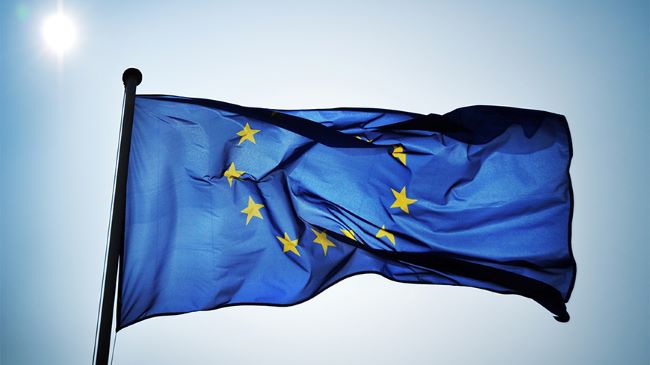
The flag of the Council of Europe. Photo: Council of Europe
Anthem. In 1972, the Council of Europe adopted the anthem, which was the final movement of Ludwig van Beethoven 's Ninth Symphony, the Ode to Joy. The instrumentation was performed by Austrian conductor Herbert von Karajan. In 1985, the Ode to Joy was also recognized as the official anthem of the European Union. The Council of Europe offers a variety of versions of the anthem, including renditions in different musical styles.
Hip-hop version of the Council of Europe anthem. Video: Council of Europe
Members of the Council of Europe
The Council of Europe currently has 46 member states. Montenegro was the last to join the organization in 2007. To formally become a member of the Council of Europe, you need to accede to the organization's Charter. According to the Charter, any European state can become a member. However, the term "Europe" is not clearly defined in international law. Therefore, in 1950, Turkey was admitted to the Council of Europe, in 1961 - Cyprus, and at the turn of the century - Georgia, Armenia and Azerbaijan. In 1994, the Parliamentary Assembly of the Council of Europe (hereinafter - PACE) issued a recommendation that any country that is fully or partially located in Europe may join the organization. Among the countries that can be considered geographically at least partially in Europe, the Council of Europe does not include Belarus, the Vatican, and Kazakhstan.
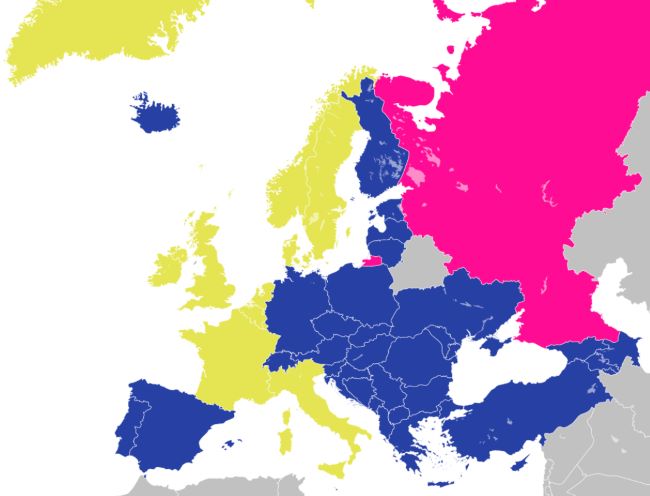

Members and former members of the Council of Europe on the map. Image: Wikipedia
Any country can withdraw from the Council of Europe by notifying the Secretary General. This is exactly what Greece did after the establishment of the Black Colonels regime in the country. In 1974, the country rejoined the organization. There are also precedents for limiting the powers of member states' delegations to PACE (Turkey in 1981, Russia in 2000 and 2014). Finally, the Committee of Ministers of the Council of Europe can expel from the organization any member that grossly violates the provisions of the Charter. This is exactly what happened to Russia in March 2022 because of the attack on Ukraine.
The main bodies of the Council of Europe
The Committee of Ministers is the decision-making body that determines the policy of the Council of Europe. It consists of the foreign ministers of all member states, who meet once a year, and the permanent representatives, who meet weekly. Each country's representative has one vote during the voting. The country that chairs the Committee changes every six months on an alphabetical basis. The activities of the Committee of Ministers include:
- Preparation and conclusion of conventions and agreements;
- adoption of recommendations to member states;
- Adoption of the budget;
- admission of new members and dismissal of member states;
- monitoring the implementation of judgments of the European Court of Human Rights.
The Parliamentary Assembly (PACE) is an advisory body consisting of representatives of all member states of the Council of Europe. Members of PACE are appointed by the parliaments of the countries from among their members. The delegation from each country must include representatives of all political parties represented in the parliament and meet the requirements of balanced representation of men and women. Each country representative has one deputy who participates in the work of the body in the absence of the representative. Depending on the size of the country, each member of the Council of Europe can send from 2 to 18 representatives to PACE. Thus, the full membership of PACE includes 306 representatives and 306 alternates. PACE sessions are held 4 times a year and last for a week. The main powers of the PACE include
- election of the Secretary General and his deputy;
- election of judges of the European Court of Human Rights;
- Adopting opinions on the candidacies of new member states;
- monitoring the fulfillment by member states of the obligations assumed upon joining the organization.
In addition, PACE sessions become a place for discussing European policy issues, and leaders of countries and governments are regularly invited to attend.
PACE session on January 26, 2023. Video: PACE
The European Court of Human Rights is the main judicial body that guarantees Europeans the rights enshrined in the European Convention on Human Rights. By the way, all 46 member states of the Council of Europe have acceded to the Convention. The Court is open to all countries and individuals. The number of judges is equal to the number of member states of the Convention. Judges are elected for a 9-year term.
The Secretariat is a body that assists other structural elements of the Council of Europe. It consists of the Secretary General, the Deputy Secretary General and the necessary staff. The Secretary General and the Deputy Secretary General are elected for a 5-year term. The Secretary General represents the Council of Europe in the international arena. Since June 2019, the post of Secretary General has been held by Croatian politician Marija Pejčinović-Burić.
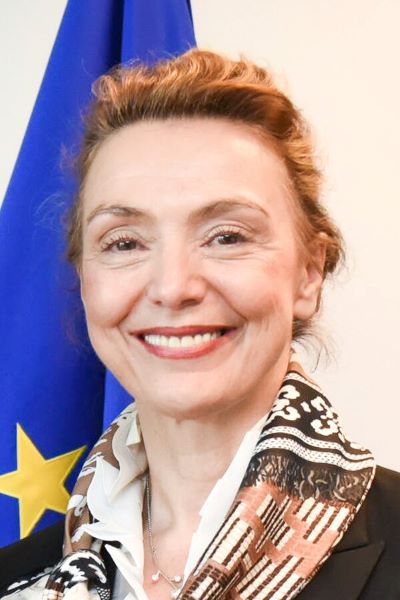
Secretary General of the Council of Europe Marija Pejčinović-Burić. Photo: Wikipedia
Activities of the Council of Europe
The Council of Europe has played a key role in the fight against the use of the death penalty. In 1983, it adopted Protocol No. 6 to the European Convention on Human Rights, which prohibited the death penalty in peacetime. Subsequently, in 2002, Protocol No. 13 was adopted, which abolished the death penalty in all circumstances. The Council of Europe has made the abolition of the death penalty a prerequisite for joining the organization. Since 1997, no member state of the Council of Europe has carried out executions.
Each country that joins the Council of Europe agrees to be subject to independent monitoring to determine the level of respect for human rights and democratic practices on its territory. Monitoring is carried out by various Council of Europe bodies. For example, the Committee for the Prevention of Torture regularly makes unannounced visits to places of detention (prisons, police stations). The European Committee of Social Rights checks whether the rights to housing, health, education, employment, and freedom of movement are respected in member states.
The Council of Europe takes measures to protect national minorities. In particular, the organization launched the European Alliance of Cities and Regions for the Inclusion of Roma. One of the results of the Alliance's activities was the Romact project, launched jointly with the European Union. The European Commission against Racism and Intolerance analyzes the problems mentioned in its title and provides regular recommendations to the members of the Council of Europe.
The Council of Europe is active in protecting freedom of speech, including the Internet. The organization helps member states improve legislation and develop appropriate public policies in the field of freedom of speech and media freedom. Educational courses and trainings are held for media professionals.
The Council of Europe fights against all forms of discrimination against women. The organization's Convention on preventing and combating violence against women is based on the idea that such violence will be impossible to eradicate unless equality between men and women is achieved.
Discussion by the PACE Standing Committee. Video: PACE
In 2010, the Convention on the Protection of Children against Sexual Exploitation and Abuse entered into force, outlawing such use of children, including domestic violence. In addition, the Council of Europe has developed provisions that facilitate children's access to justice.
The PACE and several other European organizations, including the OSCE, are working to ensure democratic and fair elections in Europe. The Congress of Local and Regional Authorities, a Council of Europe body, regularly observes local and regional elections at all stages in its 46 member states. Moreover, the Council of Europe creates assistance programs for fundamental reforms of electoral legislation, effective management of voter lists, and training for local observers and election officials.
More than 5,000 youth leaders are trained annually in Budapest and Strasbourg at the Council of Europe's European Youth Center. The training is designed to have a snowball effect, as the youth leaders are expected to pass on the knowledge gained to members of their associations. More than 15,000 young people benefit from projects supported by the European Youth Foundation that foster understanding, tolerance and mutual responsibility.
The Council of Europe and Ukraine
Ukraine declared its desire to join the Council of Europe in 1992. Before becoming a member, Ukraine became a party to several conventions of the organization. Ukraine joined the Council of Europe in 1995, becoming the 37th member of the organization. In 1997, Ukraine ratified the European Convention on Human Rights.
An important stage of Ukraine's cooperation within the Council of Europe was its chairmanship of the Committee of Ministers in May-November 2011. Ukraine was represented by politician and diplomat Kostyantyn Gryshchenko.
In response to Russia's aggression against Ukraine in 2014, the PACE imposed sanctions against Russia. In particular, Russians were deprived of the right to vote, banned from holding leadership positions and participating in PACE observer missions. In 2015, the sanctions were extended, forcing Russia to suspend its work in PACE until 2019, and to stop making contributions to the Council of Europe budget in 2017. In 2019, PACE made concessions to Russia, allowing the aggressor country's delegation to return to work in the Council of Europe.
On February 25, 2022, the Council of Europe suspended Russia's membership in the organization due to the invasion of Ukraine. On March 15, Russia began the process of withdrawing from the Council of Europe, but the organization was proactive when the Committee of Ministers decided on March 16 to immediately dismiss Russia.
In October 2022, the PACE adopted a resolution recognizing the Russian regime as a terrorist one. In January 2023, Vladimir Putin submitted a bill to the State Duma to terminate a number of international treaties between Russia and the Council of Europe. Among the denounced documents was the European Convention on Human Rights. At the end of January 2023, PACE finally recognized that Russia had been "waging an aggressive war against Ukraine" since February 2014. The Council of Europe summit, which took place on May 16-17 in Reykjavik, called on Russia to withdraw all troops from Ukraine, Georgia, and Moldova.
Volodymyr Zelenskyy addresses the Council of Europe. Video: The Mirror
Ukraine currently participates in the work of all the main bodies of the Council of Europe. The Ukrainian delegation to PACE consists of 24 MPs (12 representatives and 12 alternates).
The Council of Europe is one of the pillars of the European system of interstate cooperation. The organization has developed more than 200 international agreements. Its members include 46 countries, i.e. almost all European states. The Council of Europe has developed a flag and anthem that are generally considered to be symbols of Europe.
The purpose of the Council of Europe is to fully integrate European countries in upholding humanistic ideals. In our opinion, the wonderful goal of pan-European integration has another side. Obviously, 46 countries cannot have exactly the same ideals and priorities. It is quite obvious that there are human rights violations. However, for the sake of European integration, the organization sometimes has to turn a blind eye to obvious violations.
Let's assume that the large contributions of some rule-breakers to the Council of Europe's budget may also be important. It seems that Russia would now be a full member of the Council of Europe if not for the invasion of Ukraine in 2022, which simply could not be ignored. That is, the organization was ready to "forget" about the crimes of 2014, when European mass communication began to pay less attention to Ukrainian issues.