19 October 2026, 18:40
Miroslav Kuvaldin: "I joined the Armed Forces of Ukraine as if I were entering a monastery"
Ця стаття також доступна українською
He used to set the Ukrainian music scene ablaze as the frontman of the band “The ВЙО,” and today he serves in the ranks of “Cultural Assault.” We spoke with Myroslav Kuvaldin about how the army takes away pride and irresponsibility, but in return restores the ability to find joy in the simplest things. How do you perform for soldiers who have just returned from a difficult mission and are in an emotional slump? Why is laughter on the front lines not an escape from reality, but the best therapy against fear? How does “instrumental-bunker chanson” help connect with soldiers, and what are new songs really about? Read about it in our interview.
What did the army take from you, and what did it give you in return? It doesn’t have to be something big. Maybe a habit, a character trait, or the ability to find joy?
The ability to find joy definitely remains in the army. And that’s exactly what we do—we remind others of that.
SCREENSHOT: Intent’s YouTube channel
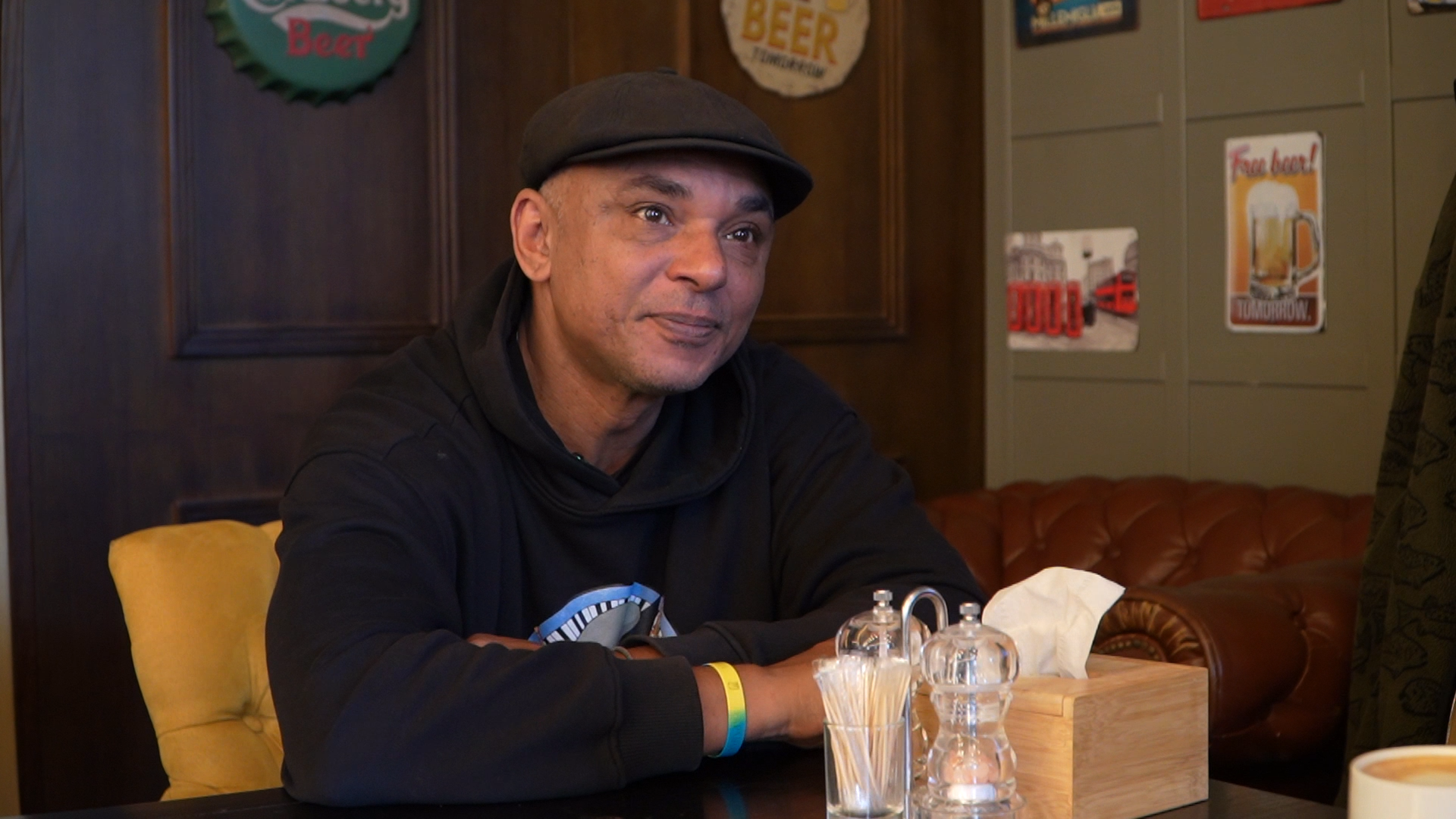
First and foremost, the army takes away your personal time: you’re on duty 24/7. It also takes away your pride. At least it did for me. I joined the Armed Forces of Ukraine as if I were entering a monastery. You know how monks submit to obedience. You have to realize that you no longer belong to yourself and are simply following orders. For someone who’s never set foot in an office, never worked for anyone, and has only ever done what they love, this would be hard. But when you’ve set that mindset for yourself, serving is no big deal.
And the army also takes away your sense of irresponsibility. You clearly understand that every action you take has consequences not only for you, but also for the people around you.
Has your attitude toward the stage changed? Before, it was a place where you performed for people in peacetime, but now you’re performing for those living through war. What do these two stages have in common, and what are the fundamental differences?
When it comes to performing for the military, I’ve been traveling to Donbas since 2014 to visit our allied units. I remember that back then, it was always hard to get the soldiers “warmed up.” Soldiers are usually emotionally reserved—after all, there’s no room for emotions in war. But music and art are all about emotions. For me, it was a challenge every time: how would they react, and how quickly could I help them open up?
Now that we’ve been doing this consistently for the past two years, it’s become much easier. First and foremost, because I’m a soldier myself. Because when a civilian man of draft age shows up and starts singing with a guitar, the soldiers’ first question is: “Why are you here with a guitar instead of in combat fatigues?” Since that question is immediately off the table for me, they take it in stride.
Still, getting to the depths of men’s emotions is a huge undertaking that takes a lot of effort. But we’ve learned how to do it. And now, when you perform for a civilian audience, the work seems as easy as can be: the lights just go out in the hall, and people are already applauding.
But in reality, these two audiences are very similar. Lately, I’ve actually been thinking that we shouldn’t divide them into “civilians” and “military.” Right now, the whole country is at war, and everyone is going through the same thing.
Is there anything from your pre-war life that you unexpectedly miss now? Not peace in general, but some specific little thing?
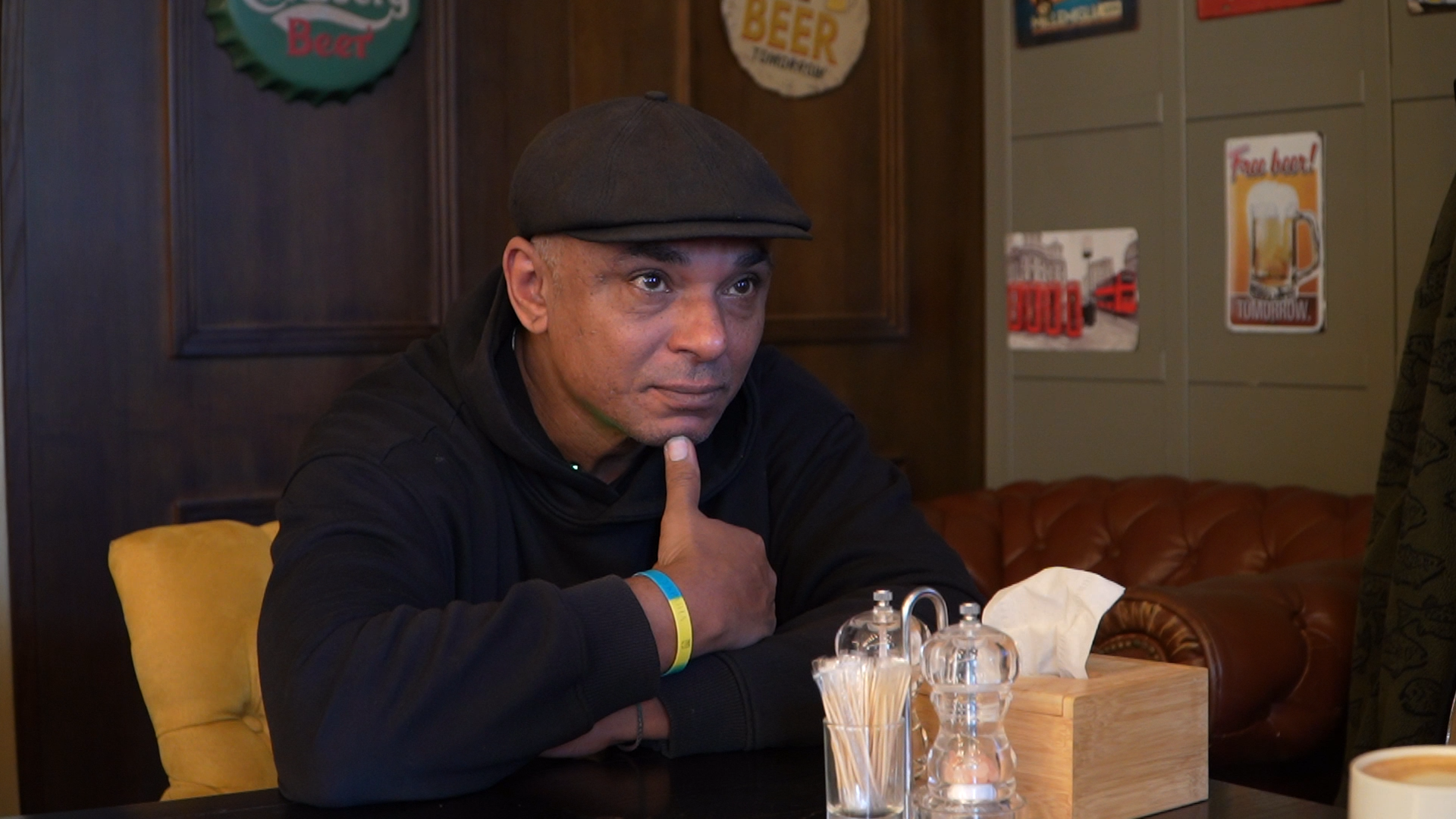
I miss the days when I could tell myself, “I’ll do it later.” In war, you get a completely different feeling—a keen realization that there might not be a “later.” Because of this, you try to do everything as well as possible, because it might turn out to be the last thing you ever do in your life. Right now, you clearly feel that the future doesn’t exist, and the past, in principle, is already gone— there’s only the here and now.
SCREENSHOT: Intent’s YouTube channel
Has the language of your songs changed? The military environment has its own slang, dark humor, and specific taboos. To what extent does this influence your creative work?
Of course it does. You can’t talk to a mechanic using the language of a professor. We use both slang and inside jokes that only military folks would understand.
Our language has changed completely—and our music, too. Before the war, we played reggae—music about staying calm, enjoying yourself, and not stressing out—but now, in the midst of war, that theme seems out of place. So instead of reggae, we chose chanson, though we only call it chanson for convenience. In reality, we’ve put together an incredible lineup—professional jazz musicians. And everything they perform turns into sophisticated jazz. We use the word “chanson” so as not to scare people off with the word “jazz,” but everyone understands the context: we’re not singing about prison, as some people think; we’re singing about war and the army.
Of course, the lyrics also have their own specific flavor. Sometimes I think we might even go a bit overboard with military slang, so I’m keeping an eye on that now to make sure the songs remain accessible to a wider audience.
Where is the line between a song that offers support and one that simply entertains? Do people at war need so-called “useful” music?
I’ve never understood when music is used without any purpose. I think “purpose” is one of my favorite words. Of course, entertainment music has its place too, but then you’re just wasting time when you could actually be helping. There has to be a certain balance. If you’re already opening someone’s heart, why not plant something deeper there that will eventually take root?
Does it ever happen that you arrive for a concert, but the soldiers aren’t in the mood for music at all? How do you find a way to connect with them then?
We do have those kinds of encounters. We usually visit several units a day; the guys are mostly combat troops. Sometimes they’ve just returned from a mission; there have been casualties; everyone is in a emotional low—and here we are, suggesting we sing. Of course, that’s inappropriate.
Then it all turns into a simple conversation: we listen to their stories, share our own, and drink tea. These encounters are also a form of psychological support. It’s hard, but it’s necessary.
Military humor is usually very dark. Where do you draw the line between a joke and a psychological defense mechanism? Could you say that laughter in war is a way to endure reality, rather than escape from it?
In fact, any kind of laughter is already an effective tool for survival, so all means are acceptable here. There are probably no taboo topics for humor, aside from basic ethical norms. For example, I can’t make jokes about people with amputations, but a person with an amputation can. When you see that a person is laughing about it themselves, then others are allowed to as well.
SCREENSHOT: Intent’s YouTube channel
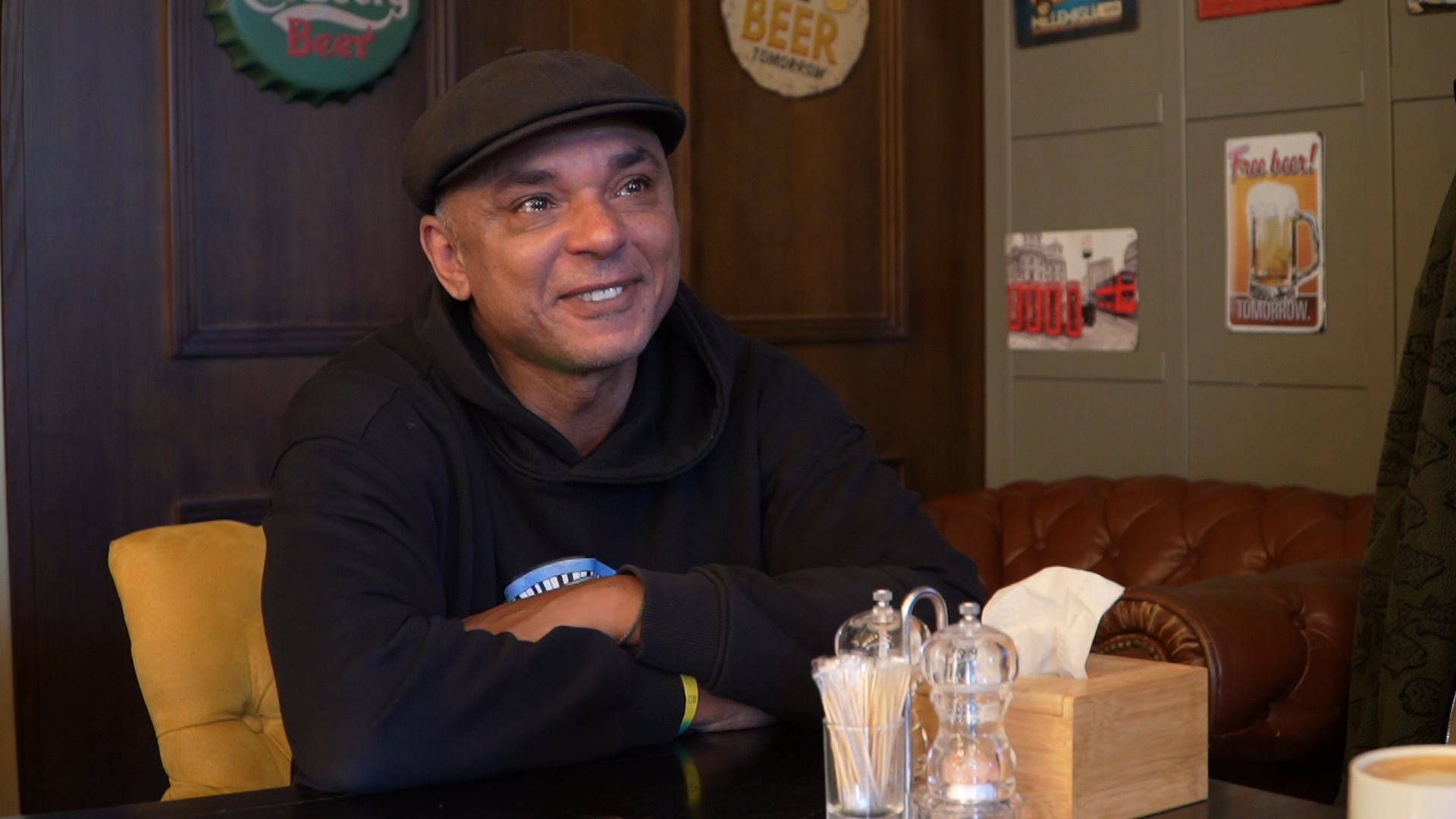
Laughter is an incredibly powerful form of therapy and a weapon in the fight against fear. The scariest thing is when fear is far away, and you’re afraid to get close to it. As soon as you start laughing at it, it’s as if you’re getting closer, examining everything in detail, and suddenly some things even seem funny. That’s how fears diminish: you call your fear by its proper name, rationalize it, and make fun of it. And it no longer seems so huge and terrifying. It’s a sort of therapeutic-mystical thing.
What is it that civilians still don’t understand about the lives of soldiers, even when they sincerely want to understand?
They don’t realize that soldiers are just ordinary civilians, few of whom ever planned to go to war. That this is a reality that could knock on anyone’s door. To understand another person, you always have to put yourself in their shoes. No one is immune; armor isn’t eternal. And all those clichés like “if you don’t want to help your own army, you’ll be helping the enemy’s”—these aren’t just words; they’re a harsh truth.
Watch the full version of the interview on the Intent YouTube channel
What do you think soldiers sometimes fail to understand about people on the home front?
That these people aren’t to blame either. I really hope for mutual understanding. It’s important for all of us to realize: we have one common enemy, and we have no right to waste our energy on internal strife. On the contrary, we need to stand back-to-back to repel external aggression.
Do you think the war has changed Ukrainian music as radically as the 1990s did in their time?
The war has finally put an end to Russia’s cultural presence in Ukraine—something that couldn’t be achieved through peaceful means in 30 years. Some people feared that we wouldn’t have enough of our own content, that we couldn’t do without the Russian language. But it turns out we can live just fine without “Tolstoyan” culture. The world is much broader, and Ukraine is becoming a full-fledged part of this great world.
I think this is perhaps the only “favor” Putin did for us by attacking Ukraine: he consolidated the nation. Society has come to realize its own self-sufficiency and unique culture. This growth occurred thanks to the extreme conditions, under which people began to create far more high-quality work.
You’ve been traveling through the south for a very long time. Artists see the country more broadly than many others, but these are very specific trips right now. What have you discovered for yourself during these trips?
The Kherson region has become extremely dangerous, but the locals never cease to amaze me: they just keep working. There are wonderful young women in the local administration who organize cultural events in basements. Not to mention that you still have to somehow make your way there under shelling, yet they live there permanently and keep life going!
In general, it’s the people who make any city what it is, and in the Kherson region, this is felt particularly keenly. Despite the constant risks, they’re restocking libraries, organizing events, and keeping the community together. And in such conditions, I really want to be there for them, to support them and help.
There’s even a sort of half-joke about it. I can’t remember the name of the village—it was under occupation and then liberated. They set up a children’s art center in the basement there, and women in their 50s and 60s work there. They told me that after the de-occupation, they found two Buryats in their barn: the men had gotten pretty drunk and simply wouldn’t leave with their “colleagues,” as they called them. So these women tied them up themselves and went to find out where to turn the captives in. Can you imagine? Ordinary 60-year-old women! That’s awesome—I definitely wouldn’t argue with women like that.