20 November 2026, 18:58
"If you've never had an electric shock run through your ears, how can you possibly understand that?" — Roman Baklazhov, a former prisoner of war
Ця стаття також доступна українською

Roman Baklazhov showed the torture chamber where he was held. COLLAGE: Nata Chernetska
Roman Baklazhov spent 54 days in a torture chamber run by Russian occupiers in Kherson. During that time, his young child began to forget his father, and the family had to endure home raids and constant fear. Today, the former civilian prisoner heads the charity “November 11” and helps people who have gone through similar ordeals. In Odesa, he supports former captives and their families: he helps them find housing, restore documents, and receive medical treatment, and he organizes mutual-aid meetings based on the “peer-to-peer” principle.
In this conversation, Roman explains what’s missing from the system of aid for displaced persons, how the evacuation of people from the left bank of the Kherson region is organized, and how investigators weed out those trying to falsely claim prisoner-of-war status. He also discusses his dialogue with the TCC, his own burnout, the first “Empty Chairs” protest in Odesa, and why the war and supporting others take up 95% of his life.
Background
Roman Baklazhov is a Kherson-based entrepreneur, volunteer, chairman of the “November 11” Charitable Foundation, and head of the Coordination Council for Civilian Support under the Kherson City Council Executive Committee; he is also a former civilian prisoner of war.
After the start of Russia’s full-scale invasion, he remained in occupied Kherson and continued his volunteer work: he provided city residents with medicine, food, and hygiene supplies, and, together with other volunteers, organized free meals for residents of the SkloTara district, primarily pensioners, low-income individuals, and the unemployed.
During the occupation, Russian security forces abducted Roman; he spent 54 days in a torture chamber in Kherson. During interrogations, he was forced to admit that he was a “Nazi” and confess that, under the guise of volunteering, he had allegedly transported explosives. For refusing to give false testimony, he was tortured with electric shocks.
After his release and relocation to Odesa, Roman moved his business operations there and focused on providing systematic assistance to civilians who had survived captivity and the occupation, as well as to their families.
Recently, people have left the occupied town of Oleshky for government-controlled territory. What are the first challenges they face after years of living under occupation?
The most immediate challenges are housing and social reintegration. People who have lived under occupation for a long time arrive and don’t understand where they’ve ended up. It takes a month, two, or even three for a person to at least realize where they are. This is precisely why specialized organizations exist to help people reintegrate into society.
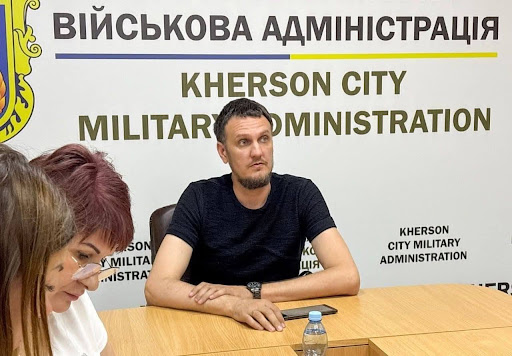
At a meeting of the Coordination Council on Support for Civilians. SOURCE: Roman Baklazhov’s Facebook
Do you have the capacity to support these people not only in the first few days after their arrival, but also to help them adapt in the long term—by assisting with paperwork, finding housing, and rebuilding social connections?
We’ve partnered with all the local foundations that specialize in this area. When a person arrives, we already know where they’ll live, where they’ll receive medical care, who will provide essential supplies, and who will offer medical services. We’ve already got all of this in place.
To what extent is Odesa currently prepared to receive people from the Kherson region who have survived occupation, unlawful detention, and forced displacement? What is lacking in the local support system?
What’s missing most is proper information, and this applies not only to IDPs but also to other areas. There need to be clear information channels for IDPs so that people understand exactly what they can receive and where. Help is available—if not from the government, then from specialized foundations. But there is no single point of contact, and people themselves lack a clear understanding of what they can count on. The government has tried to set up assistance centers for survivors, but they operate inefficiently and cannot meet all needs. There are resilience centers and many other organizations—all of them are active—but there is a lack of coordination between the foundations acting as the government’s partners and the system itself.
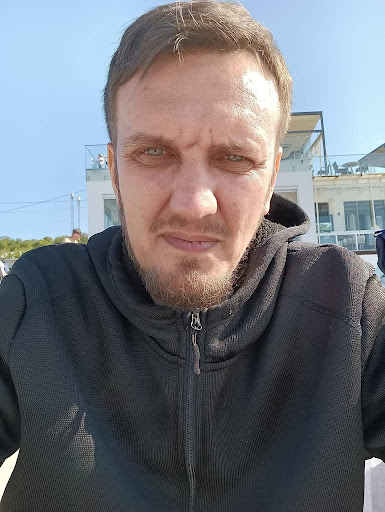
One week after being released from Russian captivity. PHOTO: Roman Baklazhov
Speaking of your main group—former civilian captives—do you see effective support from the government?
There is a government agency whose work we see in practice, and it is truly effective. This is the Coordination Center for Support of Victims and Witnesses of the Office of the Prosecutor General. Empathetic case managers work there; they call regularly to check in, ask how things are going, and see what’s needed. I have a personal case manager—we talk on the phone and even wish each other a happy birthday—and I’m not the only one. And the main advantage of this center is that when a person has a question for any state or municipal agency, a referral from the Office of the Prosecutor General resolves it instantly—local officials immediately understand what is required of them.
You’re implementing the “Path to Recovery” project in Odesa, which provides comprehensive psychosocial, medical, and legal support to former prisoners of war. How did the idea for this project come about, and what problem were you hoping to solve with it?
It often happens like this: they hold roundtables among themselves, print some brochures, and hand them out to who knows whom—after all, there are physically fewer civilian captives than there are printed brochures. We, on the other hand, decided to launch a project that provides real support for the victims.
Even long after captivity—say, four years later—people still suffer from severe consequences and poor mental health. Many people have access to psychological and legal assistance, but our project also includes an ophthalmologist, a dentist, a massage therapy course, and a neurologist. This is real help, not just brochures or a “checkbox” for a report: people actually see a doctor, and we also run “peer-to-peer” mutual support groups both within and outside the project.
Why did you decide to work not only with former captives but also with their family members? What challenges do the loved ones of those who have returned from captivity face, and are they receiving enough attention?
Those who have returned from captivity do receive some attention; there are foundations that also provide treatment. This isn’t something we came up with on our own—we’ve adopted the experience of other powerful organizations that have been working since 2014 and offer medical and psychological support. For example, the “Lisova Polyana” center or the NGO “Blue Bird” (where the co-founder, Hanna Mokrousova, was herself held captive and understands this issue well).
As for the families, we reached out to them based on our own experience. While I was in captivity, my home was searched twice. They harassed my wife; she suffered conflict-related sexual violence (CRSV). Thank God, the worst didn’t happen, but there was harassment, which is also a form of sexual violence. All of this happened in front of the child and the mother—it was a real nightmare. My wife lost consciousness twice while I was in captivity; she and my mother were treated by a psychiatrist. I saw with my own eyes the psychological state my loved ones were in.
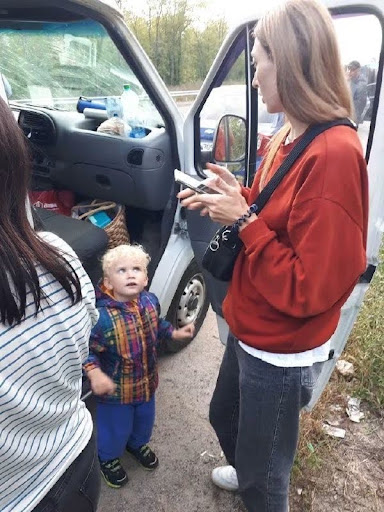
The first photo of the Baklazhov family in government-controlled territory. PHOTO: Roman Baklazhov’s Facebook
And I was only held captive for two months—and that’s not even the worst part. There are people who spent two, three, or four years there. Imagine what’s happening in their families—even after such a short time, my child had started to forget who I was when I returned. Many people say they constantly show their children photos of their father so the kids know: Dad loves them and didn’t abandon them. The strain on the little ones is enormous. That’s why we decided to support the families as well. Other foundations have similar rehabilitation programs. I myself went with my family on a retreat to the Carpathians, where I recovered and worked with psychologists. These programs exist, but there aren’t enough of them, and that’s what we need to focus on.
You mentioned “peer-to-peer” groups. Why is it important for people who have survived unlawful detention to talk specifically with those who have had a similar experience, and how does this differ from working with a psychologist?
A psychologist hasn’t been in captivity. If you tell a psychologist about certain subtle, sensitive things, they might simply not understand them the way someone who’s been through the same thing would. A simple principle applies here: the well-fed cannot understand the hungry. Only someone who has lived through it can truly understand. This applies not only to civilian captives but also to other social groups. You talk about torture, and someone tells you, “I understand you.” How can someone understand this if they’ve never had electricity run through their ears or been beaten the way they were in captivity? Only someone who has gone through it themselves can truly grasp it.
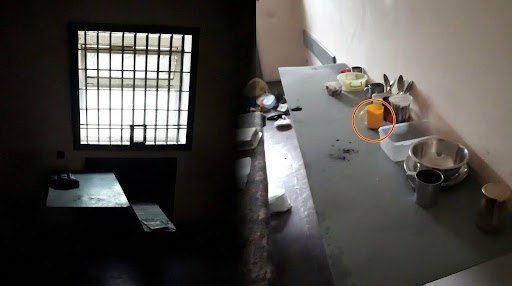
A cell in the detention center in Kherson. The yellow cup belonged to Roman Baklazhov. PHOTO: Roman Baklazhov’s Facebook
Does it ever happen that, after being released, a person doesn’t want to talk about their experience, doesn’t seek help, or avoids contact with relevant organizations? How do you find a balance between the desire to help and respect for personal boundaries?
Usually, this feeling passes quickly once a person is confronted with the realities of daily life: they need a place to live, something to eat, and a way to make ends meet. That’s when they reach out for help, because they realize they can’t do it alone. We have a Telegram chat with about three hundred people from different regions: people from Kherson, Mariupol, Berdiansk, and Luhansk. There, you can describe your problem, get advice on where to turn, and feel a sense of mutual support.
In addition, we’re in dialogue with the Territorial Recruitment Center, and they treat these people with understanding. By the way, when people who have just escaped from Oleshky are told they’ll be mobilized, it’s worth looking at the other side of the coin: how are the military supposed to know that a person isn’t lying or a traitor? Various people remained in Oleshky: some were hiding from the TCC, some from the Russians, and some were leaving and posing as victims. Therefore, the situations vary greatly.
One of the most difficult challenges is confirming the fact of unlawful detention, especially when a person has no documents or cannot describe the circumstances in detail. How should such cases be handled?
This is indeed a complex issue. There are cases where a person was kept tied up at all times or had a bag or hood over their head. The person describes everything, and yet there are still witnesses to their disappearance—relatives, neighbors, market vendors, if the detention took place there.
In de-occupied territories, this is easier to verify; in occupied territories, it’s more difficult, but these are mostly exceptions. Even if a person didn’t see faces, they might have noticed the type of flooring, the color of the walls, or any inscriptions present. If a person says they were in Kakhovka, there’s one investigator working there, and another in Hola Prystan: the investigators already have a good grasp of where and who was being held, and they can immediately tell whether the person is telling the truth or making things up. According to experienced investigators, those who try to lie usually don’t even make it to the stage of investigative procedures or reenactments because they can’t provide specific details or identify exactly who was in the cell with them.
There was a surge in status inquiries when the provision granting a deferral for civilian prisoners was adopted; that’s when the attempts to deceive began.
Has your attitude toward recovery changed since you started helping other former prisoners of war? What do you understand differently about this process today compared to right after your release?
Right after my release, I went to a retreat where there were psychologists, and, fueled by adrenaline, I felt like everything would be fine. But later, the aftereffects set in: spasms, nervous tension, and irritability. I realized I wasn’t made of iron, so I went to see doctors—that was in late 2022 and early 2023. One hundred percent of people who’ve gone through this experience these effects: some ignore them, some lash out in anger, and some start drinking or using other substances. But everyone experiences them.
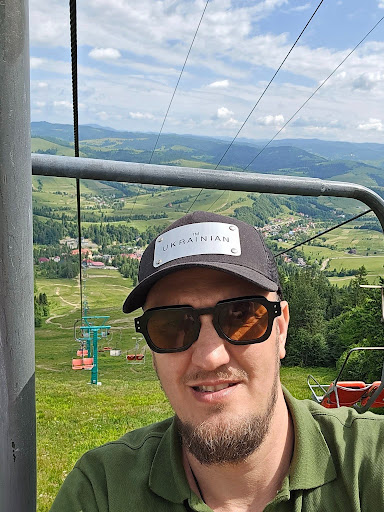
Roman Baklazhov at a retreat in the Carpathians. PHOTO: Roman Baklazhov’s Facebook
What does a return to so-called “normal life” mean to you personally? Can you make plans without linking them to the war, captivity, and helping others?
No, I can’t. The war and the issue of captivity make up about 95% of my life. My new social circle in southern Ukraine consists of former civilian prisoners of war and volunteers; another 5% or so are military volunteers, as well as a community of specialized civil society organizations that work with civilian prisoners of war.
If you could change one thing about Ukrainian society’s attitude toward people who have survived Russian captivity, what would it be?
I would introduce more empathy into the healthcare system. In regular hospitals, doctors and staff often don’t understand who they’re dealing with or what it means to be someone who has survived captivity (though one shouldn’t generalize). In military hospitals, however, the situation is completely different; there, medical professionals have a better understanding of just how difficult captivity can be.
Tell us about the “Empty Chairs” event you recently held in Odesa. Similar events have taken place in Kyiv and Lviv before, but this was the first time you organized one in the south.
I’d been reading about this event in the news for a long time and thought it would be worth holding it here as well. When we gathered with former civilian prisoners of war to mark the anniversary of Kherson’s liberation, we decided to hold “Empty Chairs” on November 15—Prisoner Writers’ Day—as a symbol of remembrance for the people being held captive by Russia.
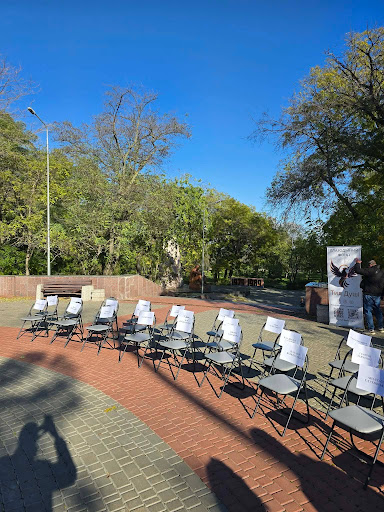
The “Empty Chairs” event in Odesa. PHOTO: Roman Baklazhov’s Facebook
We had little time to prepare, so we didn’t have a chance to communicate effectively with the local media or publicize the event widely. We gathered in Shevchenko Park near the fountain: instead of fifty chairs, we set up twenty-five—each bearing the name of a civilian currently in captivity. Representatives from the Department of Internal Policy were present, and the city parks department assisted us. Next year, we want to prepare in advance, make the event even bigger, and involve more people.
It is fundamentally important to do this specifically in the South: Odesa and the region have become a second home for thousands of displaced people from Kherson, Zaporizhzhia, and Mykolaiv regions, and families live right here among us whose loved ones have been held in Russian torture chambers for years—without legal status, contact, or a voice.
I thought to myself then: nothing like this has ever been done in Odesa before, so who will do it if not us? Even when we have to carry the chairs ourselves and face criticism instead of support, we keep moving forward anyway, because it matters.