05 July 2026, 06:58
The Amazing South: The Tendrivska Spit—a strip of land between the sea and the sky
Ця стаття також доступна українською

Tendrivska Spit. PHOTO: encrypted-tbn0.gstatic.com
The Tendrivska Spit is one of the most unusual natural formations in the northwestern part of the Black Sea. This long sandy strip is located off the coast of the Kherson Oblast in the Skadovsk District. It extends approximately 65 kilometers into the sea, and the width of this spit does not exceed two kilometers.
This latest articlein the “Amazing South” seriesis about the Tendrivska Spit—a stretch of land once beloved by tourists.
A Long Island in the Black Sea
On a map of the Northern Black Sea region, the Tendrivska Spit appears as a narrow sandy strip separating the open sea from the shallow Tendrivska Bay. Although the area is officially called a spit, it is separated from the mainland by several kilometers of open water, so geographically it is a full-fledged island known as Tendra.
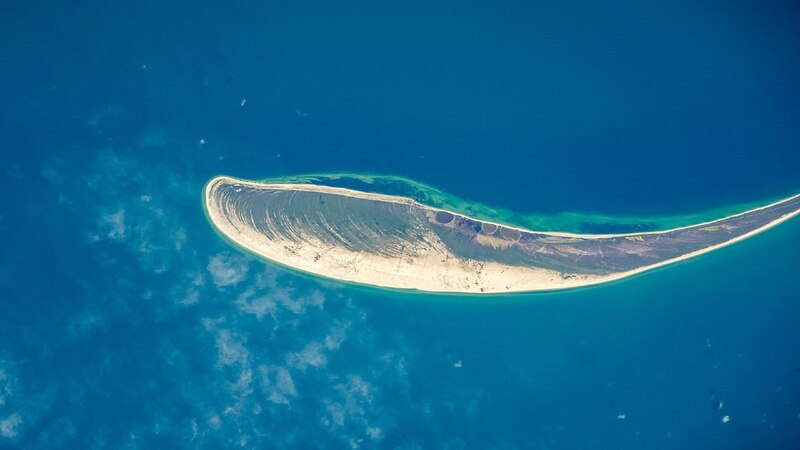
Tendra Spit. PHOTO: f.discover.ua
From a geomorphological perspective, the Tendrivska Spit is the result of centuries of intensive marine accumulation of sand and shell fragments. This unique natural feature was formed by ocean currents that transported sediment (sand, mollusk shells, and small rock fragments), as well as wave action, which gradually deposited sand along the coast. The spit’s topography consists of sand dunes, coastal ridges, lagoons, and small salt lakes, whose contours are constantly changing under the influence of natural factors.
The History of the Tendrivska Spit: Traces of Ancient Civilizations
The Tendrivska Spit is a region with a rich history dating back millennia. Today, it is a deserted strip of sand where the wind, the sea, and birds reign supreme. However, throughout history, trade routes passed through here, nomadic peoples settled here, sailors stopped here, and events unfolded that left their mark on the history of the entire Black Sea region.
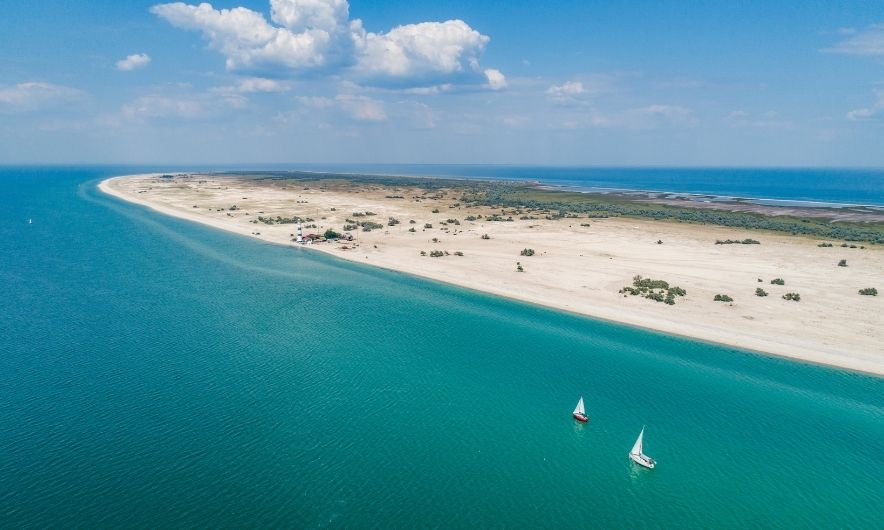
The coast of the Tendrivska Spit. PHOTO: khers-on.com
The fate of the Tendrivska Spit has always been shaped by its geographical location. It lies at the boundary between the steppe and the sea. Archaeological findings indicate that people began settling along the northern coast of the Black Sea as early as the Neolithic era. Although the Tendrivska Spit itself constantly changed shape under the influence of the sea and was not always suitable for long-term settlement, its surroundings served as seasonal campsites for ancient hunters and fishermen.
Due to periodic changes in the Black Sea’s water level, the coastline shifted repeatedly. Many ancient settlements were buried under layers of marine sediments or destroyed by erosion, so the history of the region’s early settlement remains a subject of scientific research to this day.
In the 10th–7th centuries BCE, the Northern Black Sea region became part of the world of nomadic peoples. Among the first known inhabitants of these lands were the Cimmerians, information about whom has been preserved mainly in ancient sources. They were later succeeded by the Scythians, who formed a powerful confederation of tribes that controlled the steppes from the Danube to the Don.
According to research, the Northern Black Sea region was actively settled during antiquity. It was the Greeks who first described the Tendrivska Spit in detail. In ancient tradition, it was known as “Achilles’ Run.” According to one legend, it was here that the great hero of the Trojan War trained in running or held competitions. Modern historians believe that the cult of Achilles in the Northern Black Sea region held special significance for Greek sailors. Before embarking on long voyages, they would make sacrifices to the hero, considering him the patron of sea travel. Scholars speculate that there may have been religious structures near the spit, to which pilgrims from various Greek city-states would travel.
As Rome’s influence grew, the Northern Black Sea region became integrated into the international trade network. Ships carrying wine, olive oil, pottery, and metal goods traveled along these sea routes. In the opposite direction, grain, fish, salt, and products from the steppe regions were transported.
During the 4th–7th centuries CE, during the era of the Great Migration, the Northern Black Sea region experienced a series of large-scale migrations. The Goths, Huns, and other peoples passed through the steppes, reshaping the political map of Europe. Many ancient cities fell into decline, and trade links were significantly reduced. At that time, the Tendrivska Spit once again became primarily a natural landscape, used by fishermen and nomads only sporadically.
In the Middle Ages, these lands were successively controlled by the Khazars, Pechenegs, Polovtsians, and the Golden Horde. For nomads, the coast served as seasonal pastureland. In the spring and summer, herds of horses, sheep, and cattle were driven here. Trade routes continued to pass through this area, connecting Eastern Europe with the Crimea, the Caucasus, and the Mediterranean countries.
Starting in the 15th century, the coast came under the influence of the Ottoman Empire and the Crimean Khanate. During this time, the Tendrivska Spit gained strategic importance. Control over this region allowed for the monitoring of shipping and ensured the security of maritime communications. During this period, fishing and salt production flourished here, and the coast was home to small, seasonal industrial settlements.
After the Northern Black Sea region was annexed by the Russian Empire in the late 18th century, the importance of the Tendrivska Spit increased significantly. The development of new ports, the growth of trade, and the increase in the number of ships necessitated improved maritime safety. In the 19th century, a lighthouse was built here, which became one of the most important navigational landmarks in the northwestern part of the Black Sea.
Guardian of the Sea Lanes
The growth of shipping in the 19th century required the creation of a reliable navigation system. The sandbars (raised seabed) around the Tendrivska Spit posed a serious danger to ships, especially at night and during storms.
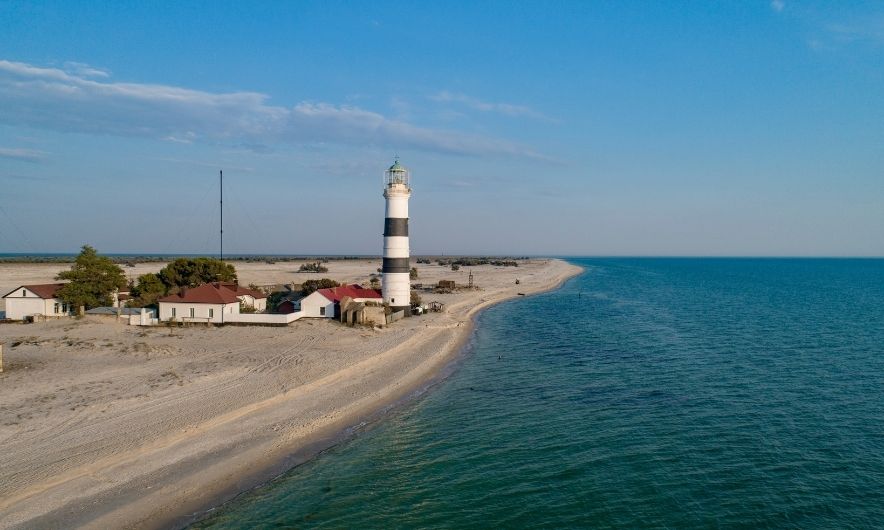
The Tendrivsky Lighthouse. PHOTO: khers-on.com
That is why the Tendrivsky Lighthouse was built on the western tip of the spit. It is the oldest operating lighthouse in the Kherson region, erected in 1827 based on a design by the renowned Dutch engineer Boris von der Fliess. It is a 30-meter-tall stone tower that has served as an important landmark for nearly 200 years for ships heading to the Dnipro-Bug Estuary, Odesa, Mykolaiv, and other ports on the northwestern Black Sea coast.
Life Among the Sands
Most of the Tendrivska Spit is part of the Black Sea Biosphere Reserve. It is one of the region’s most important nature conservation areas, home to rare steppe and coastal ecosystems.
At first glance, the sandy plains seem practically lifeless. However, it is precisely here that a unique vegetation thrives, having adapted to extreme conditions. On the spit, you can see drought-tolerant grasses, shrubs, and rare plants adapted to life on sandy soils. The roots of many of these plants extend deep into the sand, stabilizing the dunes and preventing them from being eroded by the wind. The leaves are often covered with a waxy coating or fine hairs that reduce water evaporation. Some species are able to store water in their tissues, much like desert plants. These natural mechanisms help maintain the stability of the entire ecosystem. The disappearance of even a few plant species can lead to increased erosion and the gradual destruction of the sand dunes.
The animal life here is of particular value. Numerous species of migratory birds can be found here: herons, cormorants, sandpipers, pelicans, and other representatives of wetland fauna.
Permanent residents—wild horses
One of the natural features of the Tendry Spit is Ukraine’s only population of wild horses, which roam freely within this protected area. These animals have become a symbol of Tendry and attract the attention of researchers. They move in small herds, forage among the steppe vegetation, and are able to withstand prolonged periods of drought.
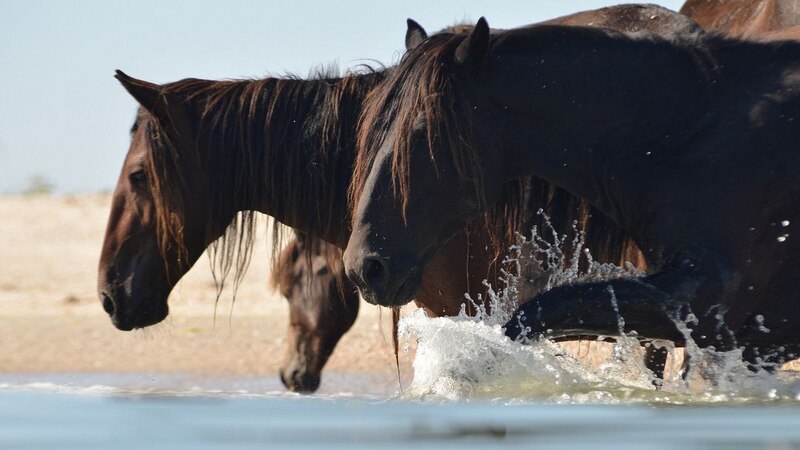
Wild horses on the Tendrivska Spit. PHOTO: upload.wikimedia.org
For ecologists, this population is of significant interest as an example of how large herbivores influence natural communities. By grazing on plants, the animals prevent excessive overgrowth in certain areas of the spit, while simultaneously promoting the restoration of meadows and preserving open spaces for the island’s other inhabitants.
A Favorite Spot for Birds
For millions of migratory birds, the northern coast of the Black Sea serves as a sort of “air highway.” In spring and fall, birds travel thousands of kilometers between their wintering and nesting grounds. Along this route, they need safe areas to rest and regain their strength. The Tendrivska Spit has become one such natural resting place.
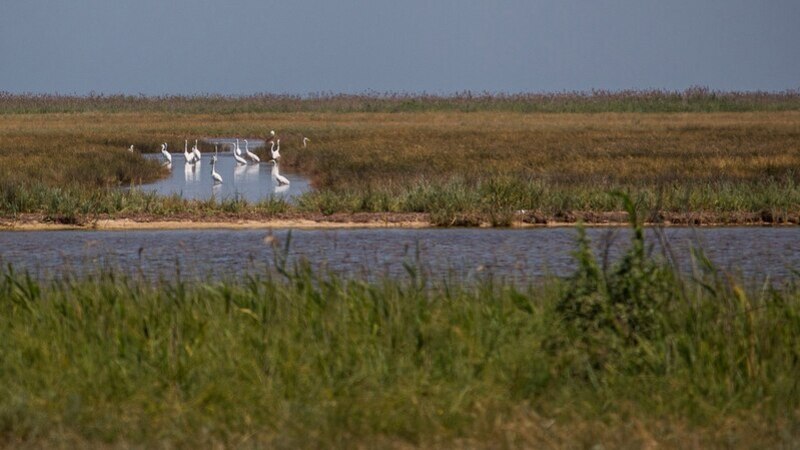
Birdlife on the Tendrivska Spit. PHOTO: unalib.ks.ua
Dozens of species of shorebirds, gulls, terns, herons, cormorants, swans, and ducks regularly stop here. For some rare species, these areas are of international importance as nesting sites and stopovers during seasonal migrations.
Ornithologists use the spit for long-term observations of changes in bird populations. Such studies allow for assessing the state of ecosystems not only in Ukraine and the Black Sea region but also throughout Eastern Europe.
Temporary Occupation of the Tendrivska Spit
Since February 2022, the Tendrivska Spit has been under Russian occupation. Due to hostilities, proximity to the front line, and the danger of landmines, visiting this area is currently life-threatening for civilians and is therefore strictly prohibited.
On February 28, 2024, soldiers from the 73rd Naval Center of the Special Operations Forces of the Armed Forces of Ukraine attempted to land on the island to carry out combat missions. The soldiers engaged the enemy and suffered casualties.
Interesting Facts
- In ancient times, the Tendrivska Spit and Dzharylgach Island formed a single landmass. It was a 130-kilometer strip of land connected to the mainland by a narrow isthmus. The ancient Greeks called this gigantic spit “Achilles’ Run.”
- In honor of Achilles, the inhabitants of Olbia held the Achillean Games on the spit—athletic competitions that included various gymnastic exercises and running on sand. The games took place once every few years, and their dates were determined by the lunar calendar.
- About a hundred animal species inhabiting the island are listed in Ukraine’s Red Book. The flora of the spit includes unique species considered endemic, such as sea alfalfa and Tendriv alfalfa.
- In the open sea to the north, west, and south of the Tendrivska Spit, the water is often cooler than at neighboring resorts due to the influence of ocean currents and greater depths. On the eastern side of the spit lies a shallow bay where the water warms up much faster and is comfortable for extended swimming.
- A spiral staircase with 104 steps leads to the top of the Tendrivsky Lighthouse. An observation deck has been built there. It offers an incredible view—a kind of reward for the challenging climb—for particularly resilient visitors.
- Most of the spit is a protected area, so free access to this site is subject to certain restrictions. Before the start of Russia’s full-scale invasion of Ukraine, tourists could reach the spit by yacht or boat from Odesa or Zalizny Port, but only to the civilian section open to visitors, which is limited to a small stretch of coastline near the lighthouse.
Юлія Сичова