Меню
Соціальні мережі
Розділи
Feb. 22, 2026, 6:42 p.m.
Amazing South: an underrated health resort in Odesa region
This article also available in English30

PHOTO: Intent
Odesa region has many natural healing resources. Intent has already talked about the Dead Sea's competitor, the Kuyalnyk Estuary, and its powerful balneological base. This time we will talk about a resort that has no less valuable "treasures".
The Black Sea coast of Odesa region is famous not only for its cozy sandy beaches, warm gentle sea, picturesque landscapes and many historical monuments. A system of estuaries "decorates" almost the entire southern coast of Ukraine, washed by the Black and Azov Seas. Not far from the largest estuary in the Odesa region, the Dniester Estuary, 18 km from the city of Bilhorod-Dnistrovskyi, there is a small estuary, the Budatskyi (Budakskyi) or Shabolatskyi, as it is also called. It stretches along the Black Sea coastline and is 17 km long and only 1500 meters wide. The area of the water "mirror" is more than 3000 hectares. As is the case with all estuaries, Budatske Lake, which is the name of the reservoir, is separated from the sea by a sand spit of the same name, Budatska Spit. But we will return to it a little later.
Budatske Lake
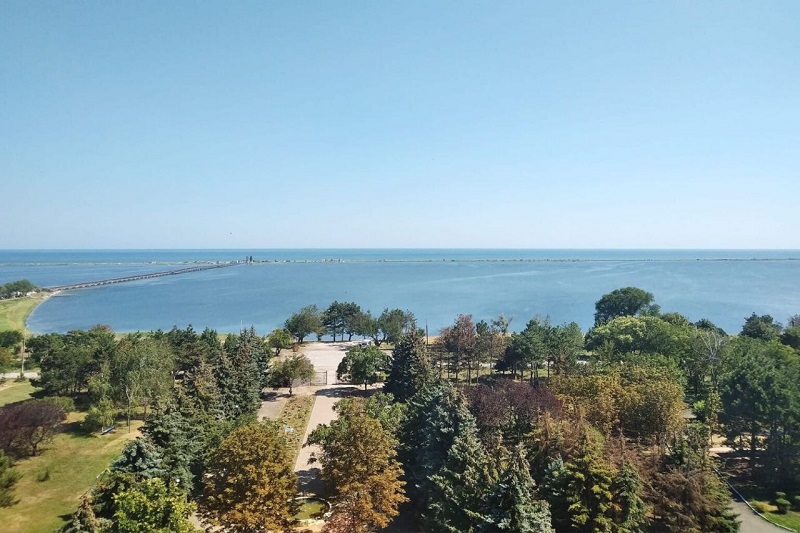
The Budatskyestuary. PHOTO: sergeevka.org
The Buda Estuary is part of the Danube-Dniester ecosystem. This leads to a constant water exchange, exchange of minerals, plant and animal resources within all the lakes and estuaries of the lagoon located between the Danube and Dniester rivers. The closest connection between the Buda Estuary and its closest "neighbor" is the Dniester Estuary. Scientists believe that the estuaries were formed as a result of the branching of the mouth of the Dniester, so both bodies of water have no clear boundaries and are connected by marshy floodplains. These wetlands are a favorite nesting place for migratory ducks, swans, and geese and a reliable habitat for a large number of seagulls, cormorants, and sedentary ducks.
The Budak Estuary is often called a lake. This is due to the fact that it is almost completely separated from the Black Sea by a narrow sandbar, resembling a lake-type body of water in shape and hydrological regime. Due to the low flow and high evaporation rate during the hot season, the water in the Buda Estuary becomes extremely salty, which is typical for lakes, not bays. In the historical context, the name "Lake Buda" was established due to its use as a closed healing spring.
Balneological treasures of the Budatsky estuary

Mineral baths. PHOTO: sergeevka.org
The shallow depth of this estuary, which averages 105 cm, contributes to the rapid heating of its waters in summer to 28-33 degrees Celsius. These factors have become the main ones in the formation of its balneological resources. The waters of the estuary have a mineralization of more than 30 percent and a sodium chloride composition. In addition, groundwater layers have formed under the reservoir, with a composition similar to that of Myrhorod and Kuyalnytsia healing springs.
The almost complete absence of communication between the Budatsky estuary and the sea led to the formation of medium-mineralized, slightly sulfide sodium chloride silt deposits with a high content of organic matter and a rich colloidal complex in its depths. These properties endow the mud with a unique healing potential, which is successfully used in the treatment of diseases of the musculoskeletal system, skin, gastrointestinal tract, nervous, respiratory, reproductive and urinary systems. However, it should always be remembered that treatment procedures with miraculous silt estuary mud should be carried out as prescribed and under medical supervision, which is when they will bring maximum benefit without harm to the body.
Budak Spit
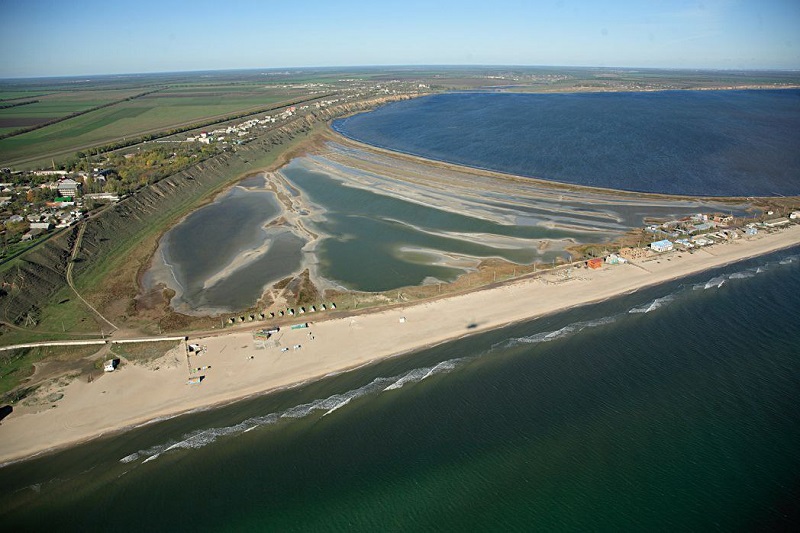
TheBudaSpit. PHOTO: To the sea and to the mountains
Starting from the resort of Zatoka to the village of Kurortne, a sandy strip stretches along the Budatska Spit. On one side it is washed by the Black Sea, on the other - by the Budatsky estuary. The width of the spit varies from 50 to 200 meters in different areas. It is this distance that separates the sea and estuary waters, making it a kind of natural dam. With its help, the Black Sea waves are trying to block the freshwater of the Dniester from entering their own space.
For many millennia, this sandy formation has been holding back the waters of the Dniester, almost preventing them from entering the sea. In the southern part of the Budatska Spit, the river has managed to neutralize the blockage and is slowly seeping into the Black Sea. But this is an unequal battle, so over time, a huge reservoir of fresh water, the Dniester Estuary, was created in the lower reaches of the Dniester.
The Buda Spit is a relatively "young" formation, having appeared in the Cenozoic era. For a long time, sea waves, coastal currents, and winds worked to "build" a natural sand mound. The surface of the spit is covered with fine-grained sand the color of red high-grade gold, so rest in this resort area is often compared to recreation in the famous Spanish resort of Costa del Sol.
On the coastal side, the shores of the Budak sand strip are almost entirely covered with grass and reeds, and the coastline stretching along the Black Sea is a continuous beach area. The spit has interspersed buildings and tourist infrastructure near the villages of Zatoka and Serhiivka, and from Serhiivka to Kurortne there are no signs of civilization at all - almost no tourists. It is this place that attracts lovers of "wild" recreation alone with nature.
Historical background
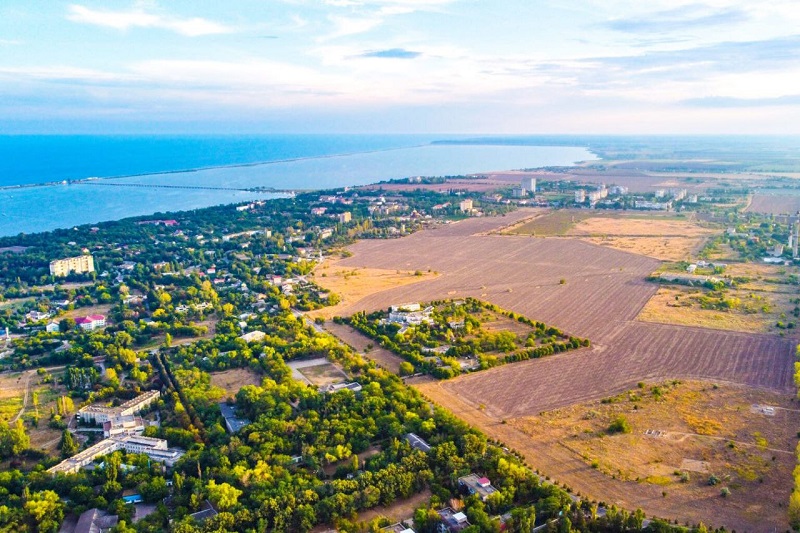
Serhiivka resort. PHOTO: sergeevka.org
Since ancient times, the attractive lands of the Black Sea region have been an area of interest for representatives of different peoples and cultures. The shores of the Shabolatsky (Budatsky) estuary are no exception, they have a rich ancient history. Archaeological excavations are confirmed by evidence of human settlement in these areas. The history of the region is a combination of the influence of the Trypillian heritage, Greek and nomadic cultures, and later the Ottoman presence. All this has formed a unique cultural landscape of the Black Sea coast of Odesa region.
The main physical and chemical therapeutic properties of the Budak Estuary brine were discovered by scientists of the Odesa Scientific Society of Balneologists in the late 19th century. At that time, a settlement consisting of 15 yards was formed on the coast of the reservoir and was called Shabolat-Sergiivka. At the beginning of the last century, a mud bath was built on the shores of the Shabolat estuary, which marked the beginning of the resort's development. For many years, people from Moldova came here for health improvement. Over time, mineral springs were discovered on the spit, and the water from them was used to treat diseases of the gastrointestinal tract.
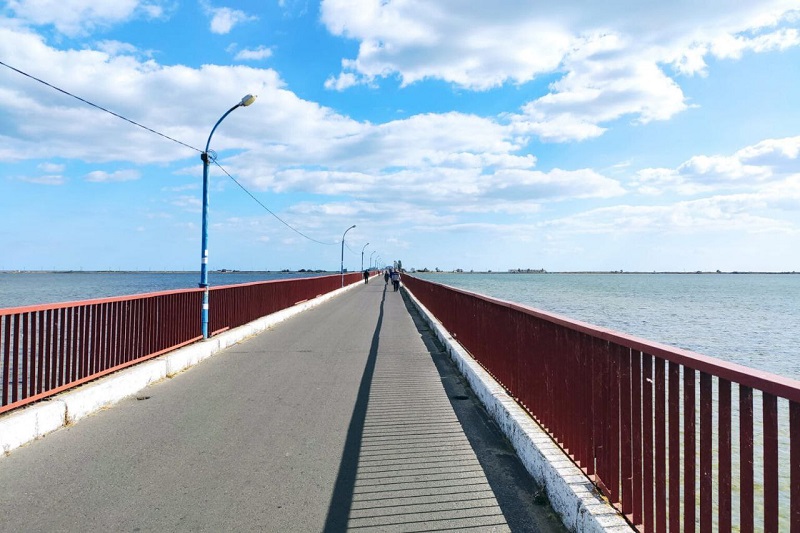
The bridge in Serhiivka. PHOTO: sergeevka.org
In 1972, a 1 km long pedestrian bridge was built across the estuary, creating a connection between the village of Serhiivka and the sea spit. After this event, the beach area began to develop, which led to an even greater flow of vacationers. The heyday of the resort was in the 1970s and 1990s. It was at this time that the village was actively building and opening sanatoriums, children's health centers and camps, recreation centers and hotel complexes.
Unfortunately, during the open armed aggression of the Russian Federation against Ukraine, Serhiivka was shelled by the aggressor. A nine-story building, a kindergarten and some sanatoriums were heavily damaged.
The Centerfor Public Investigations has personalized those who may be involved in the deadly attack on civilians in Serhiivka on July 1, 2022 by the Russian military. After that, according to the GUR, Russia eliminated Dmitry Golenkov, a pilot of the 52nd Heavy Bomber Regiment of the Russian Aerospace Forces (military unit 33310), which is based at the Shaykovka airfield in the Kaluga region and operates Tu-22M3 bombers. Golenkov was involved in the murders of Ukrainians on July 1, 2022. Then three X-22 missiles covered the distance from the launch site to the target in just a few minutes. As a result, the Goji recreation center was completely destroyed and a nine-story residential building was heavily damaged. The worst part is that 22 civilians were killed and 39 wounded. Also, as a result of the AFU's strike on L'gov in Kursk Oblast, the commander of the 52nd Long-Range Aviation Regiment, Colonel Oleh Tymoshyn, who was involved in the rocket attack on the resort village of Serhiivka in 2022, was probably killed.
In the section "Amazing South," Intent also introduced readers to the protected pearl of Mykolaiv region - Buzkyi Gard, the home of the Cossacks in Kherson region - Stanislav, and the Muslim capital of Ukraine - Bakhchisarai.
Ancient monument - Akkembetsky mound
Mounds can be found on almost all continents of our planet. This is one of the types of grandiose funerary structures that ancient people built to bury their rulers and people of noble birth. On the territory of modern Ukraine, such eternal monuments were called "royal tombs". The Melitopol, Oleksandrivsk and Hermes mounds, the Kamianske settlement, Chortomlyk and Tovste Mohyla are widely known, where among the finds were many weapons, jewelry, tools, and household items that were made and used long before the advent of our era.
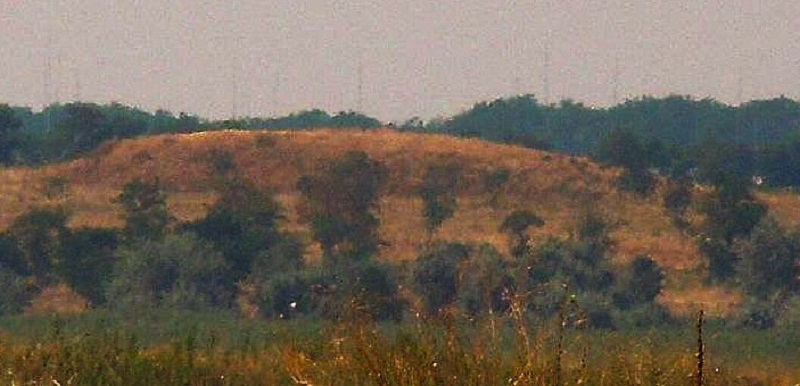
Akkembet mound. PHOTO: Wikipedia
One of the most famous and interesting burial sites is the Akkembetskyi Kurgan (Popov's Grave), found in the nineteenth century in the vineyards of the village of Bilenke. The ancient name of the settlement, Akkembet, comes from this burial ground, as it means White Tomb in Turkish. From a geographical point of view, the Akkembet mound is built on a plateau that forms the northern shore of the Budak Estuary.
This funerary structure belongs to the Trypillian culture, mainly to its later Usativ period, which developed on the territory of Northern Transnistria, Moldova, and the Western Black Sea region. The Akkembet mound is the only surviving monument from the community that lived on the shores of the Budak estuary. Other burial sites were destroyed in the middle of the last century during the economic development of these lands.
The upper part of the Akkembet mound was also destroyed as a result of agricultural activities of the inhabitants of this area. Therefore, the current height of the burial ground barely reaches the seven-meter mark with a diameter of 60 meters. Despite the fact that the mound was subjected to such barbarism, its mound has 7 stratigraphic layers, in which the remains of 27 different cultures of the past were found. Isotopic analysis has shown that most of the burials at Akkembet Mound are dated to around 2800 BC. Thus, the burial ground is recognized as an important archaeological site of the Eneolithic and Bronze Age.
Interesting facts:
- The name of the Budak Estuary comes from the place name Budak, the former name of the village of Prymorske, near which the reservoir is located. It means "swamp, mire" in Turkic.
- The Budak Spit was awarded the status of the best beach in the Bilhorod-Dnistrovskyi district of Odesa Oblast
- An extremely interesting phenomenon is observed on the coast of the Budatska Spit in August at night - the sea water glows with lights. This is explained by the presence of unicellular organisms among the Black Sea plankton that can emit light.
- As a result of historical research of the Akkembet mound, 6 burials were discovered. In one of them, the main one, the remains (ashes) of a man, a Scythian king, were found. Other people, horses, and dogs were buried next to the leader, who were killed intentionally (against their will) to act as escorts to the afterlife.
- Thanks to its geographical and weather conditions, the Shabolat Estuary is a favorite place for kite surfers from all over Ukraine in windy weather.
How to get there
Before the war, there were several ways to get from Odesa to the Budak Spit and the estuary. Now there is almost only one:
- Before the Russians destroyed the bridge, you could take a train from Odesa's railway station to Bilhorod-Dnistrovskyi, to the Bugaz station, and then transfer to bus 6 at the bus station in the center of Zatoka.
- It was also possible to take a bus from the Privoz market in Odesa to the central bus station in Zatoka, and then take bus route 6.
- Before the destruction of the bridge, it was possible to get from Odesa by car on the P70 highway through Velykodolynske and Ovidiopol or on the M27 and T1641 highways through Chornomorsk, Sanzhiyka and Gribovka, passing through Zatoka.
- From Kyiv to the resort, the route is through the city of Odesa, to which there are regular trains and buses.
- By car from Kyiv, take the E-95 highway through Odesa.
After the destruction of the bridge across the Bilhorod-Dnistrovskyi estuary, you can get from Odesa via Palanka and Bilhorod-Dnistrovskyi. In the summer, you can also take a comet from Ovidiopol to Bilhorod-Dnistrovskyi, and from there to Serhiivka.
Юлія Сичова