Меню
Соціальні мережі
Розділи
Jan. 25, 2026, 6:49 p.m.
Amazing south: a competitor of the Dead Sea from Odesa region
This article also available in English45

IMAGES: Intent
The south of Ukraine is impressive. It is not only a seaside vacation, but also unique natural areas such as sand spits, islands and estuaries, steppe waterfalls, nature reserves and architectural masterpieces. The south of Ukraine is a combination of the warm Black Sea, endless steppes, and colorful culture.
The south of Ukraine is the Odesa region, with its unique atmosphere, which remains the region's tourist gem. Here you can always enjoy seascapes, historical sites, and multicultural cuisine.
The south of Ukraine is the Mykolaiv region, which is known as the land of yachting, estuaries and protected areas.
The south of Ukraine is the Kherson region, which is famous for its pink lakes, the Dnipro Delta, and rich watermelon growing traditions.
The south of Ukraine is, finally, Crimea, which is the pearl of the Black Sea and will definitely return.
Intent will tell about all this in the new section "Amazing South"...
From ancient times to the creation of the resort
Let's start the story about the pearls of the South of Ukraine with the Dead Sea's competitor from Odesa region - Kuyalnyk health resort. This is a balneological resort located near Odesa at the foot of Zhevakhova Mountain on the shores of the Kuyalnyk Estuary, whose name comes from the Turkish "kuyanlyk" - "thick" - because the salt concentration in the water was quite high. By the way, many other estuaries also received Turkish historical names, such as Tiligul and Khadzhibey.
The Pink Estuary. PHOTO: Recreation at 100%
In the last century, the remains of a settlement of the first millennium BC were discovered on the coast of the Kuyalnik estuary. In the XIII century, the estuary was controlled by the Mongol-Tatars, who called it "Kuganlyk" ("Kuyanlyk"). Various tools of ancient people can be found almost along the entire coast of the estuary. Greek colonization left a significant imprint on this territory. At that time, the estuary was still an open sea bay with a marina. During the Middle Ages, the Genoese factories of Ginestra were located here.
Once upon a time, the mouth of the Velykyi Kuyalnyk River was located on the site of the Kuyalnyk Estuary, which eventually turned into a bay of the Black Sea. In the 14th century, sand deposits formed a spillway, and the bay became an estuary. By the way, Odesa's sandbar became famous thanks to the song about Kostya the Sailor.
From time to time, the water in the Kuyalnyk Estuary turns a pronounced red color, and the reason for this is the seasonal reproduction of algae, the mating season of artemia crustaceans, which are thrown ashore in huge numbers by the waves, and the presence of halobacteria.

The pink estuary. PHOTO: Recreation at 100%
There are no more living inhabitants in the waters of the estuary, except for crayfish and mosquitoes. But it wasn't always like this. The French engineer and military cartographer of the XVII century Guillaume Levasseur de Beauplan noted in his Description of Ukraine: "Lake Kuyalnyk is no closer than two thousand steps from the sea and teems with fish. Caravans come to these two lakes to fish for more than fifty lieu; carp and pike of such a size are found here that it is simply amazing."
The water level and salinity in the estuary changed regularly, and in dry years the estuary dried up. In 1907, 1925, and 2014, seawater was released into the estuary to prevent it from drying out. In recent years, this has been done much more frequently.
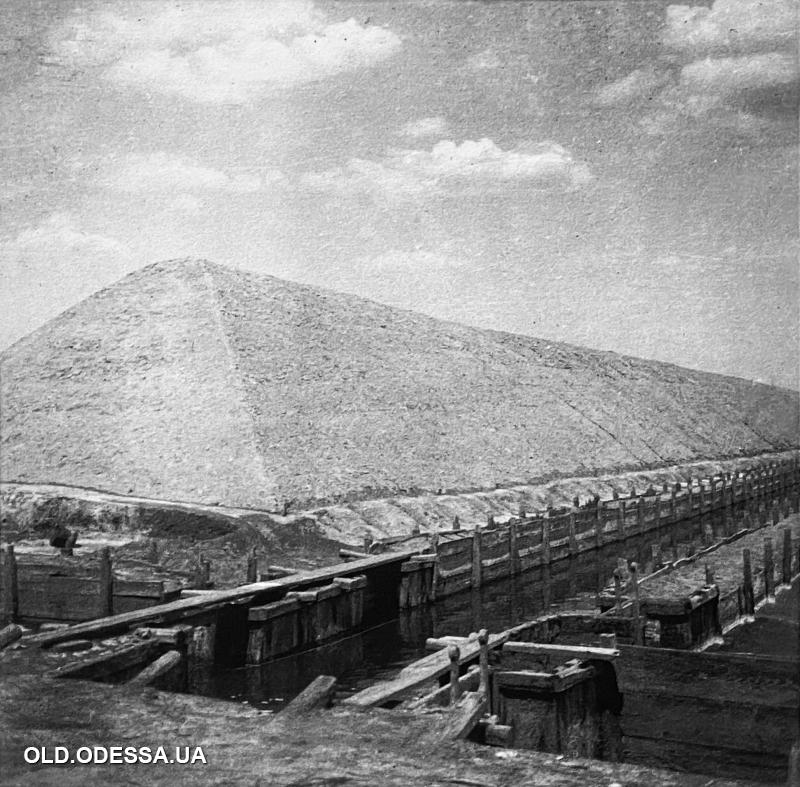
Salt extraction on the estuary. PHOTO: Windows of Odesa
After the estuary was separated from the sea, its salinity increased, and in the Middle Ages salt was actively mined here. In the middle of the XVII-XVII century, the estuary became a place of fishing for the Cossacks and Chumaks, who supplied and sold salt to European markets, and according to historical information, salt carts delivered it to St. Petersburg. Salt was mined for several centuries, until 1931.
There is also information that in 2026, a new plant is planned to be launched on the basis of the Kuyalnyk Estuary, which will use innovative technology of basin salt deposition for industrial production, which should reduce excessive mineralization of the estuary and provide Ukraine with salt. The company, whose construction began in 2024, intends to produce about 15 thousand tons of salt per month, covering more than 50% of Ukraine's domestic needs and contributing to the ecological restoration of the estuary. The project involves specialists from Artemsil and the Turkish company SALT PLUS. This will replace salt from the discontinued deposits of Donbas and meet about half of Ukraine's needs.
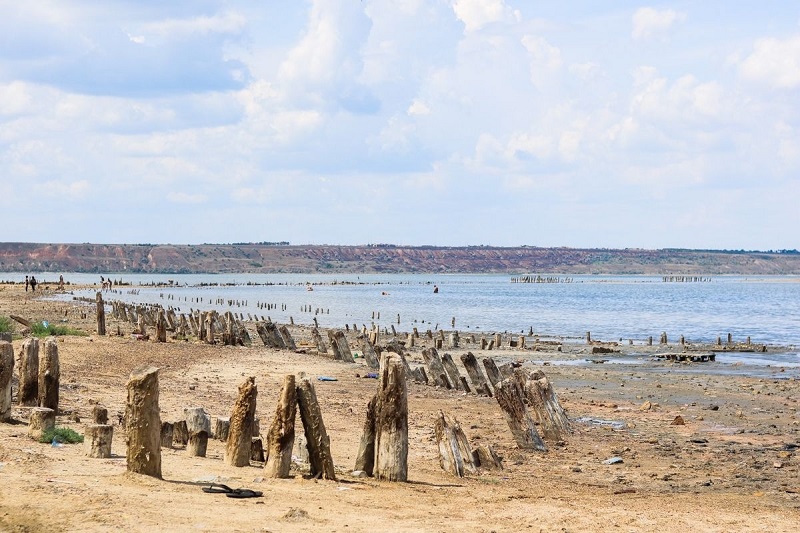
Non-industrial salt production. PHOTO: Inside-ua / bogdan_susol
It was the salinity of the estuary that contributed to the fact that the resort that was created on its shores was called a competitor to the Dead Sea.
The resort from its inception to the present day
This mud baths and resort are among the oldest balneological resorts in the entire country. They are known for their invaluable healing properties of mud and bacteria, which help strengthen the immune system. The water of the same name, Kuyalnyk, is commonly drunk alongside Borjomi.
In general, the peculiarity of Odesa estuaries is that they have layers of mud and silt at the bottom. It contains many different mineral particles and organic substances. The widespread use of this mud and brine in medicine and the birth of the Kuyalnytsia resort is associated with the name of Erast Stepanovych Andriivskyi, MD, the personal physician of Prince Vorontsov, who lived in Odesa in the early nineteenth century. At that time, Andriivskyi managed to convince the city authorities of the need to establish a medical facility on the shores of the Kuyalnyk Estuary. The city bought a plot of land for the construction of a hospital from retired Major General Prince I.S. Zhevakhov, the owner of the land between the two estuaries, the Khadzhibey and the Kuyalnytsia estuaries (later called Zhevakhova Hill). In 1833, architect Koshelev began construction. Two months later, a "greenhouse" for mud treatments and a "cold bath" were built. The first buildings were wooden. Officially, the facility was called the Hospital of Mud and Sand Baths of the Estuary. It was one of the first resorts in the Russian Empire.
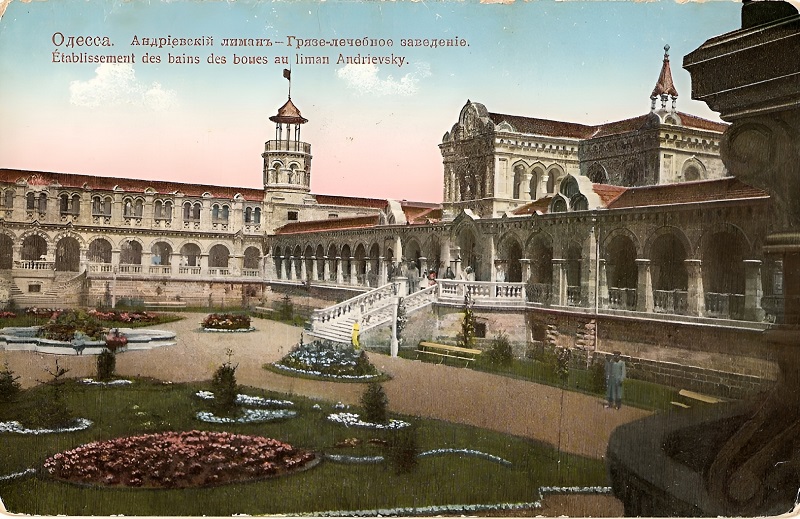
Themudbaths inthe nineteenth century: kuyalnyk.com.ua
In 1841, the hospital was expanded. Instead of wooden buildings, brick structures appeared here. In 1851, Andriyivsky traveled to the Caucasus. A monument to him was erected at the resort for the achievements of the Russian progressive doctor, and the estuary itself was called "Andriivskyi" for a long time.
The development of the resort continued. In 1873, a railroad was built to connect the estuary with the seaport and railway station in Odesa.
Construction of the railroad to Kuyalnyk. IMAGE: kuyalnyk.com.ua
In 1892, a new hospital, then one of the most beautiful in the country, was built according to the design of the famous architect Mykola Tolvinsky, and Kuyalnyk mineral water was also actively used to improve digestion and prevent stomach problems.
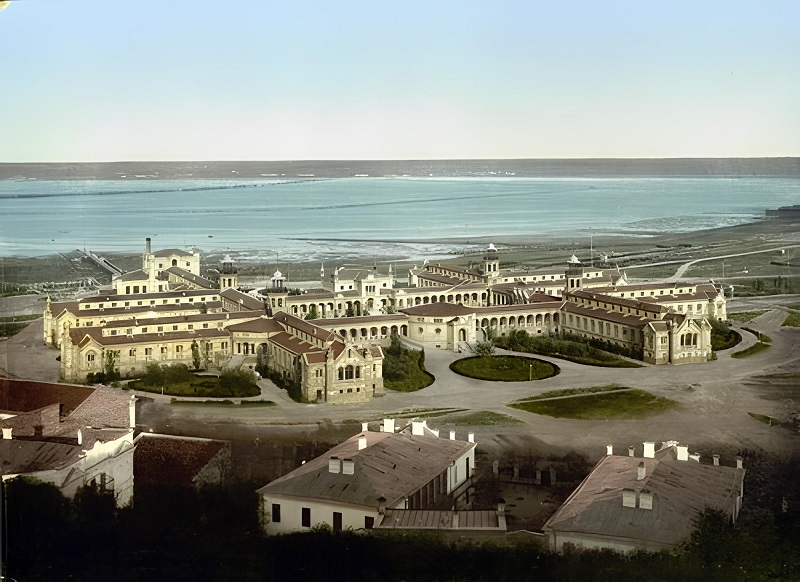
Chromolithography of the mud baths in the late nineteenth century: Wikipedia
The resort was very famous in Soviet times. Also in 1948, the industrial bottling of Kuyalnyk mineral water was started on its territory. In 1961, a plant for bottling mineral water into glass bottles was built next to the resort. Water is still bottled at the Odesa Mineral Water Plant "Kuyalnyk" to this day.
The resort still exists today, even though it has fallen into a bit of disrepair. At the present stage, the sanatorium has a polyclinic with a gym for exercise therapy, a massage room, a brine pool, physiotherapy and other treatment rooms. The mud baths are open year-round.
Treatment at the resort
The main wealth of the resort is brine (salt water) and sulfide-silt mud, which have a powerful anti-inflammatory, restorative and analgesic effect. These muds are used for the treatment of the musculoskeletal system, women's health, skin diseases and chronic inflammation. The effect is scientifically confirmed.
The water of the estuary is so salty that the body does not drown in it. Bathing in the brine stimulates blood circulation, reduces joint pain and improves sleep. The combination of steppe and sea air creates the effect of a "soft inhaler". It is easy to breathe here, even for people with chronic respiratory problems.

Modern mineral water bottling. PHOTO: kuyalnyk.com.ua
Kuyalnyk mineral water is a sodium chloride medicinal table water with a balanced composition (Na, K, Cl, HCO₃-, SO₄²-) that stimulates digestion, improves liver and gallbladder function, normalizes stomach acidity, removes toxins and helps with hangovers by restoring electrolyte balance, and is especially useful for low stomach acidity and gastrointestinal problems. It maintains water-salt balance, strengthens the immune system and is suitable for daily consumption as prescribed by a doctor due to its moderate mineralization (3-4 g/l for classic, 1.9-2.3 g/l for Kuyalnyk-1).
Main properties and effects on the body:
- Digestion: Stimulates the formation of digestive juice, helps to break down proteins, fats and carbohydrates, improves the functioning of the pancreas and biliary system.
- Stomach: Indispensable for low stomach acidity, neutralizes excess acid, helps with dyspepsia and heartburn.
- Cleansing the body: Effectively removes toxins and toxins, relieves hangover symptoms.
- Water and salt balance: Replenishes the body with essential minerals, prevents dehydration.
- Nervous system: Supports the functioning of the nervous system, restores strength.
- Immunity: It has a positive effect on the immune system and the general condition of the body.
Types and applications:
- Classic "Kuyalnik": Has a higher mineralization (3-4 g/l), therapeutic and table water.
- "Kuyalnik-1: Milder taste, lower mineralization (1.9-2.3 g/l), ideal for daily use and mineral restoration.
Although Kuyalnik I water has many beneficial health properties, it is important to keep in mind that there are certain situations when its use is not recommended.
Please refrain from drinking Kuyalnik I water in the following cases:
- exacerbation of the inflammatory process in the stomach and duodenum;
- exacerbation of inflammatory process in the pancreas;
- acute and chronic viral hepatitis in the acute stage;
- malignant neoplasms of the digestive system.
For maximum health benefits, always consult your doctor before incorporating Kuyalnik I water into your healthy lifestyle.Kuyalnyk should be consumed according to the doctor's recommendations, especially in cases of diseases of the gastrointestinal tract, hepatobiliary system, to maintain water-salt balance and eliminate toxins.
Getting to the resort:
Once upon a time, due to its popularity, a railroad connection was laid to the resort from Odesa. The resort grew every year, and thanks to convenient transportation, people began to come here from all over the country and beyond. But now everything is different.
The resort is reached by route 6, which runs from Vladyslav Buvalkin Street in Odesa to the 7th kilometer of the industrial market (year-round), and during the seasonal period, route 110 departs hourly from Odesa railway station and goes directly to Limanna Street.
You can also get to the final stop of the 20th "reed" tram, and then walk. This is a recreational tourist route.
Entrance to the estuary is free, and you can take treatment on your own, but with caution. If you have chronic illnesses, consult a doctor.
There is infrastructure, but it is very basic. Expect minimal amenities, not a luxury hotel.
Sotnykivska Sich - a landmark of Cossack Ukraine
There are several interesting tourist locations near the resort. For example, there is an old Cossack cemetery on Zhevakhova Hill within walking distance of the resort. According to researcher Roman Malenkov, the Sotnykiv Cemetery (January) is the largest surviving Cossack cemetery in Ukraine. It is located on the outskirts of Odesa, which used to be the village of Malyi Kuyalnyk.
According to Professor Taras Honcharuk, the name "Sotnykivske" originated from the inscription on the cross in the central part of the cemetery HOLY GOD CHRIST / HERE RESTS THE MALE / ANTHYMY SON OF MARK / SOTNY / CHENKA / AUGUST 21 / 1824.
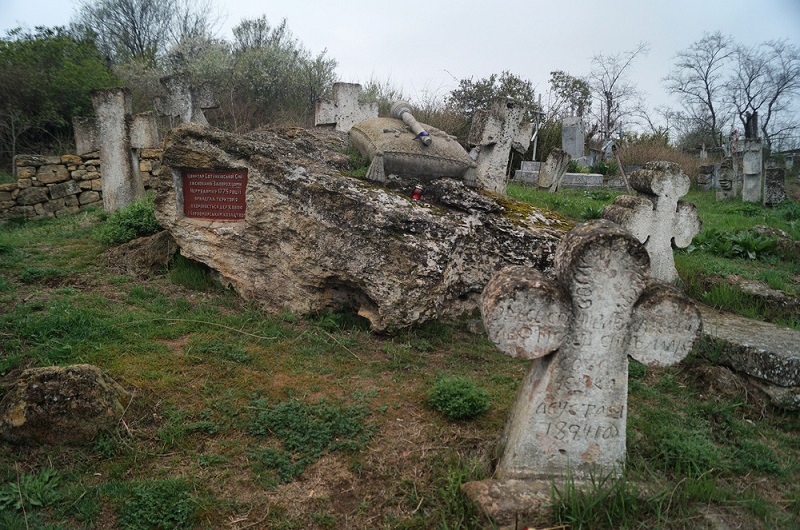
Sotnykivska Sich. PHOTO: Ukraine Incognita / Roman Malenkov
"Long before the Russian occupation-colonization, Cossacks lived here, on the edge of Khadjibey. Catherine made them sign documents that they would never take up arms - this was the condition for them to stay, not to be dragged to the Kuban. And the Cossacks became non-natives. Instead of a saber, they picked up a kaylo and a saw-the Odesa catacombs are the work of their hands. The non-Nerubai Cossacks built Odesa. The owners of the large networks of adits in which the stone used to build the city was mined were the Cossacks buried in this cemetery. For example, Shmyhora and Hetmanenko," the researcher notes.
He emphasizes that the oldest cross in the cemetery dates back to 1791, when it was erected three years before Odesa was founded. The Cossack settlement dates back to the 70s of the 18th century. In total, there are more than five hundred burials in the cemetery, about two hundred of which are crowned with stone, four-, six-, and eight-pointed crosses. These are often Maltese crosses.
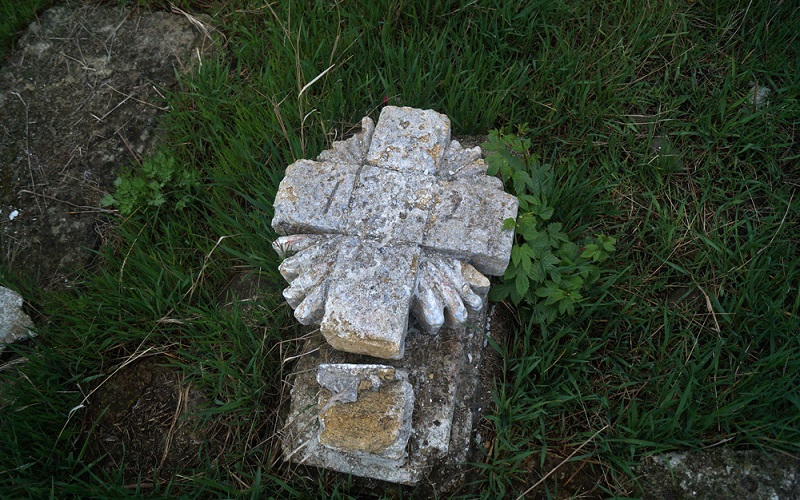
The Sotnykivska Sich. PHOTO: Ukraine Incognita / Roman Malenkov
By the way, stone crosses are not uncommon in southern Ukraine. There was no wood here, so they used stone, because a grave without a cross is not Christian.
The Sotnykivka cemetery is relatively little known, although it is one of the most valuable monuments in the Odesa region. It is located near the Khadzhybey road, not far from the Kuyalnyk resort.
Not just for treatment
Kuyalnyk is not like standard tourist locations. It is a place where you can relax mentally, without noise, queues and noisy young people. And although this resort is therapeutic and there is no pathos, it is still very pleasant here.
The peculiarity of this estuary is that a deep lithospheric fault runs along it, through which radioactive emanations gradually occur.

A view of the estuary. PHOTO: Inside-ua / bogdan_susol
The shores of the estuary are covered with a variety of steppe vegetation - about 500 species, 17 of which are listed in the Red Book of Ukraine. Rare areas of feather grass steppe have been preserved here, which have become home to many species of mammals, birds, and reptiles. That's why in 2022, the Kuyalnytskyi National Nature Park was created here and included in the Emerald Network of Europe. It contains rare species of flora and fauna, as well as historical monuments.
The park has:
- Kuyalnik estuary: With its therapeutic mud, brine, mineral waters and rose waters, especially in places of drying.
- Picturesque "lunar" landscapes: Salt crystals and dried up areas create surreal landscapes.
- Historical heritage: The place has a rich history associated with ancient civilizations, the resort and the Ukrainian Cossacks.
Юлія Сичова