Меню
Соціальні мережі
Розділи
Feb. 19, 2026, 6:43 p.m.
Fear for sale: how Odesa publics sell our psyche
This article also available in English13

The image is generated by AI
Do you remember how on the eve of the great war ,Intent warned that local telegram channels were playing a dangerous game? Back then, in 2022, it seemed like it was just a hype. Now, in February 2026, when we have been living under daily Russian shelling for four years, this game has turned into a ruthless business conveyor belt fueled by our nerves.
The most popular local telegram channels such as "H*evaya Odesa" or "ODESSA INFO" continue to work according to the old methods. Their currency is fear, despair and anger. And the exchange rate of this currency is only growing.
TCC.
One of the most painful topics today is mobilization. It is no longer informing, it is pure emotional terror. You scroll through the Hu*voy feed and come across a video: a crowd on Marseille Street, shouting, pushing, someone fainting.
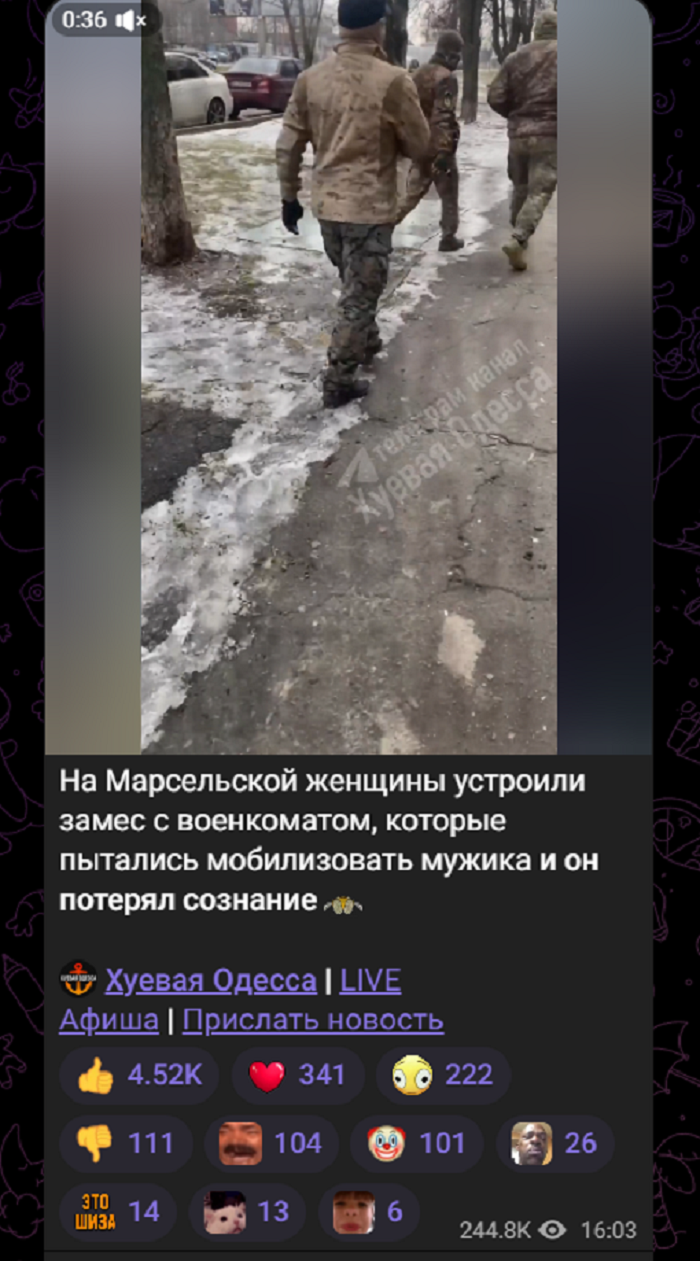
The Telegram channel "Fuckin' Odesa".
The caption is short and harsh: "The women started a 'mess' with the military enlistment office, trying to mobilize a man, and he fainted." You are not told who started the fight, whether the man had any documents, what happened a minute before the shooting. You are simply thrown into the epicenter of chaos. The goal is simple - to make you feel that the danger is not at the front, but here, in your yard, and it comes from people in uniform.
But Odesa Info is more cunning. They seem to put on the mask of a serious media outlet by publishing official reports, but the methods of manipulation are the same. They give the news about the robbery of a pensioner.
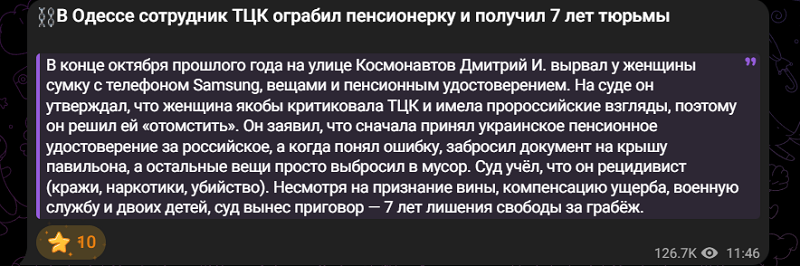
Telegram channel "ODESSA INFO"
The criminal was caught, the court sentenced him to seven years - it would seem that justice has been served, the evil has been punished. But the headline screams not of a sentence, but of a stigma: "In Odesa, a TCC employee robbed a pensioner". The emphasis is skillfully shifted: it's not the fact that the criminal has been punished that sticks in your head, but only the idea that military enlistment offices are now robbing old ladies. This is classic demonization wrapped in a news story.
Light.
The apogee of cynicism was a post about the road blocking on Dobrovolskoho Street. An anonymous poster claims that people have been without electricity for three months. It's hard to believe, but in an emotionally disturbed society, such fakes catch fire like wildfire. Instead of verifying the information or contacting DTEK, the channel simply broadcasts this cry of despair, effectively inciting other Odessans to take to the streets and blockade the city.
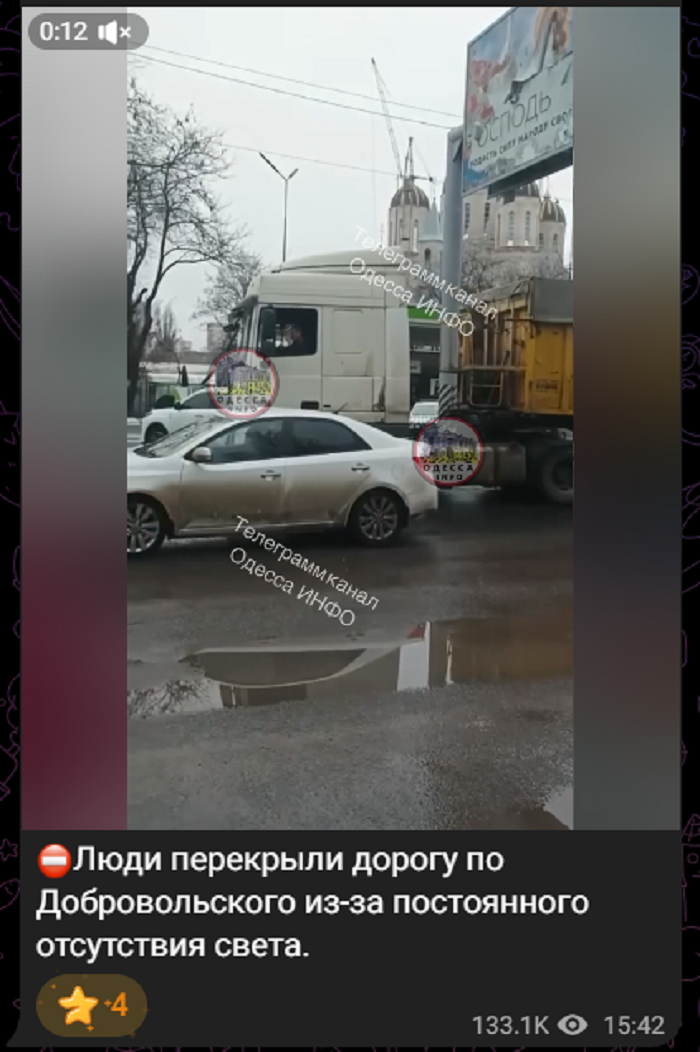
Telegram channel "ODESSA INFO"
The administrators do not write that blocking highways during the war is a blow to the country. On the contrary, the tone of such posts ("Another blockade", "traffic jam until April 10") gives the impression that this is the only effective way to communicate with the authorities. The channel works as a resonator: by showing that people on Genoese Street "came out and got attention," they actually incite residents of other districts to do the same. Instead of explaining the situation with the power system, Odessans are being sold the illusion that the power can be "knocked out" by force, paralyzing the city.
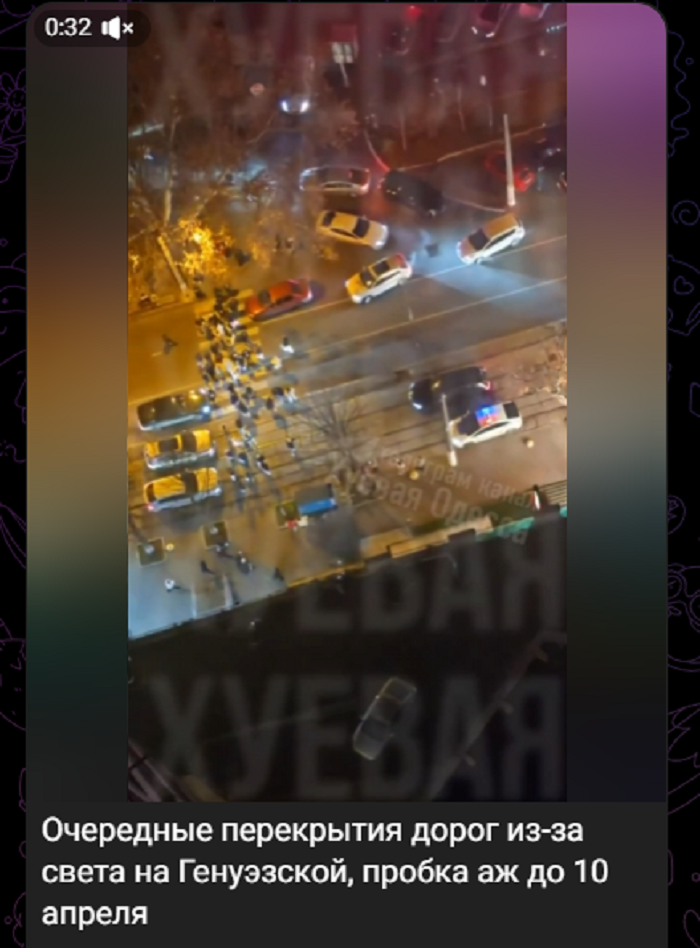
Telegram channel "Fuckin' Odesa"
The language issue
If manipulations with the topics of energy and mobilization work on fear, the coverage of the language issue in Odesa telegram channels is aimed at systemic polarization of society. The content analysis shows a clear editorial policy: any aspect of the introduction of the state language is presented exclusively through the prism of conflict or coercion.
When publishing a news item about fines for taxi drivers for refusing to serve in Ukrainian, the channel's administrators accompanied it with a provocative question: "How do you like the innovation?". From the point of view of media literacy, this is manipulation. Instead of explaining the law as a norm of the service sector, the channel questions its appropriateness, inviting the audience to express their indignation.
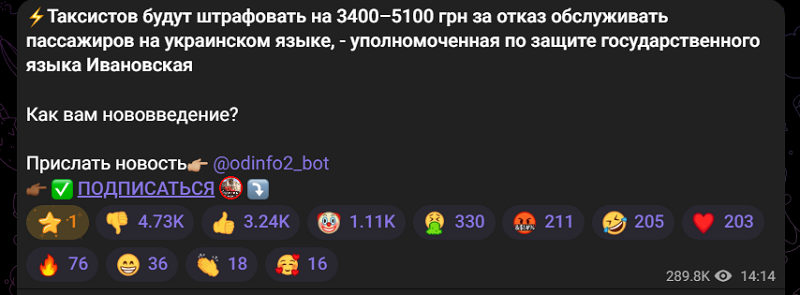
Telegram channel "ODESSA INFO"
The strategy of selecting domestic conflicts is even more dangerous. The story of the pharmacy on Kulykove Pole, where a pharmacist aggressively refused a customer, is presented without condemning discrimination. The emphasis is placed on the thesis "Odesa speaks Russian", which reinforces the dangerous narrative of the region's mental detachment. The channel actually broadcasts a message: Ukrainian-speaking citizens in Odesa are "strangers" who violate the established order.
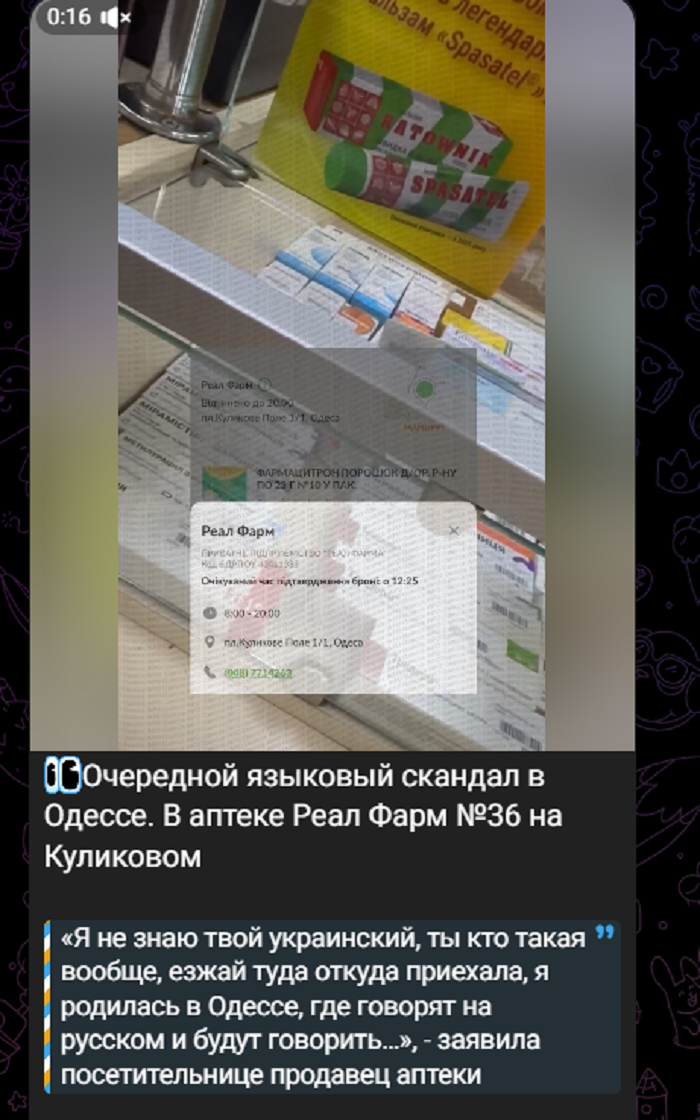
Telegram channel "ODESSA INFO"
The final chord of this strategy is statistics. The message that Odesa region is among the top violators of the language law is presented as a statement of "disobedience." Instead of raising the issue of sabotage of the law by officials or businesses, the channels record the status of the region as "problematic."
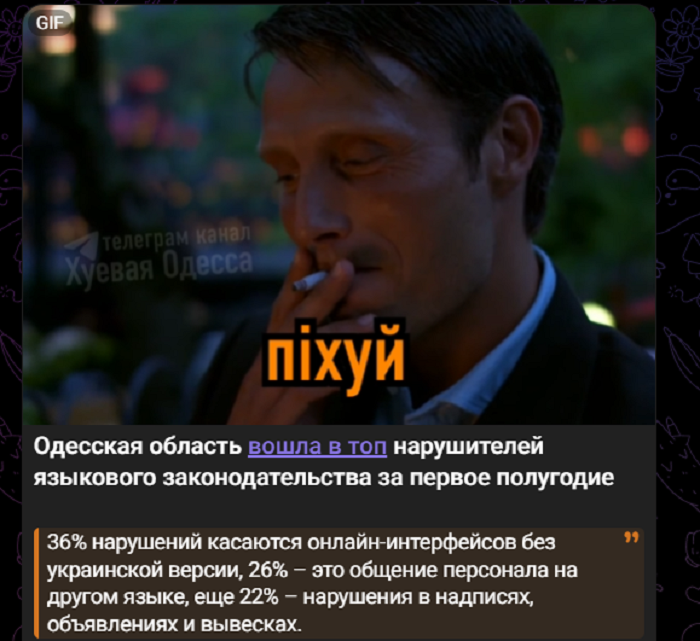
Telegram channel "Fucking Odesa"
The line between business and unconscious work for the enemy propaganda machine has been completely blurred here. The administrators of these channels will say that they just give people what they want to read. But in the context of hybrid warfare, this is like selling poisoned water in the desert. We drink this information because we are thirsty for news, but in return we get a dose of panic and despair. And while we are watching the video of the "mix-ups" on Marseilles Street with horror and reading trash news, somewhere those who really want Odesa to surrender from within are rubbing their hands together.
Such publications do not solve the problem, but scale it. They do not give hope, but sell despair. By silencing the real causes and consequences, telegram channels turn Odessans from a united community into disparate groups ready to fight each other for resources that do not exist, instead of uniting against the real enemy.
Олег Колеснік