31 August 2026, 18:50
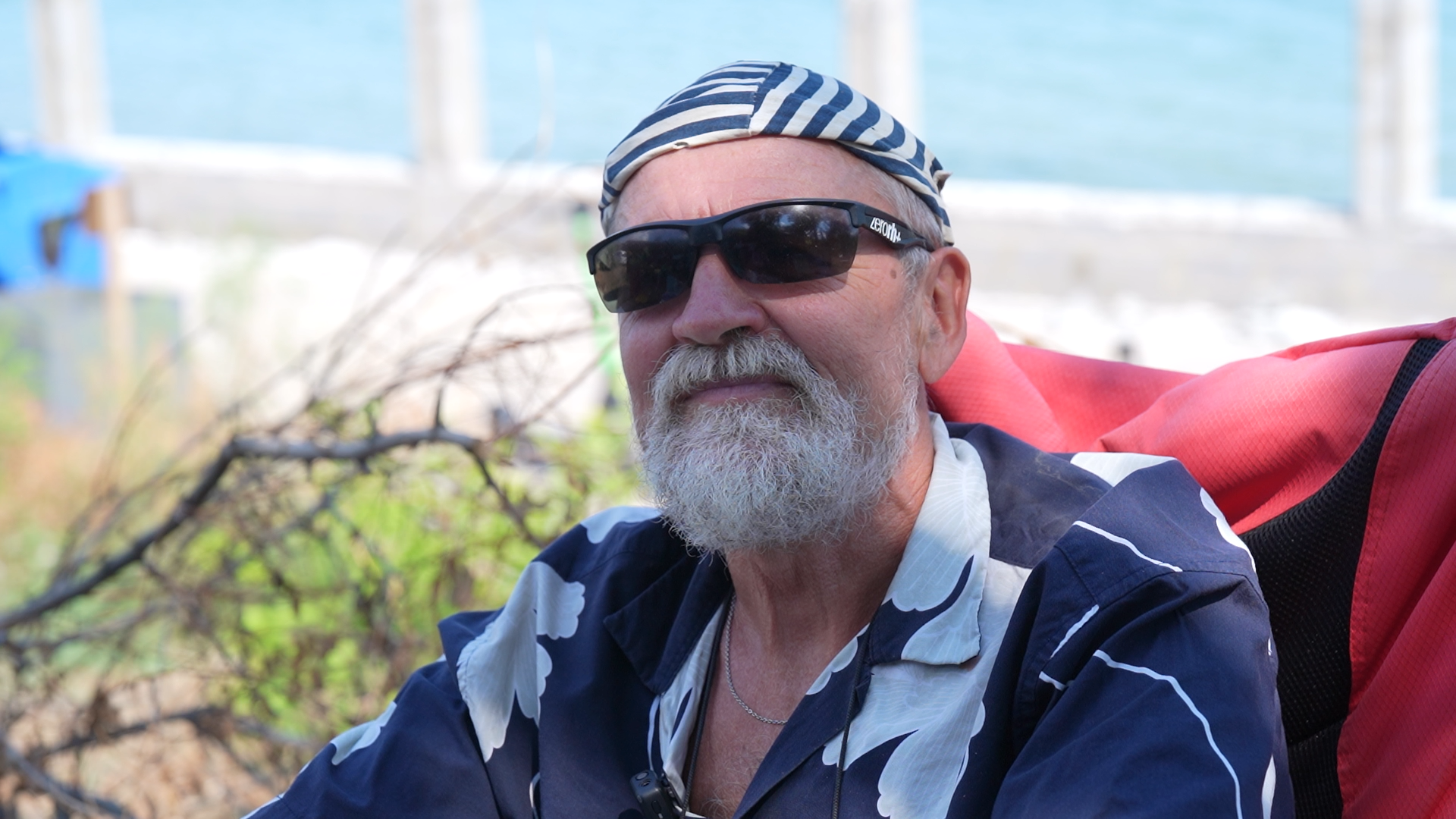
Volodymyr-Vadym Chornyi: "I was already drawing this war back in the early 2000s"
Ця стаття також доступна українською
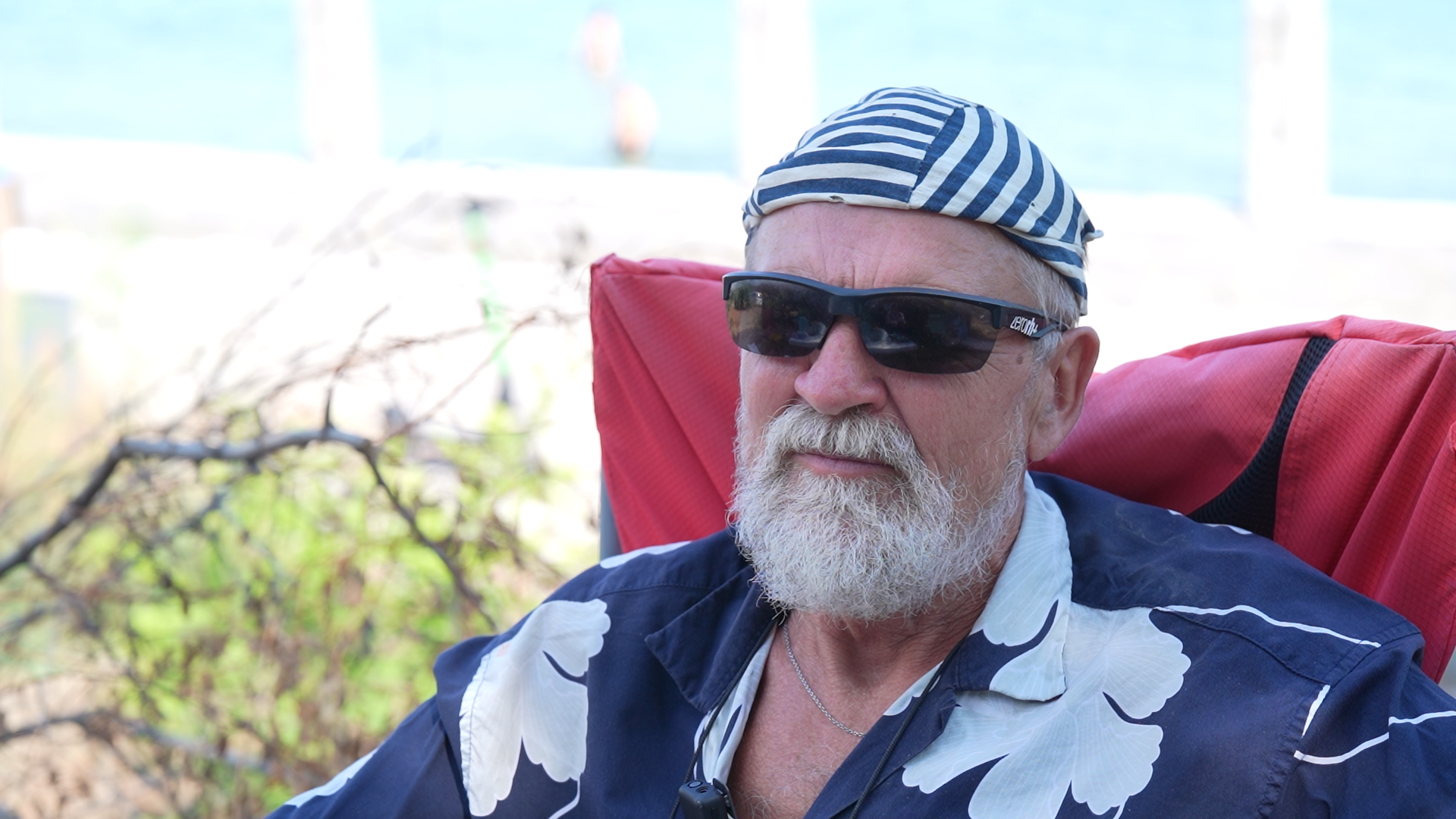
He has won European competitions, and his paintings are purchased by well-known figures. Ukrainian traveling artist Volodymyr-Vadym Chornyi spoke about his works, created during the occupation in Kherson and amid shelling in Odesa. He also discussed how he ended up in an Italian prison because of his street art. The artist explains why he rejects the pretentiousness of high society and, as a matter of principle, does not sell his mystical paintings, choosing instead to “absorb nature” every morning and create right on the seashore.
Tell us about your daily routine. They say it’s something to be envied?
I don’t want people to envy me, but that’s how it is. I wake up at six in the morning, have breakfast, and fall asleep again around eight.
SCREENSHOT: Intent’s YouTube channel
At half past nine, I get up for good, drink coffee, and start “soaking in” nature so I can paint it later. Right now, I’m painting the sea along the Odesa coast. There’s construction all around, but it’s just temporary. In the evening, I watch the full moon rise and see the hues it casts on the water. That’s also inspiration for my brush.
There’s no need to be jealous—just come and look at the sea and the sky. Of course, you’ll also have to look at the “shahids” and the explosions. But that’s our reality today.
You have a residence permit in Italy. Why don’t you stay there permanently? What brings you back to Ukraine?
Artists are highly respected in Italy. But no matter how talented you are, to them you’re still a second-class foreigner.
It’s better to be at home and sell my work for less. I survived occupied Kherson, traveled all over the Carpathians, and now I’ve parked my car in Odesa right by the sea. And I’m happy here.
How much do you sell your paintings for here and there?
In Italy, the minimum price for a painting is 200 euros. In Odesa, that’s my ceiling. I don’t charge more than that here.
But at least people buy them. If I jacked up the price, they’d just sit there. And I need constant movement and flow so there’s no stagnation—neither in my work nor in my mind. I’m almost never completely satisfied with what I’ve painted; I always want to refine something in my next canvases. You won’t get rich doing this, but that’s another story.
You’ve participated in painting competitions in Italy. Was there some kind of murky situation with first place there?
I participated three times in the “concorso di pittura,” which is a live painting competition. The judges were ordinary people: the paintings were displayed unsigned, only numbered, and visitors cast their votes in a ballot box.
Out of those three times, I received the most votes twice. But both times, I was pushed down to second place. Apparently, they thought it would be too much for a foreigner. On one of those occasions, according to the rules, the winner’s painting was supposed to go up for auction for a large sum of money. Obviously, that money was meant to go to “one of their own.”
How do Italian landscapes differ from those in Odesa or Kherson?
In Italy, the colors are more saturated and contrasting. I met artists from Norway and Germany there, and they all said the same thing. It immediately catches your eye.
Who buys your work most often these days? And which famous people have you painted for?
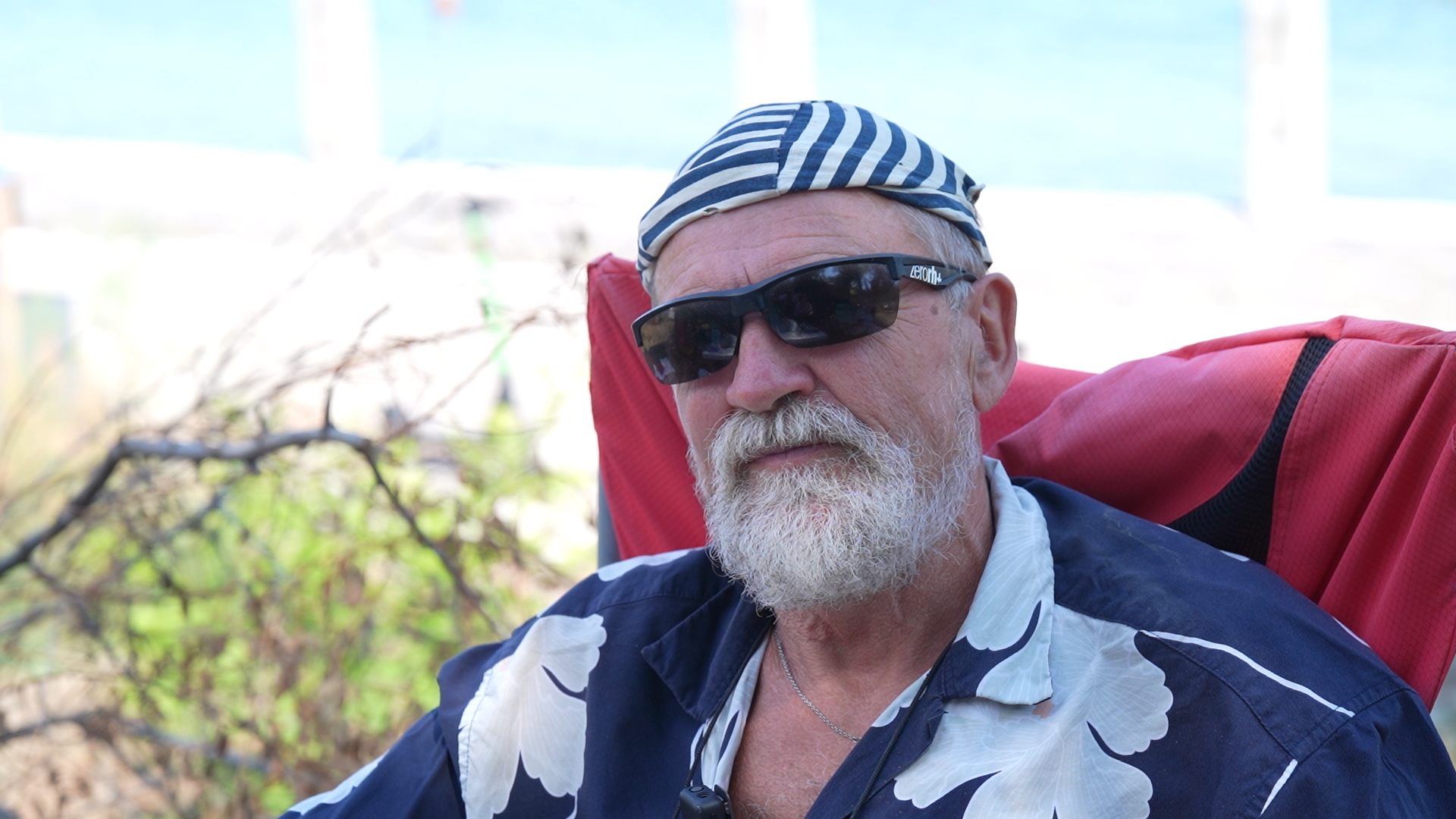
Right now, my work is mostly bought by people from Odesa. Just a few days ago, a friend of actress Oksana Fander approached me. Since they live nearby, she commissioned a painting for Oksana. I’m actually working on it right now.
SCREENSHOT: Intent’s YouTube channel
Back in 2004, we met with Andriy Shevchenko in Milan. He owns a fairly large painting of mine depicting him scoring his 100th goal with a header.
In Italy, both politicians and journalists have bought my paintings. For example, Bruno Vespa, a well-known TV host there. He simply saw my work in a gallery at an exhibition he was attending as a guest. He watched me paint and bought it. He might not have even known I was from Ukraine. He liked it and took it.
When did you realize that painting wasn’t just a hobby, but a profession? Do you remember the first painting you sold?
I sold my first works in the City Garden in Odesa. Those were my “sketches”: I primed pieces of fiberboard, framed them, and painted neutral landscapes. People bought them for $5–10. Back then, I was mainly painting miniatures.
And what’s the most expensive painting you’ve ever sold?
It was in Italy. A commission from the director of the RTV television channel in Reggio Calabria. A huge canvas, two by three meters, which was mounted directly on the wall in her home. She paid about 1,500 euros. We’re on good terms, and for a piece of that scale, it’s actually very cheap.
Do you divide your work into “for sale” and “for yourself”?
The ones I make for myself, I call “mystical.” I don’t know how to explain it, but I was already painting the events currently unfolding in our country back in the early 2000s. I also painted the September 11 tragedy involving the Twin Towers in New York before it happened.
These paintings aren’t for sale. They’re even a little creepy. They’re in Kherson now; I brought them back from Italy a while back.
Has anyone ever tried to buy them?
I haven’t even exhibited them. One of these works was stolen from me in Italy. I filed a report with the police, but to no avail. The police there are either corrupt or helpless.
These mystical paintings aren’t about “like” or “dislike.” They’re a snapshot of my state of mind at the time and my conclusions. A sense of what was about to happen.
You mentioned the Italian police. Did you have any funny stories involving an arrest with them?
It happened in Milan. I was painting on the street, completely focused on my sketch. I looked the part: a bandana, worn-out jeans—a bit of a hippie. Two carabinieri approached and started giving me a hard time: “ID!”
I said, “Wait a minute, the sun’s about to set; I’ll catch the shadow and show it to you.” But one of them practically lunged at me, shoving me. I pushed him away with my elbow: “Hey, wait a minute!” Then I pulled out a photocopy of my ID. They immediately switched to a more familiar tone—the police don’t stand on ceremony with immigrants there: “Give us the original!” It ended with them dragging me to the police station.
What happened next was like something out of a movie. I’m sitting there when a sly cop comes up to me and says so gently, “Would you like some coffee?” He takes me to a bar on the station grounds, but the exit looks like a regular street. He deliberately turns away, giving me a chance to “make a run for it.” I was 37 at the time; I could have easily gotten away. But I saw through the trap: they needed me to run so they could pin an attempted escape on me and officially close the case. I calmly finished my coffee, thanked him, and stayed put.
SCREENSHOT: Intent’s YouTube channel
As a result, I spent three days in a pretrial detention cell. Then came the trial. I placed my hand on the Bible and looked the judge straight in the eye: “You know, in Bulgakov’s *The Master and Margarita*, it says that telling the truth is easy and pleasant.” The judge sat up straight at those words. I told him exactly what had happened: that I’d come to paint, not to fight with the police. All charges against me were dropped, and the case was closed.
Is it okay to talk to you while you’re working at your easel?
Sometimes people ask me questions, and I pause for a moment, focusing on a stroke. But when the work is going smoothly and calmly, I’ll chat. Passersby, comments, mockery—you just have to learn not to react to that. You do your thing; the rest is just noise.
When did you realize that the office grind just wasn’t for you?
Sometime in 1996 in Italy. Back then, they still used the lira, the country was thriving, and my paintings were in crazy demand.
I have a naturally somewhat eccentric, poetic nature. And most importantly, I don’t need any “doping” to get into that state. I was born with this “doping.” It’s my blessing and my curse all rolled into one.
Which of your fellow artists do you keep in touch with?
With Vadym Bondarenko (his pseudonym is Bondero). We’ve been friends since the late ’80s; he now lives in the Netherlands. He’s the person who, back in the day, taught me solid artistic skills in Odesa.
Do you go to your colleagues’ exhibitions? And are you planning your own solo show?
I don’t go to exhibitions. I don’t like all the hype—it rarely lives up to reality. Except maybe for the opening—to have a glass of champagne.
I might actually like to have my own exhibition. But the paintings aren’t piling up. Sometimes people hover over my shoulder, waiting for the paint to dry so they can take the fresh canvas right away.
Now that we’ve won, I’d like to gather the works I painted under shelling in Kherson, amid the smoke. And those mystical, premonitory paintings. An exhibition like that would make sense.
Watch the full version of the interview on the Intent YouTube channel
What do you want most after the war?
To travel all over Ukraine with my easel. And then get in my car and drive across all of Italy. Stop by to see friends, paint one picture in each city, and move on. Not as a migrant worker, but as a free artist.
How much money do you need per month to live the life of a traveler?
About a thousand euros. That’s the bare minimum—and it’s more than enough to be free.