08 September 2026, 18:41
Marusya Zhenzheruk: "In Odessa, I always felt like a black sheep"
Ця стаття також доступна українською
In Odesa, the battle for the minds of the youngest children continues: Russian is often spoken in schools and after-school programs, and children are losing their social skills due to online learning and constant anxiety. How can we create a safe Ukrainian-speaking environment, debunk the imperial myths surrounding the city, and raise independent young people? Intent spoke with Marusya Zhenzheruk, a leader at the Odesa branch of “Plast,” about these issues. The article also explores why Plast members in Odesa have been waiting for over a year for city and regional authorities to provide them with their own premises, and how the organization teaches children to think critically amid the war.
What kind of child were you?
I was very serious and always got straight A’s. My mom is a teacher, so I always had to be the best in the eyes of others. I was very diligent—too much so, I think. I couldn’t just go around fooling around carefree. I always thought, “What will Mom say about this?” I never really let loose as a child, but later on I tried to make up for it.
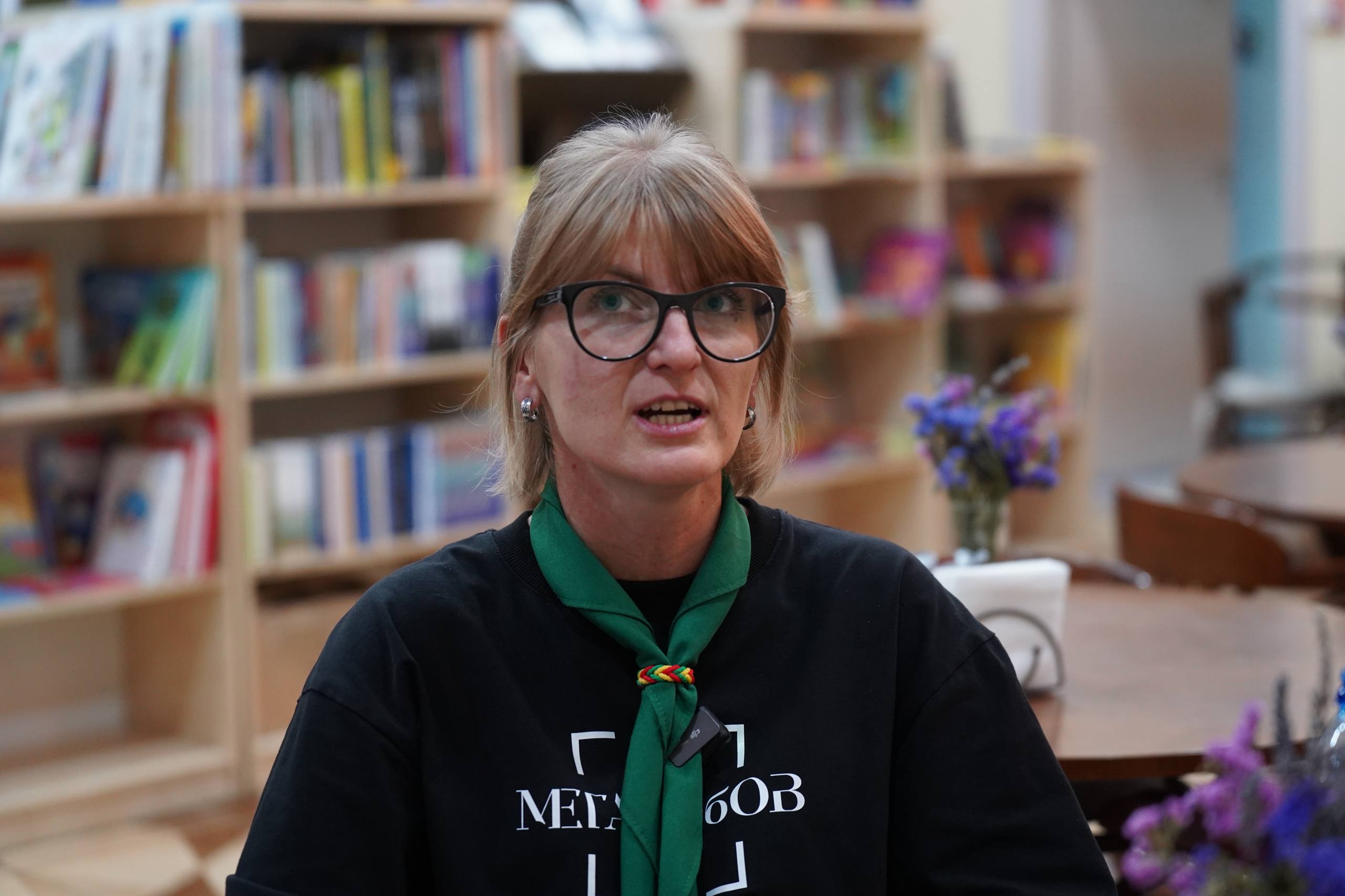
SCREENSHOT: Intent’s YouTube channel
What is your main profession?
Right now, I’m a project manager at the “Diya.Business” entrepreneur support center in Odesa. I’ve been working there for over a year. I lead various projects related to accessibility and veteran-owned businesses. We also record a podcast about Odesa entrepreneurs and how they started their businesses.
What is your educational background?
I’m an economist and accountant. I graduated from Odesa National Economic University.
Where does your love for scouting come from?
This love grew gradually once I was already part of the organization. I think that when I first started, I didn’t fully realize what it was all about. I was looking for a Ukrainian-speaking community. In Odesa, I always felt like an odd one out because everyone in my family spoke Ukrainian, but at school, university, and among friends and family—they didn’t. That’s why I always wanted to find people with whom my language wouldn’t be a barrier, people with whom I could feel at ease.
In “Plast,” I found an environment where my children and I could communicate primarily in Ukrainian. Everything else was secondary. At the training camp, even before classes began, I resonated with all the organization’s values: a love of travel, a love of Ukraine, and a desire to instill these values in children. And overall—to teach them to be conscious, independent, proactive, and able to take responsibility.
How did you become part of the organization?
A friend sent me an application for an adult training session. It was a KVDCH—a two-day Plast training session. There, they explain what“Plast” is, its structure, principles, methodology, and history. For someone who knows nothing about it, they give you a chance to get acquainted with everything. In the end, you decide whether to move forward—that is, whether to submit an application to join “Plast.” After those two days, I had some doubts. Later, I met many people who had been members of “Plast” at one time or another in their lives. I was fascinated by their stories and what they shared about this community.
I decided that this was my calling, that I was meant to be there. I submitted my application and was given the opportunity to work as a youth leader with children. Here, you grow with every session, because you have to learn how to connect with each child, resolve conflicts, teach them independence, motivate them, and create an environment where they can develop on their own. You have to play with them, sing with them, and entertain them. To keep the children entertained, we have to teach them songs. For their sake, I learned to play the ukulele so that our sessions would be more fun and musical. Nothing else would have motivated me to do that, but here I had the incentive to learn something new. When you’re in “Plast,” you’re constantly learning new things.
You said you were unsure whether to join or not. Why?
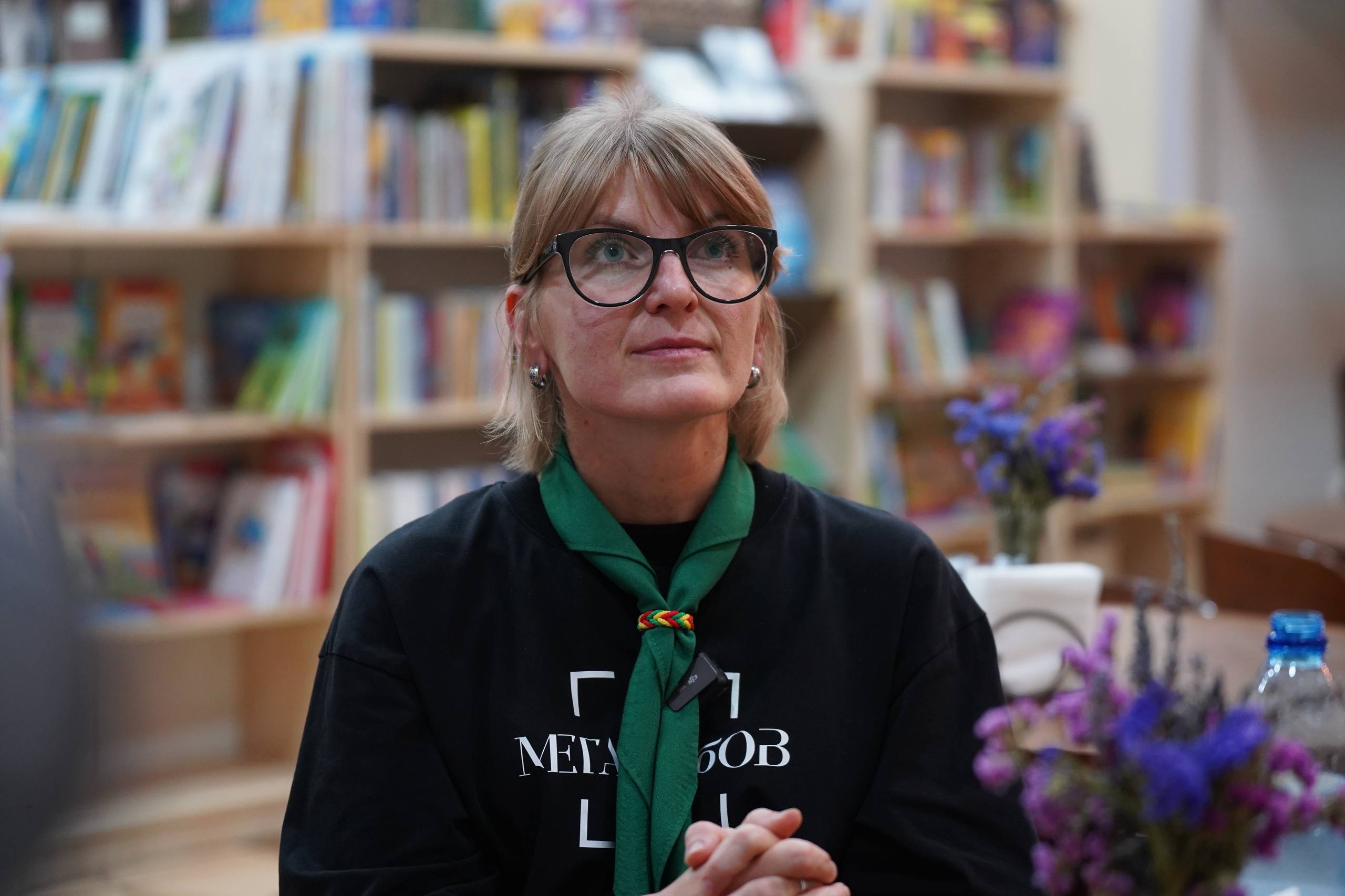
To be honest, I had reservations about the religious aspect. Being faithful to God is the first point of the Plast oath. The program includes an entire section on raising children in the faith and Christian values. I believe in God, but I don’t go to church every Sunday, and I don’t go to confession. I don’t follow all those rules the way people who truly believe do. This held me back because I was afraid of being insincere. How can I teach children or pray with them if, for example, I don’t pray before meals at home myself? Because a leader must teach by setting an example for others.
SCREENSHOT: Intent’s YouTube channel
I talked to people who had been in “Plast” for a long time, and I saw that not everyone there was very religious. First and foremost, what united us here were values rooted in a conscious Ukrainian identity. There was no dogmatism. Because I thought they’d kick me out. They’d say, “Oh, you weren’t baptized properly—you’re not a Plast member.” I saw that there was no judgment from the other adults; in other words, they accepted you. I realized that everything was okay—I wasn’t an outsider. Over time, as you interact with people and become part of it, you take it in stride. We have events every Sunday, like liturgies or various ceremonies. I don’t feel any discomfort, as I might have at the very beginning when I felt like an outsider.
How long have you been with “Plast” in Odesa?
A little over two years.
The Scouting movement as a whole has been around for over 110 years. Do we have our own Ukrainian national characteristics?
Our Ukrainian ones compared to the diaspora?
Compared to the diaspora, yes.
It’s hard for me to analyze. “Plast” was founded in Lviv on April 21, 1912. Then it emigrated abroad in 1914, when the war began, and continued to develop in exile. After Ukraine gained independence, it returned here. It’s hard for me to compare what “Plast” is like abroad and in Ukraine, because I don’t have any experience communicating with Plast members from the diaspora. Although delegations from Italy and Germany have visited us, other leaders were the ones who interacted with them. It seems to me that there are no striking differences. “Plast” is very clear in its program and structure. The program is implemented the same way both in Ukraine and abroad. The language of instruction is Ukrainian everywhere.
For example, this year my daughter had the opportunity to attend a camp in Germany. There, some children specifically studied the Ukrainian language so they could join “Plast.” That really impressed me. It’s great that this motivates the children. From what I’ve heard: here in Ukraine, the program is intensive and must adhere to every detail, while abroad there’s a certain degree of freedom and flexibility. They have time to walk around, look at the sky, and just relax. And that probably gives the kids more room for creativity. We do have more discipline, after all. But that’s not my experience—it’s my colleagues’ experience.
Why does Odesa need “Plast”?
Odesa really needs it. Here in Odesa, we desperately need any organization or structure that would showcase our Ukrainian identity and our Ukrainian consciousness. Because the claim that Odesa is a Russian city founded by Catherine is propaganda, a lie, and a distortion of history. Unfortunately, people have forgotten their true history and don’t even try to find out what Odesa is really like or what kind of people lived here. That is why “Plast” is the organization that can demonstrate that there were many Ukrainians in Odesa who have spoken the Ukrainian language since time immemorial and carried on our culture—and reveal the true face of Odesa.
In the current circumstances, this is very important because it’s about raising children. These are very difficult times—first there was the coronavirus, and now there’s a war. Children are falling behind in their school education due to anxiety and online learning. In the future, we may face a problem where children are unable to be independent and have not been taught to think critically. It is “Plast” that can provide all of this. In other words, it fills the gaps not so much in school education as in education in general. It provides a foundation in history, civic awareness, and national culture. I believe this is very important in Odesa and our region. If you look at Galicia—Lviv, Ternopil, and Ivano-Frankivsk—there’s no need to assert that you’re Ukrainian. It’s not even a matter of proving it; for them, it’s a given. So we have to demonstrate all of this to ourselves and our children and, as it were, emphasize it time and again.
SCREENSHOT: Intent’s YouTube channel
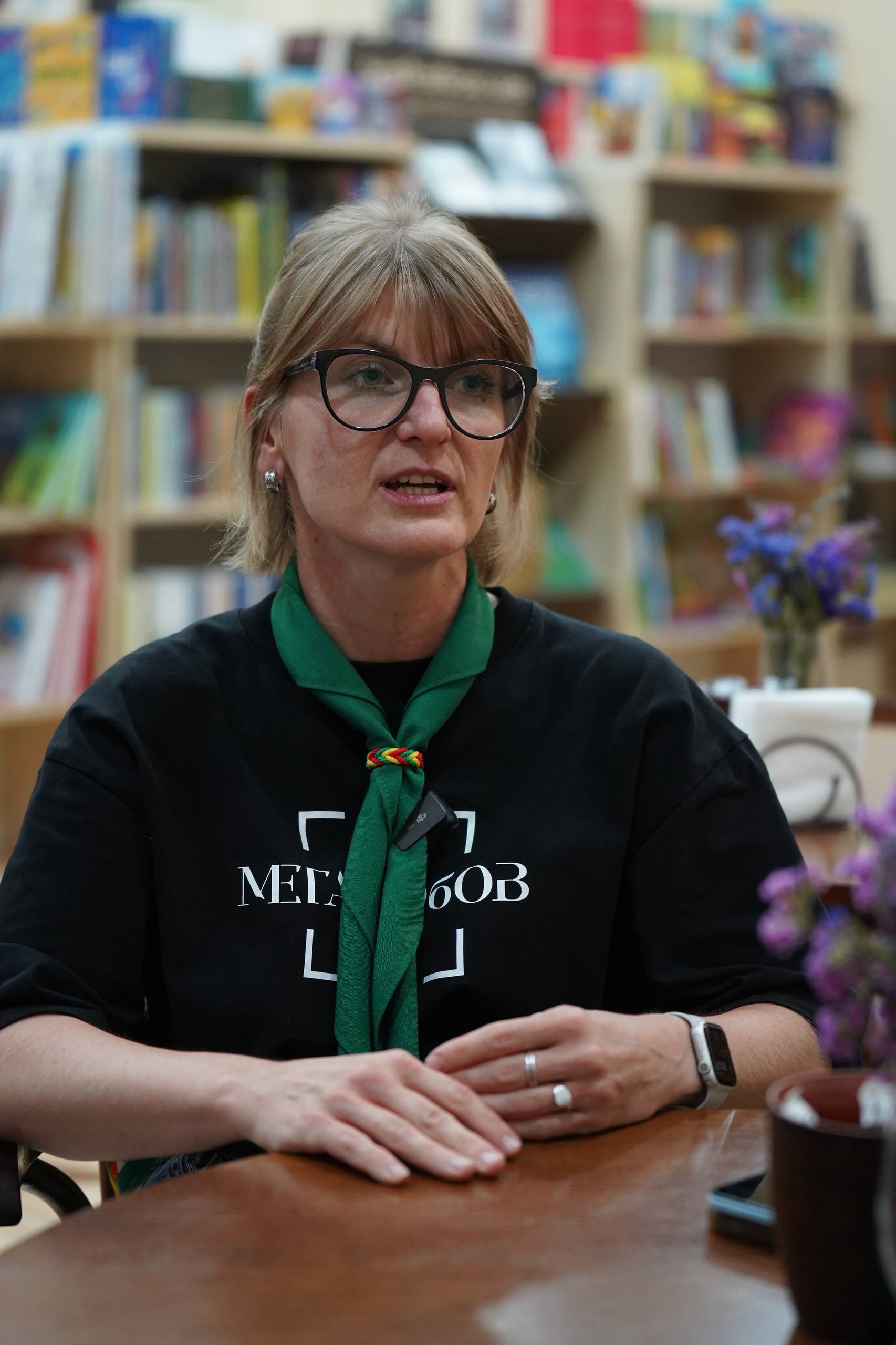
There’s a big problem even with the social environment. I’ve talked to the kids. In class, the teacher still manages to communicate with the children in Ukrainian, but outside of school, during breaks, they speak Russian. It’s sad. In all sports clubs, this Russian culture is still everywhere. In my opinion, in organizations like “Plast,” we can gradually eradicate this, offer children something interesting that’s Ukrainian, and show them that there’s an alternative—and it’s wonderful. And we have to let go of that old way of thinking, the one imposed by their parents.
I can see from my own children how positively “Plast” is influencing them. They’ve really become more independent. I especially see changes in my older daughter. She’s going through a transitional period, and right now, my word isn’t always a model or example for her. Her social circle is more important to her. And when I see her friends—her fellow Plast members—and hear them discussing camps and sharing their experiences, I’m truly glad that I introduced her to this community back then. Now I feel at ease about her. This summer, she went to different Plast camps three times. I didn’t worry about where she was, how she was doing, or who she was with. I knew she was surrounded by good people, that she was safe, that she would learn valuable lessons there, and that she would return home inspired.
Odessa needs “Plast.” I’d like for more people to know about us and for local authorities to support us more. There are certain challenges—after all, the entire organization is run by volunteers. Activities are funded by parental contributions. With these funds, we buy school supplies for the children, hold classes, and visit museums. It’s very important to have a place where we can all gather. In “Plast,” we call this a “home.” For example, in big cities like Kyiv and Lviv, there’s more than one home—they have several chapters. But here in Odesa, unfortunately, we don’t have any of that, and it’s difficult. To hold classes with the children, we have to make arrangements each time with friends and businesses that support us, love us, and are willing to host us. Allocating a “home” would be possible if the local authorities could find a municipal facility and allow us to hold our activities there. It’s not right to make parents bear the cost of renting a space.
Has there been any communication with local authorities on this matter—for example, a request to provide a space, given the number of parents and children?
Yes, there was at the beginning of winter. We spoke with Ms. Olga Lozova; she is an assistant in the military administration. She said she would definitely help us. This process is ongoing, but we’re still in the search phase.
So, you spoke at the beginning of winter, and here we are at the beginning of the next winter?
That’s how it looks. I understand that they have their own priorities as well. We’re all busy with our work. But time is passing, and so far, no solution has been found. It would be great if we had a single space. There would be more room for growth, and it would be easier to plan activities and work with the children. As it is, we depend on other organizations with which we have agreements. It’s complicated.
What needs of children and parents does the Scouting movement meet in our city?
“Plast” in Odesa isn’t just about keeping a child occupied. First and foremost, parents send their children to “Plast” for the environment I mentioned. Because all the parents whose children participate in our program are very conscientious people with a clear civic stance. They wanted to send their children to “Plast” not for the sake of scouting skills—like tying nautical knots, for example—but to help shape the right views, values, and this environment. “Plast” is a large organization, and children have the opportunity to participate in various camps throughout Ukraine and around the world. They have the chance to interact with a large number of people, learn, and exchange experiences. They can try their hand at different areas because “Plast” offers a wide range of activities and the opportunity to choose what they’d like to pursue in the future. It’s not just some club, sports team, or arts group. It’s exactly the kind of environment where sound values are built.
All the children who came to me stayed—unless they moved to another city. There’s a small chance that a child might come to a few sessions and realize it’s not their thing. I’m glad that the children’s need for social interaction is being met here. This isn’t a school class—the children can express themselves freely. We listen a little, play, sing, make things, and when the weather’s nice, we try to go on outings into nature.
“Plast” is positioned as a big game. Not just for children, but for adults too—we all have fun. That’s why children like the format and the approach of learning through play, and it resonates with them. That’s why they’re with us.
Watch the full interview on Intent’s YouTube channel
How big is the Plast chapter in Odesa?
About 90 Plast members, including 70 children and about 20 adult leaders.
Is that a small number compared to the rest of Ukraine?
It’s a small number. Compared to Kyiv and Lviv, where there are thousands of Plast members, it’s small. Across Ukraine as a whole—I recently read some statistics—there are 12,000 Plast members. In the diaspora outside the country, there are about 8,000. Odesa and the region are making progress; we’re expanding, which is very encouraging. I see how new leaders join with every training session; we’re recruiting new children, and groups are forming. All kinds of people are joining—from 20-year-olds to adults with children of their own.
Which “Plast” traditions are particularly important to you?
One of the principles that Plast members live by—and which is enshrined in their oath—is to help others. I noticed this trait even before I joined “Plast” myself. I met one person and was surprised by how selflessly they were willing to help. In this day and age, I think that’s important. It’s important to teach this to children because, while they’re still young, they’re a bit self-centered and don’t fully understand why it’s worth doing something for someone else. Then we’ll have a better, kinder society. This is especially important now, during the war. The military feels this; a lot depends on volunteers. That’s the principle of helping others. You’re supposedly helping someone else, but at the same time, you’re helping yourself.
Ольга Лопатюк