Меню
Соціальні мережі
Розділи
Dec. 5, 2025, 7:48 p.m.
Truth without donors: Nugzar Suaridze on a movie the Russian church would rather not see
This article also available in English32

Presentation of the movie. PHOTO: Intent / Kateryna Galenko
Without financial support, with a team of friends and a belief in the need to tell the truth, Georgian documentary filmmaker Nugzar Suaridze created the investigative film SpiritualStruggle. The film is about how religion is becoming a battlefield for the security of the state. He explores the influence of Moscow on the churches of Ukraine and Georgia, the silenced pages of history and the reasons why official Tbilisi still avoids recognizing the Ukrainian Tomos.
Nugzar Suaridze is an independent Georgian TV journalist. He came to Ukraine in 2022 to see the war, but created a film about another, no less critical battlefield: the centuries-long struggle for the independence of the churches of Ukraine and Georgia from Moscow's influence.
Intent talked to the author about how he worked with a sensitive topic.
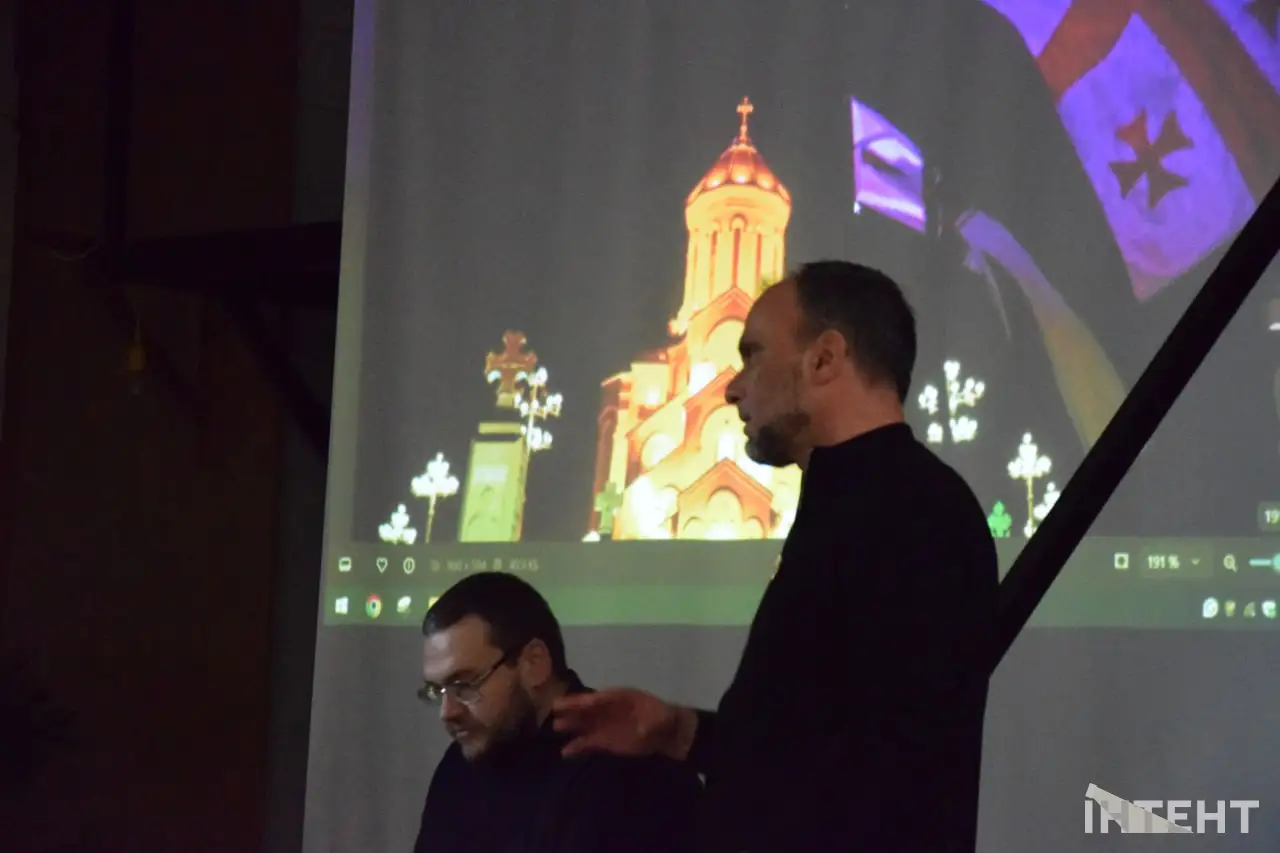
Presentation of the film. PHOTO: Intent / Kateryna Galenko
You came to Ukraine in the fall of 2022 to see the war up close and to record an invisible but important front: the religious one. What difficulties did you face while collecting materials and working with sources?
Everything was difficult. Especially in access to information. After the interviews with the sources, I searched for additional materials, read a lot, looked through archives, worked with the Internet, and so I put together the puzzle of the overall picture. At first, the movie was very long. I had to cut it down, to weed out the material that, although interesting, did not fit into the logic of the plot. There was also a problem that the Georgian Patriarchate officially refused to comment.
Another disadvantage: when you work with religious topics, you immediately realize that there will be no financial support. Donors avoid such topics. They are afraid of bias, afraid to touch on the religious sphere - "too sensitive." That's why I knew from the very beginning that I would make the movie without any support. I would do everything at my own expense and with the help of my friends. My friends helped with editing, graphics, and voice acting. We knew that we wouldn't make any money on it, but we were sure that the truth had to be shown.
So all the work was on your shoulders?
Yes. I came to Ukraine by myself, I travel around the cities by myself, I show the movie. I live very modestly, sometimes literally like a pilgrim. But sometimes a journalist or a documentary filmmaker has to do this, without hotels or grants, simply because the truth needs a voice.
I understand that there is a lot of material that was not included in the movie. Have you thought about publishing it separately?
I was thinking about it. But the situation is as follows: I have almost nothing left that could radically complement the picture. But there are archival materials, such as Yushchenko's meeting with Putin. You can see the tension in their faces, you can see where things are headed. And I would like to develop these things separately, but I don't have enough time, because all of this is actually volunteer work.
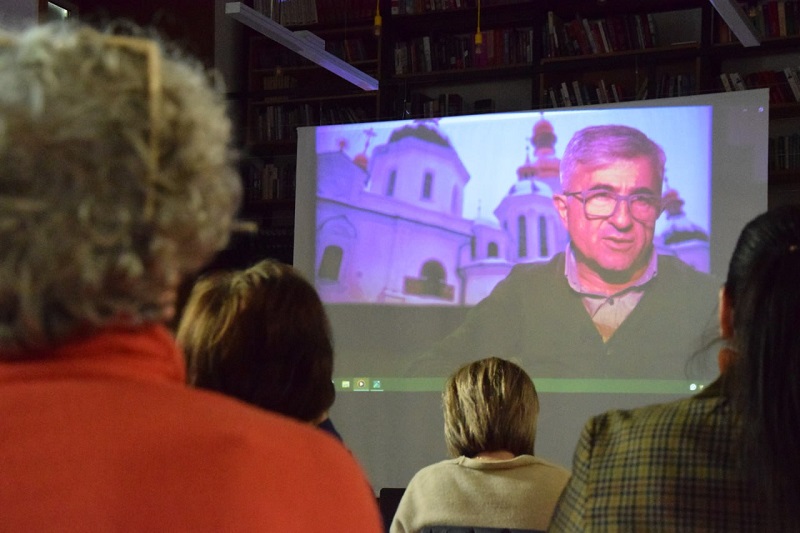
Presentation of the movie. PHOTO: Intent / Kateryna Halenko
The film has a sense of slow, gradual build-up, and in the end, horror quickly sets in. Was this your intention?
Historically, this is exactly what happened: in the beginning, there was no fast communication or modern media. And when digital media appeared, the information space became uncontrollable. Events began to unfold rapidly, and the movie reflects this.
This is both a meaningful and artistic idea: to show how long we were "strangled" and how quickly everything exploded in the 21st century.
In the movie, you mention the Christianization of Russia. You say that Russia is actually at war not with Ukraine, but with history.
Yes. It is a historical fact that Russia does not have its own date of Christianization. Christianity came through Kievan Rus. the Russian church has been trying for decades to remove the word"Kievan" from its wording.
There is a scene in the movie: Yushchenko meets with the patriarch. On the website of the Russian Orthodox Church, they write about the "baptism of Rus," and Yushchenko announces the "baptism of Kievan Rus-Ukraine." This is a symbolic moment of the struggle for historical truth.
How long did you spend looking for characters and shooting the movie?
About a year. But it was a year of uneven work-when I had free time. I started in Lviv. Ihor Balynsky helped me a lot, telling me that it was harder to work with Orthodox Christians in Lviv than in Volyn. Then he advised me to contact Olha Bulkovska, and we worked together in Volyn, visiting churches and meeting with communities.
It's easier with Georgian theologians - I know them, I understand their position.
I would also like to mention my friend who lives in Kyiv, Giorgi Birkadze, who, after watching the movie in Georgian, said that this movie should be in Ukrainian, and he helped with the dubbing of the movie. With the help of other friends, we managed to dub the movie in English and Russian. Now the movie is dubbed in four languages, and soon it will be available online.
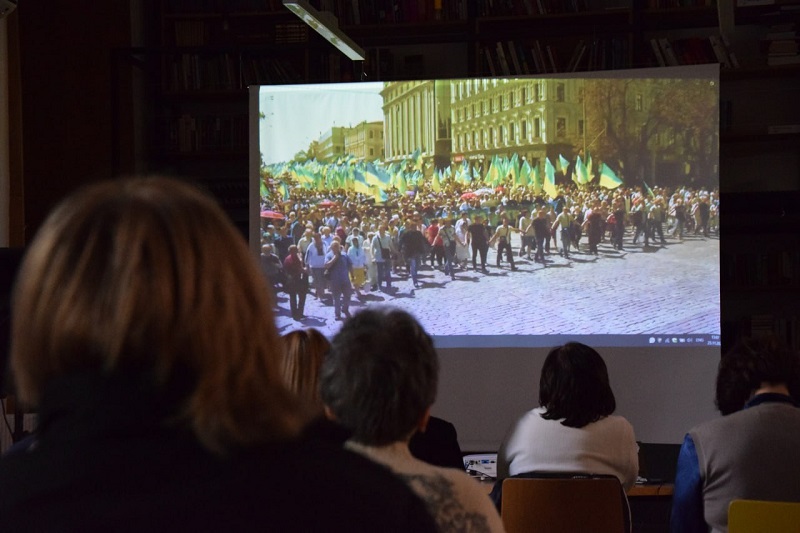
Presentation of the movie. PHOTO: Intent / Kateryna Galenko
Are Georgian theologians afraid to speak about Ukraine's autocephaly and historical truth?
There is fear. But there is only one truth. If historical facts were spoken out in the early twentieth century, and now the church is silent about them, then something is wrong.
In the film, you recreated a rare episode of Georgian Patriarch Leonid's assistance to Ukrainian autocephalists in 1919. How difficult was it to research this?
Honestly? I was surprised when I found this fact. It turns the whole idea of the current position of the Georgian Patriarchate upside down. If Patriarch Leonid was helping then, why is this now considered a "canonical violation"? Who then violates the canons-he or the modern hierarchs?
Why does the modern Orthodox Georgian Church not recognize the OCU?
In my opinion, the reason is simple: the influence of the Moscow Patriarchate. For a church that received Christianity in the fourth century, it is humiliating to follow Moscow today. But this influence is still strong.
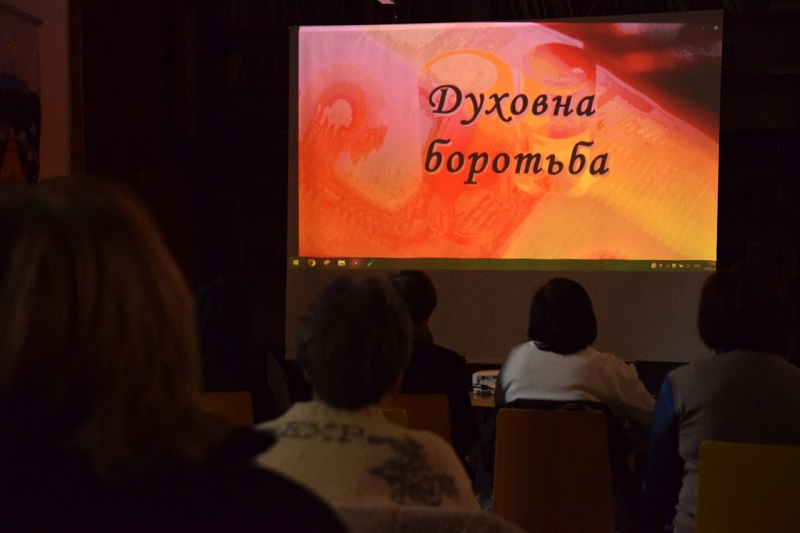
Presentation of the movie. PHOTO: Intent / Kateryna Galenko
How did the Georgian church explain its refusal to comment on the movie?
I spoke with a representative authorized to answer on behalf of the patriarchate.
My mistake was that I told him who had already been interviewed. When he heard the names of the Georgian theologians who are in my film, he said: "If they are there, we will not participate." Officially, they refer to the need to "study the Tomos even more deeply." They have been "studying" it for six years.
What forms of Russian influence in the religious environment do you consider the most dangerous?
Russia knows how to wait very well. It has nowhere to hurry. It spreads its "tentacles" in all directions and waits for the moment when it can use them. This is especially dangerous in Ukraine, where many people still go to Russian churches, especially in Odesa. The main thing here is not to put pressure by force, but to talk, to show facts, to develop critical thinking.
Have you shown the film in Georgia? What was the reaction?
There was one private screening. And then there was a screening at the Ukrainian House for Ukrainians who moved to Georgia after the war started. The reaction was very good, but the Georgian media showed little interest. Perhaps the information is not getting through properly, perhaps they are afraid of the topic.
Do you see the movie as a tool for public discussion?
Yes, absolutely. I want to see people's reactions: what they understand, what surprises them, what changes in their vision. When people thank me for the truth, that's the best reward.
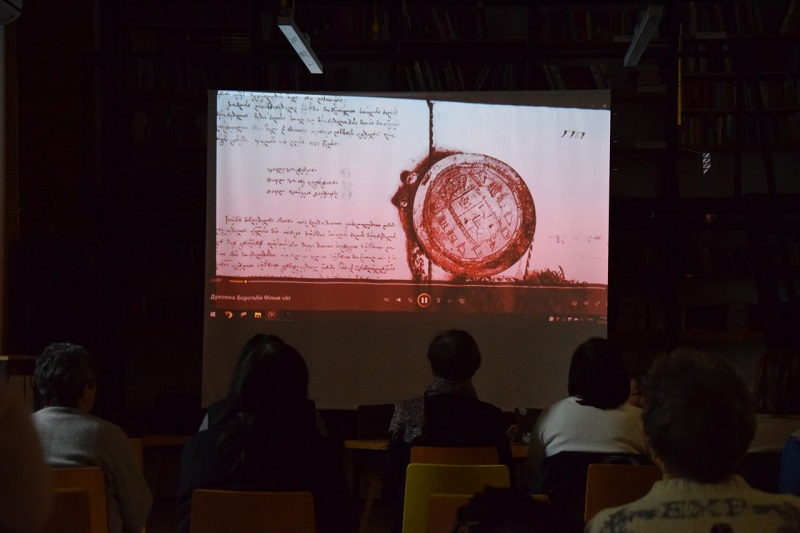
A presentation of the movie. PHOTO: Intent / Kateryna Halenko
Has the film changed your own attitude to the issue of autocephaly?
No, it hasn't. My position and the movie are one and the same. Unless the work on it has further strengthened my conviction that the church should tell the truth. Silence is a disease that only deepens over the years.
Do you feel that now is a historic moment to talk about autocephaly?
Yes, and this moment is long overdue. Church decisions affect both politics and relations between Ukraine and Georgia. If politics sometimes divides, the church should unite. Unfortunately, this is not the case today.
Do you plan to continue researching the topic of religious freedom?
Yes, I hope so. If there is a request for such projects, I will only be for it.