28 August 2026, 18:42
"Boredom at the summer cottages is terrible": How Hnylyakove Became Dachne Near Odesa
Ця стаття також доступна українською

The village of Dachne. PHOTO: Dmytro Zhdanov
Today we’ll talk about a village located so close to Odesa that, as recently as 15 years ago, it was considered a “suburban vacation area.” It is probably one of the least-studied settlements near the city. A local history expedition with the Trautman family (with whom we had also traveled around the German colony of Worms) to this village took place back in 2019, but the materials from that trip sat on my computer until 2026. So let’s begin…
The Cossack Roots of Hnyliakove
The history of the settlement of Hnylyakove begins in 1739, when yet another Russo-Turkish War came to an end. After the fighting ceased, a group of Cossacks settled near the Khadzhibey Estuary. Among them was Semen Gnylenky (Gnylyachenko), a Cossack from Sloboda. Not only did he become one of the founders of the new farmstead—the settlement actually took the name Gnylyakove from his surname. Over time, peasant settlers from Left-Bank Ukraine joined the Cossacks.
In the local cemetery, there is an old gravestone with a modern plaque stating that Cossack Hnylyachenko was buried here in 1740. Unfortunately, there is no ancient inscription on the gravestone itself, so this claim still needs to be verified.
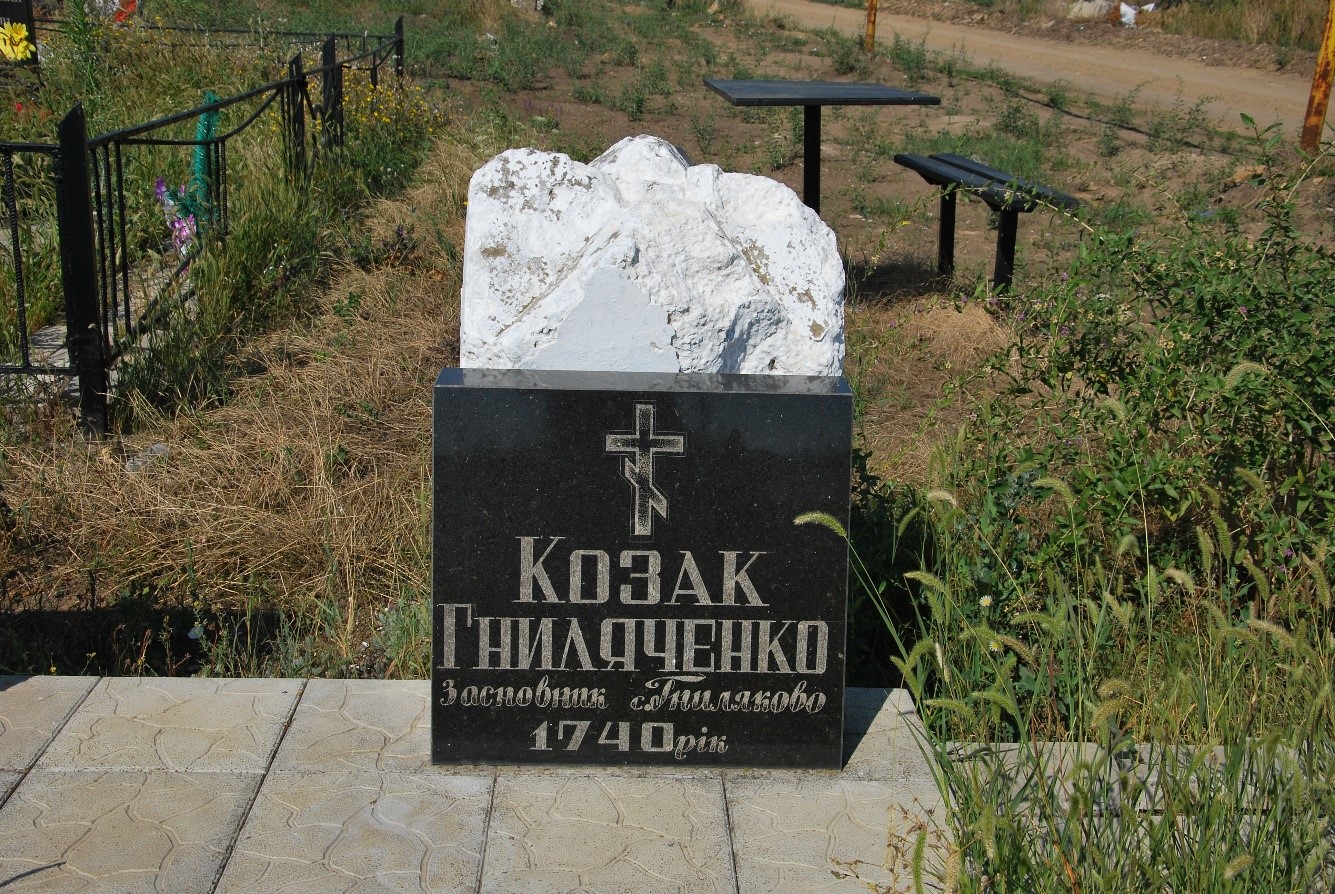
PHOTO: Dmytro Zhdanov
Interestingly, at the end of the 18th century, these lands belonged to Andrii Altesti, who sold them to Odesa in the early 19th century. Thus, Hnylyakove became a suburb of our city.
In 1830, construction of the Pokrovskaya Church was completed in the village. The consecration of the church specifically in honor of the Intercession of the Most Holy Mother of God was no coincidence—the Most Holy Mother of God is considered the chief intercessor and patroness of the Ukrainian Cossacks. In this way, the descendants of Cossack Hnylyachenko and the first settlers preserved their spiritual and national identity.
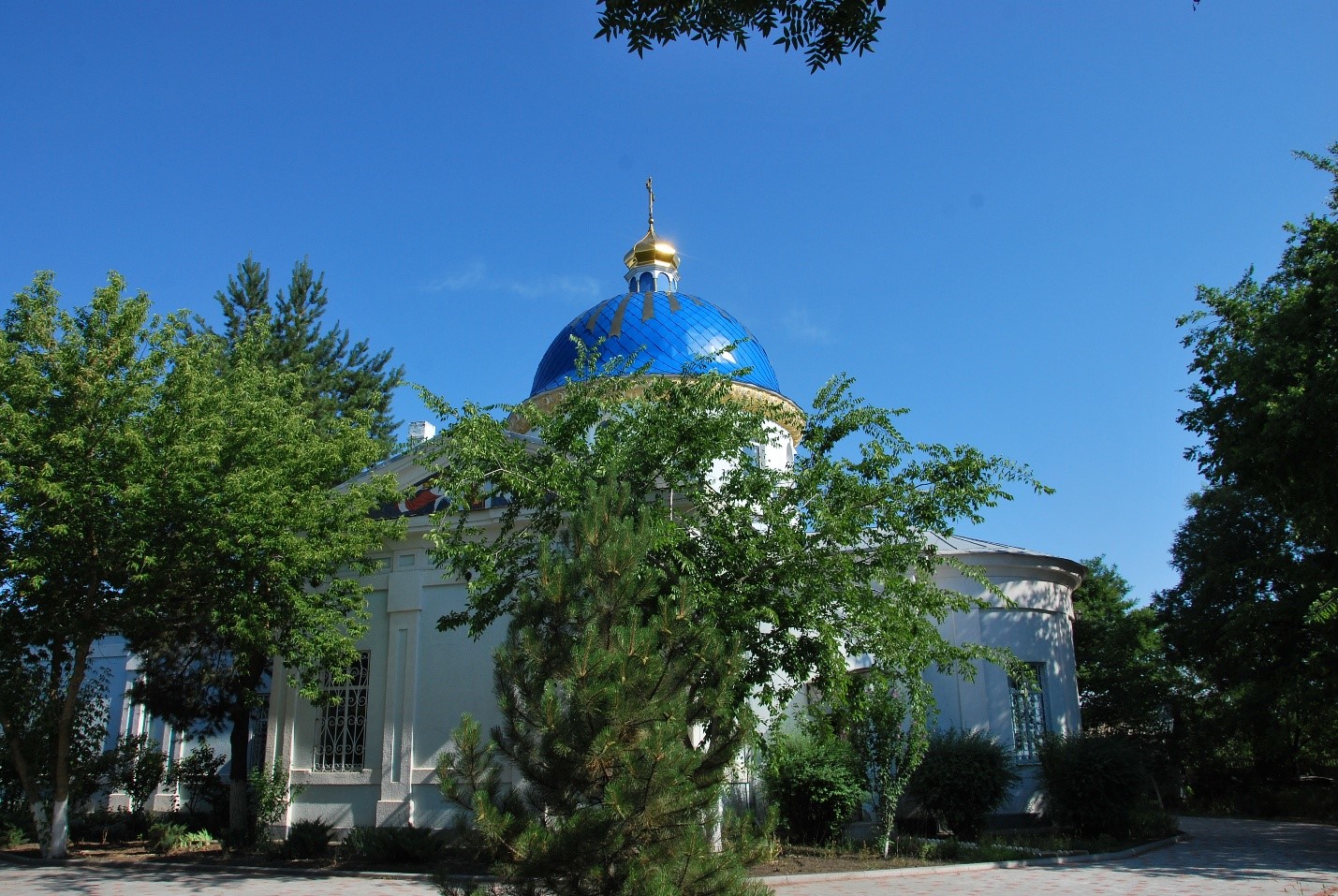
The church in the village of Dachne. PHOTO: Dmytro Zhdanov
An ancient well has been preserved in the churchyard, and its design fully replicates that of traditional Odessa wells.
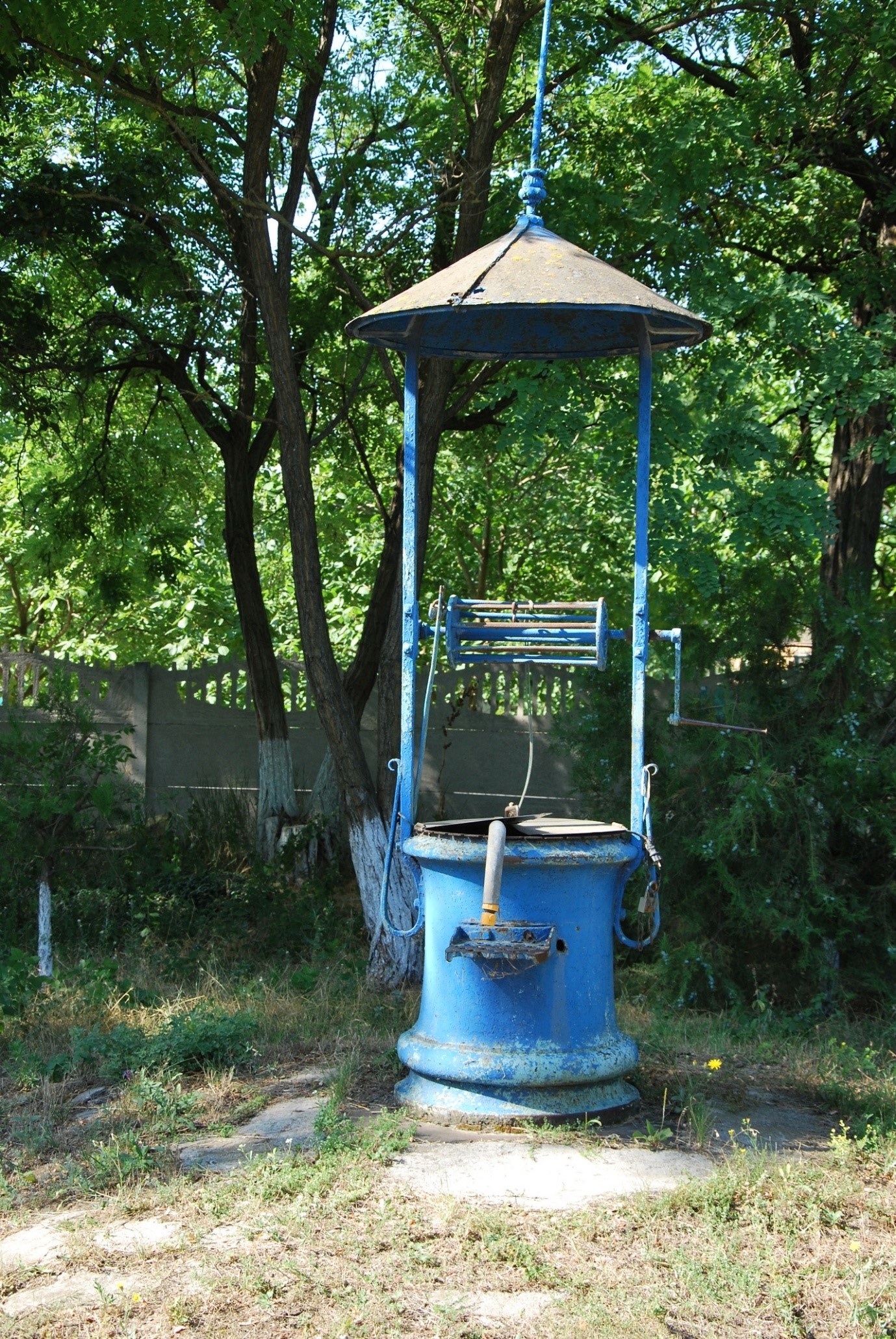
The old well near the church. PHOTO: Dmytro Zhdanov
The old cemetery as the village’s archive
The old necropolis of the historic village of Hnilyakove, which is now part of Dachne, is located next to the church. This ancient cemetery is a unique historical and architectural landmark of Steppe Ukraine, preserving tangible evidence of the region’s settlement by Cossacks, Old Believers, and settlers from the late 18th to the early 20th century.
Today, it attracts the attention of local historians and researchers of the Cossack heritage of southern Ukraine. At the same time, a significant portion of the ancient tombstones and crosses require cleaning, cataloging, and designation as an official cultural heritage site to protect them from further destruction.
One of the cemetery’s largest gravestones is particularly noteworthy. On the cross, dated 1868, a carved inscription remains: “Here rests the servant of God, Andrei Chornobai.” This text clearly reveals the living Ukrainian language and the distinctly Ukrainian Cossack surname Chornobai.
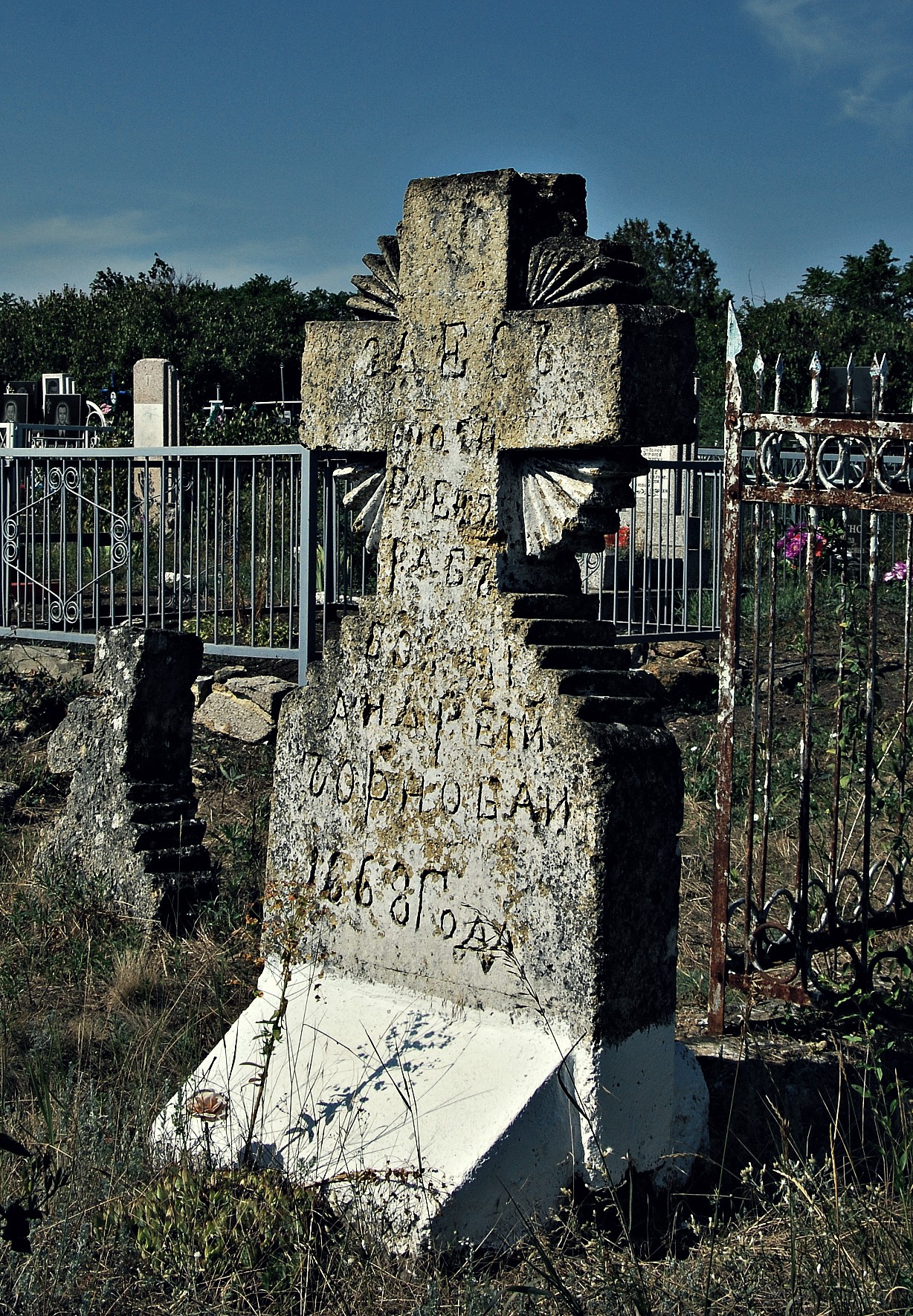
PHOTO: Dmytro Zhdanov
The Railroad That Brought Summer Residents Here
The village’s economic boom began in the mid-19th century and was directly linked to the construction of the first Odessa–Balta railroad. In 1863, the decision to build the railroad was finally approved. The contractor was Chamberlain Baron Karl von Ungern-Sternberg. Work was completed as early as 1865. This allowed local residents to engage not only in agriculture but also in freight transport (carriage driving), since the railroad station was located outside the village at that time. The opening of the railway line also greatly simplified the delivery of agricultural products to the markets in Odesa.
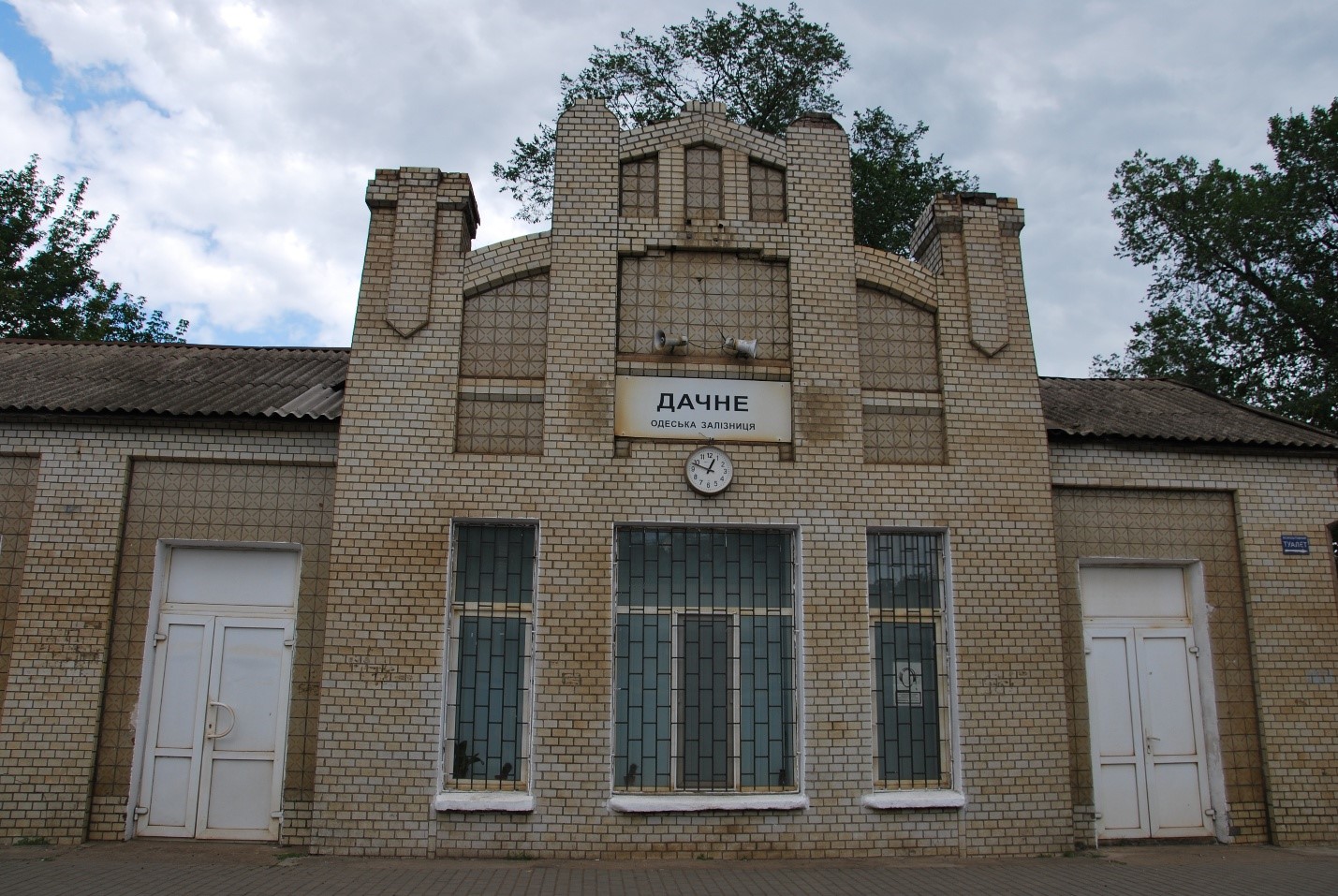
The “Dachne” railway station building. PHOTO: Dmytro Zhdanov
An exceptionally interesting structure has been preserved near the train station—a water tower (water pump) that was used to supply steam locomotives with water. A modern information plaque states that the tower was built as early as 1863. However, the structure is designed in the Art Nouveau style, which emerged much later. The train station building itself was also built in this same style. Most likely, the first water tower did indeed appear in 1863, and at the beginning of the 20th century, during the construction of the new Art Nouveau station building, a new structure was built for it.
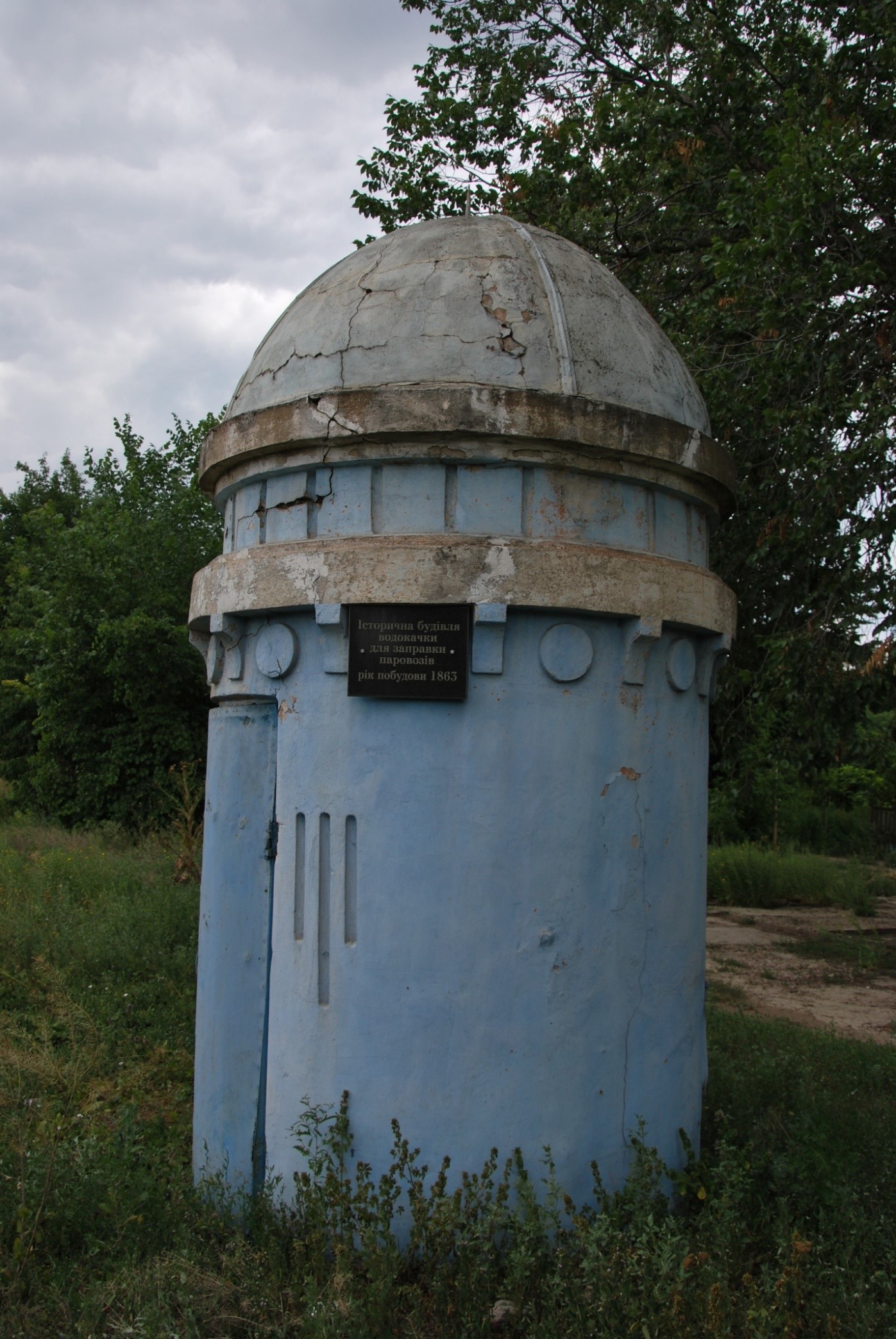
Water Pump House. PHOTO: Dmytro Zhdanov
After the railroad opened, wealthy landowners began buying up land around the station, turning it into summer estates. For some reason, it was believed that this was where the “boundary between steppe and sea air” lay, which sparked heightened interest in the area. In my opinion, this is a wonderful example of the brilliant marketing of that era. That said, the natural beauty of these places is truly remarkable!
Among the well-known summer home owners in Hnylyakove (Dachne), researchers of the village’s history mention the surnames Rabinovich, Malakhovsky, Markhotsky, and others. The area gradually took on a distinct summer-resort character, and eventually the new name—Dachne—completely supplanted the historical name Gnylyakove.
The Kabachenko farmstead stood out on its own. Interestingly, this settlement is mentioned in the list of settlements in the Odesa District and in the 1926 guidebook to the Odesa region. At that time, the village of Hnilyakove had a population of 2,100, while the population of the Kabachenko farmstead exceeded 3,000.
Some of the old summer cottages in the village of Hnilyakove have survived to this day, but their history still awaits a researcher…
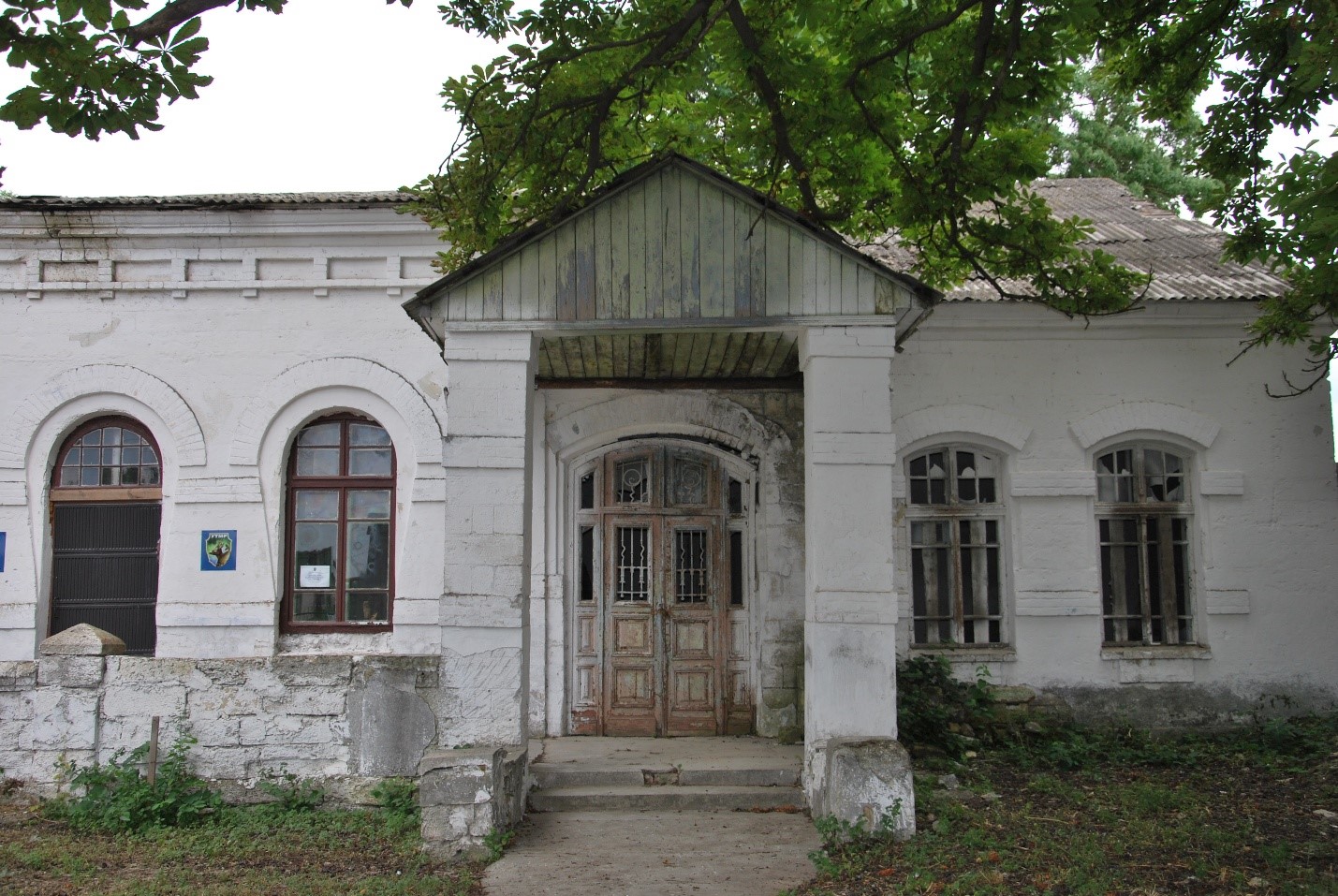
Remains of an old summer cottage. PHOTO: Dmytro Zhdanov
Cellars, “kopanki,” and roof tiles from Marseille
During our local history expedition, we were lucky enough to stumble upon an interesting abandoned cellar, and inside it—the remains of excavations where loam was mined for construction. Such cellars once existed in Odesa itself, and “mines”—ancient underground excavations for extracting loam—still remain beneath the city.
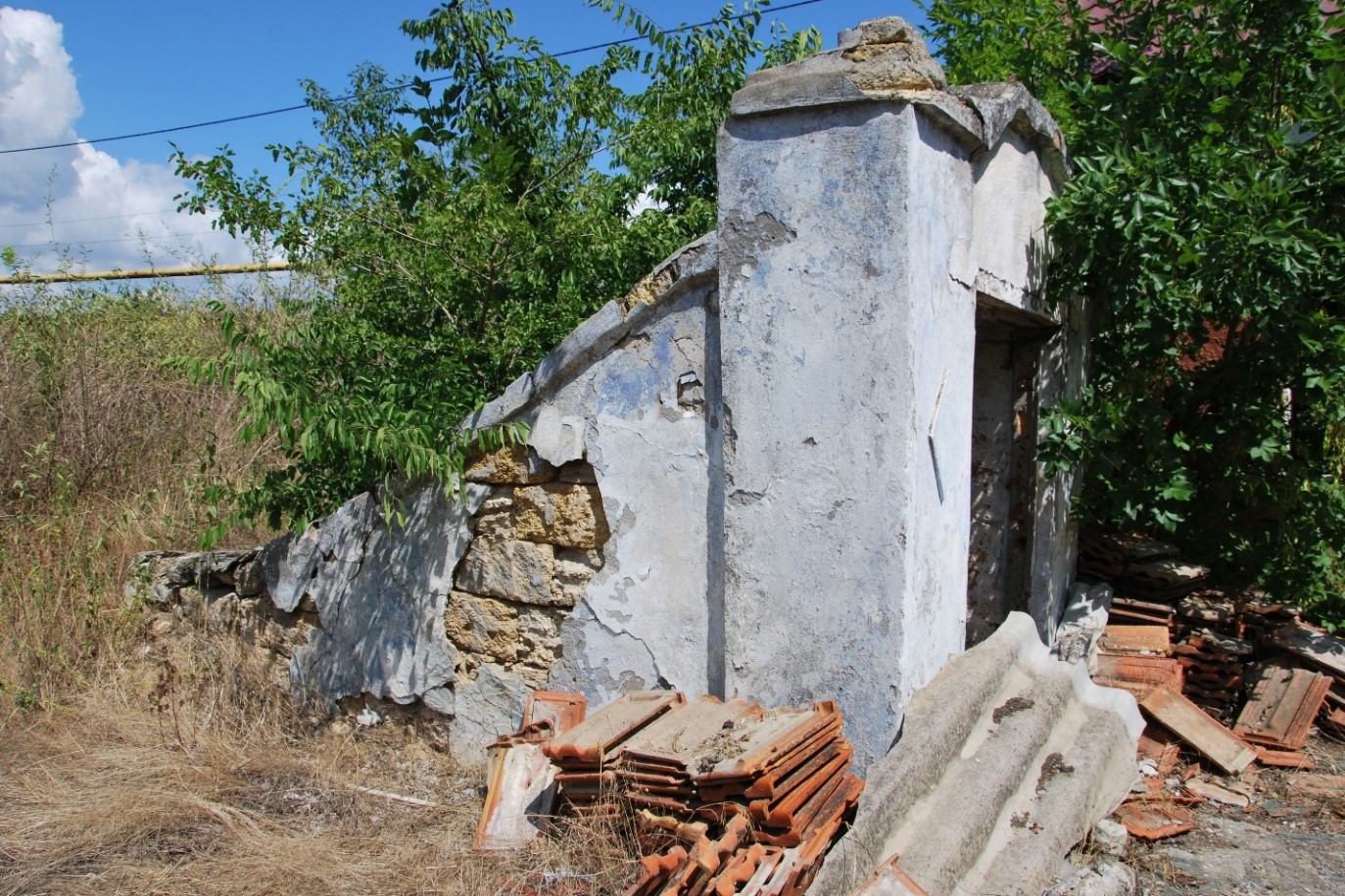
Abandoned cellar. PHOTO: Dmytro Zhdanov
The roof tiles of several types that we found are also part of the village’s construction history. Among them are antique Marseille roof tiles from two companies. The first is marked SACCOMAN FRÈRES – St HENRI – MARSEILLE. It was manufactured by the Saccoman brothers’ factory in Saint-Henri, an industrial suburb of Marseille. This tile belongs to the type of mechanical interlocking Marseille tile, the technology for which dates back to an invention by the Gilarodoni brothers in 1841.
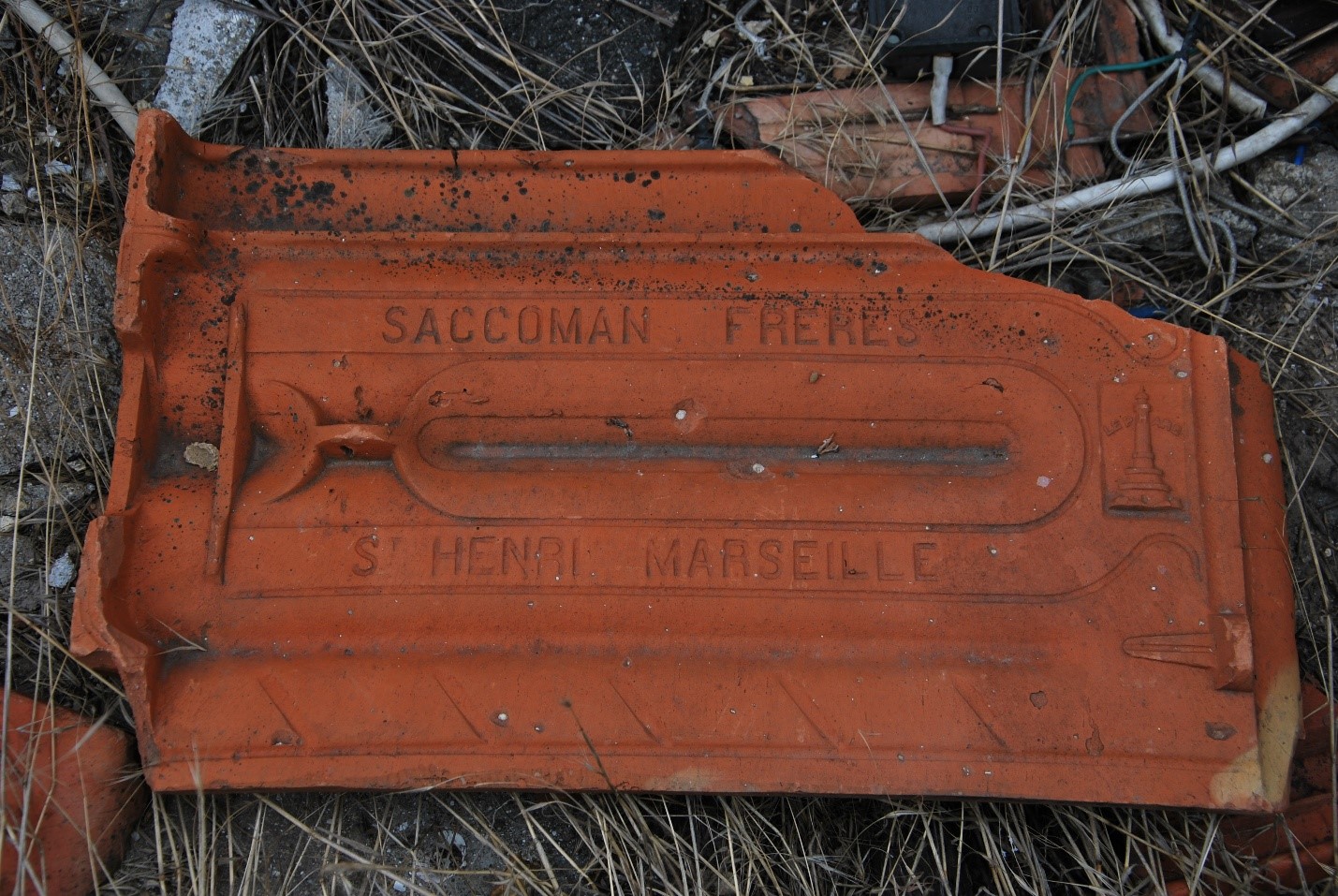
Antique Marseille roof tiles. PHOTO: Dmytro Zhdanov
Marseille roof tiles typically feature animal-shaped trademarks. Our find bears the image of a lighthouse. The lighthouse was the trademark of Saccoman Frères products—this symbol is also found on other historical examples of roof tiles from this company.
The second tile from Marseille bears the mark GUICHARD FRÈRES – St HENRI – MARSEILLE. This is also a French machine-made Marseille tile, but from a different manufacturer—the Guichard brothers from the industrial district of Saint-Henri in Marseille. To the right of the inscription, you can see the company’s trademark—a lion. The lion was the trademark of Guichard Frères roof tiles.
Interestingly, in Dachne we also found roof tiles manufactured at a Ukrainian factory in the village of Petrivka (present-day Mykolaiv Oblast). The factory in Petrivka began operations in 1900. The brick-and-tile factory there was not just an ordinary small rural brickworks, but a fairly large mechanized enterprise for its time. The factory’s products were renowned far beyond Petrivka, and in 1903, they were awarded a gold medal at an international exhibition in Berlin.
In addition to standard roof tiles, the factory produced items bearing the inscription in French: FABRIQUE DE BRIQUES DE PETROVKY (meaning “Petrovka Brick Factory”). The French design of the mark was most likely a marketing strategy linked to the high prestige of French—and particularly Marseille—roof tiles. In the early 20th century, the phrase “Marseille-style roof tiles” effectively served as a mark of quality and a certain standard for roofing material. And the factory itself openly advertised its products as Marseille-style roof tiles.
But the story of this factory does not end with these two samples. In the village of Dachne, we also came across roof tiles produced by the factory after our lands had been occupied by the Soviet regime. Admittedly, these Soviet-era products were of significantly lower quality.
Interestingly, the history of roof tile and brick production in the village of Petrivka did not end in the 20th century. Even in the 21st century, the production of building materials—including those same bricks and roof tiles—continues in Petrivka.
How Hnylyakove Finally Became a Summer Resort
By the beginning of the 20th century, the village had definitively transformed into a popular “summer resort area near Odesa.” Indeed, the 1902 guidebook “All of Odesa” lists a considerable number of summer home owners. And in September 1903, the “Society for the Improvement of Summer Home Areas in the Village of Hnilyakove” was founded.
Here’s how an Odessa newspaper described summer cottage life in the village of Hnylyakove in 1912: “At the ‘Dachna’ (Hnylyakove) station, the state of affairs regarding summer cottages is just as dismal as it is at Fontany. Many homes stand empty. Only large apartments have been rented to permanent summer residents who live in this area every summer. The boredom at the summer homes is terrible. So far, the only entertainment is waiting for the train at the station.”
So, over time, the unofficial name “Dachne” became firmly established for the summer cottage community near the railroad station. The village of Kabachenko was officially renamed Dachny in 1945. And in 1967, Gnylyakove and Dachny were merged into a single settlement under the common name—Dachne.
However, Dachne is famous not only for its summer cottages but also for its well-known enterprises. According to historical documents, in 1927, the “Agrokultura” farm was established on the lands of former dacha owners Naumov and Sandarzi, which later evolved into the modern experimental base “Dachne.”
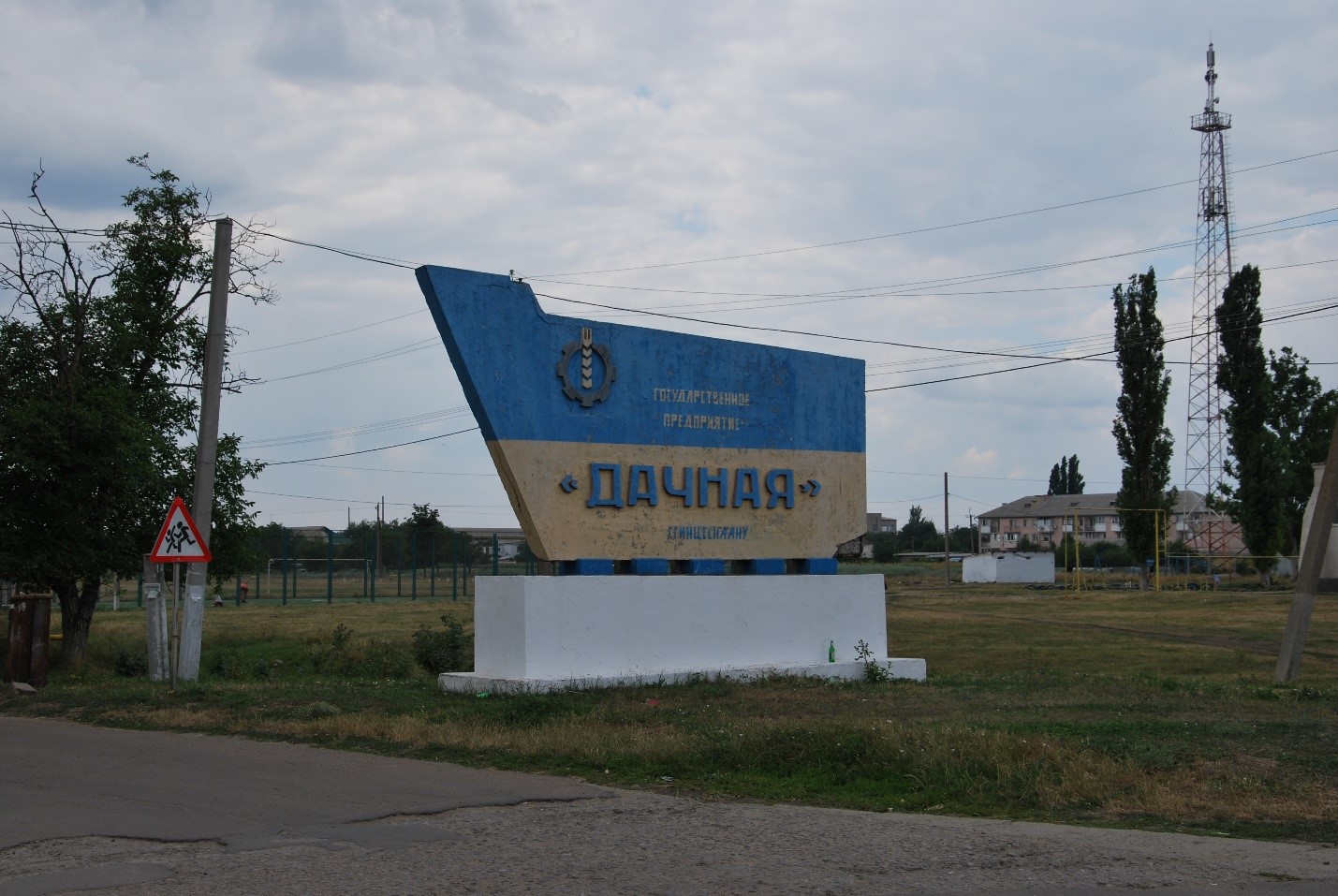
A monument at the entrance to the state-owned enterprise “Dachne.” PHOTO: Dmytro Zhdanov (2019)
The history of the village of Hnylyakove (Dachne) is preserved in old gravestones, abandoned summer homes, railroad structures, buried cellars, and even in pieces of old roof tiles that can still be found right underfoot. And perhaps the most interesting thing about Hnylyakove’s history is that it is still unfolding…