Меню
Соціальні мережі
Розділи
July 30, 2025, 10:08 p.m.
Ottoman cities of the Bujak: what remains behind the scenes of history
This article also available in English212

Izmail in the Ottoman era. Image by bessarabia.ua
The study of the Ottoman cities of Bujak faces serious challenges. As a result of numerous wars and uprisings, most of the architectural monuments of that period have not survived. Archaeologists have focused primarily on fortifications-the remains of walls and fortifications. Instead, the economic life of the cities, which could provide a key to understanding the daily dynamics of the region, has been neglected by scholars. One of the reasons for this may be the active modern development of historical areas. For example, in the city of Reni, a medieval Ottoman settlement is actually located on the territory of a modern port, which makes excavations difficult. The situation is similar in Izmail: most of the territory of the former fortress is already occupied by private estates, and the rest has been turned into a city park. Equally important is the fact that past travelers paid more attention to describing the life and customs of the Tatars, the main military force in the region, than to the inhabitants of Ottoman towns, whose lives were typical of the provinces of the empire. Thus, in order to draw a complete picture of the history of the Ottoman-era towns of Budzhak, it is necessary to conduct a deeper and more systematic research into the economic aspect of their existence, which is still poorly understood but extremely important for understanding the role of the region in the historical context.
Despite its centuries-long history, the exact date of the founding of the city of Izmail is still debatable. Different researchers offer their own versions based on available sources and archives of the Ottoman Empire. For example, historian Ion Kirtoage believes that the earliest mention of Izmail is an entry in the Ijmal Defter of Selista, dated July-August 1542. Another version is put forward by Valerii Posternak: in his opinion, in 1560 there was a temporary "revival" of the settlement, which had been destroyed before. Contemporary researchers Andrii Krasnozhon and Oleksandr Sereda also have their own point of view. They link the founding of Izmail to 1590, when Sultan Murad III issued an order to the chief eunuch of the harem, Habesha Mehmet-azi, which probably marked the beginning of a new stage in the city's development.
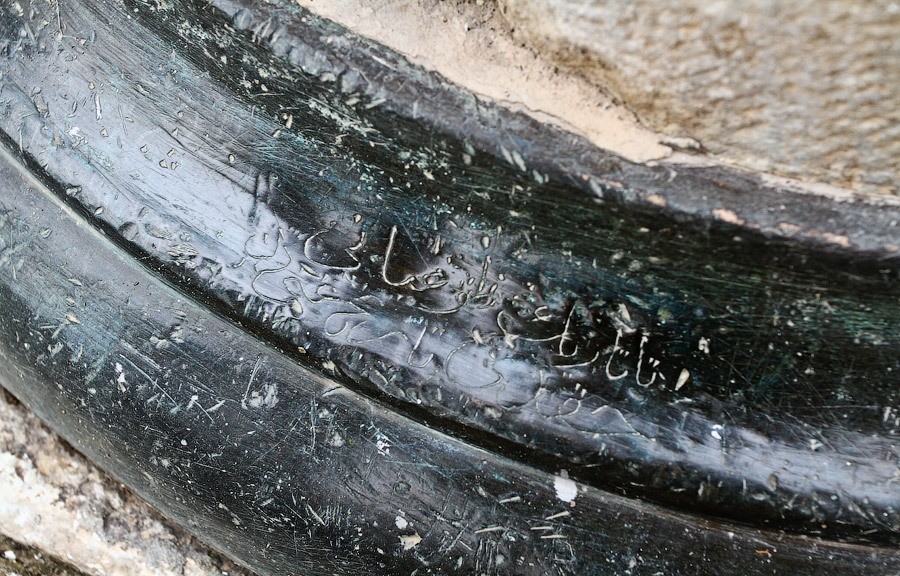
An inscription in Ottoman on a mosque in Izmail. Image by islam.in.ua
The late 16th century was a period of rapid growth for Izmail. According to the Ottoman tax registers of 1592, the city's population exceeded 5,500 people. And in 1657, according to the traveler Elevi Celebi, the city was home to 8 to 10 thousand people. Interestingly, the overwhelming majority of the population - about 84% - were Christians: Ruthenians, Vlachs, Bulgarian Moldovans, and others. They also bore the brunt of taxes. Thus, in 1592, 995 Christian households paid 6545 akce to the state treasury in the form of a fixed tax.
In 1592, the residents of Izmail-Gecidi paid a total of 357,861 akçe taxes to the Ottoman treasury. The largest share of revenues came from taxes on fish and its exports - 76,000 akçe, which accounted for 21.3% of all fees. Taxes on grain crops were in second place in terms of revenue, totaling 70,000 akçe, or 19.6% of the total amount. The third largest tax was the tax on prisoners, which brought in 60,000 akçe, or 16.7% of all tax revenues in the city at the time.
A significant portion of tax revenues in 1592 was also made up of per capita taxes paid by Christians in favor of the sultan, amounting to 50,200 akçe. A separate revenue was allocated for the maintenance of the shrines of Mecca and Medina, which amounted to 10,000 acce. The marriage tax was also high, with Izmail residents paying 58,300 akçe.
In 1593, the revenues of the city of Izmail-Geçdi decreased compared to the previous year and amounted to 254,183 akçe. As before, the bulk of the revenues came from taxes on fish exports and grain sales. The structure of taxation reflects the city's economic specialization: intermediary trade, including the trade in food and slaves, was the basis of its economy.
Every year, up to 2000 cartloads of fish were shipped from the city to Poland, Russia, Istanbul, and the Greek islands.
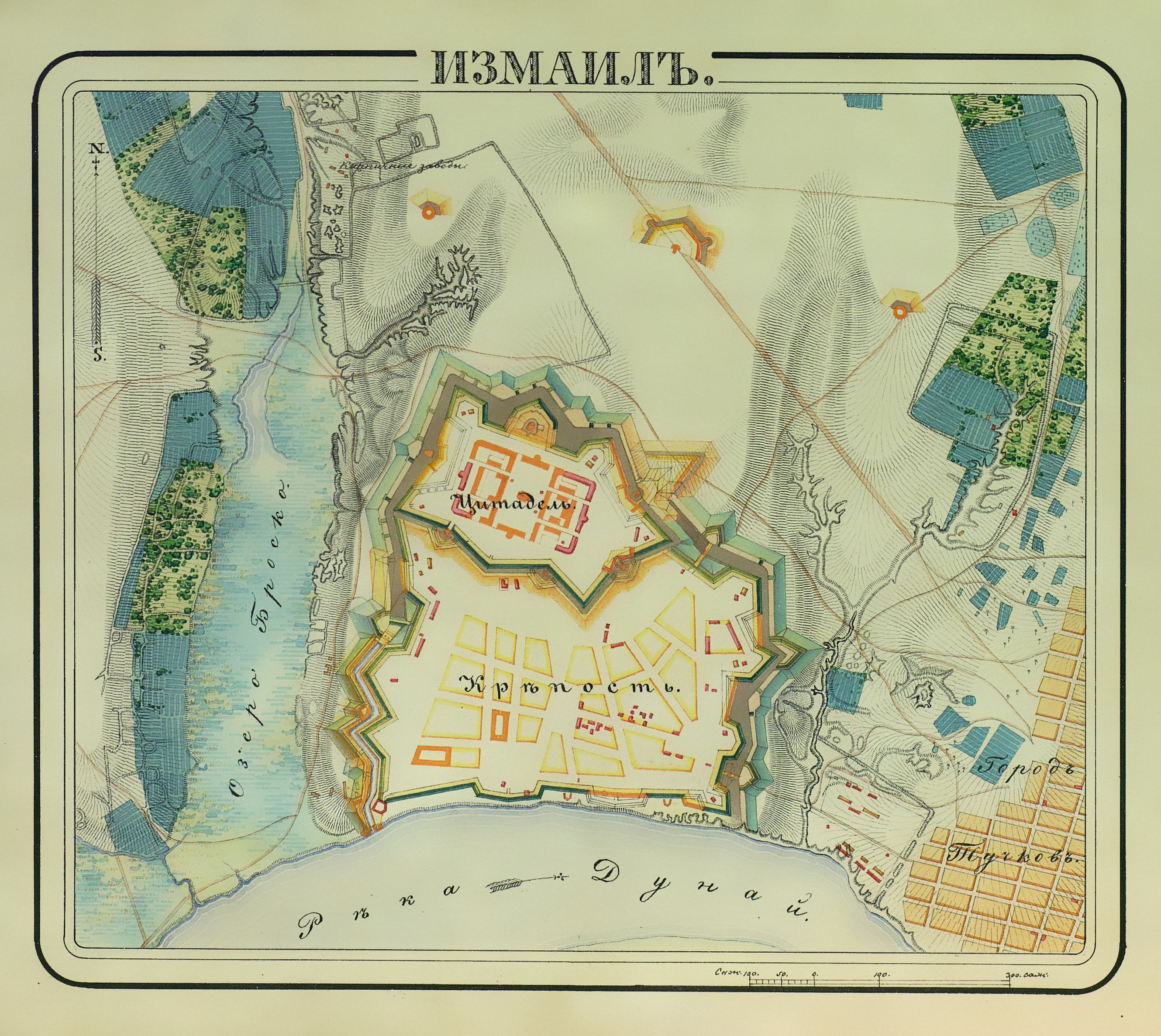
The Izmail fortress in the 18th century: Wikipedia
In the early seventeenth century, tax revenues from Izmail increased significantly. In 1604, Mehmed, the manager of the mosques, was appointed to organize the collection of revenue for the maintenance of local shrines. He undertook to increase the annual tax collection from 500 to 750,000 akçes, and to ensure the transportation of 100 cannons by providing horses.
In 1715, the per capita tax paid by the Christians of Izmail, Isakcha, and Braila alone reached 3,271,800 akçe. Compared to the figures of 1592, this demonstrates a significant increase in tax collections. Part of the reason for this is the depreciation of the akçe, but it also indicates an overall improvement in the economic situation in the region. According to Eulia Celebi, in 1657, Izmail was home to 8 to 10 thousand people. They lived in 2000 houses, and there were about 800 shops in the city. In the 1770s, Izmail reached even greater prosperity: travelers mentioned 12 Turkish shops and stores, a coffee shop, a caravanserai, and a city bazaar. The outskirts of the city were occupied by gardens and Moldovan vineyards.
The port played an important role in the development of the city. As early as 1634, it received the right to trade duty-free, which significantly increased its attractiveness. As a result, up to 500 ships, mostly Turkish, were constantly in Izmail, exporting fish, salt, and grain. According to the memoirs of the traveler Eulia Celebi, Izmail in the mid-seventeenth century made a rather modest impression: in the city center, houses were covered with reeds, and only administrative buildings remained stone. However, according to the testimony of Russian officers in 1770, the city had undergone significant changes. At that time, Izmail was divided into four unequal parts. In the center, between the river and the northern side of the fortifications, were densely populated Turkish quarters.
To the east were Armenian quarters with two churches. Tatar neighborhoods occupied the western outskirts of the city, and Moldovan neighborhoods the eastern. In general, the city was divided almost equally between Muslim and Christian populations. The historical center, as well as the most prestigious and business part of the city, were located on a coastal plateau up to 10 meters high. The Turks and Armenians shared this space, which indicates their special social status in the urban environment. There was not a single mosque in the Tatar district, while there were at least seven in the Turkish neighborhoods.
The Moldavian district was the largest in terms of area, most of which was outside the city fortifications, but it had only three churches. As early as 1790, Baron Kampenhausen reported that the city had "17 magnificent mosques," as well as "a pasha's palace and a khane for merchants.
The well-being of Izmail was largely dependent on the surrounding villages and hereditary land holdings that provided the city with food and raw materials. According to the Bulgarian traveler Petru Bohdan Bakshich, in 1641 the Izmail district included 10 settlements. In addition, there were 34 Muslim and 21 Christian villages in the region.
Among the Muslim settlements that were part of the religious district of Izmail, the names Kaplybaty, Kyshla, Dundar, Akhpanoz, Sapan, Postan, Tobak, and Iskerlet have survived. In 1593, the Tatar village of Istoytso, which had 89 Muslim households, paid 20,350 akche taxes. Most of the income came from those villages that were engaged in cattle breeding and agriculture.
In total, the Izmail religious district brought in about 207,000 akce per year, which was less than in the neighboring Akkerman religious district, where revenues reached 300,000 akce. This was explained by the smaller number of villages under the jurisdiction of Izmail.
However, the city constantly suffered losses due to Cossack raids. In 1594-1595, Izmail was twice sacked by the units of Hryhoriy Loboda and Severin Nalyvaiko. The Cossack attacks of 1603, 1609, and 1632 were devastating for the city.
Izmail suffered large-scale destruction during the Russian-Turkish wars. After a year-long stay of Russian troops in 1770-1771, the number of Turkish quarters decreased significantly, and Tatar residents almost completely left the city.
Contemporaries recorded the complete destruction of Izmail after the 1790 assault by Russian troops. At the same time, the Russian military noted a significant revival of the city during the next attack in 1807.
The traveler Andrii Storozhenko, who visited the Izmail city administration in 1829, stated with regret: "Many of the orchards that recently adorned the city of Izmail have disappeared, and no new orchards have been planted in 22 years... We must pay tribute to the Turks-they know how to garden, our people only destroy these centuries-old structures."
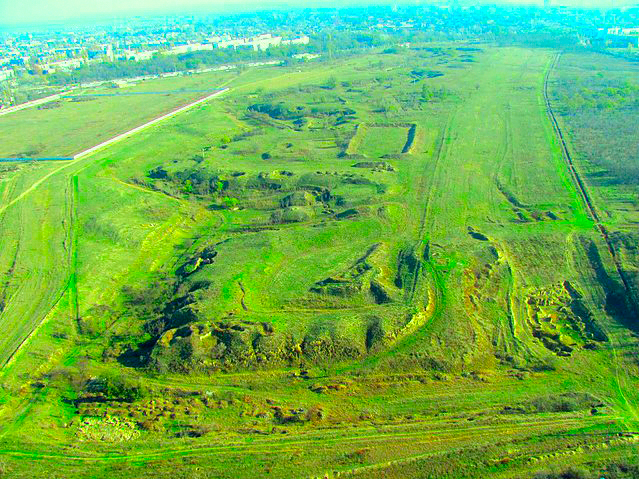
Modern remains of Ottoman Izmail. Image by odessa.net.ua
There is almost no complete information about the economic life of the towns of Tomarovo and Bendery (Tyahynya).
It is known that in Tomarovo there was a tax district where the local Moldovan population paid tribute in cattle, which probably became the basis for the name of the town - "a roll of skin". Valerii Cojocaru provides some information about the surrounding villages that supplied the city with cattle. In the company of Sultan Mustafa II of June-July 1699, Tomarovo is mentioned as a village near the Tatar villages of Cherchelush, Barta, Enikioi, and Kartal. Paul of Aleppo believed that Tomarovo belonged to the monastery of the Haseki dervishes. Unfortunately, the lack of additional written sources and archaeological finds makes it difficult to fully recreate the economic life of the city at that time.
Administratively, Bendery was close to the Bujak region. Eulia Çelebi described Bendery as a powerful fortress with a tax collection of 340 thousand akçes, around which 22 villages were located. There was a customs office in the city, and the position of the mayor included control over prices, the correctness of weights and measures, which indicates the presence of a developed market. The city consisted of 7 Muslim and 7 Christian quarters, had about 1700 houses, 4 mosques, 2 elementary schools, and 200 shops. Unlike the Danube cities, Bendery had no vineyards. The traveler explained this by constant clashes with the Christian population, which destroyed the neighborhood. At the same time, it remained unclear how these border conflicts did not interfere with the production of honey, butter, and woolen hats and fur coats.
Modern Turkish researcher Feridun Emeğen notes that the Bender district included 31 villages. Only two of them, Yeniköy and Varnici, had a Christian population. The village of Destikiran had a mixed ethnic composition, while 18 villages were Tatar. By the end of the 16th century, several new settlements appeared in the Bender area. Among them were two small Muslim villages, Beikoy and Doyan, which were located next to three Christian villages: Uskurina (another name - Juma), Istanifos and Jelidairani. Thus, the outskirts of Bendery were characterized by a mixed population, dominated by Muslims.
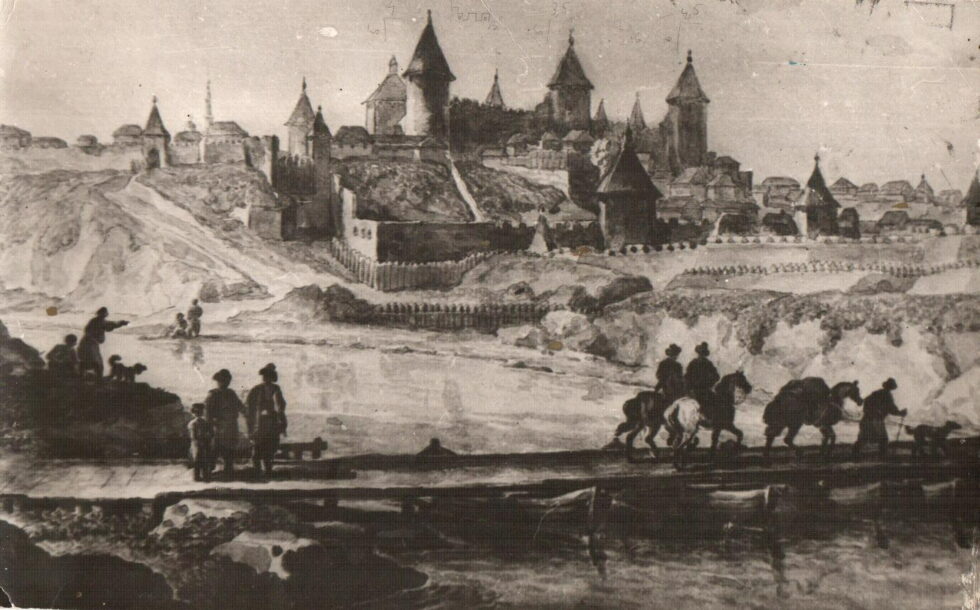
Bendery. 1790 Image by bendery-fortress.com
Since the beginning of the eighteenth century, Bendery has undergone significant changes due to the acquisition of a new administrative status - since 1700, the city became the residence of the commander-in-chief Yusuf Pasha during his campaign to Silistria. During this period, both the fortress and the city itself were actively built up, which contributed to its territorial expansion. In 1789, Baron Baltazar Kampenhausen recorded 12 mosques in Bendery. According to the 1806 census, about 7900 people lived in the city and the forstadt, of whom 5981 (75.7% of the population) were Muslims, mostly Turks and Tatars.
Bendery repeatedly came under the control of Russian troops and finally became part of the Russian Empire as a result of the 1806-1812 war. In 1807, only 369 households and 1845 residents remained in the city, indicating a significant decline and depopulation after the hostilities.
The Russo-Turkish wars of the eighteenth and early nineteenth centuries had devastating consequences for the towns of Budzhak. Constant military operations, sieges, and attacks led to the decline of urban infrastructure, the depopulation of entire neighborhoods, and the loss of the region's former trade and economic potential. The consequences of the mass migration of the Islamic population - Turks and Tatars - who formed the basis of urban life, were particularly noticeable. As a result, economic activity in the region declined sharply. The Russian government, having gained control of these territories, faced the need to actually rebuild the destroyed cities almost from scratch. For this purpose, foreign immigrants were actively involved, who were supposed to contribute to the new economic development of the region and the formation of its social structure within the imperial space.
Андрій Шевченко