15 April 2026, 20:33
Volodymyr Umanenko: "We are the first in Europe to overcome this crisis"
Ця стаття також доступна українською

Volodymyr Umanenko. PHOTO: Natalia Dovbysh, Intent
What's wrong with the city authorities in Odesa-from Trukhanov to Lysak, why he didn't study at the art academy in Tallinn because of Masks, how he saved Volodymyr Komarov from death, and why he didn't work with Kira Muratova. We talked about this with the artist, designer and curator Volodymyr Umanenko. We also talked about stand-up as a vanity fair, 55-year-old Igor Gusev, who polishes his cartoons, and why "living a smooth life" is a dangerous illusion.
Read the short version and watch the full interview on Intent's YouTube channel.
In one of your interviews, you said that you wanted to "live unequally". What does this "unequal" mean to you today - in life and in art?
It still means the same thing, not even evenly, but asymmetrically. Because life in general is asymmetrical, a very paradoxical thing. We wanted to live equally, and 30 years later we had a war. I think we all deserved it.
We deserved this attitude from our neighbors because we allowed it. Not because we relaxed, but because we wanted to live equally. We wanted to sit quietly in our cherry orchard and eat some diet dumplings. That's how we got there.
In principle, this is a test. But I not only know, I feel: we are at the peak, even at the exit. And we are the first to get out of the crisis that is happening now, I don't know about the rest of the world, but in Europe we are definitely the first to get out of the crisis that is happening now.
We were the first in this existential experience that the creator is conducting. Perhaps similar things are happening in Africa and South America, if we look at the events of the last five years. But we see that we are leaders "in progress" - in development. It is on this existential level, and in general on some kind of mental, moral and ethical level.
How did you get involved with Masks? How did you develop their visual style?
I studied in Tallinn and lived in Kropyvnytskyi. And it was there in the early 80s that I had my own small theater. We did pantomime, dramatic stuff-it's gone now. Back then, I was guided by people who were doing similar things: Marceau, Polunin, and others.
I worked at a garment factory at the time. I was a simple cutter and dreamed of getting into a design bureau. In general, at that time I dreamed of becoming the Minister of Light Industry. I was involved in theater, drawing and dancing. And during my shift at the factory, I was told: "Someone is here to see you at the checkpoint." I went out and there were my two girls from the theater, and with them were two stamps. It was a fierce winter, with snow one and a half meters deep. And these two stamps-imagine the year 84: one in a jacket and a hat, the other in an overcoat without shoulder straps, and also in a hat. In general, they were very strange, but not punks.
The story goes like this. The girls went to a cafe, and the two stamps were approached. They started talking. They said: "We're artists, we're here on tour." It was the first tour of the Masks, when they had already decided on the Philharmonic and started touring. So they came up and introduced themselves as artists. And the girls said to them, "We're artists too, we have a theater." They started talking. The men realized that Kropyvnytskyi also has an interesting theater.
I finish my shift and go to their performance. I watch and realize that my gang and this gang are like twins. We started talking, and I started coming to Odesa. Because of "Masks," I didn't actually finish my studies at the art academy in Tallinn. Well, thank God. Later I realized that it was a real choice, and I was right.
Then, after that meeting, I waited a couple of years until a costume designer position became available. I was invited. I dropped everything and came to Odesa, got a job at the Philharmonic and started working. It's been since 1987, and it's still going on.
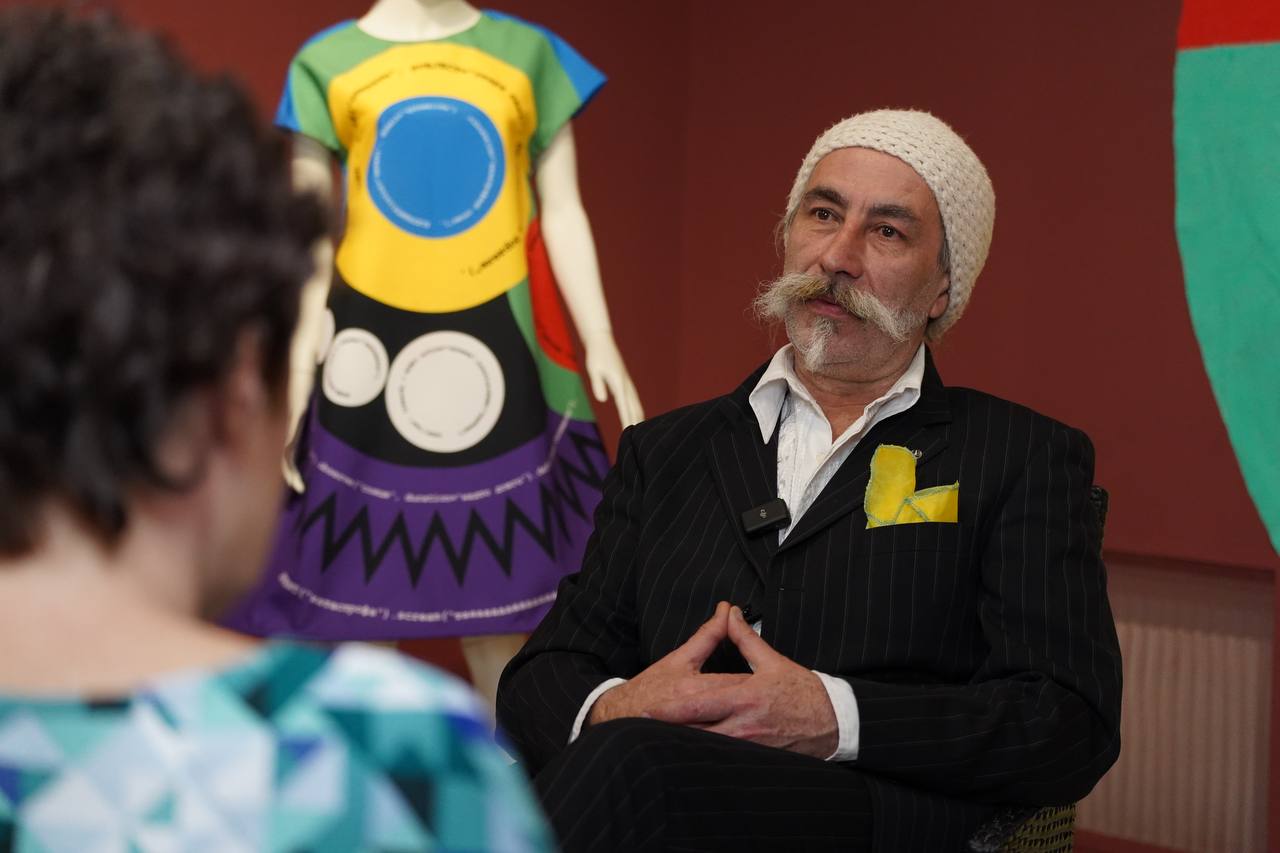
PHOTO: Natalia Dovbysh, Intent
How do you feel about contemporary comedy and stand-up?
I have a calm attitude to stand-up, but I regret that it didn't start 15 years earlier. Back then it was classic - and it wasn't even Eddie Murphy. It's Dustin Hoffman, there's a great movie called Lenny (80s). That's where I think real stand-up is. He set my benchmarks, and I realize that nowadays not everything that is called stand-up is. Mostly it's pulling a blanket over yourself, vanity fair, when people just want to be looked at and get paid for it.
And since we're talking about Masks, what is your attitude to Oleksandr Muzychko 's statement about Vladimir Komarov?
I would say that he is wrong. I don't even want to comment on Muzychko and what he said. He is simply wrong. And he should apologize. And he should apologize for a very long time, because he did not know the person he was talking about. And this is not just anyone. Vladimir Komarov is a close person, my colleague, my brother. We are all brothers in Masks. And my godfather.
What kind of comedian was Komarov? How was his stage persona created?
He had the least experience of the Masks actors, but he was the easiest to create a flexible character. He had the role of Fanny Kaplan, who shot Lenin. I remember it very graphically: Komar in this black dress, in those shoes that I picked out for him so that he could run with that bag. It was a wonderful transformation for me. I knew him as a stage actor, and when we got into cinema, I saw this multifunctionality of his images.
In general, I have a lot of private stories related to the fact that we became godfathers. I remember that I saved him from death at least three times during the tour. I took him by the skin of my teeth and he didn't fall where he didn't need to. Anything could happen on the set or on stage.
I also taught him how to smoke a pipe. It was around 1988. I was just walking around Chernihiv and saw a handmade pipe in a shop. I bought one, bought some tobacco, and came to the hotel. The guys said: "Wow, cool!". Volodymyr Komarov smoked it, but forgot about it. Only later did he return to the subject. He was a good smoker in general. A normal guy from Moldavanka, as they say.
But the fact that he became such a pipe maker... I remember how he dreamed of a milling machine and everything he filled the house with. And about the smells when he was cutting and grinding tubes.
I think I'm the only one of the Masks who somehow followed a profession. I mean, I was engaged in clothing and became a costume designer, and then I became a director, and so on. And Komar is a professional electrician. He's just a great guy, from God. I remember how he was working on the set, when we had no lights, no gaffers, nothing.
He was also an electrician in the navy - he served three years in the Northern Fleet. And this somehow affected him. Perhaps not the Odesa trait, but some really simple trait of a guy from Stepova, with a straight back. He always had a straight back.
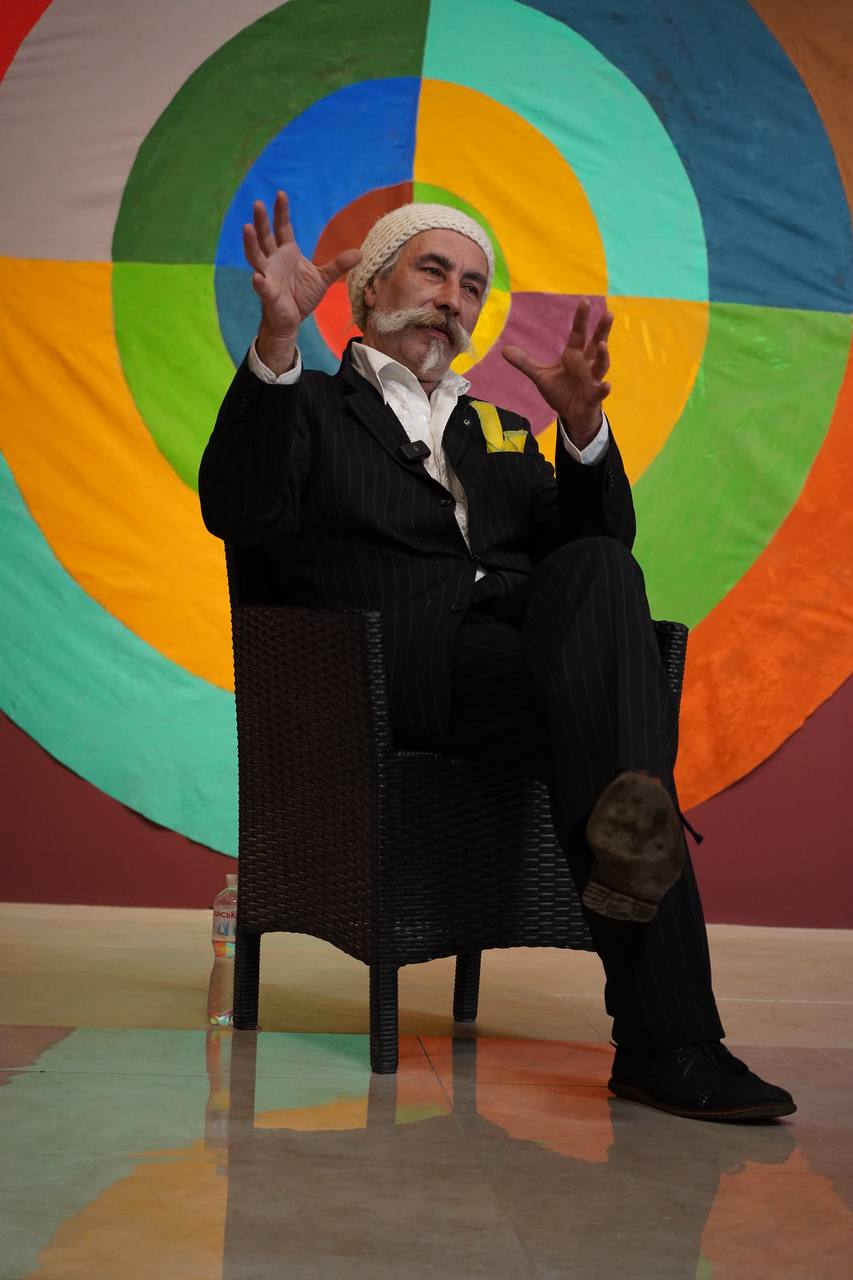
PHOTO: Natalia Dovbysh, Intent
Some of the actors in Masks have appeared in films by Kira Muratova. How do you assess her visual language?
It was very good that she invited them there. I think it's even a bit late - she could have done it earlier. The first person she noticed was Buzko.
It wasn't that we were being ironic at the time, we were just busy with other things, and she didn't really call us out. It was Buzko who invited her first, and she went to her, it was Asthenic Syndrome.
And then Kira Muratova started inviting everyone, and almost everyone worked with her.
I was not able to work with her as an artist, not even because of her character, although perhaps because of it. It's not that we didn't get along, but somehow it didn't work out. At the same time, I respected and loved her very much.
It was something extraordinary. Even for Brief Encounters with Vysotsky, I was in awe of her. And the fact that she was a difficult person in life is even a good thing.
I still sometimes communicate on Facebook, and I correspond a little with her husband Yevhen Holubenko. For me, his very presence is a reminder of their couple, of the times when the studio was alive, when everything was in full swing.
I remember running from the group to the pavilion, and someone stopping me and pulling me into another room. Muratova's assistant said: "Can I see you for a minute?" I'm the one with long hair, wearing some strange outfit, in a hurry to do something. She turns me on and says: "Kira Georgievna, look at this character." And Kira Georgievna: "Lera, I know him. We will work with him again."
Since the beginning of the full-scale war, you have held many open actions - at the Bookstore, on Deribasovskaya Street. What effect did this have on the citizens?
First of all, it had an effect on me. I wanted to do it. This is not a new story - I've been involved in street and various art projects for twenty years. That's why I was actually drawn to the museum. I have always been in this artistic environment.
And then the street became especially vibrant because all the museums, galleries-everything was closed. You remember March 2022.
In the first week, I realized this simple thing: those who took a machine gun took a machine gun, and those who had a brush started painting. And I saw how Facebook literally collapsed under the huge amount of work. Even serious artists were drawing.
At first, I just shared them - for support, for those who don't know how to react. And then I realized: I want to show it live. Not everyone is on Facebook. And the question arose: where? I immediately thought of Deribasovskaya as the most public place. But on the third day, it was blocked off, covered with hedgehogs. Then I started walking around the city looking for a place to do it. But everything was closed - and it was absolutely clear.
And the only place that remained alive was the Book. People still gathered there to drink coffee and talk.
I went there, saw Misha Beiserman, and said that I wanted to make an exhibition. I asked him to help me make arrangements. A few days later I got an answer: "Do whatever you want". I gathered the works, figured out how to place everything, and that's how the first exhibition appeared. There were works by different artists, but also mine. I was also inspired at that time - I started drawing, even in simple computer programs.
And I immediately came up with the idea of not just a name, but a kind of motto. I didn't want to take "freedom or death" - this choice seemed to me imposed, even manipulative. I didn't want to choose between the two. So I formulated it differently: "Freedom is not death".
This was the first exhibition. Then we started meeting regularly - at first once a week, on Friday, then we switched to Saturday. And it gradually grew into something more: people came not just to have coffee, but to see each other, to understand what was going on.
Later, this came back to Deribasovskaya Street when it was opened. There was a whole wall of artwork. Then it was partially closed, but recently it was reopened.
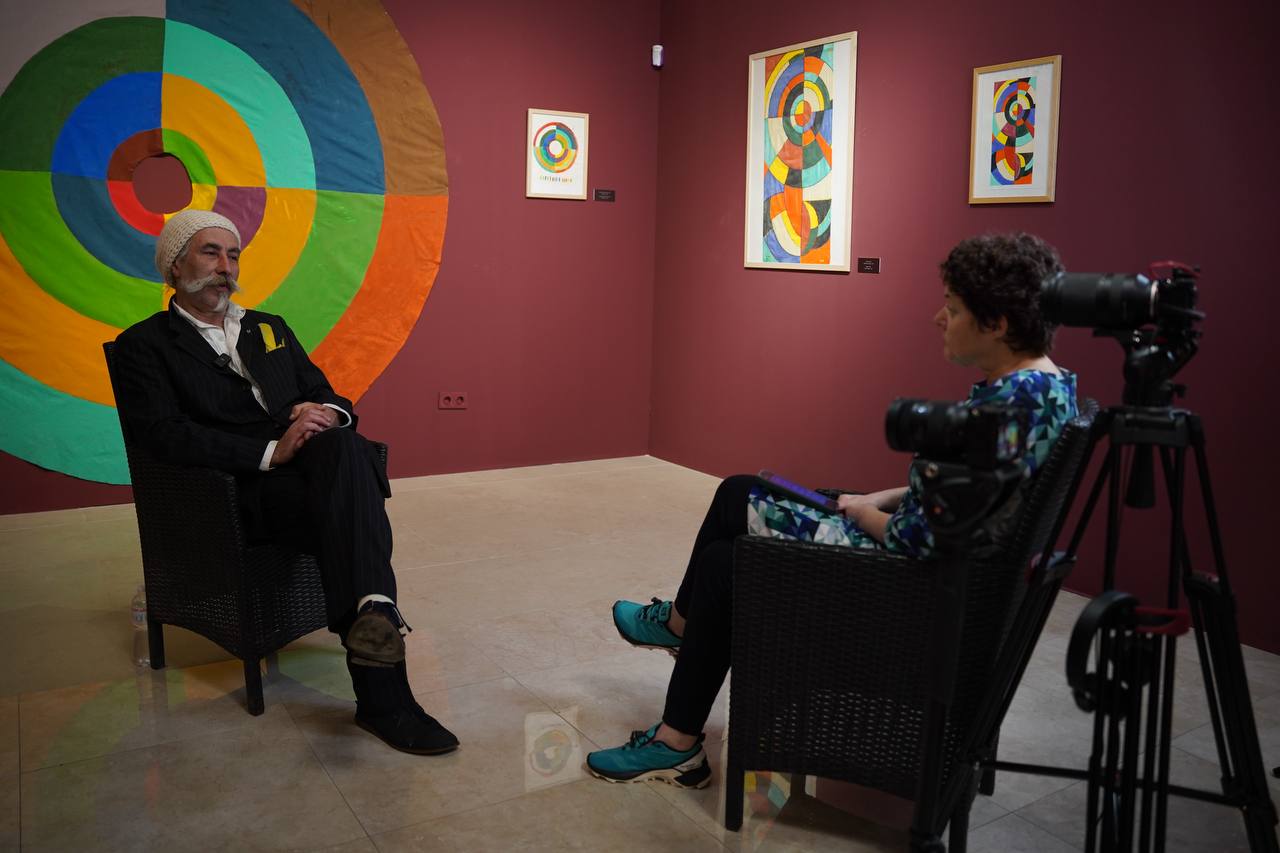
PHOTO: Natalia Dovbysh, Intent
Trukhanov's suspension, Liptuga's dismissal, and Lysak's arrival - what did it bring to the city? What do you think has changed?
In my opinion, Trukhanov shouldn't have been elected at all, and then wait so many years to remove him. And I wonder why Gennadiy Trukhanov hasn't been held accountable as an administrator and, perhaps, as a person.
Liptuga, in my opinion, was also not a strong head of the Department of Culture. His appointment was a mistake.
As for Lysak, I honestly don't know who he is. I don't see him in the museum or at exhibitions, we don't know each other. And this, in my opinion, is the wrong position for a person in such a position. If you come to a city as a new manager, you have to get to know it: walk around, get to know people, the environment. This is a basic thing. I would have done exactly that in his place - just walked around the city and got to know it.
Not just to criticize, I'll give you an example. May the memory of Oleksandr Roitburd be blessed, he was a different model. A person who grew up in this city knew all of Odesa, knew half of Kyiv. And if he had stayed in New York, for example, he would have known everything there as well. This, in my opinion, is the ideal situation when an artist comes to a managerial position.
But in Liptuga's case, it was somehow out of place. It ended in the same way. And the fact that he is now creating some foundations... I can't say that I see any real results in this.
I often hear that during the war, culture in Odesa declined: patrons, collectors, artists, writers either left or joined the Armed Forces. Do you feel this emptiness?
Yes, I do. In general, there are fewer people, fewer artists.
I write to Igor Gusev in a messenger: how are you? And he replies: here, I'm polishing cartoons. The man is 55 years old.
Although many other people have moved to the city. But really, it's like the raisins have been washed out of the bun. I hope that this will pass.