23 April 2026, 18:45
"Ukrainians have a 'genetic code of survival' - writer Victoria Belim
Ця стаття також доступна українською

Victoria Belim. PHOTO provided by the interviewee
Writer, journalist and translator from Persia Victoria Belim has returned to Ukraine. She is working on a new book about the preservation of cultural heritage in a full-scale war. Victoria gathers material for her work personally in the frontline regions, talking to people who, despite the danger, preserve culture, communities, and even a sense of humor. One of these places was Kherson. Read more about the experience of living in the city, the strength of its residents and the purpose of the upcoming edition in the interview with Intent.
Victoria, you speak Ukrainian and have Ukrainian roots. How do you have such a special connection with Ukraine?
I was born in Kyiv but moved to the United States when I was 15. However, my connection to my homeland remained extremely strong despite the fact that for a long time I was not able to return to Ukraine. The first opportunity to do so came only in 2014. But all this time, my memories of Ukraine, Kyiv, and especially my great-grandparents' estate near Poltava, have been very influential and have left a lasting impact on me. So much so that my professional life as a writer actually began with sketches based on this memory.
You visited Kherson for the first time in 2016 and again in 2026. How has the city changed in your perception?
At first, I came to Kherson for just two days. Then I planned to stay longer, but only for a short time: to do an interview and move on. However, I quickly realized that it was impossible to feel the real life of the city that way.
Today, it is very difficult to "discover" Kherson even through such mundane things as walking or driving a car. Because a large part of the city is dangerous and difficult to access. That's why I decided to stay here for more than ten days - just to understand how the city lives now. I did the best I could under the circumstances. And with some help, I visited the so-called "red" zone, saw the historic center, and talked to local residents. And through conversations with people who continue to live here, I was able to understand Kherson the most.
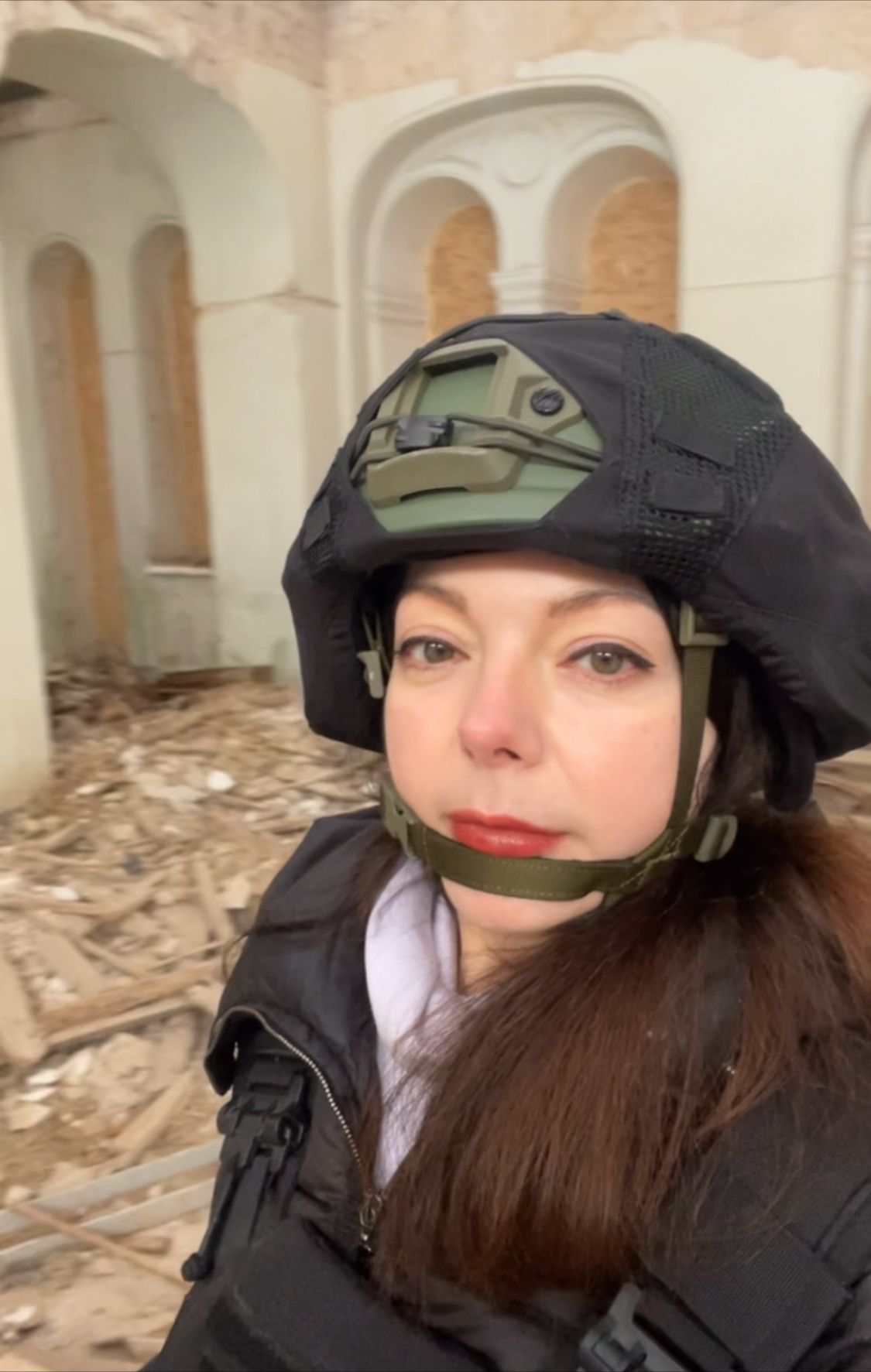
Victoria Belim at work in Kherson in the "red" zone. Photo courtesy of the interviewee
So it was the people of Kherson who encouraged you to stay in the city longer than planned? What was it about them that fascinated you so much?
Yes, it was the people who inspired me to stay in Kherson for more than ten days. They were artists, actors, journalists, photographers, theater people, radio operators, volunteers - those who support their community. It was incredibly exciting. Every meeting and every conversation left vivid memories and touched me in a special way.
I was impressed by the love of Kherson residents for their city. And Kherson itself also impressed me with its... I don't even know what to say. I don't want to use the word "indomitable" because it is repeated so often that it has lost its meaning. But still, Kherson is a truly unique city.
Is it difficult to collect stories in the frontline areas? How willing are people here to share their lives?
People were very sincere and open. They shared their stories and memories with me in a surprisingly frank way. And what particularly impressed me was their sense of humor. Honestly, I don't even remember the last time I had such an enthusiastic and deep conversation with people. I repeat it over and over again: it was the people of Kherson who made me stay here longer. Many people asked me if it was scary to be in the city. But in fact, all these meetings, conversations, and emotions were so vivid that they overwhelmed everything else.
What touched you the most in Kherson?
I was in one of the centers where I talked to an artist. She teaches drawing lessons there. At some point, her phone rang, and she apologized and answered it. Then she explained that it was her mom from the city that is currently under temporary occupation. It is very difficult for her to get in touch. The only place where it appears is extremely dangerous. Despite this, she tries to go there every day to call her daughter. It is the only way they can talk.
When you hear a story like this, you begin to realize how deep the impact of this war is and how traumatic it is. All these stories make abstract things real. You start to feel this trauma of war much deeper. I often think about this incident. It is very painful for me, but at the same time it is extremely important for understanding what is happening.
Kherson was not the only frontline city you visited during this trip to Ukraine?
Yes, it was. I was in Sumy and Donetsk regions. I also lived in Kharkiv for quite a while, and I was there for a residency at the Literary Museum in December 2025. So I can compare my experience in Sumy, Kramatorsk, Sloviansk, Kharkiv, and Kherson. Each city is very different. Each has its own problems, its own atmosphere, and even its own mentality. And you can feel it very much.
I would also like to add that during my stay in Kherson, I held a perfume master class at the Resilience Center. After all, I have another profession - a perfumer. I have experience with fragrances and olfactory practices as a kind of therapy. That's why I suggested holding such an event. It was a very warm and interesting practice for both me and the participants.
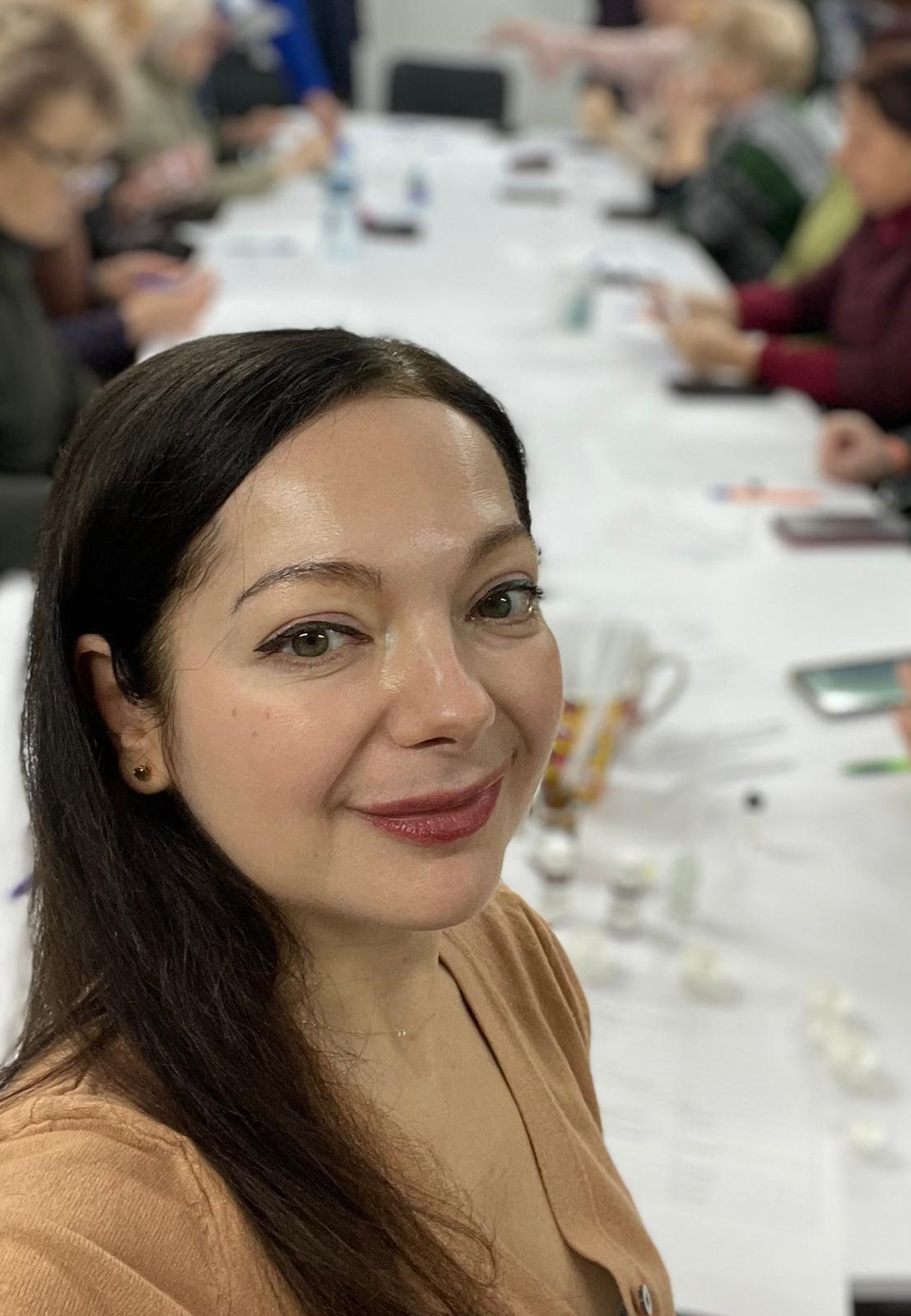
A perfume master class by Victoria Belim in Kherson. PHOTO courtesy of the interviewee
And everywhere you went you talked to people. How do you plan to use the material you collected?
I will use it in my upcoming book Rose and Flame. The idea for this book came about a long time ago. Back when I was working in northern India, where I observed how people in Kashmir were trying to preserve their culture despite very difficult circumstances. When I was there, I realized how important it is. Because preserving culture and cultural heritage actually helps to preserve us. If people have such a mission, it gives them strength, inspires them, and helps them to live even in the most difficult conditions.
Where did the title of the book come from and what does it mean?
The title is still a working title. But it reflects a contrast that I know well from Persian poetry. The rose is a symbol of beauty, inspiration, something high and great. The flame is danger, courage, and sometimes a form of self-sacrifice. And it is in the interaction of these two forces, beauty and danger, that life often happens.
I would also add that for me, working on this book is, first of all, an opportunity to be here in Ukraine. It is extremely difficult for me to experience this war from a distance. That is why I try to come here as often as possible.
This is not your first book about Ukraine, is it?
"House with Roosters. What My Family Hid is my first book, which I have been working on for several years. I started it in 2014 and finished it in 2021. This year, in February, it was published in Ukrainian.
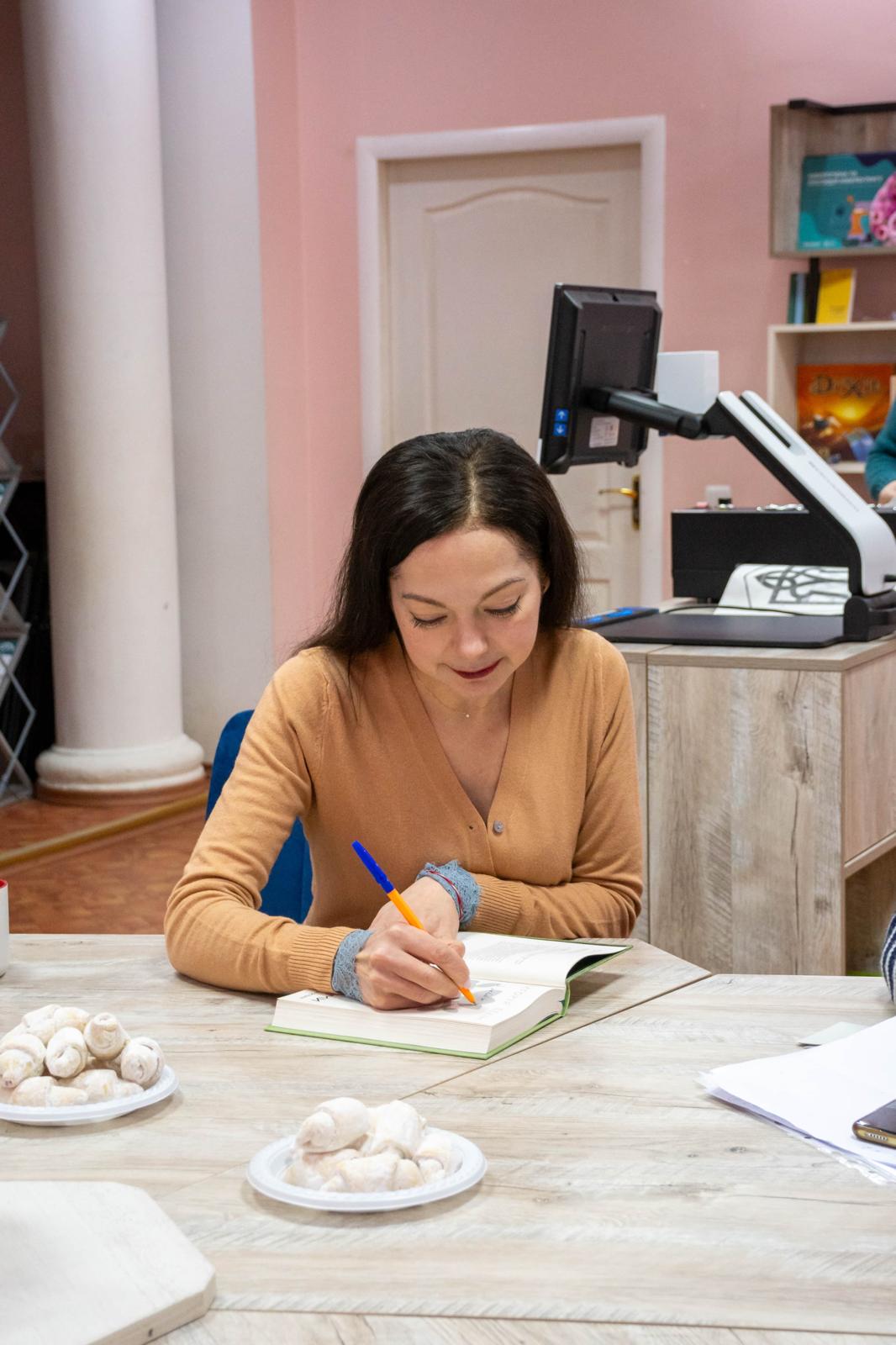
In Kherson, Victoria Belim presented the Ukrainian-language version of the book "House with Roosters. What My Family Was Silenced About". PHOTO provided by the interviewee
The book is about my family and family stories that were kept silent for a long time, but which were very important to know in order to better understand our history, culture, consciousness, and identity. Therefore, this publication is a kind of microcosm of Ukrainian history seen through the prism of my family's fate. At the same time, it is also my personal story of returning to Ukraine - of searching for this country, as well as searching for Ukraine in itself.
"Does The Rose and the Flame have a different emphasis? Will it tell the stories of people from the frontline territories?
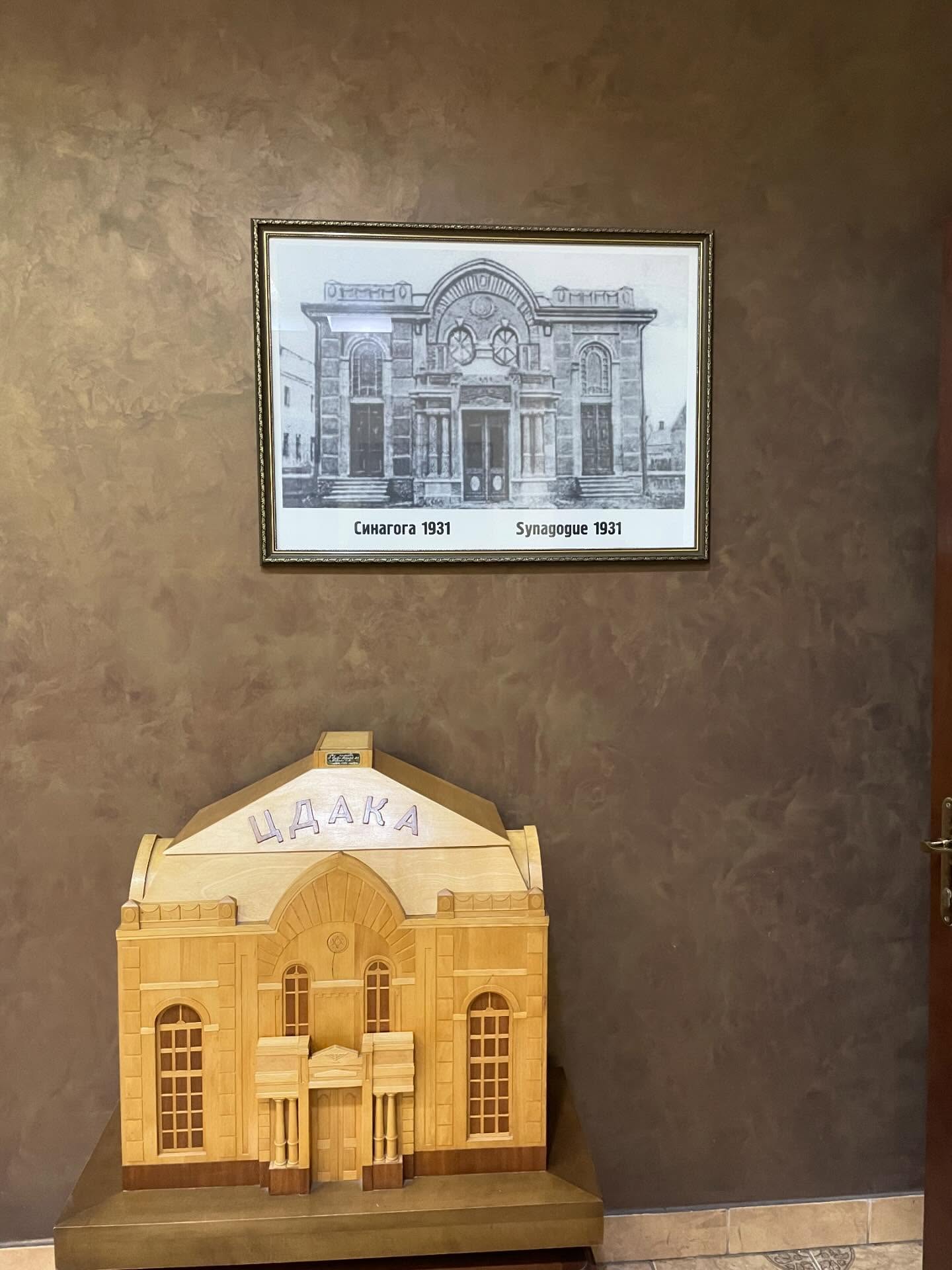
Yes, it will. This is also the story of Kherson. More precisely, of all the people I met. And this is an attempt to bring their voices, their stories to my readers. There are a few moments that are particularly stuck in my memory. Perhaps one of them is my visit to the art museum and to the synagogue. Both buildings are now located in the so-called "red" zone. I am very grateful to Artem Rudakov, a press officer of the 30th Marine Corps of the Ukrainian Navy, who helped organize this visit and provided escort.
I constantly think about the city center, which was once thriving and now destroyed. It made a strong impression and was dangerous at the same time. But it was extremely important for me to be there, to communicate with the people who work in the museum and with those who come to the synagogue and support their communities.
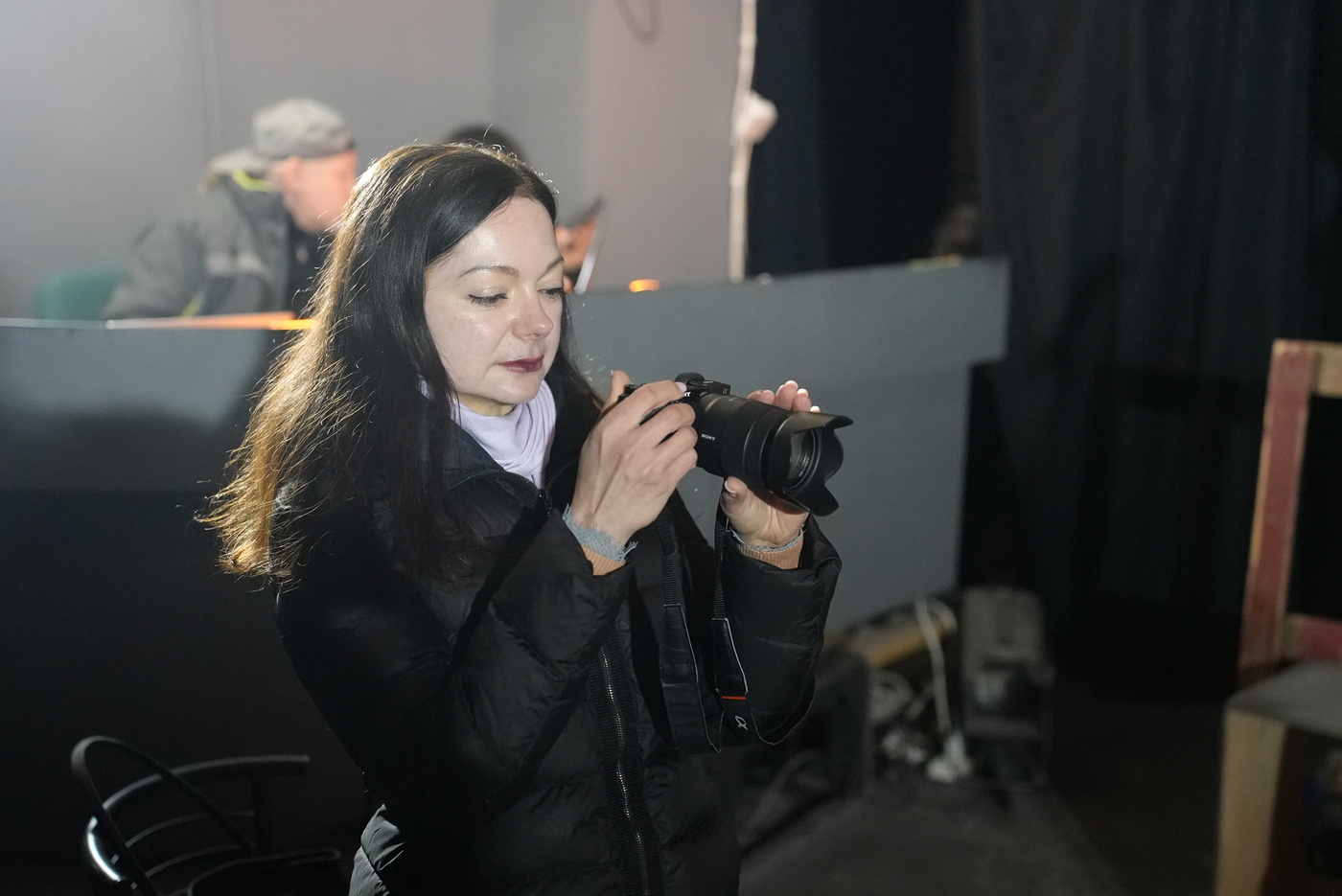
Victoria Belim at work in a Kherson theater. PHOTO: Suspilne Kherson
Why is it especially important to talk about culture and its role in the lives of people and communities during the war?
For me, culture in times of war is first and foremost about preserving ourselves and our communities. Very often, culture in times of war becomes a tool of propaganda. But I see its main purpose in a different way - in the ability of people to preserve their identity, their memory, their memories of the city.
War, of course, causes a lot of destruction and losses. But history proves that culture can survive even the most difficult times. Ukraine has gone through this many times, but its national identity has remained - diverse, vibrant, with many roots. And these stories are also important to tell. That is why during my stay in Kherson I tried to communicate with different communities. For example, with the German community that still lives in the region. And also with the Jewish and Greek communities-the history of the Kherson region is impossible without these people and without the cultural layers they create and maintain.
Viktoriia Belim collects stories from different cultural communities. PHOTO courtesy of the interviewee
In your opinion, how do Ukrainians manage to preserve their culture and identity in such difficult conditions?
I am convinced that we have a certain "genetic code of survival". Because the history of Ukraine, especially the twentieth century, is a constant struggle and constant survival. I can speak about myself. I grew up on my great-grandmother's memories of my great-grandfather. They knew what war was, what hunger was, what it meant to survive. But they also knew how to enjoy life and find beauty in its various manifestations. It seems to me that this ability is very much alive in Ukraine. We can search for ourselves, discover something light and warm, and ultimately enjoy ourselves even in the most difficult circumstances. And at the same time, we can survive.
And our sense of humor is a separate kind of cultural heritage. Sometimes I think it could even be registered with UNESCO as an intangible cultural heritage.
What truth about Ukraine would you like European readers to feel and understand through your work?
I really want Europeans to realize: Ukraine is a part of Europe. Our history is a part of European history. And what we are experiencing now is not something remote or isolated. In a sense, it is also a mirror for the whole of Europe.
I don't want to sound like Cassandra and predict any gloomy scenarios. But it seems to me that the events in Ukraine are forcing us all to think about what the future of Europe might look like and how fragile the peace that many have become accustomed to is.
Яніна Надточа