29 November 2026, 06:05
Petro Stoliarsky: From a Three-Year-Old Violinist to David Oistrakh's Teacher
Ця стаття також доступна українською

Petro Stoliarsky. PHOTO: wikimedia.org
There used to be a joke in Odessa: “What does it mean when a child from Odessa walks down the street without a violin in hand? It means that this child plays the piano.”
Time doesn’t stand still, but even today in Odessa you can see children and teenagers—with and without violins—hurrying to the school gates. The Stolyarsky School. Petro (Pinchas) Solomonovich Stolyarsky—a violinist and educator whose name in Odesa remains a symbol of quality and the highest level of professionalism.
Intent continuesits series of articles about people whose lives are connected to Odessa. With this publication, we mark the 155th anniversary of the birth of Petro Stolyarsky—a teacher who nurtured an entire generation of outstanding violinists.
With a violin in his hands from birth
The future genius of pedagogy was born in the town of Lipovets in the Kyiv Governorate (now part of Vinnytsia Oblast) on November 30, 1871. Music was a part of his life from the moment he was born. His father was a traditional klezmer musician. Klezmer ensembles consisted of 3–5 performers who played instruments such as the violin, clarinet, flute, cimbalom, accordion, and trumpet.
The violin was the leading instrument: klezmer musicians often traveled from town to town, and the size and weight of the instrument were of considerable importance. As a rule, these musicians had no formal training and performed at weddings and other ceremonial events of the Jewish communities in Eastern Europe. The art was passed down from older relatives to younger ones.
This is exactly how little Pinchas Stolyarksy began his career as a klezmer violinist at the age of three. His father formed a family klezmer ensemble, and there was a place there for the youngest of Solomon Stolyarksy’s twelve children as well.
From Klezmer to Classical Music
At the age of fourteen, Pinchas Stolyarksy began studying with professional musicians—Otakar Shevchik and Stanislav Borcevich. In essence, he had to learn everything from scratch, since the klezmer style of playing differs significantly from the classical style.
While studying, he also played in a theater orchestra. That’s how Odessa entered his life—the theater troupe came here on tour. In Odessa, the young man continued his violin studies under the Czech violinist and teacher Josef Karabulka. After graduating from the Odessa Music College, Stolyarsky began working in the orchestra of the famous Odessa Opera, where he would remain for twenty-one years—until 1919.
From Performer to Teacher
Of course, Stolyarsky did not limit himself to a career as a performer. In 1911, the musician opened his own “P. S. Stolyarsky Private Violin Courses,” located at 15 Peter the Great Street (now Vsevolod Zmiyenko Street). Even back then, Odessa families considered it an honor to have their children study music with Stolyarsky himself.
After the 1917 revolution, Stolyarsky became a professor at the Odessa Conservatory and continued to nurture musical geniuses. And in 1933, a specialized ten-year music school for gifted children was established. That very same legendary “school named after me,” as the teacher himself called it.
In 1938–1939, the school moved into its own building, designed by architect F. A. Troopiansky and located near the Sabanayev Bridge. Previously, this site had been a park, laid out after a fire that destroyed the “Krymsky” Hotel.
Over the course of his teaching career, Petro Solomonovich Stolyarsky trained a whole constellation of outstanding violinists: Nathan Milstein, Samuel Furer, Boris Goldstein, Elizabeth Gilels, and David Oistrakh. Their students and subsequent generations of musicians continue the traditions of Stolyarsky’s pedagogical school throughout the world.
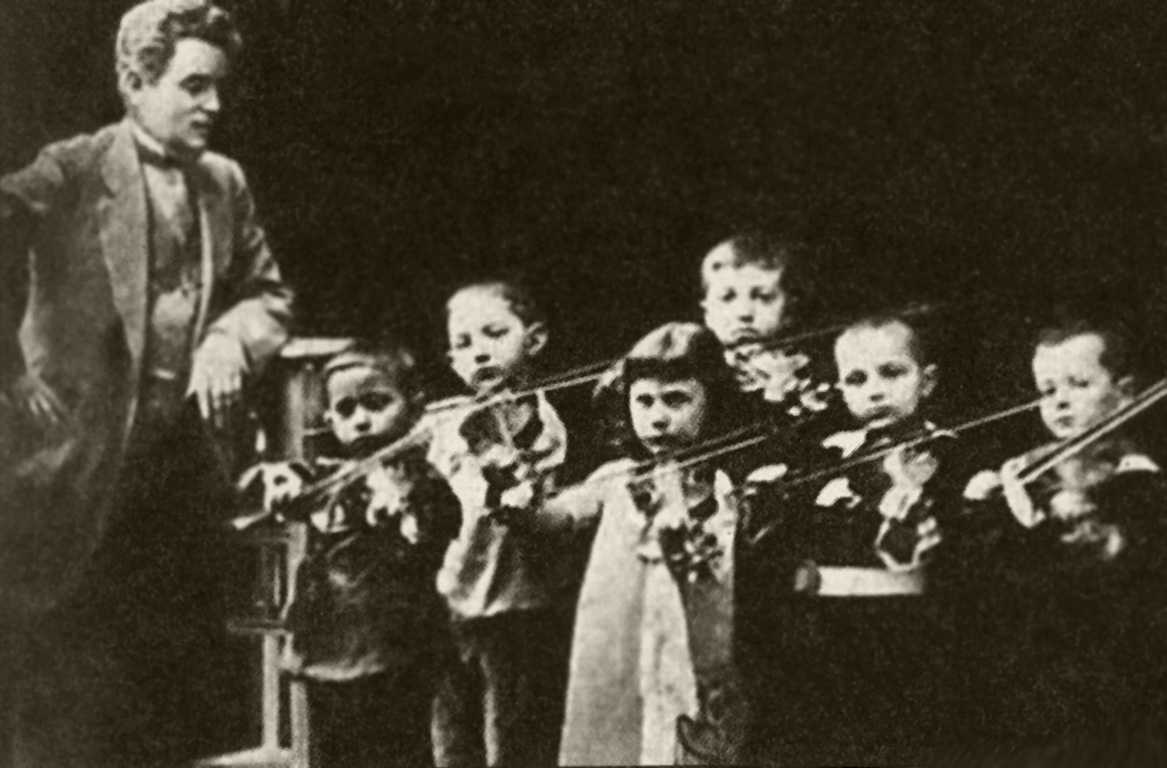
Stolyarsky with his students. First to the right of Stolyarsky is David Oistrakh. PHOTO: odesa-memory.info
Evacuation and Death in a Foreign Land
Petro Solomonovich Stolyarsky lived in Odessa until 1941. Together with his family, he was evacuated to the city of Sverdlovsk (modern-day Yekaterinburg). There, he tried to continue his teaching work despite extremely difficult conditions.
The death of his wife, Frida Markivna, and the news of his son-in-law’s death at the front took a heavy toll on the 73-year-old educator’s health. Also, in April 1944, news reached Sverdlovsk that Odessa had been liberated and that the school building had been destroyed. Petr Solomonovich Stolyarksy’s heart could not withstand such upheavals—he passed away on April 29, 1944.
During Nikita Khrushchev’s rule, Petr Solomonovich’s students sent a letter to the General Secretary requesting that Stolyarksy be reburied in Odessa. This request was denied.
The Legacy of a Great Educator
The people of Odesa still remember Petro Solomonovich Stolyarsky with warmth. Numerous anecdotes related to the peculiarities of his speech have been passed down from generation to generation. His native language was Yiddish. Later, he learned Polish and Russian. When speaking Russian, Petro Solomonovich would often unintentionally create puns that brought smiles to those around him.
His sense of humor and vivid way of speaking were an integral part of his teaching skills. Demanding of his students, Stolyarsky knew how to give advice that would be remembered for a lifetime.
“Don’t rush; don’t move the bow so quickly. Imagine that this is your salary. You shouldn’t spend it all at once, but spread it out over a long period of time.”
“Who are you trying to outrun? Playing the violin isn’t like riding a horse. Show me some beautiful music.”
“What is a sparrow? It’s a nightingale that hasn’t mastered its trills.”
In his quest to achieve a noble sound from the instrument, he would say: “Don’t think that the word ‘violin’ comes from the word ‘squeak.’”
After the war, Petr Solomonovich’s daughter, Nelly, returned to Odesa. She brought with her the preserved family archive, which was later donated to the Odesa Museum of History and Local Lore.
A memorial plaque has been installed on the facade of building No. 8 on Italiiska Street in honor of Stoliarsky, who lived there until 1941. And in 2016, his name was immortalized on Odessa’s Walk of Fame.
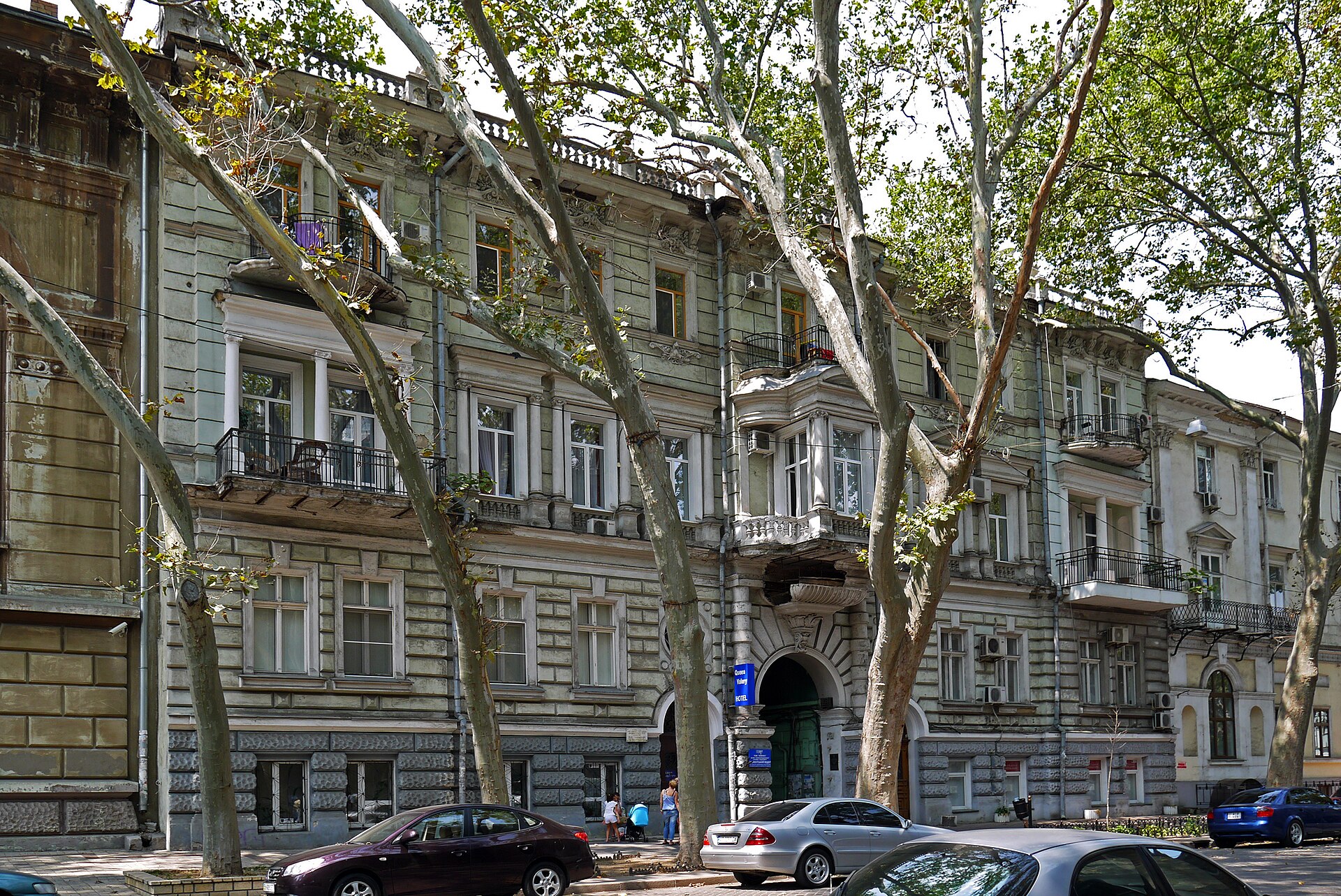
The house at 8 Italiiska Street, where Petro Stoliarsky lived. PHOTO: Posterrr
But the outstanding educator’s greatest legacy remains his school. Restored in the postwar years, it has carried on the traditions of its founder.
On July 23, 2023, the building of the legendary school was damaged as a result of a rocket attack on Odesa. Despite this, the school continues to operate and educate new generations of “ordinary genius children”—as Stolyarsky himself called his students.
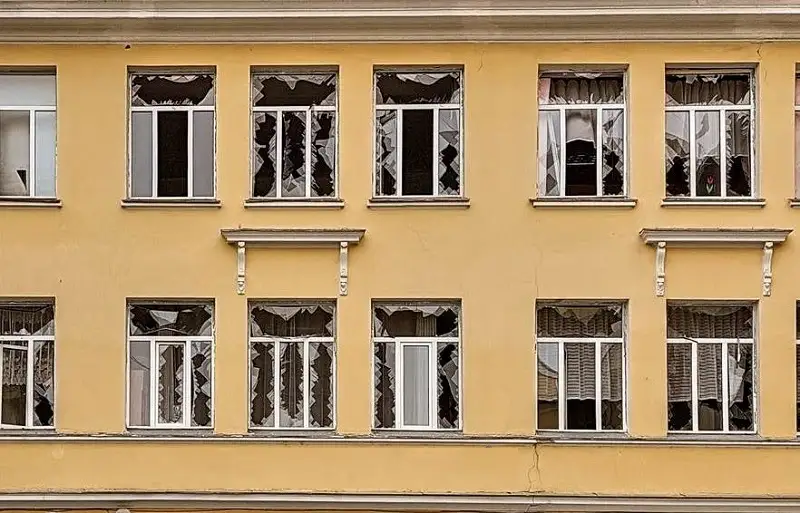
The damaged building of Stolyarsky’s school. PHOTO: Kulturometer