17 April 2026, 18:42
"If you are truly obsessed with an idea, it becomes a reality," says Bleshchunova, acting director of the museum
Ця стаття також доступна українською

Olena Ilyasova. PHOTO: Odesa Municipal Museum of Personal Collections named after O. Bleshchunov
A space for conversation, restoration, and rethinking - this is the role the team of the Odesa Municipal Museum of Personal Collections named after O. Bleshchunov sees for itself today. In the interview, the acting director and chief curator Olena Ilyasova talks about the transformation of the institution, international projects, digitization of the collection, and why it is important for a modern visitor not only to look but also to talk. What does this have to do with cats?
What is unique about the Bleshchunov Museum compared to other museums in Odesa and Ukraine?
The uniqueness lies in the very idea of preserving and presenting various personal collections in a holistic manner and according to the collectors' intentions. In the world's museum practice, personal collections are usually divided into different thematic expositions. And often only the museum staff knows that certain items belong to the same collection, unless it is specifically stated in the annotations. Most often, this remains internal, proprietary information. Only sometimes, when preparing exhibitions dedicated to collectors, such collections are combined, but these are usually one-time projects.
Oleksandr Bleshchunov, the founder of our museum, did not consider himself a classical collector. He collected what he was really interested in, and that is why his collection is so diverse. He was not characterized by the desire to own objects that is typical of collectors: things always existed in living contact with people.
Bleshchunov was also one of the founders of the modern mountaineering movement in Ukraine, and dozens, hundreds, and thousands of people have passed through his house over the years. Everyone had access to works of art-visual and sometimes tactile. This was especially true of children: they were taught to communicate with beauty.
Not every collector is ready to open his or her home and collection to people in order to interest them in history, art, and travel. This is the fundamental difference between Bleshchunov's idea: the focus is not on things, but on people.
Which museums are you currently working with?
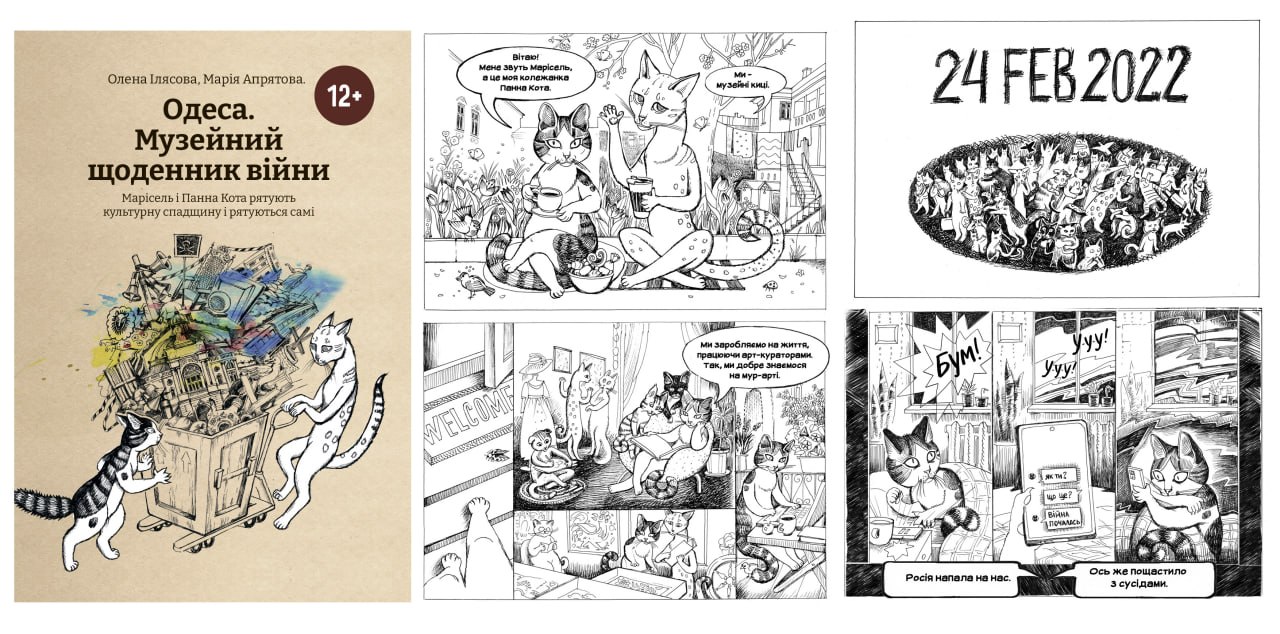
The painting "Odesa. Museum Diary of the War". PHOTO: Odesa Municipal Museum of Personal Collections named after O. Bleshchunov
If we talk about the usual joint exhibitions, then, unfortunately, it is almost impossible now. No state museum works fully with its collection, and neither do we. That's why we often talk about project activities involving artists. Contemporary authors are invited to work on a certain concept, an exhibition is created, and then it can travel around Ukraine.
One of the landmark projects of our museum is Odesa. Museum Diary of the War. Marisel and Panna Kota Save Cultural Heritage and Save Themselves." This is a graphic novel whose main characters are real museum cats. On the pages of the painting, they "live" all the difficulties of museum workers in wartime: they pack exhibits for evacuation, create exhibitions, go to an art residence, overcome everyday difficulties - everything like people.
The movie was created by two museum workers. The idea of the concept and the script belong to me, and the illustrations were made by Maria Apryatova, the head of the exhibition department of the Bleshchunov House. "Some people consider us to be the prototypes of the cats Maricelia and Panna Kota, but this is not entirely true. We can say that they represent all museum workers in the country.
The project was supported by colleagues, and the first episode in the exhibition format has been traveling around Ukraine since 2023. It has visited Lviv, Kyiv, Kropyvnytskyi, Rivne, and other cities of the country. We dream of completing this route at the Kharkiv Literary Museum, which is our longtime partner.
The idea arose in the first days of the full-scale war. On February 25, 2022, the second day we were packing up the collection, I suggested to my colleagues that we make a painting in which our cats would tell our foreign colleagues about what was happening to us and the museum. The reaction was mixed. At that moment, all the museum workers were thinking about something else, but the project went ahead.
Sometimes, if you are truly obsessed with an idea, it becomes a reality. Eventually, both the exhibition and the book appeared. In June 2023, the cats "learned" Romanian and traveled abroad for the first time to Chisinau, where the project made a strong impression. Today, Marisel and Panna Kota already speak English, French, Czech, Dutch, and even West African languages, and have begun to learn Polish.
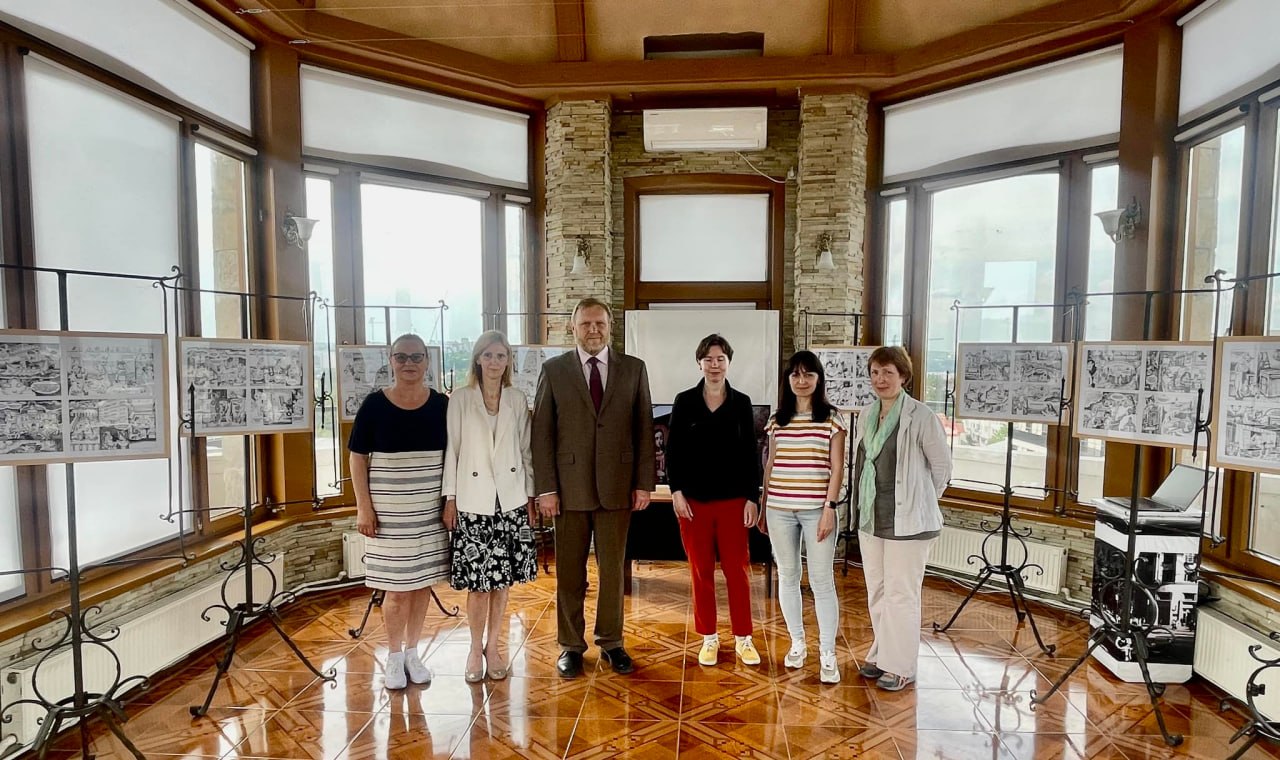
Opening of the exhibition "Odesa. Museum Diary of the War". Museum of History, Chisinau. June 2023. PHOTO: Odesa Municipal Museum of Personal Collections named after O. Bleshchunov
Later, in 2024, we received a scholarship from the Vienna Institute for the Humanities as part of the Documenting Ukraine program and created seven more episodes of the mural, covering the three years of the war in Odesa-from 2022 to the spring of 2025. We printed Ukrainian and English versions of the book, and there is also an online version. We are often asked about a sequel, but this is a chronology that cannot be written in advance. Unfortunately, it has an open ending. We tried several times to find a point - New Year's Eve 2025, then spring as a symbol of hope. But each time reality interfered: shelling, new tragic events. In the end, we left the ending open: we are still inside this story.
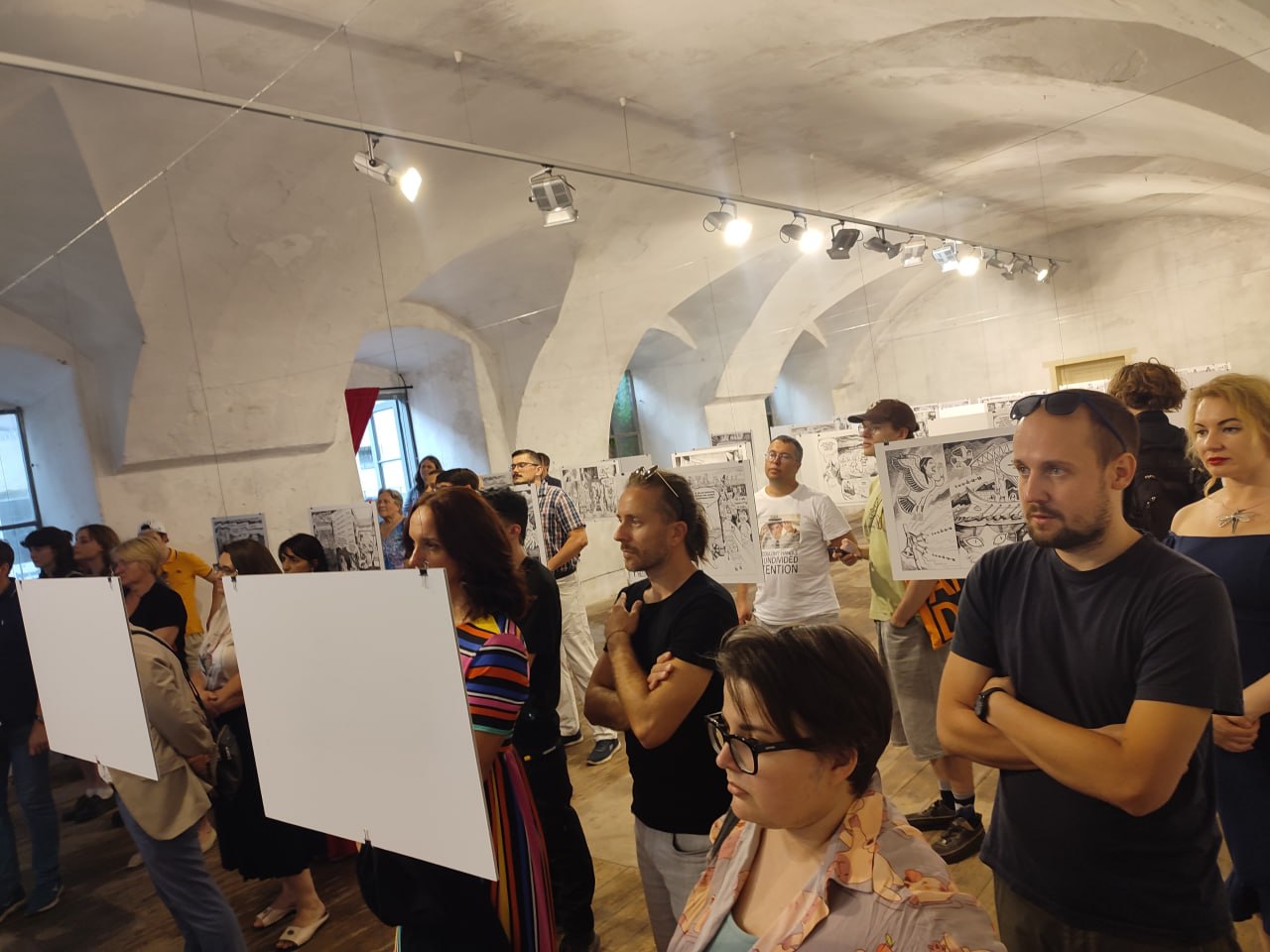
The opening of the exhibition "Odesa. Museum Diary of the War" in the Kaznice space, Brno. August 2025. PHOTO: Odesa Municipal Museum of Personal Collections named after O. Bleshchunov
The project was conceived as an appeal to a Western audience, but it turned out to be very necessary in Ukraine as well. It helps both children and adults to start a conversation about difficult topics: the war and personal experiences. We started working with regional libraries that share this approach. After all, a vicious circle often arises: the school believes that parents should talk about difficult things, and parents believe that the school should talk about difficult things. In the end, no one talks to children. But children live in this reality, they are not in a vacuum. That's how another format appeared - the workshop "Creating Your Own Hero," which we call "cat therapy." We see that this tool works, but it requires internal involvement of adults. This is one example of how we can work in a new way, leaving the Soviet models in the past.
As for international cooperation, we were pleasantly surprised by the response. Odesa is a UNESCO City of Literary Heritage. Thanks to the organization's Odesa office and its head, Maya Dimerli, our project was supported by this international network in February 2025. In Europe, we were actively supported by Sweden, the Netherlands, Italy, and Slovenia. We also received support from literary heritage cities in the United States. The most unexpected was the interest from Australia (Melbourne) and New Zealand (Dunedin), where an exhibition was held in the municipal library, and in Melbourne they even printed an edition of the painting for distribution.
The response from Japan was the most impressive. In one of the cities of literary heritage, Okayama City, the mural was added to the school curriculum on the topic of "War and Peace", which is related to local history. Through our mural, children were taught about the city's own experience, including the evacuation of museum objects during World War II. This is an example of how you can work with memory and the present with precision and care.
How has the museum changed after 2022 in terms of its mission and content?
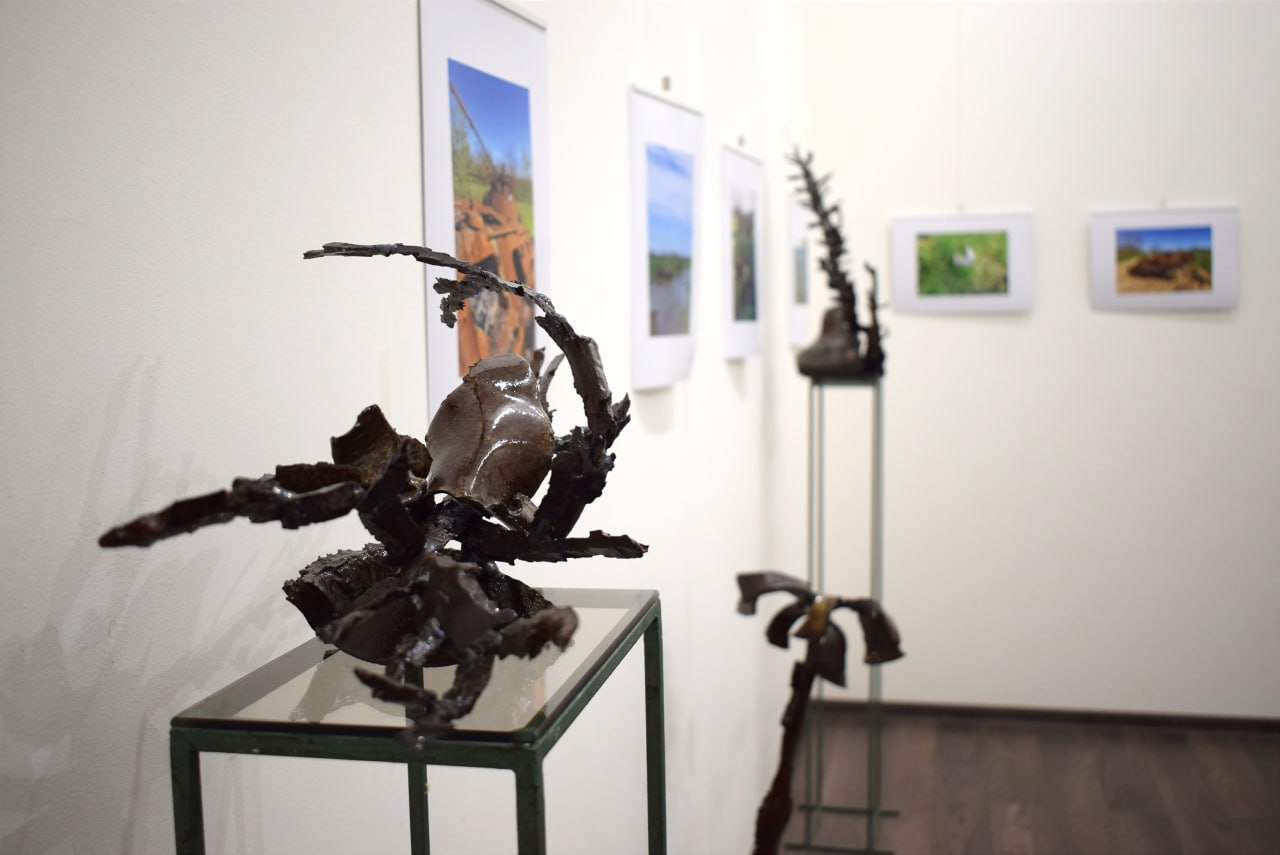
Kyrylo Maksymenko's exhibition Manifesto for Peace. PHOTO: Odesa Municipal Museum of Personal Collections named after O. Bleshchunov
"Our mission was formulated long before the war, in the early 2000s, and it remains quite complex and multilayered: "The museum is a space for living, learning, communication, creativity, play, and experimentation." Since then, all our projects have been based on these general principles, making the museum a kind of laboratory for testing creative ideas.
Even during the Covid, we felt that there were more meanings, but we could not accurately formulate an updated version of our mission. In 2022, it became clear that the museum is also a space for self-discovery and empathy. These dimensions were added and became fundamentally important. The work of our current team is based on the result - to do the best we can in the current conditions with the resources we have and move on. Today, it is important to constantly be aware of the context, rely on internal resources, and be guided by international cultural trends.
We have to admit that Ukraine has rarely become a museum trendsetter. More often we borrow ideas, adapt and develop them. That's why it's important to take risks sometimes and do even what seems impossible. For example, our project is not a story about cats. In the international context, the graphic novel is a recognized genre that is used to deal with the most complex topics today: The Holocaust, the Holodomor, the traumatic experience of wars and disasters. Perhaps this is why our project has received such strong support abroad.
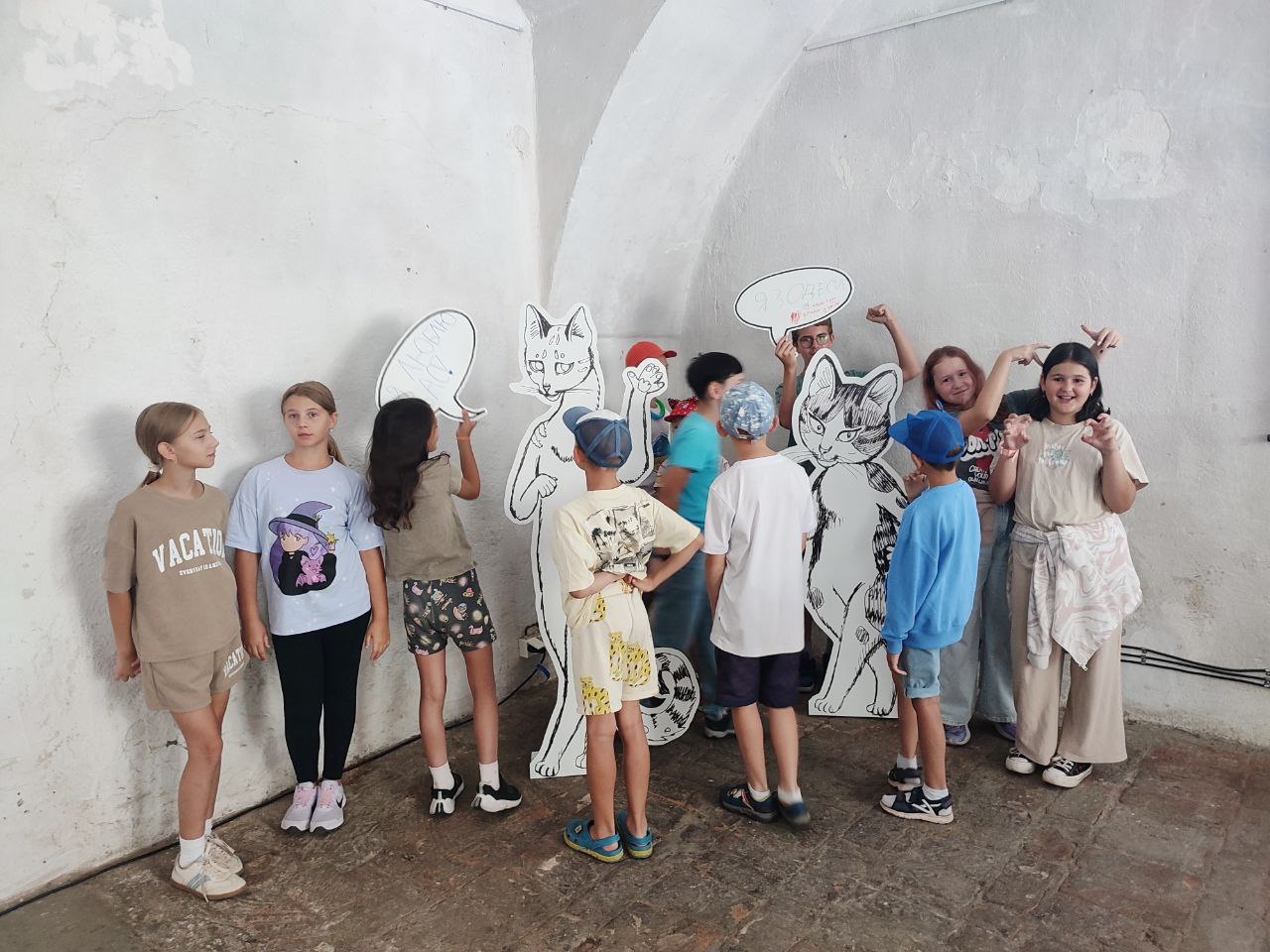
Curatorial tour of the exhibition "Odesa. Museum Diary of the War". Brno, 2025. PHOTO: Odesa Municipal Museum of Personal Collections named after O. Bleshchunov
Last year, Maria and I presented the book at the Bremer Zine Festival in Bremen, one of the UNESCO World Heritage Cities. And here we encountered an important thing: not everyone is ready to hear about the war in Ukraine right away. But the visual language of the painting, the images of the fluffy characters work in a different way. At first, they attract attention, evoke positive emotions, and then open the way to a conversation. People get involved, start to empathize, and only then are they ready to talk to us directly, realizing that this story is not really about cats.
I can't say that this is our main project in general, but it is the main one among the social ones. The museum has different areas of activity, and we are trying to develop them in parallel, despite our limited resources. And perhaps this is what our work is all about today: doing the best we can and a little more.
Who is your visitor today?
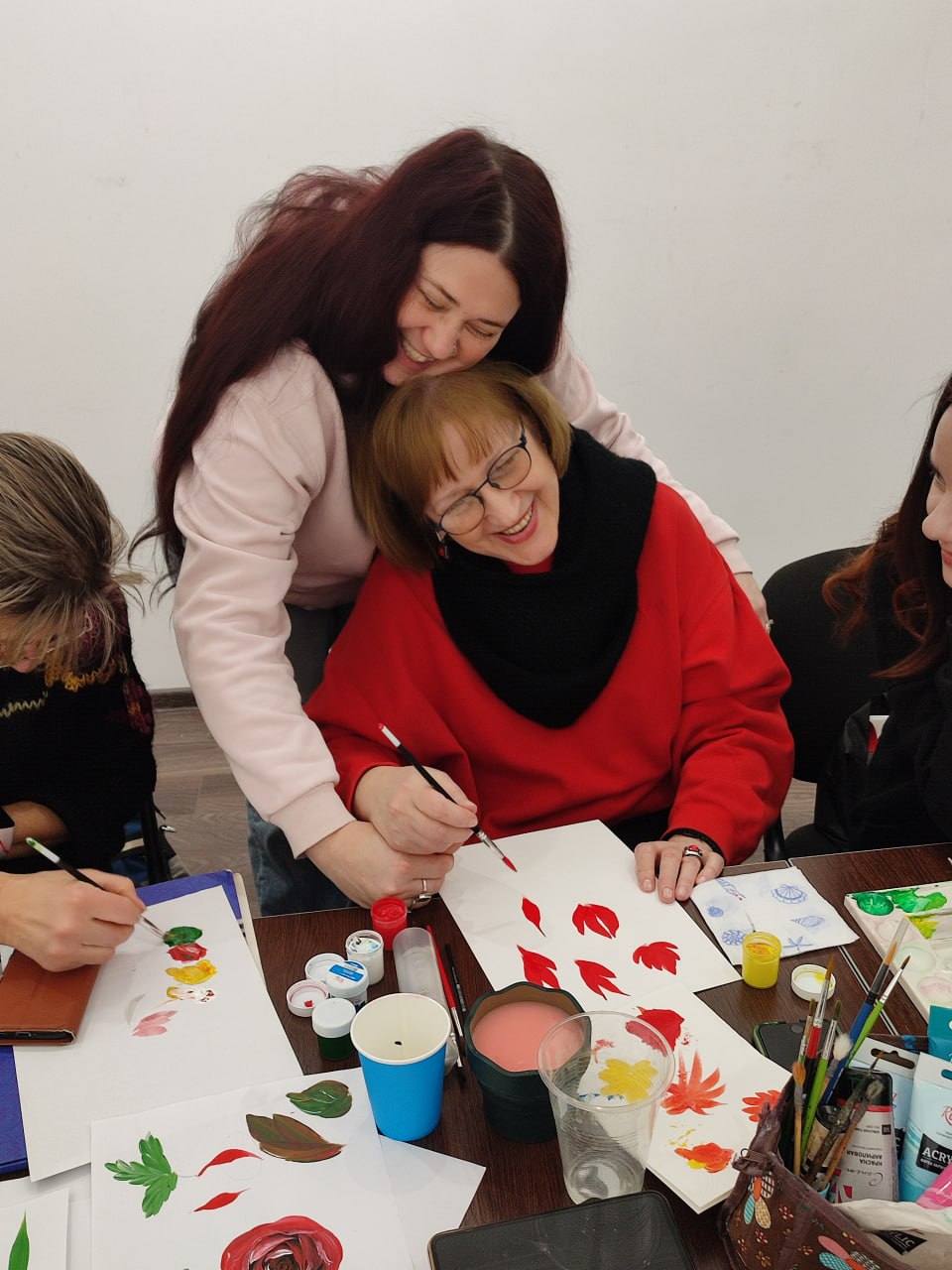
A creative meeting for adults. PHOTO: Odesa Municipal Museum of Personal Collections named after O. Bleshchunov
Today, our main visitor is an adult woman. Relatively speaking, the ratio is about eight to two: eight women to two men. To be honest, it's a bit upsetting.
At the same time, the age of the audience varies: both young people and very young people come, but in a smaller percentage. Before the war, our main visitors were families with children. Special programs were created for this format, but now the situation has changed significantly.
Odesa has always had a strong tradition of investing in children's development, but due to migration, the audience has changed. We felt it: people who came to the city due to life circumstances have less demand for such formats. We still have a special children's day on Saturdays. This is the time when children are engaged in creative activities: both Odesa residents and IDPs. We do not separate them. Sunday has become a day for adult programs.
These classes are now incredibly popular: the space is completely filled, and literally all surfaces are used for creativity. Many of these visitors are parents, but they are not always ready for family classes. Instead, they have a strong need for personal time - for the opportunity to exhale and recover. And we treat this with understanding. We try to create a friendly, cozy atmosphere.
As a result, we have undergone a certain reorientation. We, of course, continue to work with children on our own territory, but we are increasingly going to other spaces to visit them, and now we are cooperating with libraries. In 2022-2023, we were actively working in humanitarian centers, where there were many IDPs at that time.
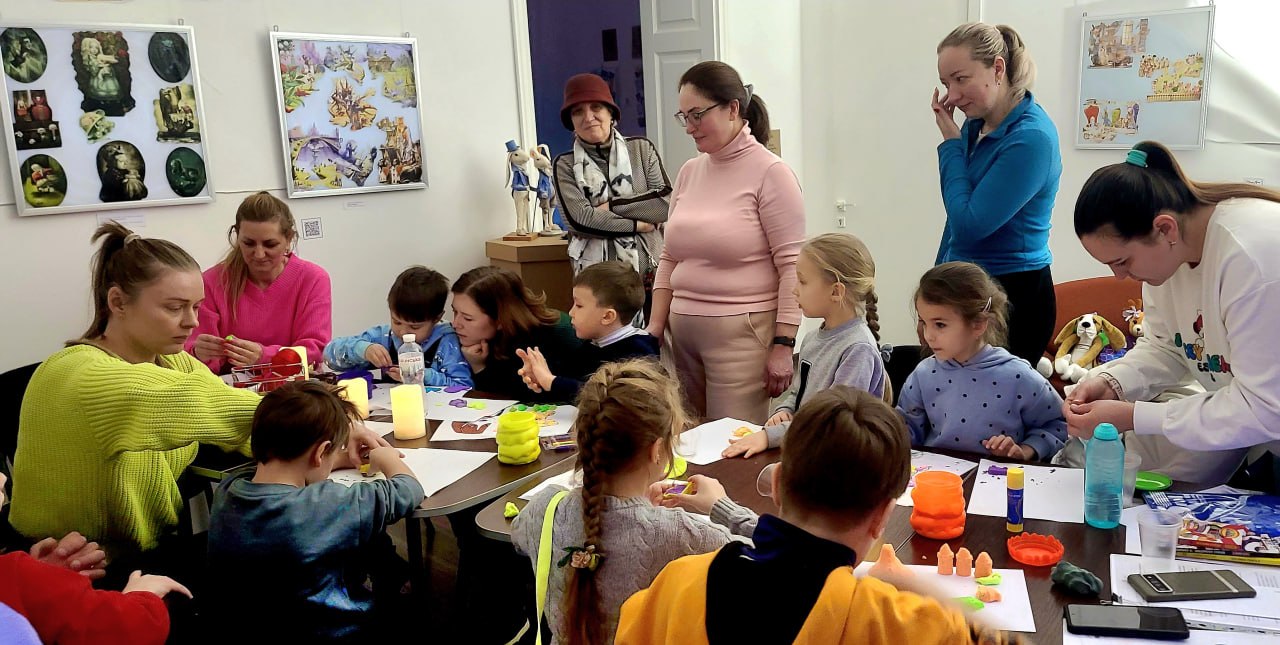
A workshop for children with their parents. PHOTO: Odesa Municipal Museum of Personal Collections named after O. Bleshchunov
Today, the museum is more focused on an adult audience, which I hope is temporary. Most projects are now created for them.
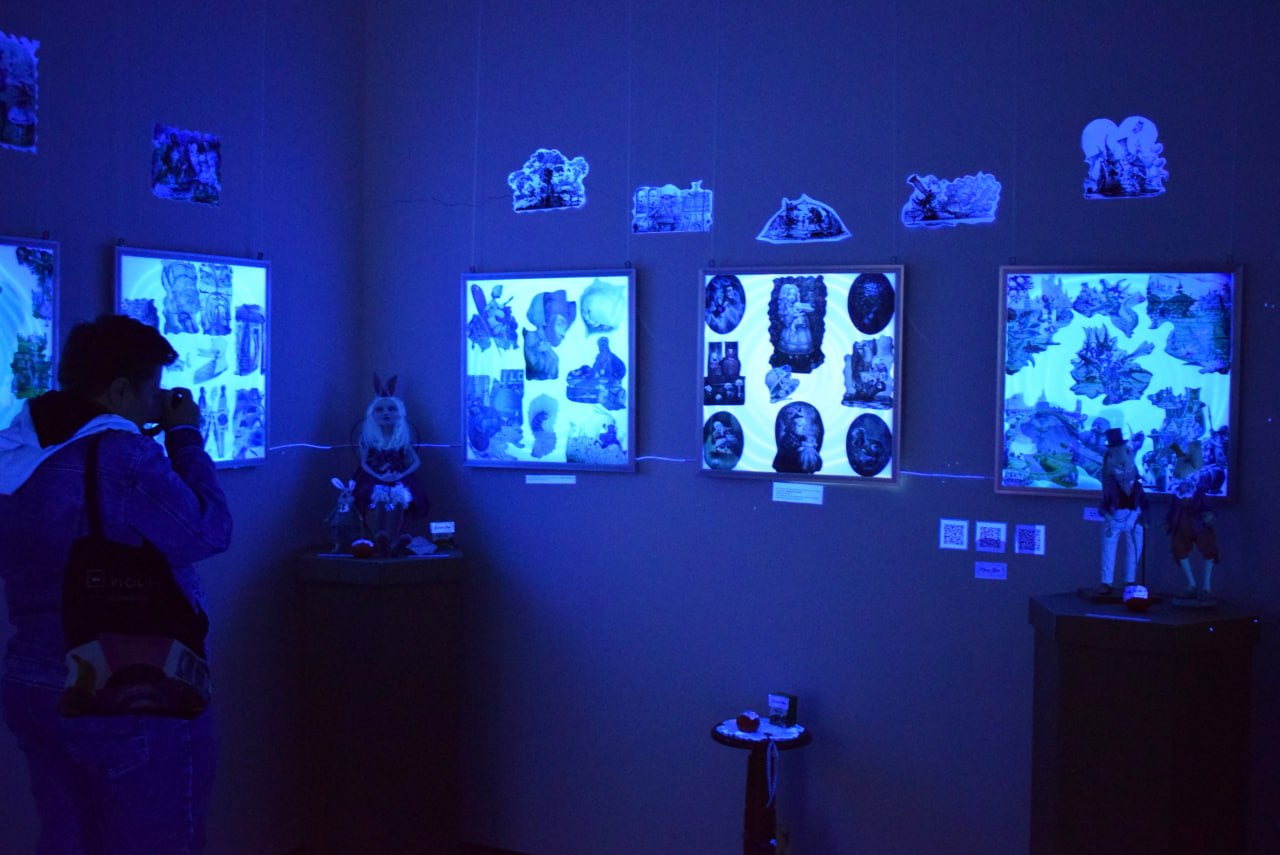
The exhibition "Through the Mirror to the Wonderland". PHOTO: Odesa Municipal Museum of Personal Collections named after O. Bleshchunov
The exhibition project "Through the Mirror to the Wonderland" is a good example. It would seem to be a very children's topic, but a significant part of the visitors were adults, often without children. Later they came back with their families, but at first they came alone.
This is an important signal: people need a space where they can recover a bit psychologically. As the saying goes, put an oxygen mask on yourself first, and then on your child. And the museum today is in many ways becoming just such a place of psychological safety and support.
How does the city help its museum?
The city covers the basic expenses: salaries of employees, utilities, security - the things without which the museum cannot exist. We currently employ 15 people. During the war, the staff was reduced, it used to be bigger. The annual salary is UAH 3 million for all employees. Whether this is a lot or a little, everyone estimates it in their own way. But it is important to understand that this amount includes taxes and a surcharge to the minimum wage.
At the same time, we understand that the country is at war and are grateful to the city for covering basic expenses. For all other needs of the museum, we try to attract extra-budgetary funding. For example, charging stations, office equipment, packaging materials, and protective equipment were purchased through grants and charitable assistance from international foundations. The organization that saved us in the spring of 2022, as well as all the museums in the region, is the Odesa-based NGO Museum for Change. By the way, they continue their mission today.
A separate and main area of the museum's work, the digitalization of the collection, is implemented through grants and partnership programs. Digitalization of museum objects is especially important now, in times of war. This is one of the museum's key tasks, but it is fully funded outside the budget.
One of the most recent projects is to digitize the collection of Turkmen jewelry and create an online catalog. The project is not yet formally closed, but it has already been implemented. And it was very difficult. The grant was received from the Goethe-Institut in a competitive competition among a large number of museum institutions. It amounted to about 20 thousand euros and included digitization equipment.
The work on the grant project revealed a serious problem: current legislation makes it impossible for budget organizations to cooperate with international donors. Money received from a foreign partner, once it gets to the account of a budget organization, automatically changes its status.
This means that they are subject to all the restrictions, rules, and regulations of budget financing. For example, there are restrictions on the cost of equipment, even though the donor allocates funds to buy the specific equipment needed. As a result, there is a paradox that significantly hinders the development of budgetary institutions. And this issue certainly needs to be addressed at the legislative level.
Let's talk about scientific work. Before the war, the museum published catalogs of individual collections: icons, fans. Do I understand correctly that the Odesa collection of fans is the largest in Ukraine?
One of the largest, if we are talking about state museum collections. There are also private collections of fans and accessories in general. Private collectors, of course, have more opportunities for replenishment and restoration.
Even during the war, an online catalog of Meissen porcelain was created. Now it is being prepared for uploading to the Europeana platform, which will provide access to it for the global community.
Over the past two years, work has been underway to enter information about the collection into the Register of the Museum Fund of Ukraine, created by the Ministry of Culture and Information Policy of Ukraine. All information about each of the thousands of museum objects is being transferred from paper to this resource.
Last year, we participated in a grant project that allowed us to strengthen the team with volunteers, because the amount of work, including the translation of old descriptions, is enormous. By the way, this is a common problem for many museums. As a result, we managed to add three thousand items to the register. We started, of course, with the most valuable part of the museum's collection. Now the next stage is to prepare and upload photos.
Let's get back to digitization. At what stage is this process now?
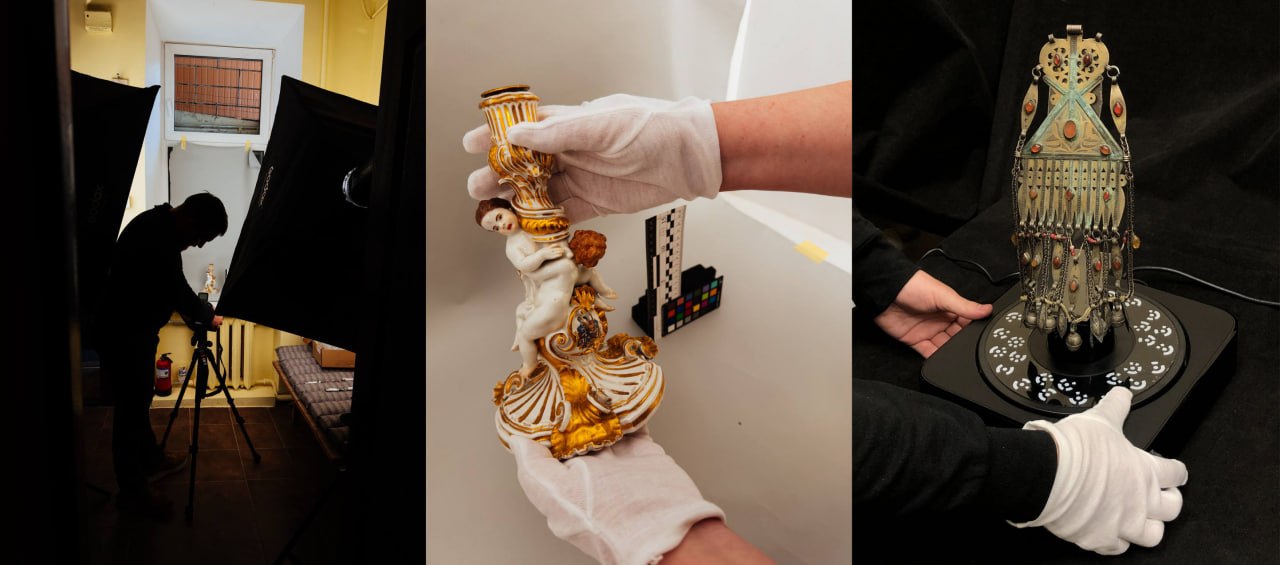
Digitization of the museum's collection. PHOTO: Odesa Municipal Museum of Personal Collections named after O. Bleshchunov
We started back in 2018. Back then, it was a project supported by the UCF. Within its framework, we made 3D models of iconic objects in the collection. Although any museum will say that its entire collection is unique, there are still things that can truly be classified as world heritage, and that's where we started.
The project continued in 2019. Then the work went less systematically, because the city does not have the resources for such expensive projects, and we have to constantly attract external funding. Nevertheless, in 2021, we continued some initiatives - for example, the most interesting items from the fan collection also received 3D models. Now, when you open the catalog, you can not only read the description but also carefully examine the object using a QR code.
We have been fully and systematically digitizing since 2023 - 2022, for obvious reasons, fell out. Now the process is structured as follows: we take a part of a certain collection, digitize it, and then move on to the next one. This is a continuous work. For example, we are currently digitizing a collection of glass. Before that, we worked with icons, and earlier with Central Asian jewelry. This is part of a large European project, a consortium involving six countries. Each team has its own direction, and we work on specific tasks.
It is important to understand that this is not work for the sake of work. It is about developing and testing digitization technologies, including new approaches. Our partners are an experienced team of specialists from the NGO Pixelated Realities.
There are two levels of digitization. The first is 3D, when three-dimensional models of the most valuable works of art are created. The second one is basic 2D digitization, i.e. high-quality photography of each object. This is what should ideally be done for the entire collection. In this area of work, our new partner is the powerful Lviv-based team HeMO. In general, digitization is no longer a separate project, but an ongoing process that does not stop.
Tell us about your workshops, a format where the artist works during the exhibition.
The pre-war format, when a visitor would just come, look at the exhibition and leave, doesn't work anymore. It is important for a person to live this experience: to talk, exchange opinions, reflect on what they have seen. This is the only way to start a real interaction with a work of art through a dialog.
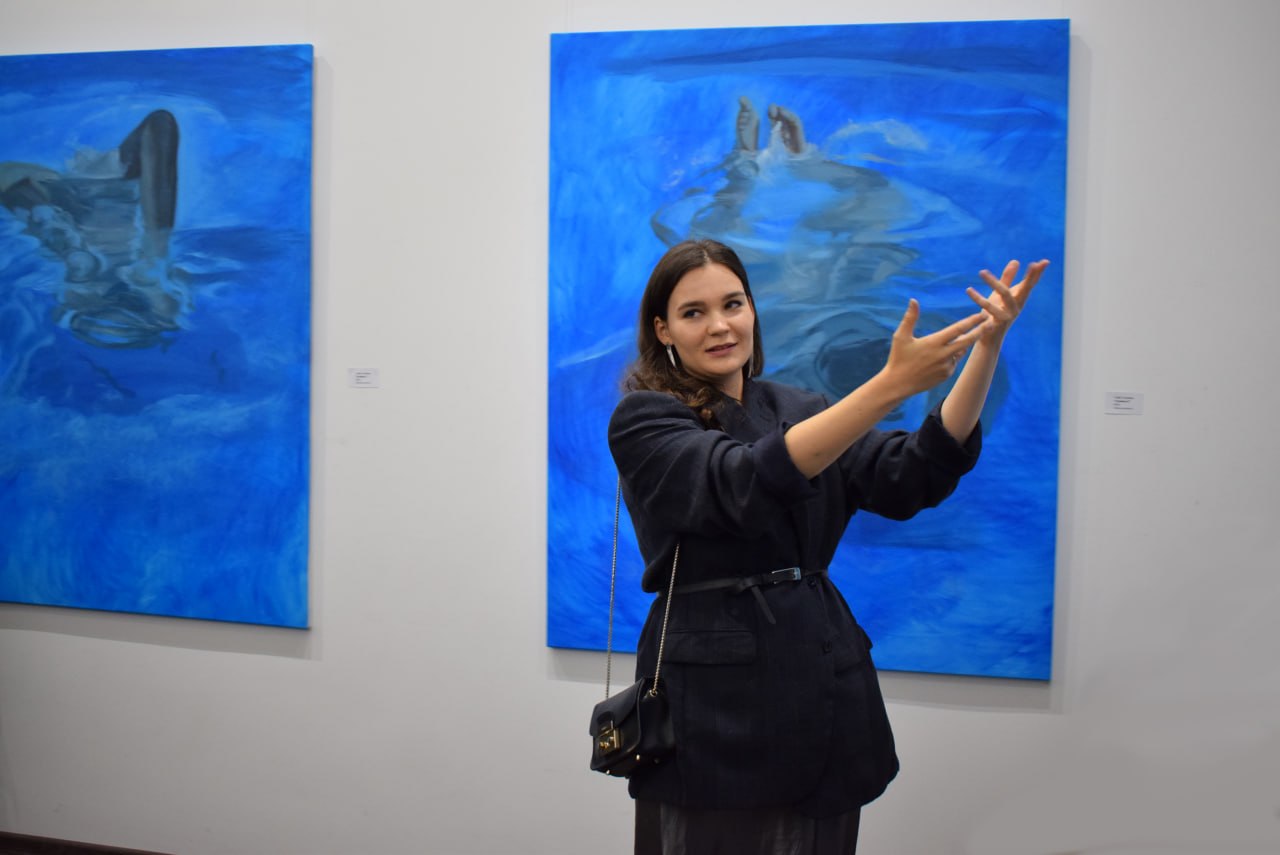
Exhibition "Connection" by Sofia Golubeva. May 2025. PHOTO: Odesa Municipal Museum of Personal Collections named after O. Bleshchunov
Our first exhibition after the outbreak of full-scale war opened in late June and early July 2022. The museum was closed for about three months, and then we reopened and gained a new experience of communicating with the public in new realities. This changed the concept of our exhibition work, and we continue to work in this way to this day. So, during an exhibition of an artist's work, his author's tours and master classes are already the norm. In addition, we have recently developed a tradition: every year, on the occasion of the museum's foundation, we present private collections. For example, we organized an exhibition of antique postcards from the collection of Anatoliy Drozdovsky, and last year we presented a collection of women's accessories by Natalia Osadchuk. Her story, by the way, is very revealing. She used to work as a restorer and at some point wondered why she was restoring objects for others if she was so interested in it herself. That's how her own collection began.
This year the museum turns 40 years old. To celebrate this date and to please our visitors and ourselves, we are preparing an interesting project together with a well-known Odesa collector. But let it be a surprise.
Are there any traditions of free days that the museum follows? I read that the entrance is free on January 28. Has this tradition been preserved?
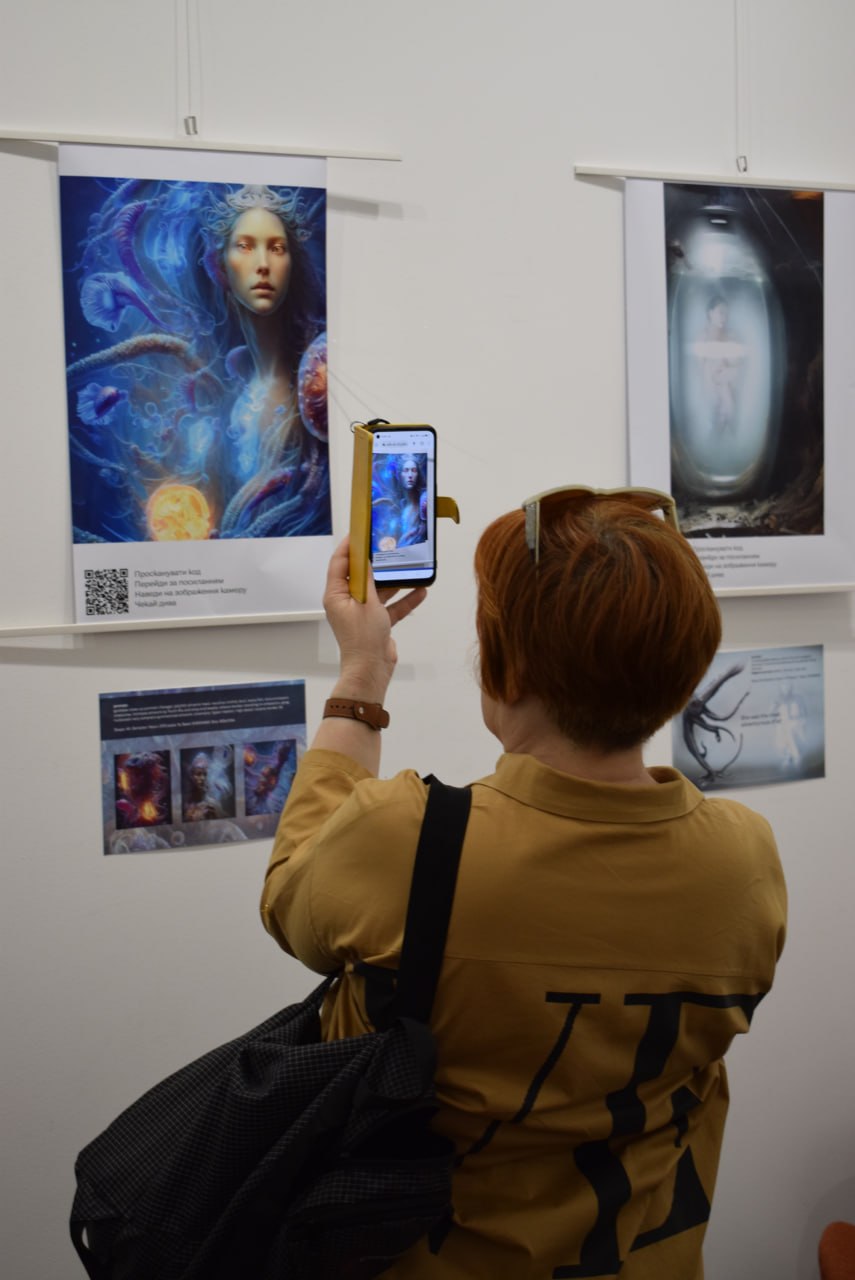
Vladimir Lukyanov's exhibition "AI-motograph - the aesthetics of algorithms". May 2023. PHOTO: Odesa Municipal Museum of Personal Collections named after O. Bleshchunov
Yes, this tradition has been preserved. And not only on January 28. On this day, we do not celebrate a birthday, but the day the museum opens to visitors, so admission is free. We also have other days with free admission: International Museum Day (May 18) and Alexander Bleshchunov's birthday (August 25).
What is more important for Odesa today - preserving the past or creating new meanings?
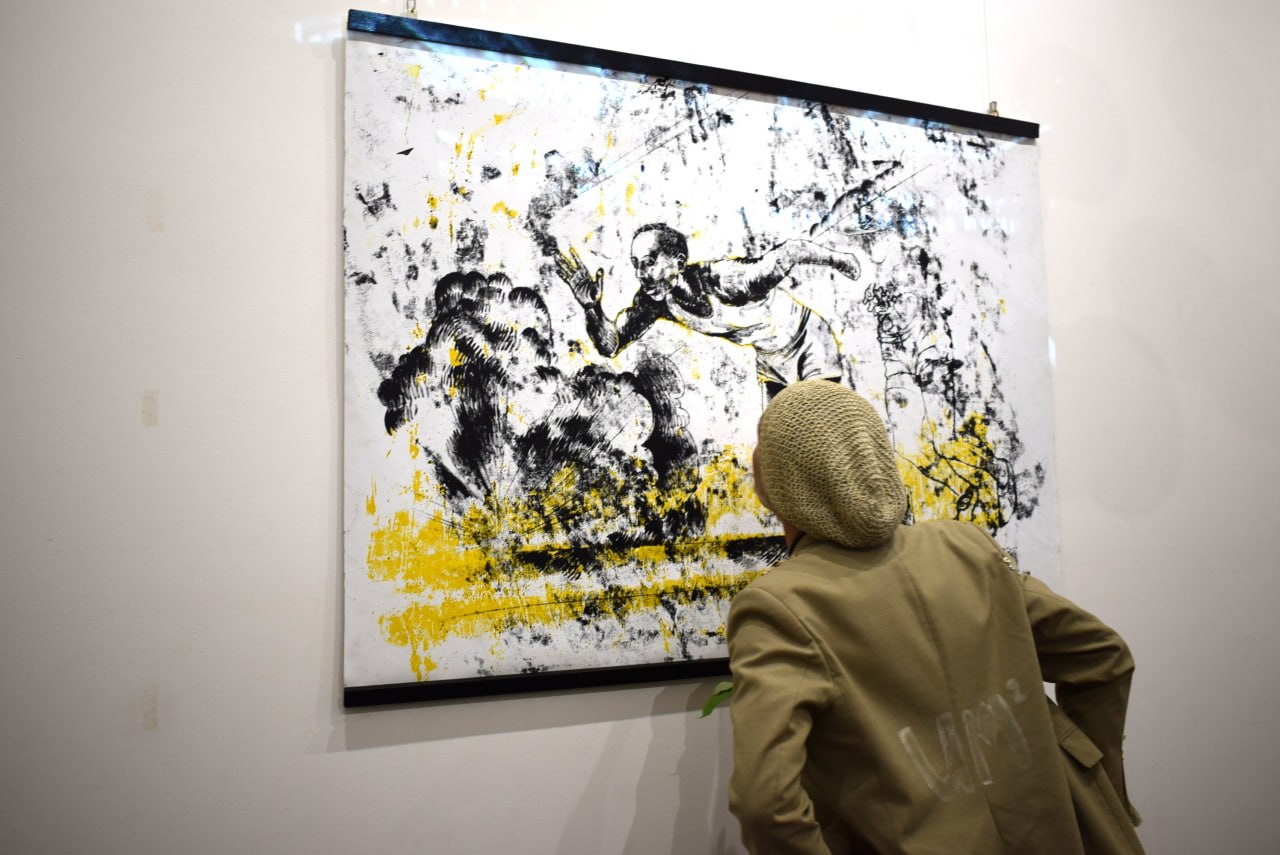
Exhibition "Triumph of the Will" by Serhiy Lykhovyd. May 2024. PHOTO: Odesa Municipal Museum of Personal Collections named after O. Bleshchunov
Definitely, to create new meanings. But without forgetting the past. For a long time we have been emphasizing the multiculturalism of Odesa. But in the sense that we are used to, it is more of a stable expression than a reality.
Today, it is important to work critically with the museum heritage, in particular, through decolonization. This applies even to familiar names. For example, we used to refer to one of our collections as "Central Asian jewelry," using the Soviet term. Now we use the international standard - Central Asia. There are many such nuances in museum collections. We rethink the name of the object, the language of description, and the context.
There are distortions even at the level of geography and place names. For example, we are used to always saying "Bessarabia," although in some cases it is more accurate to say Budzhak. We ignore the Turkic and Ottoman heritage of the region. It seems to be present, but remains invisible, and is hardly ever talked about.
It is important to get rid of the myth about the exclusivity of Odesa as something completely unique and out of context. Every city in the world is unique, and Odesa is no exception. It is much more important to honestly understand your place in history and find it in the present.
The war has a strong impact on the city. Odesa is suffering from shelling, and there is an outflow of people to the western regions of the country, where it is still calmer than here. And now there is a risk of slipping into provincialism - it is already noticeable. Therefore, the task for the city and its residents is not easy: to keep the balance, people, and cement the urban environment.
Talking about distant ideal scenarios that may someday be realized is not productive now. It's important to work with what we have and create new meanings here and now, understanding reality and its limitations.
How do you see the Bleshchunov Museum in ten years' time?
We expect to get the second floor of the building. Now the museum occupies the first and basement floors of the facade building. But the decision of the Odesa City Council in 1997 envisaged the museumization of the mansion, and this is, in fact, a logical continuation of the museum's development to accommodate new collections.
Ideally, the courtyard outbuilding should also be resettled and adapted. It is not necessary to turn it into a classic museum space. It can be a social enterprise that will work for the benefit of the museum. For example, it could be a small hotel, a hostel, or a residence for artists.
If we restore the second floor with its historic southern architecture - terraces, a characteristic building of the first third of the XIX century - it will open up great opportunities for creating residences. This is exactly the very specificity of Odesa that is important to preserve.
In general, we are talking about the preservation and development of an authentic Odesa courtyard not on Moldavanka, but in the city center. I would like to dream that small shops with souvenirs or cafes may appear on the ground floor. That is, the task is not just to expand the museum, but to create a living environment around it that shapes the atmosphere and attracts people. We would really like to realize this plan.