25 July 2026, 19:17
A priest from Crimea indoctrinated children with militaristic ideas and reported on his colleagues
Ця стаття також доступна українською

PHOTO: Collage by Intent
Journalists have published correspondence from Crimean priest Dmitry Krotkov that reveals his long-standing collaboration with Russia’s FSB. The priest informed on fellow priests, recruited new informants, and was involved in the militarization of children in the occupied territory.
Thisis reported in a joint story by “Slidstvo-Info” andToronto Television.
Dmytro Krotkov defected to the occupiers back in 2014. Since then, he has regularly appeared on Russian propaganda programs, notably on Vladimir Solovyov’s show. In Russia, he receives awards, while in Ukraine he has been charged with aiding an aggressor state.
According to the investigation, the humanitarian center led by Krotkov supplied the Russian army with attack drones, thermal imagers, radios, and electronic warfare systems.
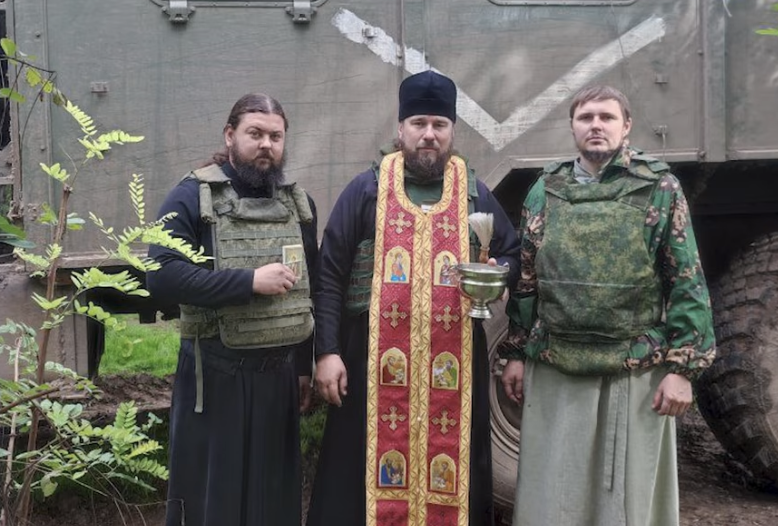
The priest’s main contact is an FSB handler listed as “Ivan Ivanovich.”
Journalists have identified him as Ivan Latyshev, who moved to Simferopol after the occupation of Crimea and oversees religious affairs at the FSB’s Crimean Center for Countering Extremism.
Krotkov regularly reported to his handler on the sentiments of other priests—specifically, which of them were pro-Ukrainian and which were loyal to the occupation. Priests from the Dzhankoy and Bakhchysarai districts of Crimea, in particular, suffered as a result of such denunciations.
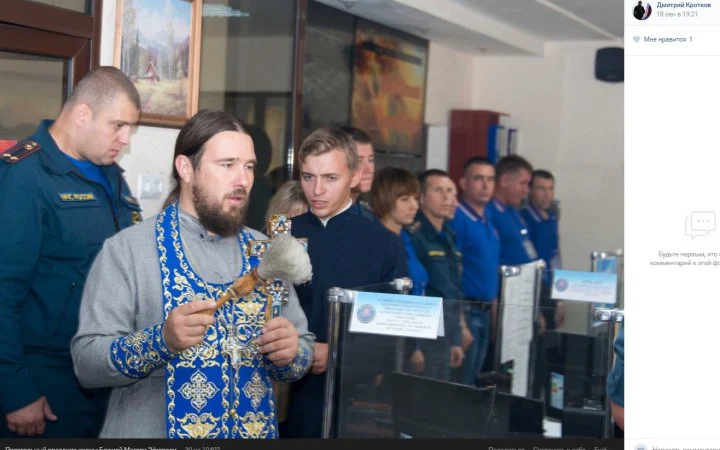
The priest did not limit himself to reporting on others—he actively sought out candidates to collaborate with the FSB, specifically recommending a young priest from Gurzuf to his handler. Krotkov organized regular meetings between priests and law enforcement officials, occupation prosecutors, and military commanders, thereby expanding his network of agents.
Among his contacts were the head of the FSB Directorate for Crimea, the head of the Investigative Directorate of the Russian Federation’s Security Service for Crimea, prosecutors in Crimea and Sevastopol, as well as military commanders, including a general whom the Ukrainian side had previously believed to have been killed.
For “strengthening combat cooperation,” Krotkov received a medal from the Russian Ministry of Defense.
Another aspect of the priest’s activities involves recruiting children for propaganda events.
According to correspondence, schoolchildren in Simferopol were forced to write thank-you letters to Russian soldiers and collect care packages for the front lines.
In Yalta, students were sent to make trench candles for the army instead of attending regular classes, while Sunday school students wove camouflage nets.
The correspondence also revealed contacts with the organization “Drugaia Ukraina” (Another Ukraine), linked to Viktor Medvedchuk. Krotkov agreed to cooperate with the foundation and coordinated publications about his activities with the organization’s representatives.
Despite his close ties to the occupying authorities, Krotkov lives in constant fear for his own safety.
In February 2024, the SBU sent him a summons via social media, urging him to “appear as summoned and sincerely repent.” Krotkov did not respond, but immediately forwarded a screenshot of the summons to his FSB handler.
Journalists note that none of the priests mentioned in the correspondence have been arrested or convicted by the occupying authorities—all continue to serve in their parishes.