01 May 2026, 17:15
Soviet monument with Russian propaganda demolished in Mykolaiv
Ця стаття також доступна українською

A memorial sign on Flotskyi Boulevard in Mykolaiv in the 1970s. Photo: "Mykolaiv Bazaar"
In the center of Mykolaiv, a Soviet memorial sign in the form of a cube, installed in 1976, was dismantled. The object was located near the chess club and contained a text glorifying the Russian imperial and Soviet history of the city.
According to Suspilne.Mykolaiv, the dismantling was carried out by the Mykolaiv Parks utility company.
The memorial sign consisted of a cube with bronze bas-reliefs on three sides depicting ships built in Mykolaiv, including the frigate St. Nicholas, the battleship Potemkin, and the research vessel Academician Sergei Korolev. The fourth side had a large text in Russian.
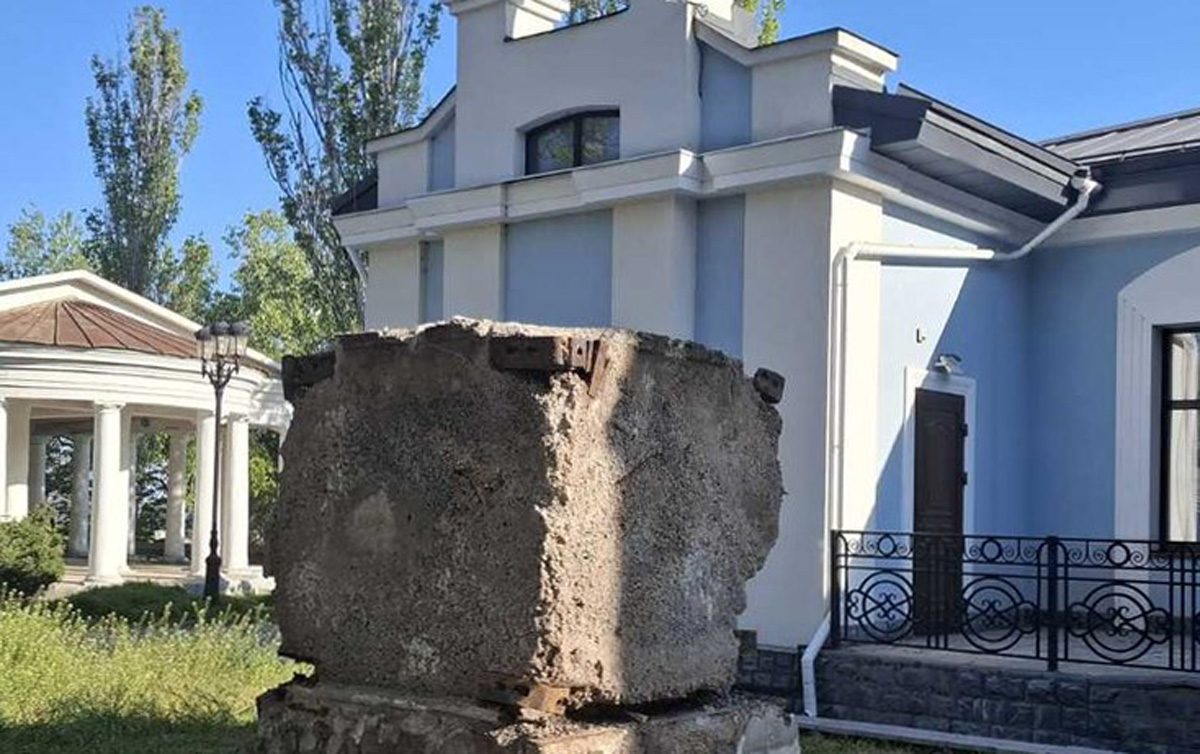 The memorial sign in the process of dismantling. Photo: Suspilne Mykolaiv/Dina Pletenchuk
Its content contained narratives typical of Soviet propaganda. In particular, it said:
- called Mykolaiv the center of shipbuilding in the south of the empire
- emphasized the role of the city as a base for the Russian navy
- glorified Russian naval commanders
- used Soviet terminology
- emphasized the military traditions and achievements of the USSR
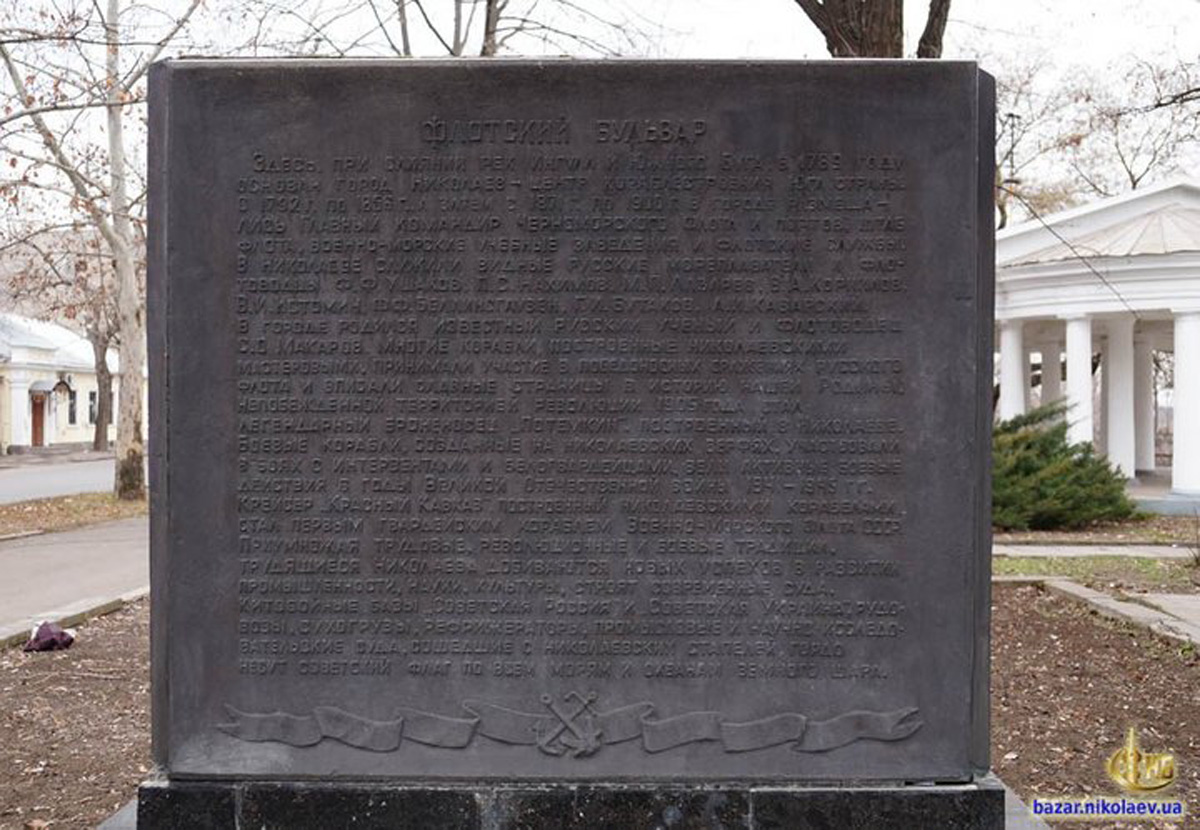 Photo: "Mykolaiv Bazaar"
Thus, the memorial sign formed an exclusively Russian-imperial and Soviet view of the city's history.
The object did not have the status of cultural heritage. Its dismantling had been planned since 2025, but the work was actually carried out on April 30, 2026.
The demolition took place as part of the processes of decolonization and de-Russification of public space that have been ongoing in Ukraine since the outbreak of full-scale war.
As a reminder, members of the Mykolaiv City Council approved a decision to change the names of two streets that previously symbolized Russian or Soviet influence.
Earlier, in Mykolaiv, members of the street renaming commission expressed surprise at the change in the position of the Ukrainian Institute of National Memory regarding the figure of Mykhailo Faleev, one of the city's founders. This change relates to the application of the Law 'On Condemnation and Prohibition of Propaganda of Russian Imperial Policy in Ukraine and Decolonization of Toponymy'.
The UINP has recently published updated lists of individuals whose objects dedicated to them do or do not contain symbols of Russian imperial policy. In these new lists, some figures whose names were previously subject to decolonization are no longer considered to be associated with Russian imperial policy.