22 September 2026, 22:32
An Electric Car for Daily Commutes and Long-Distance Trips: A Review of the Toyota C-HR+Advertisement
Ця стаття також доступна українською

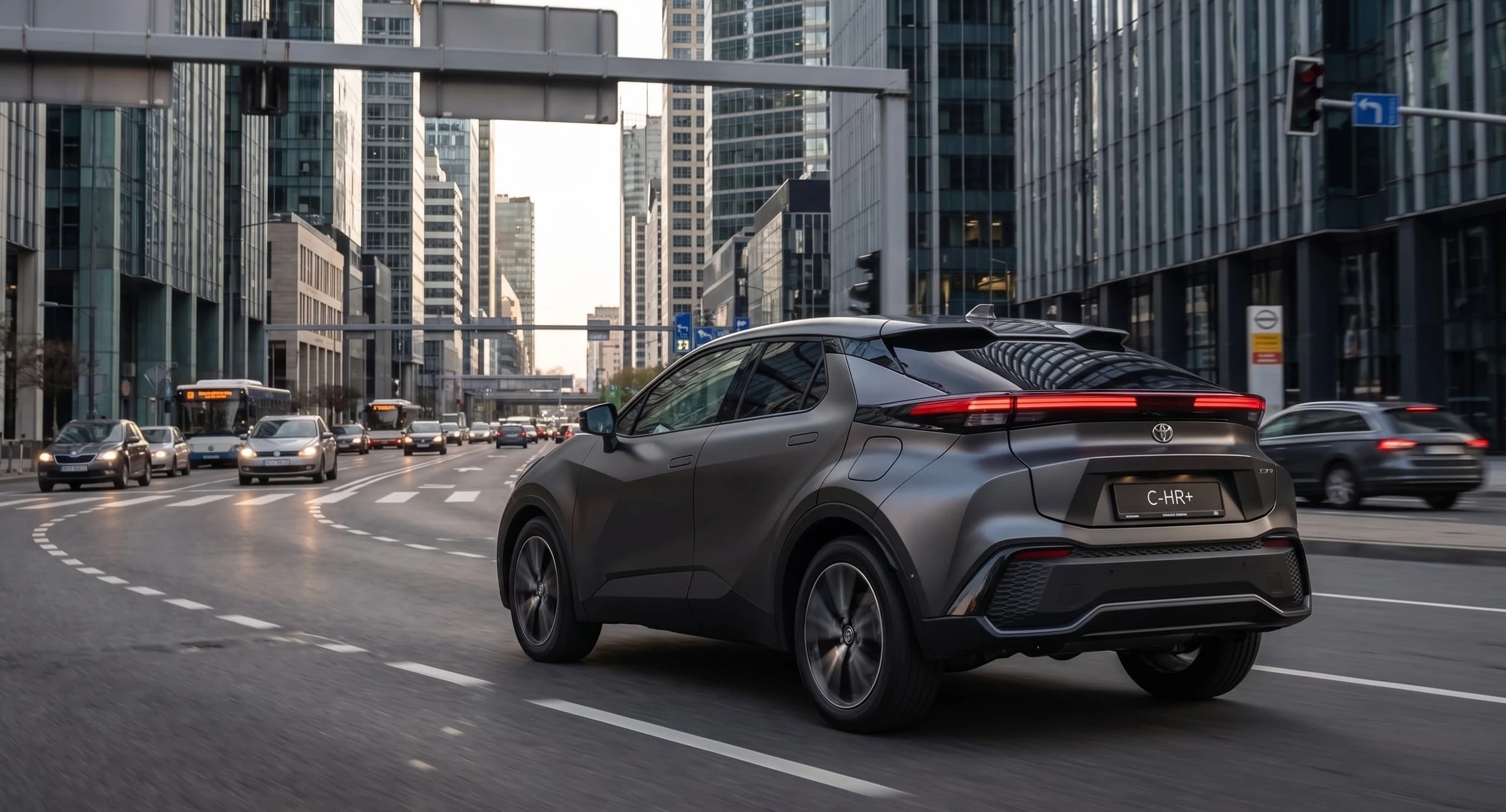
Toyota C-HR+
Just a few years ago, electric cars in Ukraine were viewed primarily as a means of transportation for short city trips: their range and the network of charging stations did not allow for planning long-distance trips. The situation has changed—fast-charging stations have appeared along major highways, and new models can easily cover several hundred kilometers on a single charge. The Toyota C-HR+ is one such new model and positions itself as a car suitable for both daily city driving and highway trips. Let’s take a closer look at how well it suits Ukrainian driving conditions.
A separate model, not an electric version of the C-HR
Despite the similar name, the C-HR+ is not a battery-powered version of the standard crossover. It’s a standalone model built on a platform designed specifically for electric vehicles: the battery is integrated into the floor, the wheelbase is longer, and as a result, the second row of seats is more spacious. The dimensions remain compact for city driving, and the trunk capacity is 416 liters. To see exactly how the different versions differ from one another and what features they offer, visit the Toyota CHR Electric page on the official dealer’s website.
How far can it actually go?
The manufacturer claims up to 560 km on the WLTP cycle for the version with the larger battery. In everyday use, however, you should expect lower figures: in winter, at high speeds, and with the heater on, the range is reduced by about a quarter. In practice, this means that a route like Odesa to Kyiv requires just one stop to recharge, and a typical week of city driving—covering 50–70 km per day—can be supported by a single overnight charge at home.
Charging is no longer a bottleneck either: at a fast-charging station, the battery goes from 10% to 80% in about half an hour. When plugged into a household outlet or a wall-mounted charger, the car charges overnight.
Ground Clearance and Handling
The main concern with any electric vehicle in Ukraine is the condition of the roads. The C-HR+ has 185 mm of ground clearance: it’s not an SUV, but this figure is significantly higher than that of a sedan and sufficient for an uneven yard, a dirt road to a summer cottage, or a high curb. The battery is enclosed in a protective casing, so the risk of damaging it on ordinary bumps is low.
The low-mounted battery also has a side effect—a lower center of gravity. On the highway, the car handles more stably than a gasoline-powered crossover of the same height. The downside is weight: the suspension handles small potholes more harshly, and the tires and brake pads wear out faster. This is a characteristic of all electric vehicles, not just this specific model.
Who Should Consider It
The C-HR+ is a sensible choice for drivers who commute in the city daily, take a few highway trips each month, and have the ability to charge the car at home or near the office. In terms of price, the model competes with well-equipped gasoline-powered crossovers in the same class. However, if a significant portion of your routes are on unpaved roads and the charging station network in your region is underdeveloped, a hybrid remains the more practical choice for now.