Меню
Соціальні мережі
Розділи
Oct. 23, 2025, 8:02 a.m.
Two Odesa residents deceived people at a training camp for the Armed Forces of Ukraine
This article also available in English171

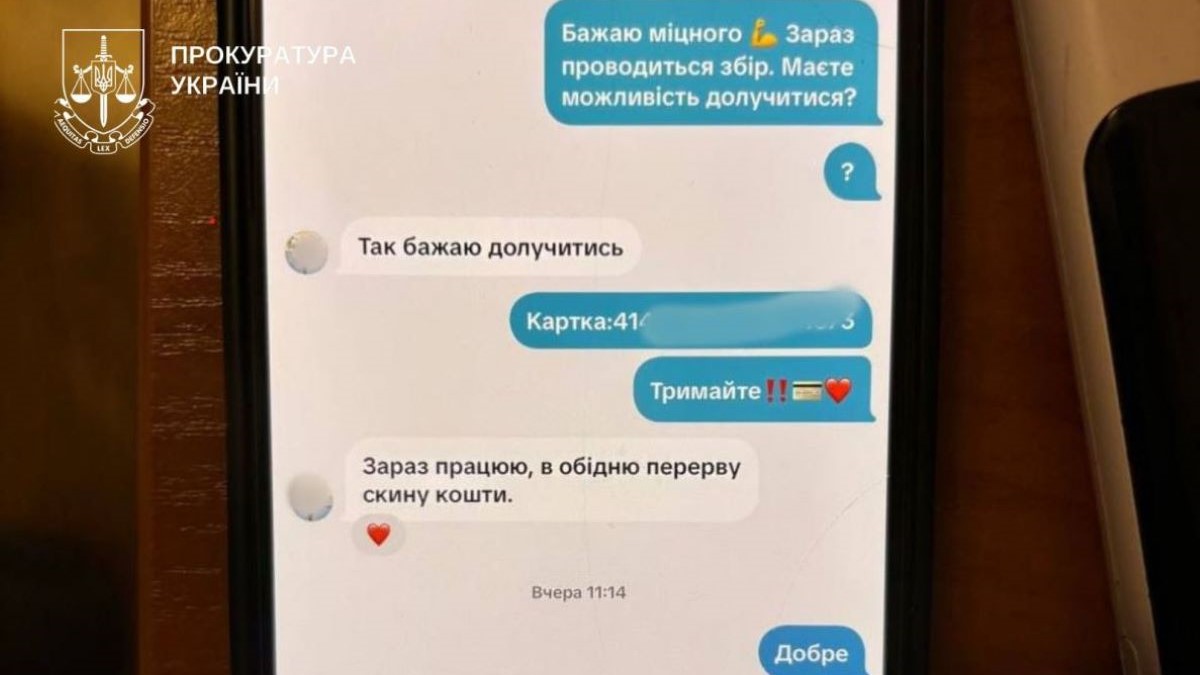
The fake page of the Armed Forces training camp. PHOTO: gp.gov.ua
Two young men from Odesa organized a scheme with a fake TikTok page, hiding behind a collection for the Armed Forces on behalf of "Magyar". They misappropriated the funds under the pretext of helping the army.
This was reported by the press service of the Prosecutor General's Office.
Under the procedural guidance of juvenile prosecutors of the Sviatoshynskyi District Prosecutor's Office of Kyiv, two residents of Odesa aged 17 and 20 were served a notice of suspicion of fraud.
The investigation established that the young men created a fake TikTok page through which they raised funds on behalf of the commander of the Unmanned Systems Forces of the Armed Forces of Ukraine, Robert Brovdi, call sign "Magyar," allegedly to support the military. In reality, they spent the money raised on their own needs. According to preliminary data, they managed to defraud people of at least one million hryvnias in six months.
Their actions are classified under Part 4 of Article 190 of the Criminal Code of Ukraine - fraud committed by prior conspiracy by a group of persons using electronic computers. This article provides for imprisonment for a term of 5 to 12 years with confiscation of property for fraud committed on a large scale or by an organized group.
The investigation is being conducted by the Sviatoshynskyi Police Department in Kyiv with operational support from the Kyiv Cyber Police Department.
In September, in Odesa, a court seized the property of members of a group that made money by selling non-existent cars allegedly for the Armed Forces. The criminals used the names of charitable foundations to defraud the military and volunteers.
According to the investigation, the two men created a criminal group that operated from the beginning of the full-scale invasion. They organized an entire network that worked like a real business: some members created fake social media pages, others posed as volunteers, customs brokers, or drivers. The scheme was well thought out: they posted ads on the Internet about the sale of cars from Europe for the army, and sent fake documents and photos to gullible customers.