Generator for home: how to choose a backup power supply and not overpayAdvertisement
Ця стаття також доступна українською

The experience of the past years has taught us the main thing - the light and warmth in the house depend not on the circumstances, but on our preparation. Blackouts have ceased to be a hypothetical scenario and have become a reality to which we can and should adapt. And if earlier people thought about buying a generator only when the power was already out, today Ukrainians are more forward-thinking. They start preparing for cold weather and power outages in the summer or early fall.
This strategy is fully justified. As soon as the temperature outside drops and outage schedules become tighter, the market reacts instantly: the demand for backup power supplies skyrockets, prices creep up, and the most popular and reliable models disappear from store shelves in a matter of days.
However, there is another trap in this pre-emptive preparation: trying to protect themselves and their families as much as possible, people often make a typical mistake: they buy a super-powerful generator for all the money in the world, guided by the principle that it should be enough for everything. As a result, this unit is idle most of the time, consuming so much expensive fuel in an hour that it becomes a golden opportunity to run it.
Backup power is not about buying the most powerful machine on the market. It's about accurately calculating your real needs, where every kilowatt counts and safety and efficiency come first. Let's figure out how to find the right balance so that your home is bright and cozy, and your wallet doesn't go empty at the selection stage.
What are the types of generators for home
For an autonomous power plant to work efficiently, the type of equipment is selected for specific tasks, taking into account the type of fuel, continuous operation time, and output current characteristics.
Gasoline generators. The most common option for domestic use as a backup power source.
- Technical features: The average continuous operation time is 5 to 8 hours, after which the engine needs a maintenance break to cool down. The average fuel consumption for 3-4 kW models is 0.7 to 1.1 liters of A-95 gasoline per hour (depending on the load level).
- Specifics: They start up stably at low temperatures (in winter in the cold), but they deliver current with possible voltage fluctuations. Therefore, it is advisable to use a stabilizer to connect household appliances.
Diesel generators. Designed for long-term or continuous power supply in case of long-term blackouts.
- Technical features: Able to operate non-stop for more than 20 hours under high load. They have an extended engine life (twice as long as their gasoline counterparts) and consume about 20% less fuel per kilowatt produced. However, they are more difficult and costly to repair in the future.
- Specifics: They have a high initial cost and large dimensions. The noise level without a special protective casing can exceed 90 dB, which requires installation at a distance from residential areas or in a separate room. Also, diesel fuel is sensitive to severe frosts and can wax if the generator is left outdoors without heating.
Inverter generators. They work on the principle of double current conversion (alternating to direct and back to alternating).
- Technical features: They produce a stable current with a perfect sine wave (frequency and voltage deviation within 2.5-3%). Thanks to an electronic module, they automatically regulate the engine speed: if only a laptop is connected, the engine reduces the speed to a minimum, which significantly saves fuel.
- Specifics: They are optimal for powering sensitive microprocessor-based equipment: modern double-circuit gas boilers, computers, servers, and communication systems. However, their price is much higher than standard gasoline generators of the same capacity.
Dual-fuel generators (gas/gasoline). Combined factory models equipped with a built-in gas reducer.
- Technical features: They can operate on both gasoline and liquefied gas (propane-butane) from cylinders. The main fact is that operation on gas reduces the cost of one hour of equipment operation due to the difference in fuel prices. At the same time, the device retains full mobility and the ability to switch to gasoline at any time.
Portable power plants. A separate category of equipment based on lithium or lithium-iron-phosphate batteries.
- Technical features: They do not generate energy from fuel, but accumulate it while charging from the mains in 1-2 hours. They are completely silent and have no exhaust gases, so they can be used inside living rooms or apartments. The downside is that they are limited by the current battery capacity, which requires an external power source to recharge. In fact, this is a large and powerful power bank.
How to calculate the required power
To ensure that an autonomous power plant or portable power plant operates stably and without overloads, it is important to clearly distinguish between its rated and peak power:
- Therated power is the maximum load that the device is capable of delivering continuously during long-term operation in normal mode. It is this indicator that you need to focus on as the main labor force.
- Peak (maximum) power is a short-term reserve (from a few seconds to a minute), which is needed so that the generator can cope with a heavy start of household appliances and not stall.
Please note: Unscrupulous manufacturers often indicate in the parameters only the maximum power, which is an overestimated figure. In this case, before buying, you need to find out the rated power of such a model.
It is the starting loads that most often cause equipment to shut down. Any device that has an electric motor or compressor in its design requires several times more energy at the moment of switching on than during further standard operation. This surge lasts for seconds, but the backup system must be able to withstand it.
When calculating, you should take into account the sum of the power of the devices that will operate simultaneously, and be sure to add a power reserve of 20 to 30%. The acceptable load should be approximately 80% of the power plant's rating. If the margin is too small, you will face constant overloading and equipment shutdowns.
For an accurate calculation, you should focus on the average technical consumption of household appliances:
|
Household appliance |
Rated power consumption (W) |
Start-up coefficient (increase factor) |
Required power at startup (W) |
|
Router and media converter |
10 - 15 |
1.0 |
10 - 15 |
|
Lighting (LED, whole house) |
50 - 100 |
1.0 |
50 - 100 |
|
Double-circuit gas boiler |
100 - 150 |
2.0 |
200 - 300 |
|
Computer (PC) or laptop |
80 - 300 |
1.0 |
80 - 300 |
|
Refrigerator (modern inverter) |
150 - 250 |
3.0 |
450 - 750 |
|
Borehole pump for water |
800 - 1100 |
3.5 |
2800 - 3850 |
|
Electric kettle |
1500 - 2200 |
1.0 |
1500 - 2200 |
A practical example of calculation
Let's consider a typical set of household appliances that are often planned to be run during a blackout:
- Refrigerator: 200 W (starting factor 3)
- Microwave oven: 800 W (starting factor 2)
- Electric kettle: 2000 W (starting factor 1)
- Lighting and TV: 300 W (starting factor 1)
- Small household appliances: 200 W (starting factor 1)
Now let's calculate the actual load in stages, taking into account the motor starts:
- Refrigerator: 200 W * 3 = 600 W
- Microwave oven: 800 W * 2 = 1600 W
- Electric kettle: 2000 W * 1 = 2000 W
- Lighting, TV and small appliances: 500 W * 1 = 500 W
Add up the total power: 600 + 1600 + 2000 + 500 = 4700 W
To the result obtained, be sure to add the necessary technological reserve of 25% for the stable operation of the engine: 4700 W * 1.25 = 5875 W (round up to 5900 W)
Conclusion: in this scenario, the best choice would be a generator with a rated power of 6 kW.
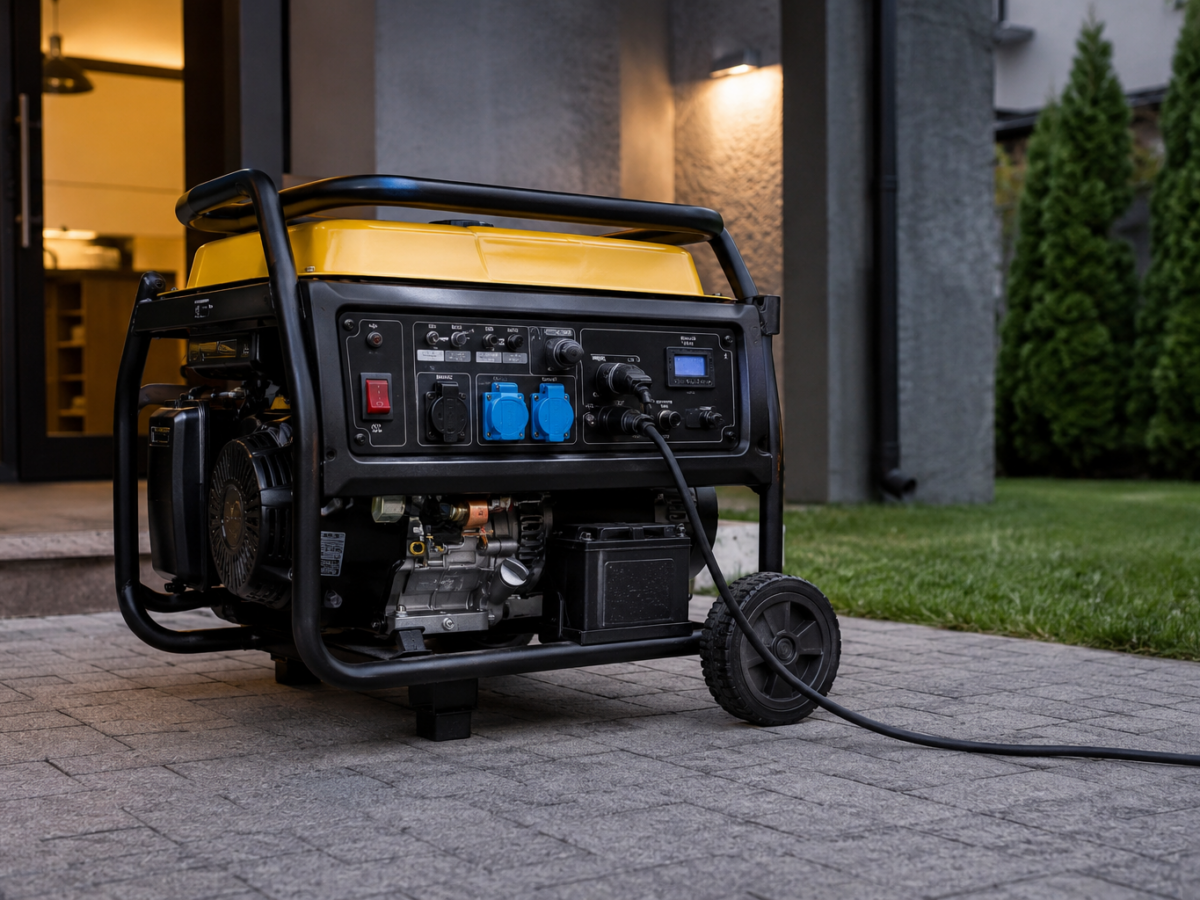
Which generator is suitable for a private house
For a private house, an autonomous power plant is the basis of life support, because the operation of most engineering systems depends on the availability of voltage. When organizing a backup power supply for a house, the operation of several critical nodes is taken into account first.
- Boiler operation. Heating boilers consume only 100-150 watts, but are sensitive to the quality of the current. To automate them, an inverter generator is needed that provides a stable voltage without jumps.
- Water pumps. Borehole equipment provides autonomous water supply, but has high starting currents (a 1 kW pump requires up to 5 kW at startup).
- Refrigerators and basic household appliances. The refrigerator operates cyclically and requires increased power when the compressor starts (start-up factor 3). Other appliances (kettles, microwaves) are switched on strictly in turn when operating from the generator.
- Lighting. Modern LED lamps throughout the house consume between 50-150 watts and practically do not load the system.
Technical nuances of operation
The comfort and safety of using the equipment depend on several important factors.
- Installation location and ventilation. Due to the release of deadly carbon monoxide, the engine is strictly prohibited from running inside living rooms, basements, or closed verandas. The best place is outdoors under a canopy (away from windows) or in a separate technical room with forced ventilation and exhaust gas exhaust through a metal corrugation.
- Noise level. An open-type gasoline engine emits about 75-85 dB, and a diesel engine - more than 90 dB. To minimize the noise, install the equipment at a distance of at least 5-7 meters from residential areas or buy models with a protective noise-insulating casing.
- Fuel consumption. The average fuel consumption for popular 3 kW household models is approximately 1 liter of gasoline per hour. Diesel and dual-fuel (gas/gasoline) versions are more economical. The volume of the fuel tank is also important - large tanks allow the equipment to operate without refueling for up to 10-12 hours.
- Regular oil changes. Generator engines are air-cooled and require oil changes much more often than a car. The first change (run-in) is carried out after the first 5-20 hours of operation, and each subsequent change is carried out on average every 50-100 hours (depending on the manufacturer's instructions). Ignoring this rule will lead to rapid overheating of the engine and its overhaul.
Can I use a generator in an apartment?
Using a classic liquid-fueled generator in an apartment building is a direct violation of fire safety rules, which carries a deadly threat. The current regulations in Ukraine strictly prohibit the installation and operation of internal combustion engines in any enclosed spaces of high-rise buildings.
Risks that make it absolutely impossible to do so:
- Carbon monoxide hazard. Gasoline or diesel combustion products contain a toxic gas that is colorless and odorless. Even with the windows open, carbon monoxide instantly accumulates in the confined space of an apartment, leading to severe poisoning or death in minutes.
- High risk of fire and explosion. During prolonged operation, the muffler and engine heat up to hundreds of degrees. The presence of flammable fuel in the tank of the device (and canisters with a supply nearby) in a cramped apartment is a direct path to a fire.
- Noise and vibration. The noise level of an operating station reaches 65-90 dB. In the reinforced concrete walls of a high-rise building, this rumble creates a powerful vibration throughout the entrance and makes staying in the house unbearable for you and your neighbors.
Compromises: balconies and adjoining areas
In an attempt to get around the prohibitions, people sometimes install appliances on open balconies, loggias, or in yards. However, each of these scenarios is controversial.
On open balconies. Installing a fuel generator on a balcony is strictly prohibited. Even if you bring the exhaust pipe outside, carbon monoxide will inevitably be drawn into the apartment, both yours and your neighbors', through windows and ventilation slots, which poses a direct threat to life. In addition, according to the rules of the State Emergency Service, any such station must operate at a distance of at least 6 meters from the windows and doors of the building, which is impossible to realize within the balcony.
In the courtyards of the building. Residents of the first floors sometimes take the equipment outside. This is safer, but the device must be permanently installed at a distance of at least 6 meters from the building. Such installation requires approval from condominiums or neighbors, protection of the cable from mechanical damage, and reliable ventilation if the device is hidden in a special closed box to protect it from theft and rain.
An important conclusion: If you can't ensure that the fuel engine can operate outdoors at a distance of 6 meters, give up on the idea. The only absolutely safe, approved alternative for use directly inside the apartment is a portable power plant.
What alternatives to a generator are suitable for an apartment
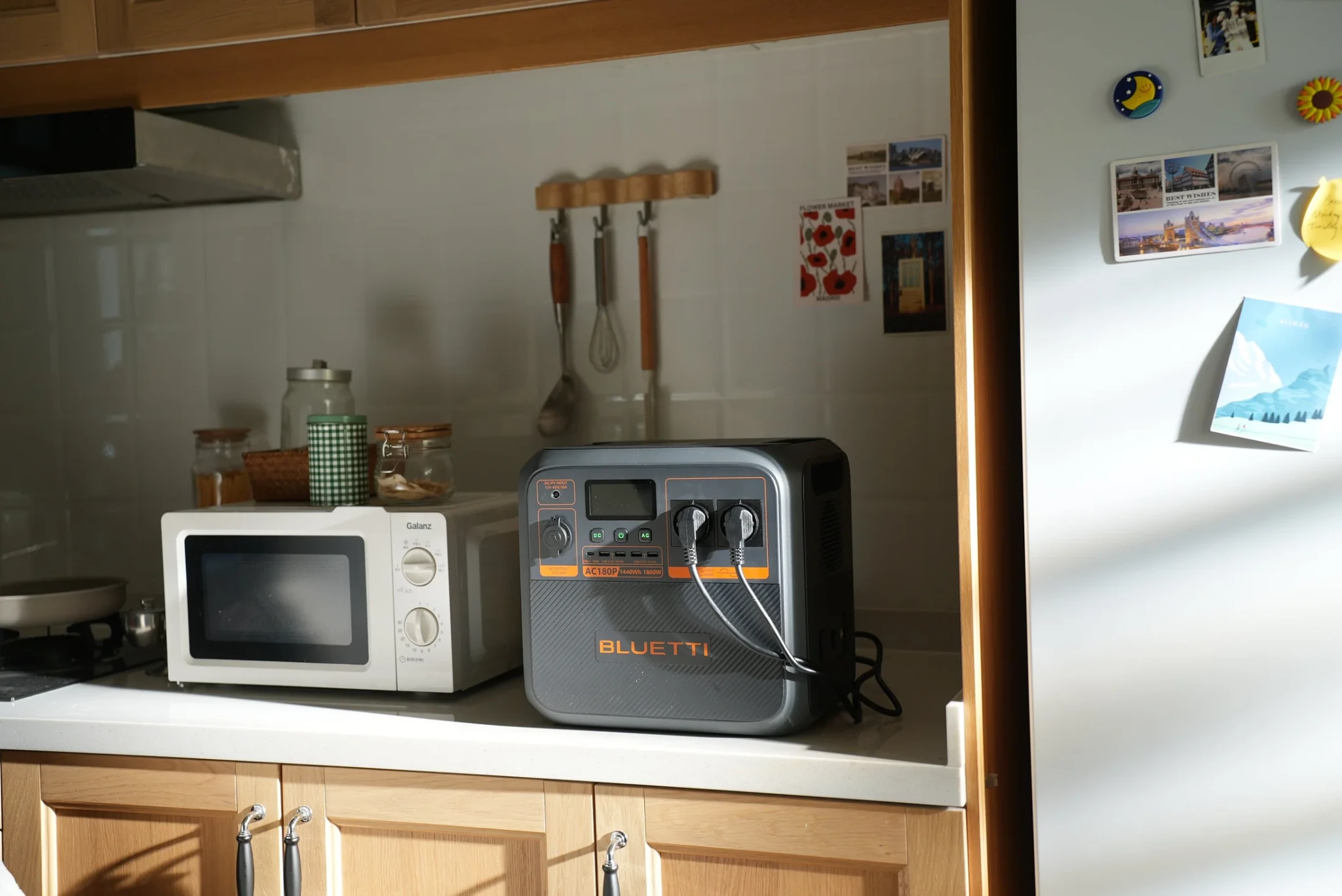
For residents of apartment buildings, the only safe and legal solution is systems that do not generate but accumulate energy. They operate without noise, fuel, and harmful emissions, so they can be used directly in living rooms.
- Portable charging stations (EcoFlow, Bluetti, etc.). These are ready-made mobile units that combine a lithium-iron-phosphate battery, an inverter (220 V converter), and smart automation. They are suitable for quick connection of not very powerful equipment through built-in sockets and are fully charged from the mains in a few hours.
- Inverter systems with batteries (UPS/UPS). Stationary kits consisting of a separate uninterruptible power supply unit (inverter) and external traction batteries (GEL, AGM or LiFePO4) connected to it. The system automatically switches the apartment to battery operation when the power goes out and charges the batteries when the power comes back on.
The main limitation of such systems is their limited capacity. When the energy supply is exhausted, the devices become useless until they are recharged from the mains again. In addition, they have severe power limitations: budget models simply cannot cope with the high inrush currents of appliances such as a washing machine or microwave.
To understand how long the equipment will work autonomously, let's take the standard and most popular configuration as an example - a charging station or UPS with a battery capacity of 1000 Wh (1 kWh). If the devices are connected separately, this power reserve will provide the following performance:
- Internet router and media converter (10-15 W) - 60 to 80 hours of operation.
- A work laptop (50-60 W) - 15 to 20 hours of operation under load.
- Refrigerator - from 10 to 12 hours.
- A double-circuit gas boiler (100-130 W) - from 7 to 9 hours.
What to look for before buying a generator
Before making your final choice, be sure to analyze the following device characteristics:
- Type of start. Budget models are started manually, with a cable that needs to be pulled sharply. To facilitate operation, it is better to choose equipment with an electric starter, where the engine starts by simply turning the key or pressing a button (like in a car). If you plan to have the system automatically turn on when the power goes out, look for a generator with an electric starter and a special connector for AVR (automatic transfer switch).
- Voltage stability and AVR availability. A liquid-fuel engine produces an unstable current that can damage boiler or computer control boards. The presence of a built-in automatic voltage regulator (AVR) is a prerequisite for domestic use, as this module smooths out power surges. If you need power for highly sensitive digital equipment, it is better to pay attention to inverter models.
- Fuel consumption and autonomy. Pay attention not only to the volume of the tank, but also to how many liters of fuel the device consumes per hour at a load of 50-75%. It is optimal if one refueling provides at least 8-10 hours of continuous operation so that you do not have to refuel the engine in the middle of the night.
- Noise level. Open-type equipment creates a strong rumble (over 75-80 dB). If the autonomous power plant will be installed close to windows or a terrace, look for devices with noise-absorbing protective covers.
- Type of sockets on the panel. Basic devices are usually equipped with two standard 16 A Euro sockets (each can withstand a load of up to 3.5 kW). However, if you purchase a powerful device of 5 kW or more and plan to connect it directly to the house's input panel, the panel must have a 32 A power outlet capable of drawing the entire generator's power through a single cable.
- Service and availability of spare parts. Any engine needs regular maintenance (oil changes, filter and spark plug cleaning). Buy equipment from brands that have official service centers in Ukraine.
If you are looking for reliable equipment, we recommend that you study the technical specifications and compare current generator models to find the best option for your budget and tasks.
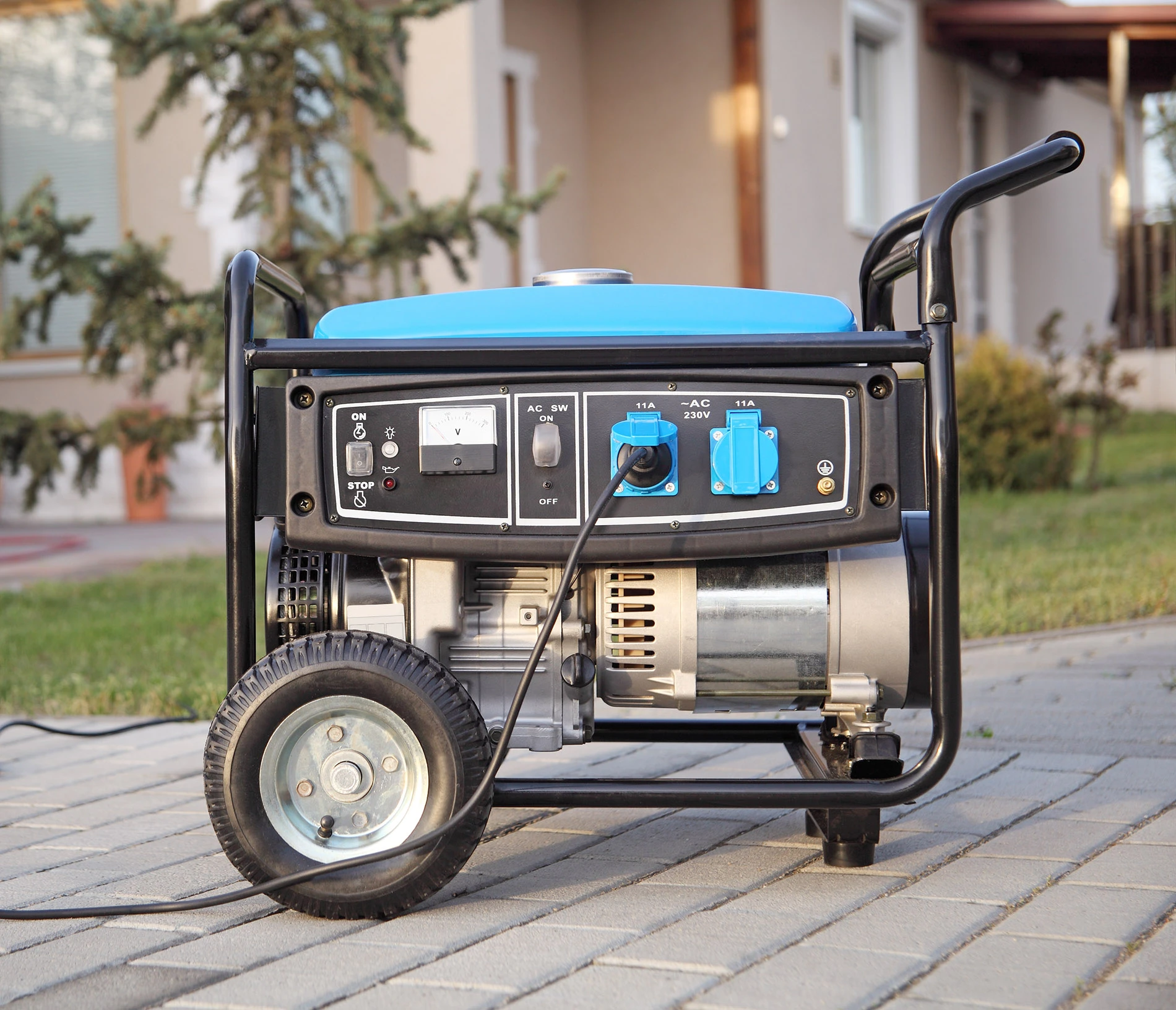
The constant shelling of cities and infrastructure makes our own energy independence a crucial condition for survival and comfort. When preparing for seasonal outages, it is important to choose equipment rationally and in advance to avoid shortages and overpayments. Remember that the backup power supply should always be chosen for the specific tasks of your home: battery chargers are best suited for an apartment, while a fuel cell is indispensable for the private sector. At the same time, excessive power is not always a plus, as it leads to unnecessary overpayment and increased fuel consumption. Accurate calculation of the starting currents and the actual load will allow you to create a balanced and economical system that will provide your home with light and heat in any circumstances.