Меню
Соціальні мережі
Розділи
Farewell to winter in Ukraine: history and traditions of Maslenitsa
This article also available in English118

IMAGES: Intent
On February 16, one of the most delicious and fun folk festivals of the year, Maslenitsa week, will begin in Ukraine. This is not just one day: the celebration, like the Christmas holidays, lasts for a long time: a whole week before Lent. This year it is from February 16 to 22.
The dates of Lent, in turn, depend on the Easter holidays. Therefore, Easter, which in 2026 falls on April 12, and Maslenitsa are closely related, although the church tradition does not recognize Maslenitsa, because it cannot be found in the Orthodox calendar. However, there is Cheese Week, which is the last week before Lent, which in 2026 lasts eight weeks. The Church did not abolish the pre-Christian traditions of Maslenitsa, but rather adapted it to the new religious context.
The holiday retained its folk, secular character, and the spiritual meaning for believers was not about fun but about gradual preparation for Lent. That is why Maslenitsa remained a cultural tradition rather than a religious event. The only element of Maslenitsa with a clear Christian meaning is Forgiveness Sunday. On this day, believers ask each other for forgiveness in preparation for Lent. At the same time, the tradition of mutual reconciliation has become well integrated into folk culture and has become widespread outside the church context.
Initially, the celebration of Shrovetide was associated with the vernal equinox-the people were seeing off winter and welcoming spring, which is why the celebrations are accompanied by fire. But after the adoption of Christianity, it turned out that the traditional time of the holiday falls just in time for Lent, so Maslenitsa had to be shifted to the last week before Lent.
Therefore, Shrovetide week always precedes Lent and is considered the last period when it is allowed to consume dairy products, butter, and eggs. Its dates are the same for both the new church style and the old one.
This holiday is also called Shrovetide, Launch, Syropust, Kolodii, Syropusna week, Cheese Sunday, Women's Day, and Obshchytsia.
Shrovetide or Kolodii?
The holiday of Kolodii is not just an "analog" of Maslenitsa, but a unique Old Slavic rite that existed in our lands long before the baptism of Rus (when no one knew that Moscow would appear among the swamps) and the traditions imposed by the Soviet government.
Historians note that for a long time, Soviet propaganda tried to displace the authentic Kolodii with Maslenitsa (although it is a folk tradition from ancient times). However, there are fundamental differences between them.
It is emphasized that Kolodii is about marriage, procreation, and harmony, while Maslenitsa is mainly about festivities around food.
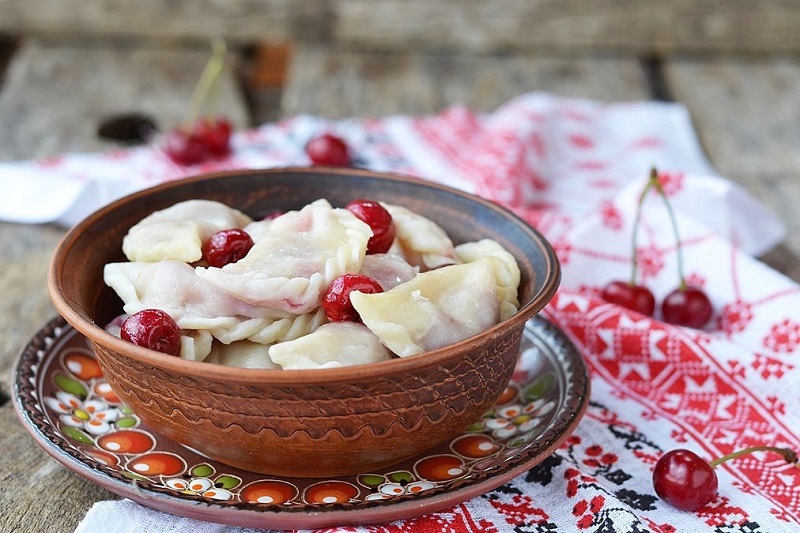
PHOTO: Smachno24
Also, despite the popularity of pancakes (a tradition more typical of our northern neighbors), dumplings with cheese have always been an authentic Maslenitsa dish for Ukraine. Their shape was associated with the moon and complemented the "sun" symbolism of pancakes. Varenyky personified satiety, prosperity and the opportunity to enjoy food before the start of Lent. Ancestors used to say: "Even a Turk eats dumplings on Shrovetide," another proverb: "Dumplings will prove that they won't give you bread!"
The tradition of cooking dumplings with cottage cheese was connected with the fact that after the winter cows calved and there was a lot of milk in the houses. In winter, cattle are not slaughtered, and last year's stocks were running out, so dairy products and pastries were part of our ancestors' diet at that time.
Our ancestors had an interesting belief about Maslenitsa: if you fall asleep with a lump of cheese in your mouth this week and then wake up and it remains in the morning, you will get special magical powers. Or you'll see a real witch. Of course, no one has ever managed to wake up with cheese in their mouths.
Varenyky were consumed in such large quantities that the owners' flour reserves were reduced to a catastrophic minimum. But rich treats were the norm: "Lent is coming, we need to eat up." By the way, people didn't eat meat during the week of Maslenitsa, they tried to make dishes based on dairy products.
The best dumpling makers are given a special award
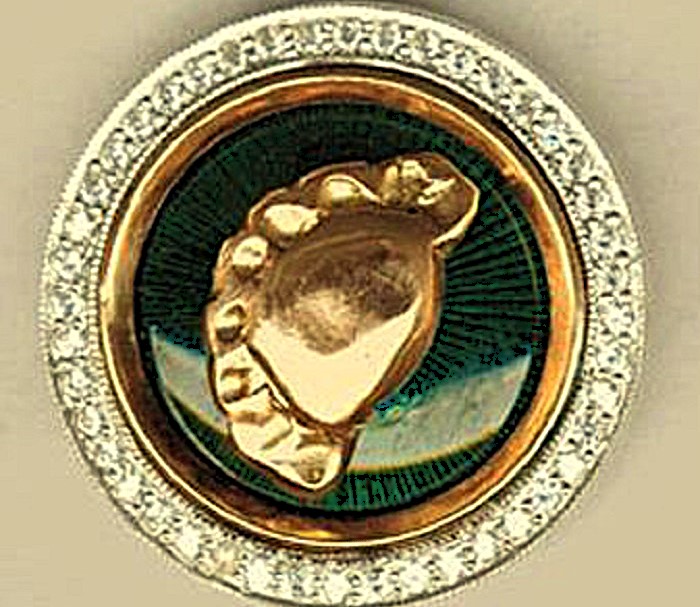
In Ukraine, dumplings are so respected that they are used as a gagoroda: "Golden Dumpling" is a special badge for the best cooks and confectioners in Ukraine.
The two-centimeter round base of the award is made of 925 silver. The Golden Dumpling itself is made of 583 gold, as is the circle that frames it on the enamel (as if a small gold dumpling had been placed on the plate). The dumpling itself is covered with zirconium "diamonds" on the canvas of the "plate" - 38 pieces with a diameter of one millimeter each.
"Golden dumpling". PHOTO: Vesela Abetka
The signs were designed and manufactured in Simferopol by the People's Artist of Ukraine Serhiy Sklyar. The idea of the Golden Dumpling symbol was proposed by producer Roman Vorobyov in 1999.
You can tell fortunes with dumplings
This tradition is centuries old. Girls used to tell fortunes on dumplings on Sviatky, starting on December 13, when that sacred period began.
There were many ways to do it. They would put buttons, coins, and rings in the dumplings. They made "lucky" dumplings with pepper. Girls would be asked to choose dumplings and offer them to a hungry cat, as if the cat would eat the first dumpling, and the girl would be the first to marry.
Kolodii: history and rituals
The traditions of the holiday go back to the distant pagan past. This holiday originated on the territory of Ukraine in pre-Christian times, around the fourth century AD. To this day, the church has not been able to adapt the holiday to its calendar and give it a religious connotation.
Kolodii Maslenitsa was actively celebrated in the IX-XII centuries. Back then, the rite of Kolodii was celebrated on the eve of Lent. It was the last week before Lent when weddings could be held. This week was also called the Women's Week or simply Women's Week, and Kolodii, respectively, was called the Women's Day. Kolodii coincided in time with Syropusna week, the last week of Maslenitsa.
The tying of a shoe to young men who had not yet started a family is a unique Ukrainian tradition of celebrating Kolodii, which emphasized the importance of marriage to the community.
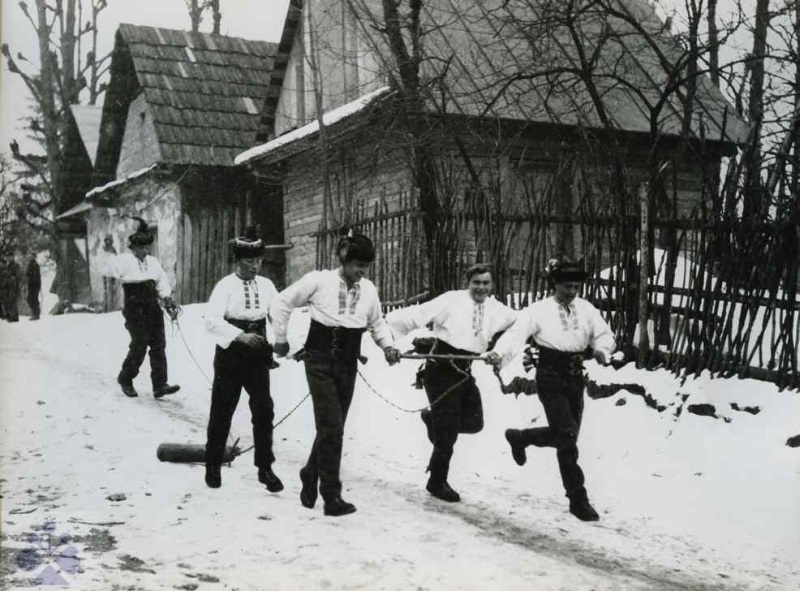
PHOTO: Osvitoria.media
Thus, married women would go from house to house in the village to visit men who had not decided to marry or were looking for girls. The women would give the single guys real bullying: they would scold them, ask them why they were "fooling around" with girls when they finally decided to start a family. If a guy wanted to pay them off, he would treat the young women to a meal, put on a mohorych, and promise to marry them the same year. If he didn't, they would tie a firewood chopper to his leg with a rope. It happened that boys would run away from the house when they saw young ladies with logs in their hands. Then they could easily put the log on their father's or mother's leg: "Why are you not marrying your children for so long?"
Flocks of harsh women would also enter the homes of married couples who had not given birth to their first child for a year. They would also be bullied, asked questions and asked to explain why they did not want to have children, why they were upsetting the community. Couples had to justify themselves: "We must be jinxed!" - "Then go to a fortune teller and 'work off' the evil eye. Go to church and pray more often."
During the week of Kolodii, girls used to tie a wooden block to the feet of unmarried boys. In order not to walk around with the block, they gave a "ransom" ("mohorych") for it.
The ritual of Kolodka's life took place throughout the week:
- On Monday, Kolodka was "born",
- on Tuesday she was "baptized",
- on Wednesday she was "christened",
- on Thursday, it would "die",
- on Friday Kolodka was "buried",
- on Saturday they "mourned",
- On Sunday, the culmination of Kolodii's life and Kolodka's fate came. Young women would "drag" Kolodka.
Maslenitsa: what each day of the holiday means
Each day of Maslenitsa has its own name and meaning.
Monday is the meeting of Maslenitsa
On the first day of Maslenitsa, people cleaned the house and baked the first pancakes. They were always used to treat beggars and poor people, or to leave pancakes next to the house to commemorate deceased relatives. On the first day, you could go to visit or receive guests, and on Monday, you would set up the Maslenitsa effigy.
Tuesday - Flirting
On this day, there were showers - parents were in a hurry to woo their children before the start of the fast. Those who wanted to could look for their soul mate without the help of their parents, for example, at parties or on a visit.
Wednesday - Mother-in-law's pancakes
On the third day of the week, the son-in-law has to go to visit his mother-in-law and serve her mohorych with something strong: "So that your throat doesn't dry out!" And the mother-in-law had to generously feed her son-in-law with dumplings.
The amount of treats on the mother-in-law's table was a good indication of how much the son-in-law had messed up over the past year. The friendlier the mother-in-law was on this day, the happier the life of the young couple would be.
Thursday - Go wild, Shrovetide
This is a day of fun. Cleaning and all household chores were finished and sleigh rides, fist fights (with northern neighbors), jumping over the fire and other fun began.
Friday - Mother-in-law parties
On this day, the mother-in-law had to go to visit her son-in-law. But she did not go alone, but with friends and relatives. Of course, the son-in-law did not cook pancakes - his wife did - but he had to indulge his mother-in-law and guests in every way possible all evening.
Saturday - The gathering of the daughter-in-law
Married women would invite their husbands' sisters-in-law to visit, treat them to pancakes and give them gifts. They would also tell fortunes together.
Sunday - Shrovetide (Forgiveness Sunday)
This Sunday is also called Forgiveness Sunday. On this day, people would finish celebrating, apologize to each other for their offenses, and forgive offenders themselves. Traditionally, when people met, they would say to each other: "Forgive me," and in response they would hear: "God will forgive and I forgive you." Also on this day, people commemorated the dead and burned the Maslenitsa effigy.
It is worth noting that the week of Maslenitsa is celebrated not only in Ukraine, but also among Bulgarians, Slovenes, Poles, Macedonians, Czechs, and others.
Shrove Monday
The first Monday after Shrovetide was considered the strictest in terms of nutrition. On this day, families could sleep in and not sit down for breakfast for a long time, and instead of the usual dishes, housewives baked duzhyky (flatbread) on the first day of Lent. This is a bread made from rye flour using only water and without a single drop of oil.
Interestingly, it was considered necessary to drink vodka on this day. That's why the first Monday after Maslenitsa was called Poloskozub: vodka was used to rinse the cheese out of your teeth.
Burning the effigy of winter
The ritual of burning the effigy, which in different regions was called Marena, Solomakha, or Kostrub, symbolized farewell to the cold and everything obsolete. It was an act of renewal - cleansing the space before the arrival of spring and a new cycle of life.
There was no ritual of burning the effigy in most regions of Ukraine. Although nowadays, during Maslenitsa, people love to burn something. This tradition is Russian, where they really burned Winter, while in Ukraine it was already warm and snowless in most regions at Maslenitsa.
In some regions of Ukraine, it was customary to burn "Baba" in the spring: garbage that had accumulated during the winter. Another option is to burn a Kostrub. This is a scarecrow that was placed at crossroads during snowy winters to help people know where to go or drive if the road was covered with snow. Kostrub was highly respected because he fulfilled the mission of a lighthouse. Men passing by Kostrub would stop to give him some tobacco: "Here, have a smoke, Uncle Kostrubatyi!". And when the snow came down and these clumsy uncles became unnecessary, they were burned. It could be either before Maslenitsa, during, or after.
What not to do on the first day of Shrovetide
There are many prohibitions associated with Maslenitsa, especially on the first day of the holiday. Our ancestors believed that breaking traditions could bring bad luck.
On the first day of Shrovetide, you can't:
- quarrel and have conflicts;
- refuse to treat people to pancakes;
- engage in hard physical labor;
- be sad and complain about life.
On the contrary, hospitality, kind words, and a joyful mood were welcomed.
Shrovetide - a farewell to winter
There were many rituals, and they were often purely regional. But common to all Ukrainians was the idea that the better and more cheerful they spent the winter and greeted spring, the more productive the year would be, and they would be spared all kinds of illnesses.
Therefore, they prepared carefully: they cleaned the house, did all the hard work to avoid it on Shrovetide.
During this week, it was customary not only to have fun, but also to purify oneself before fasting and to commemorate ancestors. It was important to ask for forgiveness from anyone who might have done you harm.
Maslenitsa appeared among the Slavs long before the spread of Christianity, so its roots are pagan. Initially, the holiday was dedicated to seeing off winter and welcoming spring: the cold period was the hardest for peasants, and the end of winter was always celebrated as a significant event.
Shrovetide is a pancake festival
Shrovetide symbolizes farewell to winter and preparation for Lent. Its traditions are associated with pancakes (a symbol of the sun), family feasts, and special folk signs that Ukrainians have been observing for generations.
Pancakes on Pancake Day have a deep symbolic meaning. They are considered the main dish of Maslenitsa because of their round shape, which in the popular imagination represents the sun and the return of warmth. They were baked as a sign of respect for the light and life that awakens after winter. The variety of fillings and recipes had not only a gastronomic but also a ritualistic meaning - abundance before the period of abstinence. It was believed that the more pancakes baked in the house, the richer and happier the year would be. That's why housewives tried to cook them every day during the whole Shrovetide week.
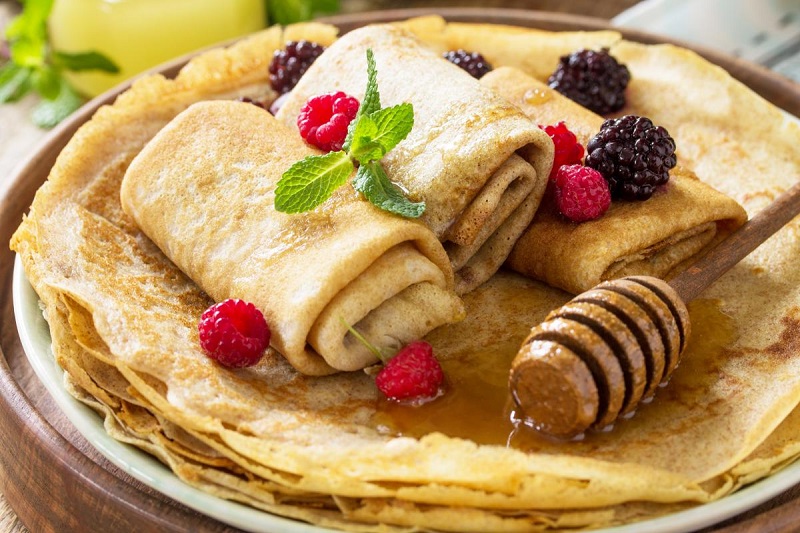
PHOTO: depositphotos.com
What kind of pancakes are baked on the first day of Shrovetide
The first day of Shrovetide, popularly called "Meeting," has a special significance. On this day, simple thin pancakes are baked without complex fillings - with milk or water. It was believed that the first day sets the tone for the whole week, so pancakes should be neat and tasty.
Often, the first pancake was made as simple as possible - without sugar and fillings, as a tribute to tradition and respect for ancestors.
Who should eat the first pancake on Shrovetide
According to folk customs, the first pancake was not eaten by yourself. It was given away:
- to the needy,
- to neighbors,
- or left as a "peace offering" in memory of deceased relatives.
It was believed that such a gesture brought prosperity to the home and protected the family from misfortune throughout the year.
***
It should be noted that the main dish of Ukrainians was not pancakes, but dumplings, especially with cottage cheese and sour cream. Pancakes were used to make pancakes, and pies and cottage cheese casseroles were also served. There was also jelly from pork legs, cabbage soup, stewed cabbage, and fish soup.
Pancake recipe from Intent
Traditionally, pancakes are the main dish of Shrovetide. We present an interesting pancake recipe to our readers...
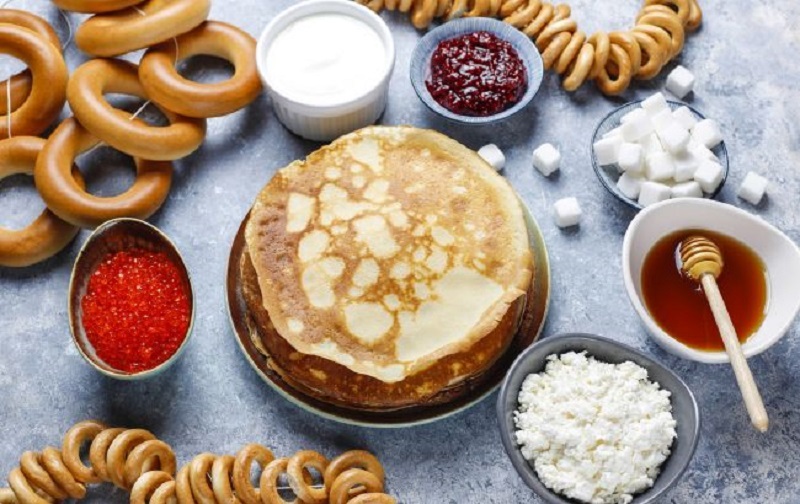
PHOTO: Freepik
To make pancakes, you will need:
- 2 eggs
- 1 tbsp of sugar
- 1.5 cups of milk
- 12 tbsp. l. flour
- 3 tbsp of vegetable oil
- 0.5 cups of boiling water
- butter
- cinnamon
For the filling you will need:
- cottage cheese - 2 tbsp.
- cream - 60 ml
- sugar
First, prepare the dough according to the proportions specified in the recipe and fry the pancakes in the usual way. Brush the finished pancakes with butter and sprinkle with cinnamon sugar, then wrap them, put them in a baking dish and bake them in the oven for about 7 minutes to dissolve the sugar.
While the pancakes are baking, you can make the cream: mix the cottage cheese, cream, and sugar.
When the pancakes are ready, brush them with the cream and sprinkle with cinnamon, and then serve them to the table.
Recipe for dough for kefir dumplings from Intent
These dumplings are tender, fluffy and large in size.
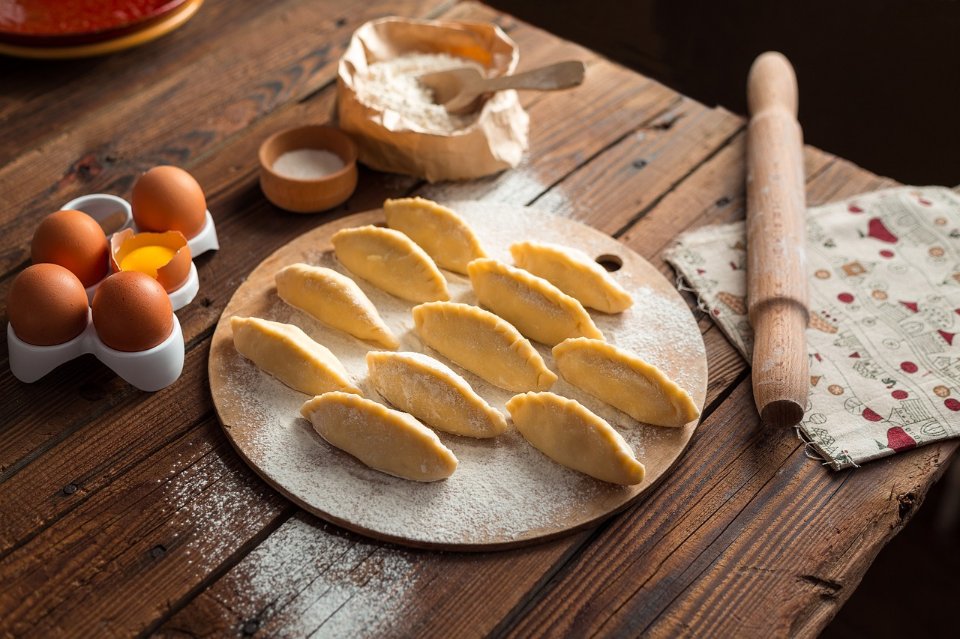
PHOTO: pixabay.com
Dough ingredients (in order of addition):
- flour - from 5 to 5.5 cups;
- salt - a teaspoon;
- baking soda - one and a half teaspoons;
- egg, beaten with sugar - one tablespoon of sugar per egg;
- warm kefir - half a liter.
Intent told you how to make dough for dumplings when it came to dishes for Christmas Eve.
The second cooking option is to dissolve salt in kefir in advance so that its flavor in the dough is even.
A little secret: the fatter the kefir, the more tender the dough.
The stiffness of the dough depends on the quality of the flour (you need high-grade flour). Sometimes eggs also make the dough stiff.
How to make super dough for dumplings:
If the dough is hard, too thick, or tears, you need to
- change the proportions - that is, add more water;
- leave out the egg or take only the white from it;
- replace the water with cottage cheese - this is the secret ingredient that makes the dough softer.
Make the curd filling for these dumplings to your liking.