Меню
Соціальні мережі
Розділи
Christmas Eve: must-have dishes for the family
This article also available in English29

PHOTOS: !FEST
Christmas will soon come to Ukraine - one of the most important, bright and festive days of the year for Christian residents of the country. At this time, people gather with their families, visit or organize a nativity scene, listen to joyful carols in the streets, and play snowballs (in regions where there is snow). The Christmas fast is coming to an end. On Christmas Eve, Ukraine celebrates an equally important Christmas Eve with special customs and dishes. This year it will be held tomorrow, December 24. This event marks the beginning of a series of winter holidays.
An old Ukrainian tradition
The Christmas Eve dinner is an old Ukrainian tradition when the whole family gets together and prepares 12 traditional Christmas dishes. Their number symbolizes the 12 apostles, and according to other (more ancient) legends, the 12 months of the year.
It is usually a very cozy dinner, when all the household members return home from different cities and spend time with their families. The dishes are prepared in small quantities, without excess, so that everyone can taste a little bit of everything. In addition to the Christmas table itself, other customs and even the sequence of serving dishes were important. This is a kind of coded system of amulets, where each dish has its own function: protection, wishes for prosperity, gratitude to ancestors, or invitation to prosperity. Each dish on the table is obligatory and meaningful.
Traditionally, the Holy Supper is held on December 24 on Christmas Eve, and before the transition to the Gregorian calendar, it was celebrated on January 6. The intent is to tell you what is usually added to the menu on the Christmas table and how to prepare delicious old dishes for Christmas Eve.
Ukrainians have long put not just food on the table on Christmas Eve, but also amulets, wishes, thanks to their ancestors, harvest signs, prayers for peace, and calls for prosperity.
12 Lenten dishes for Christmas Eve
Since ancient times, Ukrainians have been preparing 12 meatless dishes for the Holy Supper. Let us tell you about them.
Kutia: a dish that "speaks to the family"
Kutia is the most important dish of the Holy Supper among all Ukrainian dishes for Christmas and a symbol of fertility, purity, honoring deceased ancestors, and eternal life.
This dish is the heart of Christmas Eve:
- Grain is life
- Poppy seeds - memory and protection
- Honey - harmony
- Uzvar - connection of generations
Dinner begins with kutia because it is an appeal to the ancestors for support. In some villages, the first spoonful of kutia was thrown upwards "to make the wheat grow".
Traditional kutia is made from wheat, but nowadays it can often be replaced with rice or millet.
Ingredients:
- 400 g of wheat grains.
- Raisins 100 g.
- Poppy seeds 200 g.
- Walnuts: 100 g.
- 150 g of honey.
- 100 g of sugar (or stevia).
Recipe:
The wheat should be soaked in cold water overnight (if it is "arnautka", then it can be only for an hour), and the next day it should be cooked in plenty of water for 2-3 hours. Raisins should be poured with boiling water. Poppy seeds should also be steamed in boiling water, and then ground with sugar in a mortar. After that, all the ingredients are mixed: steamed raisins, chopped nuts, honey, poppy seeds, and wheat. The kutia should be left to steep until the Christmas Eve dinner.
The kutia should be neither liquid nor dry, with a creamy texture. Sometimes various dried fruits and berries, different types of nuts that the family likes, and a few spoons of broth are added to regulate the consistency.
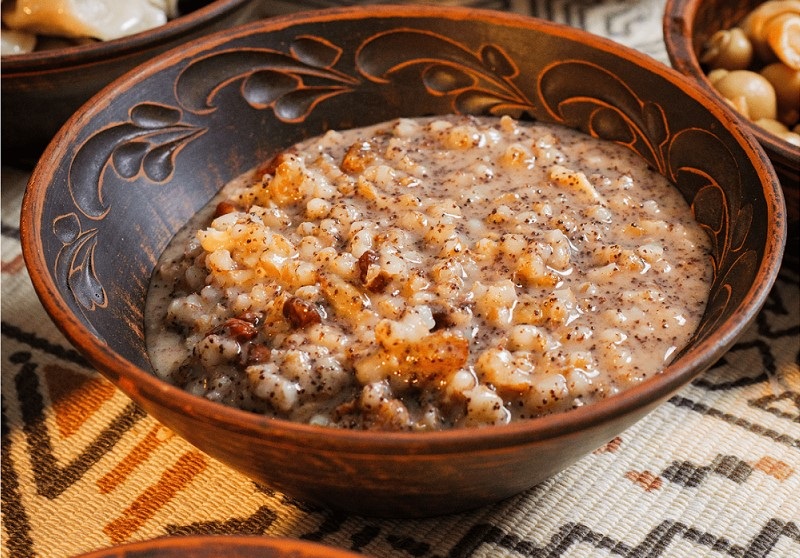
Christmas kutia. PHOTO: !FEST
Uzvar: "the drink of eternity"
Uzvar made from apples, pears, dried apricots, berries, and prunes represents longevity and fertility. It is "living water" that completes the cycle of dishes. In the Carpathians, it was believed that uzvar "closes the year," so it was always left on the table until morning.
The traditional Ukrainian drink was a must-have on Christmas Eve. Do not spare dried fruits and berries to make the taste and color rich.
Ingredients:
- 400 g of dried fruit.
- 2.5 liters of water.
- 2 tbsp of honey or sugar or stevia.
Recipe:
Uzvar is a drink made from dried fruit of your choice: prunes, dried apricots, dried apples and smoked pears, berries. All this goodness should be poured with warm water overnight, and then boiled, allowed to brew, and served. You can add a little sugar, but don't overdo it, because you'll lose all the flavor of the dried fruits and berries. Uzvar is also prepared on Christmas Eve to add to kutia.
Borsch: "a talisman of the house"
Lenten borsch is a dish of unity. The red color of the beets symbolized vitality, and the dish itself symbolized peace in the family. In Galicia, borsch was often served with ears and mushrooms, which strengthened the connection with the ancestral world.
Nowadays, borsch has become something commonplace and familiar, but in ancient times, no celebration was complete without this dish. On Christmas Eve, borsch is made extra special by adding ears - small dough products.
Ingredients:
- 3 beets.
- 1 carrot.
- 1 onion.
- 200 g of celery root or parsley.
- 100 g of dried mushrooms (for borsch).
- 1-2 bay leaves.
- 2-3 pieces of allspice.
- 1 tbsp of vinegar.
- 300 g of fresh mushrooms (filling for ears).
- 200 g of flour.
- 3 tbsp of oil.
Recipe:
First of all, prepare the ears. Knead a simple dough from flour, 2 tbsp of oil, and a teaspoon of salt. Gradually add about half a glass of water: the dough should not be liquid, elastic. Roll out the dough thinly and cut out circles with a glass or nozzle.
For the filling, fry diced mushrooms with a finely chopped onion. Make mini-dumplings filled with fried mushrooms. You can also use dried mushrooms, which go into the borscht itself. The ears are boiled in salted boiling water for 2-3 minutes, then drained and oiled to prevent them from sticking together.
In the past, borsch on Christmas Eve was made with beet kvass, nowadays vinegar or lemon juice is used, but the basic recipe is the same. Dried mushrooms should be soaked overnight and boiled the next day. Wash and peel all vegetables. Boil beets and carrots until tender, then cut into strips, sprinkle with a tablespoon of vinegar.
Boil the broth from carrots, onions, celery root, allspice, bay leaf, add salt to taste and three liters of water, boil for half an hour, take out the vegetables, add the dried mushroom broth, beets and carrots with vinegar, boil and turn off. If desired, add boiled beans or cabbage. When serving, pour the borscht into a bowl and top with mushroom ears.
Oil, garlic and bread: the three invisible pillars of dinner
Bread and oil should always be on the table during the Holy Supper. In winter, garlic comes to their aid:
- Bread - blessing of the house.
- Oil - purity and light.
- Garlic - protection from disease.
This is a triad that accompanies all other dishes and forms a home amulet. Sometimes, dishes based on flour (bread), oil, and garlic are prepared separately. For example.
Lenten donuts with garlic
Garlic dumplings are served with borscht or mushroom soup, fish and other dishes.
Ingredients:
- 400 g flour.
- 250 g water.
- 10 g dry yeast.
- 1 tbsp sugar.
- 5 tbsp oil.
- Head of garlic.
- Bunch of dill.
Recipe:
Dissolve the yeast in warm water with sugar, leave to stand for 10 minutes. Then gradually add 3 tbsp of oil, a teaspoon of salt and flour in portions. Knead the dough, cover with a towel, and let it rise for half an hour. Next, divide it into equal doughnuts and put them on a greased baking sheet. Let it rise a little more.
Bake the donuts in a preheated 180°C oven for 15 minutes. Then peel and press the garlic, mix it with 2 tbsp of oil, chopped dill, salt and brush the doughnuts with this mixture.
Mushrooms: "the voice of the forest"
Mushrooms were considered a "gift of the spirits". Therefore, dishes with mushrooms are a sign of respect for the forest and those who lived before us. In Polissia, mushroom dishes were often served next to kutia as "memory dishes".
Cabbage: "purity and renewal"
Cabbage dishes cleansed both the body and the house. A cabbage leaf is a sign of renewal. The Hutsuls used to put cabbage salad on the edge of the table "to make all the bad things go away".
The most famous dish with these two products on Christmas Eve is...
Cabbage with mushrooms
One of the simplest and no less tasty dishes for Christmas is stewed cabbage with flavorful dried mushrooms.
Ingredients:
- 0.5 kg of cabbage.
- 300 g of fresh mushrooms.
- 100 g of dried mushrooms.
- 1 onion.
- 2 tbsp of tomato paste.
Recipe:
Dried mushrooms should be covered with boiling water overnight. Chop fresh mushrooms (champignons, oyster mushrooms, frozen porcini mushrooms, mushrooms), peel the onion and cut it into slices. Fry the mushrooms and onions in vegetable oil for 5 minutes. Chop the cabbage, add to the mushrooms, mix everything, add the dried mushrooms. Salt the dish, add a glass of water and simmer for 20 minutes, then add the tomato paste and cook for another 10 minutes.
Stuffed cabbage rolls: "the birth of something new"
Cabbage rolls in cabbage leaves are a metaphor for the germ of life, procreation, and well-being. In some regions, they were called "ditki" as a wish for a new birth in the family.
Lenten cabbage rolls with mushrooms
Lenten dishes are just as tasty and festive as those on Christmas Day itself. This statement is proved by cabbage rolls with rice or buckwheat and mushrooms, another dish that is traditional for Ukrainians during the holidays.
Ingredients:
- 250 g of rice (or buckwheat).
- Dried mushrooms: 100 g.
- 1 medium cabbage.
- 1 carrot.
- 2 onions.
- 100 g of tomato paste.
- 1 bay leaf.
- 2-3 allspice.
- 2 tbsp of oil.
Recipe:
Lean cabbage rolls with rice and mushrooms are the same recipe as regular cabbage rolls, but mushrooms are added instead of meat.
As always, pour boiling water over the dried mushrooms and leave them overnight. Cut the head of cabbage, boil it and divide it into leaves. Remove the top leaves, put the cabbage back into boiling water, and cut off the hard root from each leaf. Boil rice until half cooked, mix with mushrooms. Grate the carrots, cut the onion into cubes, salt and fry the vegetables until golden brown with oil, add to the rice.
Wrap a tablespoon of filling in each cabbage leaf. Put the cabbage rolls in layers in a slow cooker or saucepan, tightly pressing together. Pour tomato paste and water over the top of the cabbage rolls. Simmer for 1-1.5 hours until tender.
Beans: "strength and cohesion"
Beans were treated as a food of endurance. It symbolized the health of the family, the "bonding of the home" and the invincibility of the community.
Beans contain a lot of vegetable protein and satisfy hunger well. Therefore, bean dishes are especially relevant for the lean menu.
Stewed beans with vegetables and mushrooms
Ingredients:
- Beans, 1 cup.
- Mushrooms, 300 g.
- Onions, 5 pcs.
- Carrots, 2 pcs.
- Bell peppers, 150 g.
- Tomato paste
- Salt, pepper
- Oil
Recipe:
First, boil the beans until tender. Peel the mushrooms, cut them into thin slices and fry them in vegetable oil.
In another frying pan, fry the onion, sliced in half rings, until transparent. Add the coarsely grated carrots and the pepper cut into strips.
Add tomato paste to your taste. When the vegetables are ready, add the beans, mushrooms, salt and pepper. And simmer for a few more minutes to combine the ingredients. The dish can be eaten both warm and cold.
Dumplings: a symbol of hidden benefits
Dumplings are closed "bags" in which the fillings are considered gifts. Cabbage - prosperity, potatoes - stability, mushrooms - "gift of spirits", cherries - joy. They showed that the year would be generous.
Dumplings with cabbage
Dumplings can be cooked every day, but on Christmas Eve this dish symbolizes family prosperity and satiety. The main feature of dumplings is the ready-made filling. You can add berries, poppy seeds, jam, and mushrooms. On Christmas Eve, dumplings were often cooked with stewed or sauerkraut, or with potatoes and mushrooms.
Ingredients:
- 400 g of flour.
- 200 g of water.
- 2 tbsp of oil.
- 500 g of cabbage.
- 1 onion.
- 2 tbsp of tomato paste.
Recipe:
For the unleavened dough, mix flour, water, oil and 0.5 tsp of salt. Knead and leave to stand for 40-60 minutes.
While the dough is resting, prepare the filling. Cut the onion into small cubes, fry in vegetable oil in a deep frying pan. Finely chop the cabbage, salt and add to the onion, pour in a glass of water and simmer for 10 minutes, then add the tomato paste and simmer for another 10 minutes.
Roll out elastic thin dough, squeeze out rings with a glass, put in a tablespoon of cabbage and seal each dumpling. Cook in salted water for 10 minutes and serve.
Dumplings with potatoes and mushrooms
Another variation of traditional dumplings. The dough recipe has already been described in the previous version. To prepare the filling, boil potatoes, fry mushrooms and onions, and mix it all together. Dumplings filled with potatoes and fried onions are also delicious.
Fish: "purity and transition"
For Ukrainians, fish is a symbol of faith, purification, and change. It was associated with the "water beginning of the world," so it was one of the main dishes on Christmas Eve. The fish was cooked boiled, baked, or poured. There are no restrictions in the choice, it can be pike, crucian carp, catfish, pike perch, bream, and so on. We advise you to choose Ukrainian fish to follow the customs.
Baked or fried fish
To bake fish, season it with salt and pepper, rub it with spices, add onion rings, sprinkle with lemon juice, and bake it in foil at 190°C for 30-40 minutes, depending on the size. You can also make a simple fish fried in flour, stewed with tomato or mushrooms, or a fish bisque.
The easiest way is to salt the fish in a brine made from 1 liter of water, 100 g of salt, 30 g of sugar, 5-6 pieces of allspice, 3-4 pieces of bay leaf. Or buy ready-made herring, sprinkle with vinegar and serve with onion rings.
Regional "lost" dishes that were only available locally
- Hemp kutia - in Polissia - is the oldest analog of the classic kutia. It had a strong status of purification and protection.
- "Shulyk" with poppy seeds
- Podillia version - a ritual dish-amulet for good luck.
Hutsul banusho-like dishes
In the highlands, people sometimes prepared lean versions of ancient dairy dishes with corn and dried meat.
How the table was set on Christmas Eve
Traditional table and home decorations were made from ordinary straw and hay. They decorated the table with Didukh and straw toys, put fragrant hay under the tablecloth, and garlic on the four corners of the table to drive away evil spirits. A lighted candle was also placed on the table, kutia, uzvar, and bread in the center, and then other dishes were added.
Christmas serving dishes, glasses, and colorful slices of fruit and vegetables created a festive atmosphere. We added napkins and towels with Christmas motifs. Nowadays, hot drinks are also prepared and soft music is played (if there is electricity), and lights are lit on the Christmas tree or window.
Christmas Eve traditions
Christmas food is not the only attribute of Christmas Eve. The customs that are passed down from generation to generation create magic. It all starts with waiting for the first star to rise in the sky. That's when it's time to sit down at the table and pray together. The extra plate/empty glass on the table is left for those who did not wait for the holiday (the dead).
The meal began with kutia: each family member had to taste it first. Kutia was and still is a symbol of Christmas Eve. The head of the family would throw a spoonful of kutia to the ceiling: if it stuck, then there would be a good harvest and a good year. Then they would serve borsch or soup, fish dishes, dumplings, stuffed cabbage and donuts for dessert.
On Christmas Eve, children would crawl under the table and repeat the voices of different livestock to "get lucky": sheep, cows, chickens, geese, horses. After the games, in some regions they would start caroling.
There is also a custom of sharing prosvira, or slices of bread with honey, on Christmas Eve. The host has to go around to each family member and treat them, saying a wish from himself to that particular relative.
After dinner
- Caroling and the nativity scene: young people and children walk with the Christmas star, sing carols, and congratulate the birth of Christ.
- Household rounds: inspecting the cattle, feeding them, clearing the paths of snow.
- Asking for forgiveness: all offenders must be forgiven.
Prohibitions
- Quarreling, cursing, refusing alms.
- Washing clothes, cutting hair, shaving.
- Saving for the holiday.