Меню
Соціальні мережі
Розділи
Nov. 6, 2025, 6:49 p.m.
New trends in the EU for refugees from Ukraine
This article also available in English76

Photo: https://visitukraine.today/
The European Union is preparing to end temporary protection for Ukrainians. Our author has analyzed what forced refugees from Ukraine can expect in the future.
Which EU countries have the highest number of Ukrainians
By the end of the summer of 2025, more than 4.37 million Ukrainian citizens who were forced to flee their homes due to Russia's full-scale aggression against Ukraine had been granted temporary protection in the European Union. This number continues to grow slowly but surely every month. As of August 31, 2025, the total number of persons granted temporary protection increased by 30980 people (+0.7%) compared to the end of July.
This, according to the published data of the European Union Statistical Service, demonstrates that migration flows do not stop.
The EU countries hosting the largest number of persons granted temporary protection from Ukraine are Germany (1 million 210 thousand 515 people; 27.7% of the total number of persons in the EU), Poland (995 thousand 925 people; 22.8%) and the Czech Republic (385 thousand 855 people; 8.8%). The number of persons under temporary protection increased in 25 EU countries, with the three largest absolute increases observed in Germany (+6800; +0.6%), the Czech Republic (+5175; +1.4%) and Romania (+2370; +1.2%).
Although Germany has received the most Ukrainians in absolute terms, the burden on smaller countries is much higher. To assess this, the ratio of refugees per 1,000 local residents is used. The highest ratios of persons granted temporary protection per thousand people were observed in the Czech Republic (35.4), Poland (27.3) and Estonia (25.4), while the corresponding figure at the EU level was 9.7 per thousand people. It should be noted that as of August 31, 2025, Ukrainian citizens accounted for more than 98.4% of persons granted temporary protection in the EU. At the same time, adult women accounted for 44.6% of the total. Minors accounted for almost one-third (31.1%), while adult men made up about a quarter (24.3%) of the total.
This number of Ukrainians are staying and have been granted temporary protection in EU countries on the basis of Council Implementing Decision 2022/382 of March 4, 2022, which established the massive influx of displaced persons from Ukraine as a result of Russian aggression against Ukraine and introduced temporary protection. On June 13, 2025, the European Council decided to extend temporary protection for these persons from March 4, 2026 to March 4, 2027.
"While Russia continues to terrorize Ukrainian civilians with indiscriminate air strikes, the EU continues to show its solidarity with the Ukrainian people. We will continue to provide protection to millions of Ukrainian refugees for another year. The Polish Presidency has also initiated discussions on a strategy to gradually withdraw temporary protection after a just peace is reached. In the near future, we will work on common solutions for the entire EU in this area, in particular in the context of returning to Ukraine," said Tomasz Siemoniak, Minister of the Interior and Administration of Poland.
The temporary protection system reduces the burden on national asylum systems, as persons eligible for this type of protection do not need to apply for asylum individually. The extension until March 2027 sends a signal to displaced persons from Ukraine that they do not have to apply for asylum.
The extension does not change the terms of the March 2022 decision regarding the categories of persons covered by temporary protection or the rights they enjoy.
What is temporary protection and who is eligible for it?
Temporary protection is an emergency EU mechanism that is activated in exceptional circumstances when there is a massive influx of refugees. The EU Temporary Protection Directive was adopted in 2001 following the large-scale displacement of people caused by the armed conflict in the Western Balkans, in particular from Bosnia and Herzegovina and Kosovo.
The EU activated a temporary protection mechanism for refugees from Ukraine in March 2022 in response to Russia's full-scale invasion of Ukraine. If the circumstances in Ukraine change to allow for a gradual return and sustainable reintegration, the Commission may propose to the Council to suspend temporary protection earlier than the foreseen expiry date.
Ukrainians in the EU who have been granted temporary protection are entitled to:
- residence and access to housing
- access to the labor market;
- social security and medical care.
For unaccompanied children and adolescents:
- legal guardianship
- access to education;
- medical care.
The EU also approved rules to release funds to help people fleeing the war in Ukraine. These funds have ensured that member states hosting refugees have sufficient resources to meet the growing needs for housing, education and healthcare. Thus, to support EU countries and regions in dealing with the consequences of Russia's war against Ukraine and hosting Ukrainian refugees, the EU has taken steps to provide more flexibility in the use of EU Cohesion Policy funds, for example by expanding the possibilities of transferring resources between programs and receiving 100% EU funding, as well as providing additional pre-financing for projects to offer immediate assistance to Member States.
When Russia's direct aggression against Ukraine began, the EU allocated around €17 billion in cohesion and post-pandemic recovery funds that Member States could reallocate to support refugees from Ukraine with immediate needs such as housing, education, health and childcare. This included around €7 billion of unspent Cohesion Policy funds from 2014 to 2020 and around €10 billion of funds earmarked for post-pandemic recovery under the Recovery Assistance for Cohesion and Territories in Europe (REACT-EU). These funds have facilitated the financing of a wide range of activities to support people fleeing war and provided sufficient direct support to those working with refugees in local communities.
Completion of the Temporary Protection Program
The Temporary Protection Program, which since 2022 has granted millions of Ukrainians the right to reside, work and receive social benefits in the EU, is scheduled to end. On September 16, 2025, the EU Council adopted a recommendation on the transition from temporary protection for displaced persons from Ukraine. The recommendation sets out a common framework to ensure the sustainable return and reintegration of displaced Ukrainians to Ukraine when conditions permit, as well as a gradual transition to other residence statuses for those eligible.
With this recommendation, the EU is preparing for a coordinated approach in case conditions in Ukraine make it possible to gradually withdraw temporary protection status.
The recommendation also contains measures to ensure information provision to displaced persons and measures to ensure coordination, monitoring and information exchange between Member States and Ukraine.
The document called on Member States to offer displaced Ukrainians national residence permits issued, for example, for reasons related to employment, training, education or family circumstances, if they meet certain conditions. Persons enjoying temporary protection should also be able to apply for statuses under EU law, such as those related to highly skilled work. According to EU law, it is not possible to hold such statuses simultaneously with temporary protection.
Member States should also ensure that displaced Ukrainians are provided with information on the possibilities of applying for another legal status, the impact on their benefits and rights, and support for returning to Ukraine. EU countries should, in particular, create information systems and campaigns on voluntary return programs. They could also establish so-called Unity Centers, which could be funded by EU programs. The Unity Centers can serve as contact points for displaced Ukrainians in the Member State, provide assistance with documents, as well as advice on employment in Ukraine and the host country.
The document also mentions support for the reintegration and voluntary return home of Ukrainian residents. The point is that many Ukrainians who fled the war need support to be able to return to Ukraine and reintegrate into Ukrainian society. Member states can help them by allowing them to make familiarization visits to Ukraine. The conditions for these familiarization visits should be agreed upon between EU countries.
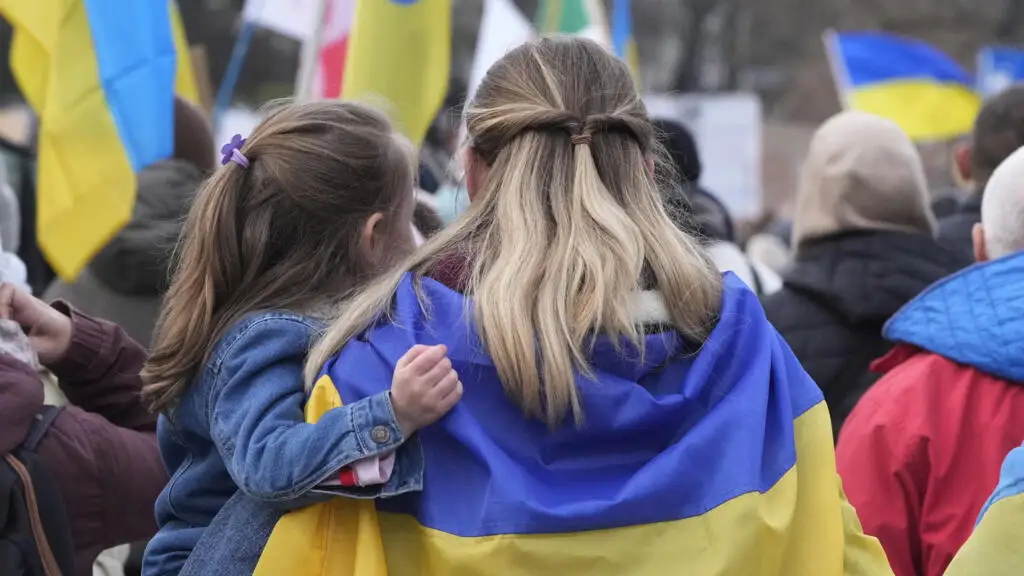
Photo: AP
Member States should also provide for voluntary return programs valid for a limited period of time and agree on the conditions of these programs with the Ukrainian authorities and other Member States. They should also extend temporary protection rights (e.g., related to housing, medical care, and education) to persons registered in voluntary return programs.
In some countries, Ukrainian refugees have already begun to be "made to feel nervous" this year. Earlier, Intent wrote that due to the veto of one of the laws by the newly elected President of Poland, Karol Navrotsky, refugees from Ukraine could become illegal immigrants. However, after the problem was resolved, the Polish Social Insurance Institution (ZUS) announced a significant increase in control over the payment of social assistance for 800+ children. The changes directly affect foreigners, including Ukrainian citizens. The main goal is to ensure that only those who actually reside and work in Poland receive the benefits.
In addition, while most EU countries are likely to act in sync, Poland plans to end temporary protection almost a year earlier - in March 2026. This will force almost a million Ukrainian refugees staying in this country to make a decision: whether to apply for a residence permit on a general basis or return to their homeland.
Some refugees from Ukraine may also face problems in the Czech Republic. Thus, Tomio Okamura, the leader of the SPD party, which entered the Czech parliament after the recent elections, insisted on revising residence permits for all Ukrainian citizens who are under temporary protection during the election campaign.
According to the SPD's proposal, only those Ukrainians who work in jobs that are unattractive to the local population will be able to stay in the Czech Republic. In other words, these are low-paying or physically demanding professions where there is a shortage of Czech personnel. This initiative has become one of the main conditions that the SPD has put forward for a possible entry into the government after the parliamentary elections.
Pressure on refugees is growing in other countries as well. In particular, governments are cutting social benefits and unemployment benefits. In Germany, they plan to reduce and then completely stop financial support for those who refuse to take up employment.
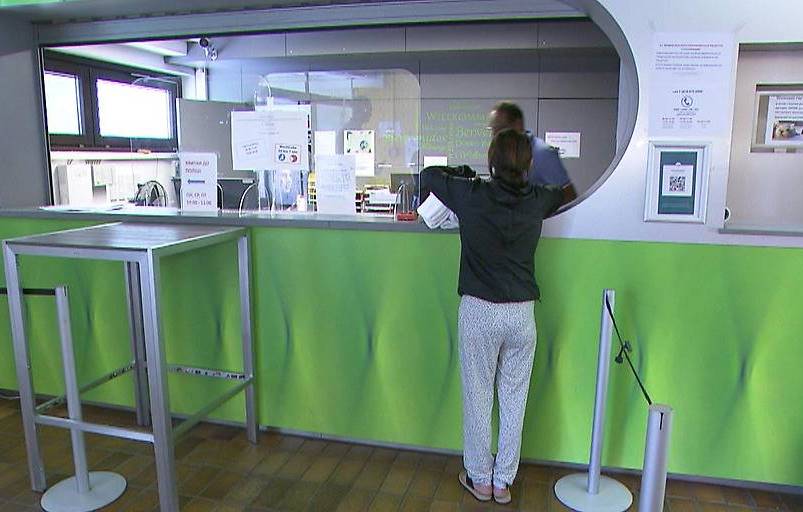
Refugee center in Vienna. Photo: wien.orf.at
Also in Austria, the last center in Austria that accepted Ukrainians fleeing the war will be closed in Vienna by the end of this year. The reason for the closure was the difficult situation of the shelter, which had been operating at the limit of its capacity for a long time. After the closure of a similar center in Vorarlberg this summer, Vienna remained the only federal state with its own reception center for Ukrainians. During the work of Quartier Schlossberg, nearly 9000 Ukrainians received the necessary assistance: short-term housing, food, counseling, as well as support in registration, paperwork and relocation to other federal states. The shelter is run by the charitable organization Volkshilfe, which has been operating at the limit of its resources for a long time. The Austrian government paid 190 euros of one-time assistance per person, but the amount has not been indexed since 2022 and covered only part of the costs.
Refugees from Ukraine: return or flight?
If the war in Ukraine ends in the near future, the number of refugees returning will be much lower than in the first years of the full-scale invasion.
This was stated by sociologist Yevhen Holovakha in a commentary to UNIAN.
According to him, in 2022, about 80% of those who went abroad expressed their willingness to return. But these intentions are weakening over time: the longer the war lasts, the less likely Ukrainians are to return home.
"Soon it will be four years since the war has been going on. And there is a parallel with the war in the Balkan countries. In Bosnia, after 4 years of war, 30% returned to Bosnia. Our situation is similar, we are not very different. Therefore, if the war ends in the near future, we should be guided by this figure. But everything depends on many factors. The first is how the war itself will end. It is also important how other countries will treat Ukraine. If they stop providing aid, for example. In Ukraine, more than 70% of those who have left have higher education. And what do they mostly do? Of course, not in their specialty. It is not very pleasant for a person with a university degree to work as a cleaner. And at home, this person can work as a specialist," the sociologist noted.
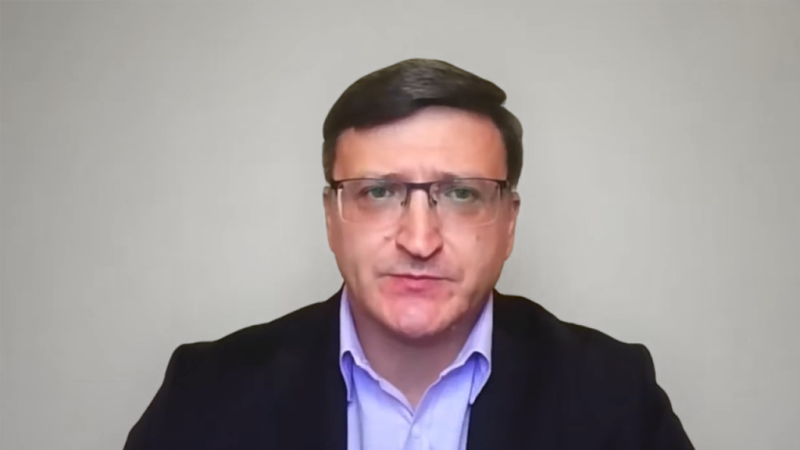
Vasyl Voskoboinyk. Photo: https://ompua.org/
Meanwhile, according to Vasyl Voskoboinyk, head of the Office of Migration Policy, Europe will not have any problems with the completion of the temporary protection program, as countries operate within a clear bureaucratic procedure.
"Sooner or later, the war will end, and Ukrainians will be transferred to other legal grounds for stay - work, study or family circumstances," the expert explained.
However, according to Voskoboynyk, we should not expect a massive return of Ukrainians until the war is over. On the contrary, according to the NBU's forecasts, about 200,000 more people may leave Ukraine next year.
Therefore, the main task for Ukraine is not to lose the competition for its citizens after the war. After all, its future depends on whether the country is attractive for living and working.