Меню
Соціальні мережі
Розділи
Feb. 12, 2023, 9:11 p.m.
UNITED NATIONS: World Tourism Organization
This article also available in English11109

Image: wikipedia
We continue our series of publications on the activities of global international organizations. We refer to such organizations as structures whose members are the vast majority of countries. An important feature of such organizations is that the rules and decisions they adopt actively influence the formation of a certain area of human interests - politics, economics, justice, sports, etc. Today we will focus on the World Tourism Organization.
General characteristics of the UN
General description of the World Tourism Organization
General characteristics of the United Nations
The United Nations consists of 193 states. All sovereign countries can be found among the UN member states, except for the Vatican. Such a respectable representation potentially allows to consider and resolve any issues of global or regional level. In particular, the UN is able to extinguish armed conflicts, as it was repeatedly demonstrated in the twentieth century (Iraq, the former Yugoslavia, Somalia).
The organization is headquartered in New York. The UN also has additional offices in Vienna, Geneva, Nairobi and The Hague. The organization uses six official languages: Arabic, Chinese, English, French, Russian and Spanish.
The UN structure includes six main bodies: The General Assembly, the Security Council, the Economic and Social Council, the Secretariat, the International Court of Justice and the Trusteeship Council. However, the latter body has been formally suspended since 1994. The chief official of the UN is the Secretary-General. Since January 1, 2017, this position has been held by Portuguese politician and diplomat Antonio Guterres.
General characteristics of the World Tourism Organization
The World Tourism Organization (hereinafter - WTO) is a UN agency responsible for the promotion and development of tourism around the world. The WTO considers tourism as an important tool for economic growth and sustainable environmental development. The organization is headquartered in Madrid. The WTO was founded in 1975. It became a specialized agency of the United Nations in 2003.

Photo: Wikipedia
The WTO includes 160 members, 6 associate members, 2 observers and more than 500 affiliated members. Although the vast majority of the world's countries are members of the WTO, a number of developed countries are not members of the organization: Australia, Belgium, Canada, Denmark, Finland, Great Britain, New Zealand, Sweden, the United States, and the United Kingdom. Dependent territories are associate members of the WTO: Flemish Community, Puerto Rico, Aruba, Hong Kong, Macau and Madeira. Two observers to the WTO are the Holy See and the Palestine Liberation Organization. Affiliate members include representatives of the private sector, educational institutions, tourism associations, commercial structures, etc.
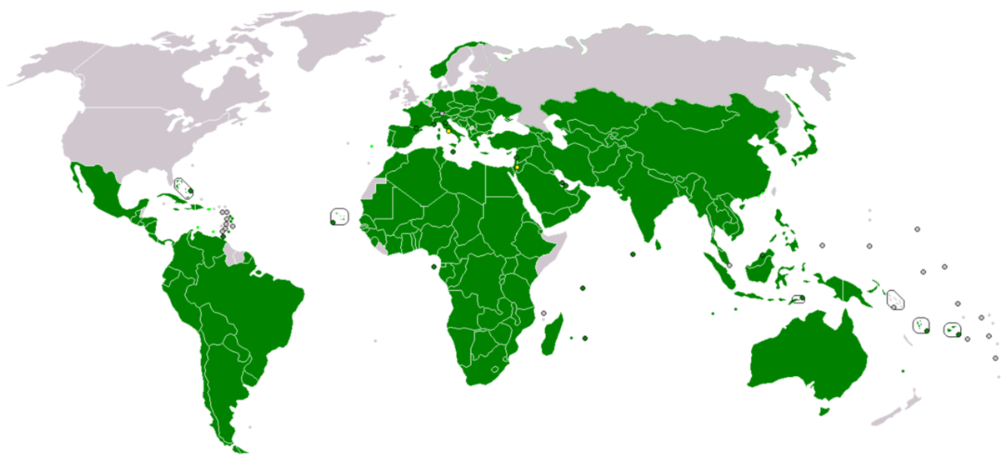
WTO members on the world map. Image: Wikipedia
The General Assembly (GA) is the main governing body of the WTO. The GA meets every two years and consists of WTO members and associate members. Affiliate members and representatives of other international organizations may attend meetings as observers. The GA approves the WTO budget and work program and discusses key topics in the tourism sector. The GA also elects the Secretary General every 4 years.
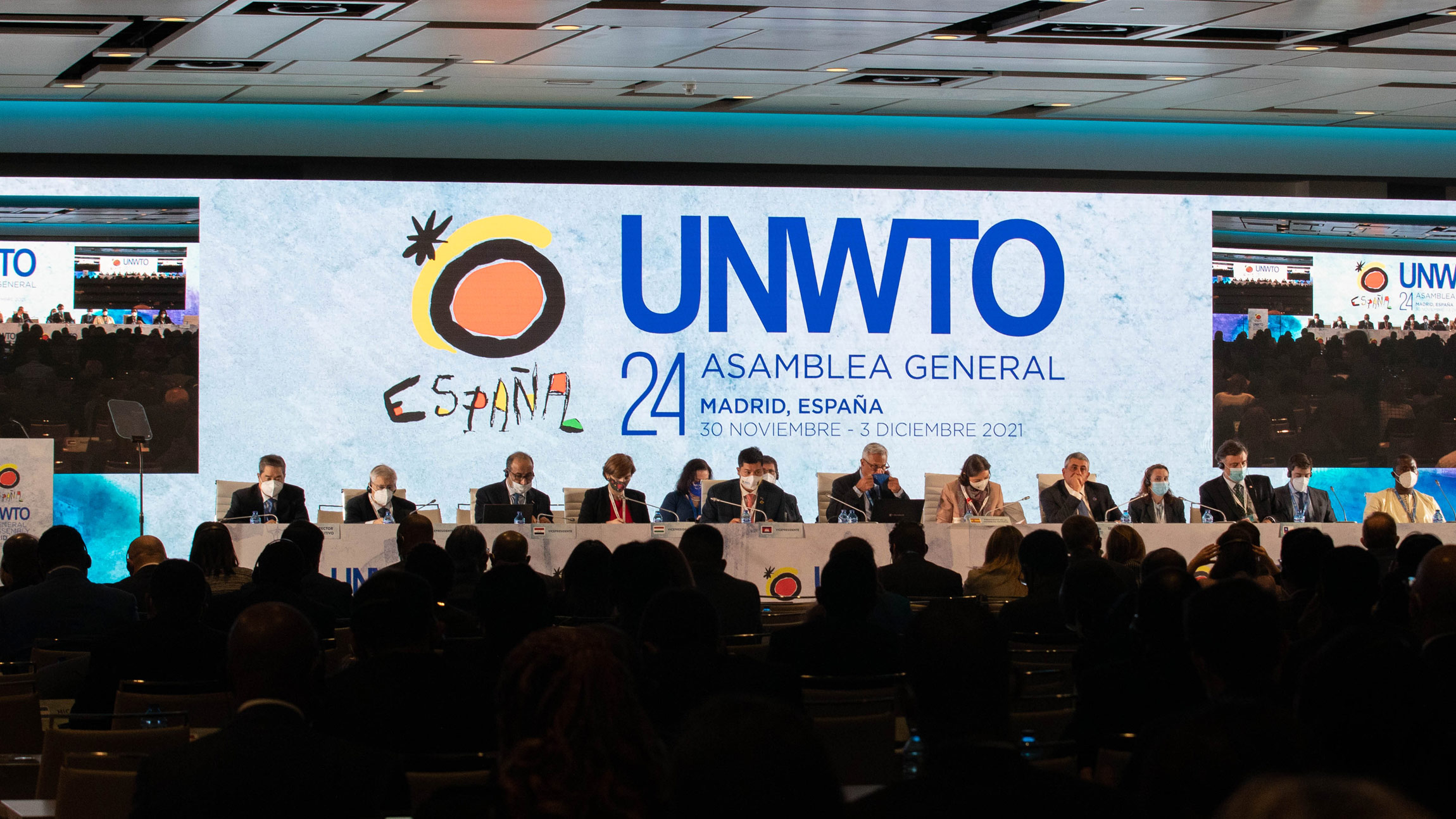
The WTO General Assembly. Photo: WTO
The Executive Council (EC) is responsible for implementing the decisions and recommendations of the GA and reporting to the GA on the performance of its duties. The Board meets at least twice a year. One out of every five WTO members is elected to the SC, taking into account equitable geographical distribution. Spain is a permanent member of the WTO as a host. Members are elected for a 4-year term.
The WTO has 6 regional commissions - Africa, the Americas, East Asia and the Pacific, Europe, South Asia, and the Middle East. The commissions meet at least once a year and consist of all members and associate members of a particular region. The commissions provide an opportunity for WTO members to maintain contact with each other and with the Secretariat between sessions of the General Assembly, to which they can make proposals and express their wishes.
The Secretariat currently consists of the Secretary-General and 152 headquarters staff. They are responsible for implementing the WTO's program and meeting the needs of the organization's members. The Secretariat also includes a regional office in Nara, Japan.
The Secretary General is the head of the WTO. Since January 2018, this position has been held by Georgian politician and diplomat Zurab Pololikashvili. He became the sixth head of the organization.
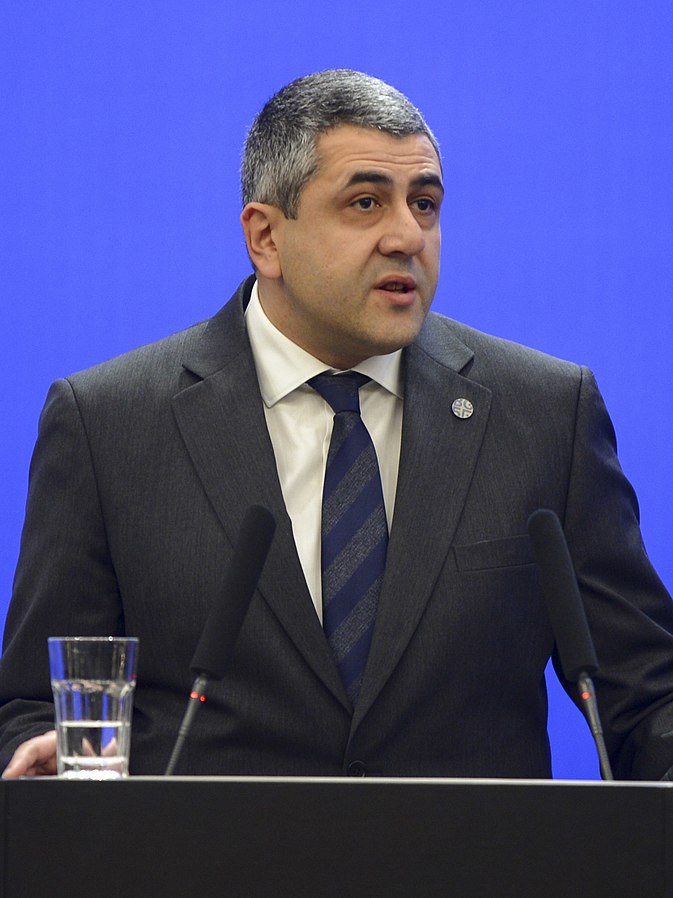
WTO Secretary General Zurab Pololikashvili. Photo: Wikipedia
One of the important forms of WTO activity is holding conferences and meetings. For example, in 1980, the WTO held the World Conference on Tourism, in 1982 - the World Tourism Meeting, and in 1989 - the International Conference on Tourism. In addition, in 1985, the WTO General Assembly adopted the Charter of Tourism, and in 1999, this body approved the Global Code of Ethics for Tourism.
The WTO assists its members in developing tourism policies and strategies, provides advice on tourism management and vertical cooperation at various levels, and offers models of cooperation with the private sector.
To help rebuild tourism infrastructure, the WTO provided expertise and advice to governments affected by the 2004 and 2006 tsunamis. In particular, assistance was provided to Thailand and Indonesia. In 2009, the WTO launched the "Ho Khao Energy Efficiency Program" in Thailand to reduce the effects of climate change. With the assistance of UNEP, the WTO joined the development of a strategy for tourism development in the Carpathians.
Hotels and other types of tourist accommodation are responsible for a significant portion of carbon emissions. The WTO is one of the initiators of the Hotel Energy Solutions project, which provides information, technical support, and training for small and medium-sized enterprises in the tourism sector.
The WTO has established the International Network of Observatories for Sustainable Tourism. The network monitors the economic, social and climate impacts of tourism in order to reduce the negative effects and increase the positive aspects of tourism activities.
The observatory on the island of Mallorca. Video: WTO
The WTO conducts regular research in the field of tourism. In particular, the WTO Tourism Dashboard offers statistics and conclusions on key indicators in the tourism industry at the global, regional and national levels. The dashboard contains information on tourist arrivals and accommodation, the share of tourism in exports and GDP, and seasonality. The WTO also publishes the World Tourism Barometer report four times a year, which tracks short-term trends in the tourism business.
The organization is engaged in educational activities. In particular, the WTO Academy offers educational programs, trainings, webinars and online courses on various topics. The WTO's Education for Executives project aims to improve the skills of tourism business professionals.
The WTO pays attention to gender issues. In particular, the organization has launched the project "Empowering Women after COVID-19", which aims to strengthen gender equality in tourism government institutions and businesses in the process of overcoming the consequences of the pandemic.
Ukraine joined the WTO in 1997. The Decree of the President of Ukraine of September 21, 1998 "On the Day of Tourism" established the norm of celebrating this event annually on September 27. In September 1999, Ukraine was elected to the WTO's WTO Council. Since May 2000, the Ambassador of Ukraine to Spain and Andorra has been acting as the Permanent Representative of Ukraine to the WTO. Eight WTO international seminars on various aspects of global and national tourism policy were held in Ukraine. WTO Secretary Generals Francesco Frangiali and Taleb Rifai visited Ukraine.
In response to Russia's attack on Ukraine in February 2022, the WTO General Assembly decided on April 27 last year to terminate Russia's membership in the organization. Forty countries voted in favor of Russia's expulsion, while 11 countries opposed the decision. Interestingly, Russia tried to withdraw from the WTO at the last minute on its own accord. In this case, Russia would have been expelled only a year after submitting its official application.
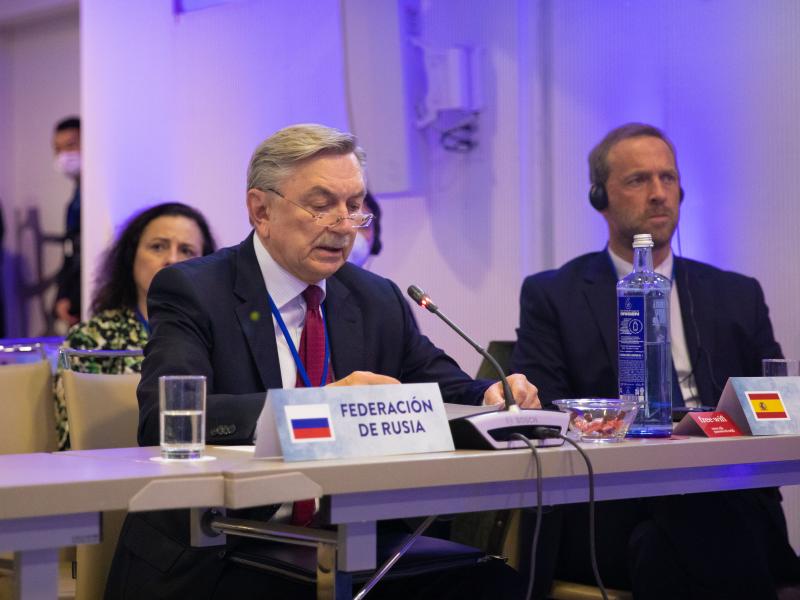
At the WTO General Assembly session, members vote to expel Russia. Photo: WTO
The WTO is the leading international organization in the field of tourism. The WTO organizes international conferences, conducts research and collects information in the field of tourism, and helps its members develop tourism strategies. However, it should be emphasized that a significant number of countries, including UN members, are either not members of the WTO or have withdrawn from the organization. Moreover, some reputable countries do not have membership in the WTO: Australia, Belgium, Canada, Denmark, Finland, Great Britain, New Zealand, Sweden, the United States, and the United Kingdom. For example, Australia withdrew from the organization in 2015. Representatives of the state noted that the WTO does not meet Australia's needs, while annual contributions are quite significant.
Some of the WTO's decisions look ambiguous. For example, in 2012, the WTO appointed Zimbabwean dictator Robert Mugabe as its official representative, which led to Canada's withdrawal from the organization. Thus, it can be argued that the world's leading countries consider membership in the WTO optional. They have sufficient capacity and authority to promote their own tourism industry without the WTO's help. On the other hand, for less influential countries, the WTO can be a very useful platform for tourism development and international cooperation.