Меню
Соціальні мережі
Розділи
Jan. 22, 2023, 7:18 p.m.
UN Entity for Gender Equality and the Empowerment of Women
This article also available in English4621

Intent continues a series of publications in which we tell you which countries are members of certain international organizations and what role they play in the world. In the previous issues, we looked at the essence of the work of:
World Bank,
General Assembly,
Security Council,
International Court of Justice,
UNICEF,
Red Cross and others.
General characteristics of the UN
The United Nations consists of 193 states. All sovereign countries can be found among the UN member states, except for the Vatican. Such a respectable representation potentially allows for consideration of any global or regional issues. In particular, the UN is able to extinguish armed conflicts, as it did many times in the twentieth century (Iraq, the former Yugoslavia, Somalia).
The organization is headquartered in New York. The UN also has additional offices in Vienna, Geneva, Nairobi, and The Hague. The organization uses six official languages: Arabic, Chinese, English, French, Russian and Spanish.
The UN structure includes six main bodies: The General Assembly, the Security Council, the Economic and Social Council, the Secretariat, the International Court of Justice and the Trusteeship Council. However, the latter body has been formally suspended since 1994. The chief official of the UN is the Secretary-General. Since January 1, 2017, this position has been held by the Portuguese politician and diplomat Antonio Guterres.
General description of the UN Entity for Gender Equality and the Empowerment of Women
The United Nations Entity for Gender Equality and the Empowerment of Women (UN Women) - is an organization within the UN system that works on gender equality and promotes the advancement of women in the world. UN Women helps UN member states to set global standards for gender equality and works with individual governments and civil society to develop relevant gender policies and legislation. The organization is headquartered at the United Nations Building in New York. UN Women's activities are partially funded by voluntary contributions from states, foundations and the private sector, and partially funded from the UN budget.
Interestingly, UN Women has a kind of anthem for the organization. On March 8, 2013, 25 famous singers and musicians gathered to sing the song"One Woman". The song was written specifically for UN Women to celebrate the organization's work for women and girls around the world.
UN Women was established in 2010 by the UN General Assembly through the merger of four different organizations. Since its inception, the organization has been led by three executive directors. It is significant that all of them were women. Interestingly, the first executive director was former Chilean President Michelle Bachelet. Since September 2021, UN Women has been headed by Jordanian representative Sima Sami Bacchus.
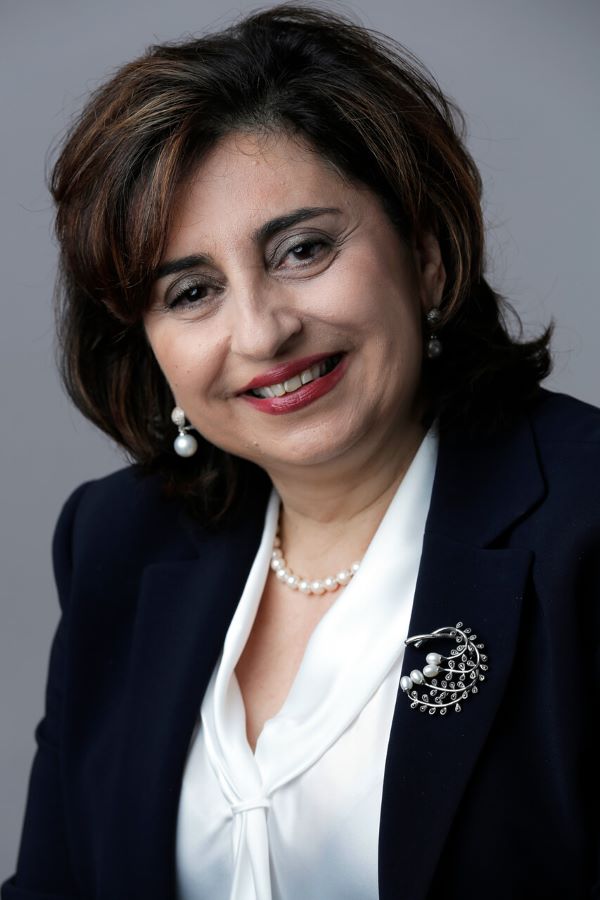
UN Women Executive Director Seema Sami Bacchus. Photo: UN Women.
Governance of UN Women
UN Women's governance consists of two tiered structures. The first is formed by the UN General Assembly, ECOSOC and the UN Women Executive Board. This structure is responsible for the operational activities of the organization. The second is formed by the UN General Assembly, ECOSOC and the UN Commission on the Status of Women. This structure is responsible for the normative side of the organization's activities.
The key body responsible for the day-to-day activities of UN Women is the Executive Board. The Board consists of 41 representatives of UN member states representing different regions of the world:
- 10 from Africa
- from Asia - 10; and
- from Eastern Europe - 4;
- Latin America and the Caribbean - 6;
- Western Europe and other countries - 5;
- from countries that make the largest financial contributions - 6.
Among the functions of the Board are the following: managing the operational work of the organization; ensuring that operations and strategy are in line with the overall requirements set by the General Assembly and ECOSOC; and deciding on the administrative plans and budget of UN Women. The Board holds one annual and two regular sessions.
The Executive Board of UN Women. Video: UN Women.
Activities of UN Women
The activities of UN Women are implemented in several areas. First, the organization is working to formulate global standards for gender equality. Second, UN Women helps UN member states implement these standards by providing expertise and financial support. Thirdly, the organization works with other parts of the UN system to promote gender equality through a wide range of other issues related to human rights and human development.
UN Women has implemented a series of 16 key programs that fit seamlessly into the organization's strategic plans. The programs are aimed at eliminating structural barriers to gender equality and women's empowerment. In particular, the Women's Political Empowerment and Leadership Program works to increase the number of qualified and capable women who are able to stand for election, transform gender norms, and support women leaders in gender-sensitive political institutions.
UN Women believes that innovative technologies have the potential to improve the gender-imbalanced global system. The organization supports women engaged in innovation and entrepreneurship; invests in innovations and technologies that meet the needs of women; and, together with industry, develops tools and methodologies that will allow for a gender-sensitive approach to innovation.
There are many intergovernmental forums around the world that discuss issues of gender equality and the advancement of women. In particular, these issues are considered at the meetings of the UN Commission on the Status of Women, the UN General Assembly, the UN Security Council, ECOSOC and at major international conferences. UN Women supports the efforts of UN member states in establishing gender equality norms. The organization conducts research, provides useful information and helps individual countries implement norms and standards.
UN Women coordinates the efforts of various organizations within the UN system. The organization ensures that gender equality issues are central to various programs and projects, advocates for additional resources to address gender issues, and supports and implements joint programs within the UN system. UN Women plays a key role in disseminating knowledge about the situation of women.
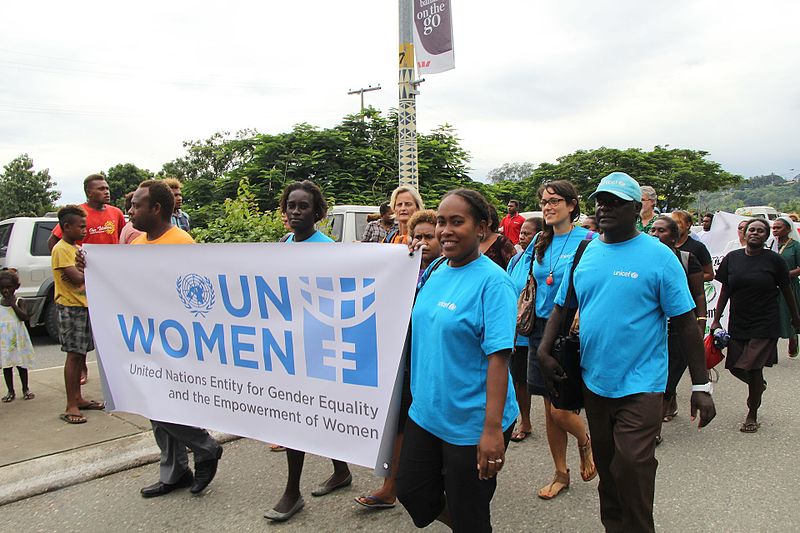
UN Women and UNICEF staff take part in the celebratory parade on March 8, 2014. Photo: Wikipedia
The UN tries to monitor gender balance in the organizations of its system. UN Women is making significant efforts in this direction. The organization conducts continuous monitoring within the UN system, collects information, compiles databases, and creates infographics that identify trends in gender balance.
UN Women has a training center that offers training courses, programs and materials on gender equality. The Center regularly introduces innovative approaches and methodologies into the training process.
UN Women conducts regular research and publishes reports on gender issues. The organization, together with partners from the UN system, promotes the production of high-quality gender statistics. In particular, within the framework of the Expert Group on Gender Statistics, UN Women staff developed 52 gender indicators and new principles for measuring violence against women and girls. The organization cooperates with agencies involved in global gender statistics.
UN Women in Ukraine
UN Women has been working in Ukraine since 2015. The organization's activities in Ukraine began with individual projects. In 2018, an office was opened here. The strategic plan for cooperation with Ukraine for 2018-2022 identified three thematic areas:
- women, peace and security
- Eliminating violence against women and girls;
- governance, leadership and participation.
UN Women is working with the government, the Verkhovna Rada, human rights and women's organizations to implement the norms and gender policies. After the Russian invasion in February 2022, the organization focused its efforts on addressing the humanitarian needs of women and girls affected by the war and supporting the initiatives of women's organizations.
UN Women is one of the youngest organizations in the UN system. In general, gender issues were dealt with long before this organization came into being. Even now, within the UN system, the organization is not the only one dealing with women's issues. For example, the UNHCR deals with refugee women, UNAIDS takes care of women with HIV, WHO is concerned about the health of all women in the world, etc. However, the main achievement of UN Women is that it is able to accumulate global efforts and attract the necessary resources to implement projects and programs that women need.
It is impossible to imagine the modern world without such an organization, given the global trends towards feminization. Undoubtedly, the fight for equal rights is one of the cornerstones of any democratic society. However, we would like to warn that the struggle for quality does not turn into a pursuit of quantitative indicators. In particular, we are not sure that every organization should have the same number of men and women. Let there be more women if they perform their duties more effectively. We believe that the trends of the communist past to artificially "equalize" all people should be left behind.