Меню
Соціальні мережі
Розділи
May 19, 2023, 7:11 p.m.
UEFA has left Russian football out of the game. All about the organization
This article also available in English10580

Image: sport.unian.net
Alexander Čeferin, who will head the Union of European Football Associations (UEFA, French Union Europeenne de Football Association, hereinafter UEFA) until 2027, called it impossible for the Russian national team and Russian clubs to return to tournaments under the auspices of the association. The aggressor country is talking about transferring its football to the Asian Union. Find out what UEFA is in Intent's article.
General characteristics of UEFA
General characteristics of UEFA
UEFA is an international football body that organizes competitions of national teams and club teams in Europe. It unites national football associations (hereinafter referred to as NFAs) of European countries, distributes advertising and broadcasting revenues between them and European clubs. The organization is headquartered in Nyon, Switzerland. The official languages of UEFA are English, French and German. The organization was founded in 1954 in Basel after consultations between the NFAs of Italy, France and Belgium.
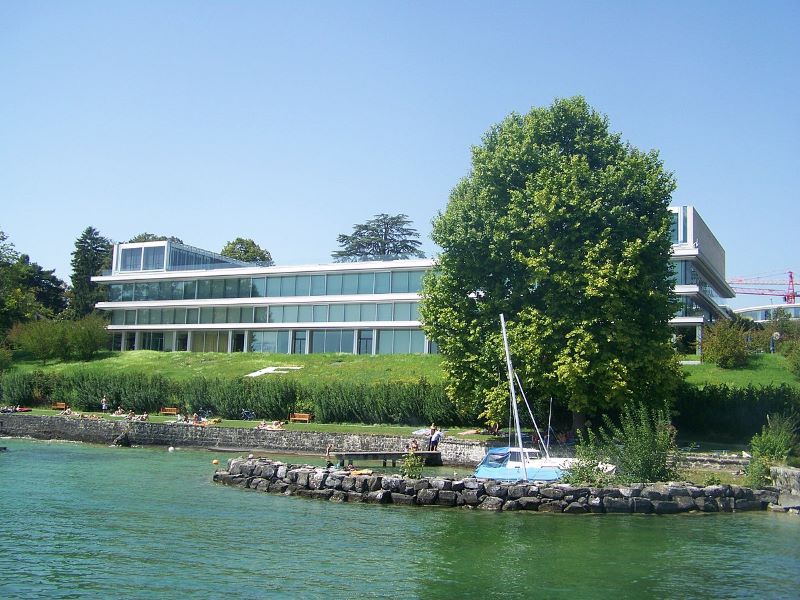
UEFA headquarters in Nyon. Photo: Wikipedia
UEFA consists of 55 NFAs. Most members are European sovereign states. Among European sovereign states, only Monaco and the Vatican are not members of the organization. But the organization has several members that are not European sovereign states: England, Northern Ireland, Scotland, Wales, Gibraltar, the Faroe Islands and Kosovo.
There are also several countries that could geographically be part of the Asian Football Confederation (AFC): Armenia, Azerbaijan, Georgia, Russia, and Turkey. Kazakhstan and Israel were part of the AFC, but joined UEFA. Israel was actually forced to make this decision because of its complicated political relations with a number of Asian countries.
Some NFAs allow their clubs to participate in other countries' championships. In particular, the Monaco club competes in the French championship, Welsh clubs Cardiff City, Swansea City and Newport County play in the English championship; Northern Ireland's Derry City participates in the Irish championship, 7 teams from Liechtenstein play in Swiss leagues.
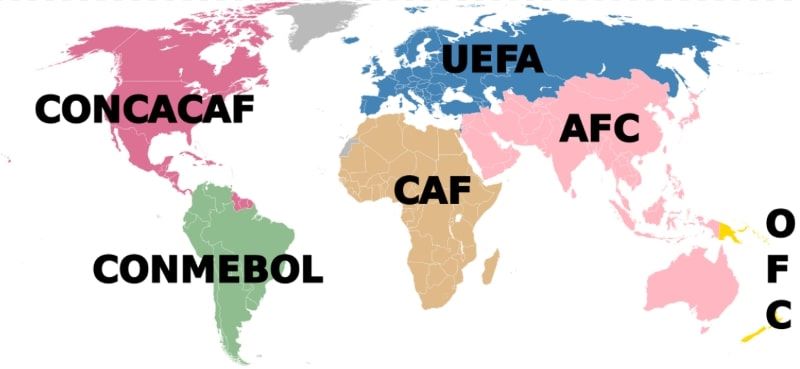
Football confederations on the world map. Image: Wikipedia
A UEFA member may be expelled from the organization in the following cases:
- if it has not fulfilled its financial obligations to the organization;
- has seriously violated the provisions of the UEFA Statutes or failed to comply with a decision made on its basis;
- lost the status of an NFA representative;
- has been expelled from FIFA. The decision to expel may be made by the Congress if at least three quarters of its members vote for it.
Congress is the main decision-making body that brings together the presidents and general secretaries of all NFAs. The Congress meets once a year and lasts for one day. The main functions of the Congress include:
- approving the budget;
- electing the UEFA President, part of the Executive Committee and European representatives to the FIFA Council;
- amending the UEFA Statutes;
- consideration of proposals and decision-making;
- dismissal of members of the organization and admission of new members;
- dismissal of members of the Executive Committee and the Enforcement Bodies.
The Executive Committee (EC) is the main executive body consisting of 20 members, including the UEFA President. Sixteen members of the EC are elected by Congress, two by the Association of European Clubs and one by the European leagues. No country can be represented by more than one member. Members of the EC are elected for 4 years. As a rule, the EC meets once every two months. The main functions of the EC include: exercising general control over UEFA's activities and developing the necessary instructions; appointing and dismissing the Secretary General and his deputy; approving the annual business plan of the UEFA Administration.
The President represents UEFA on the international stage and chairs the meetings of the Congress and the GC. The President is responsible for UEFA's relations with FIFA, other confederations, member states, political bodies and international organizations, and implements the decisions of the Congress and the GC through the Administration. The President is elected for a 4-year term. Since 2016, the position has been held by a lawyer and former president of the Slovenian NFA, Aleksander Čeferin. At the last Congress on April 5, 2023, he was re-elected for another term.
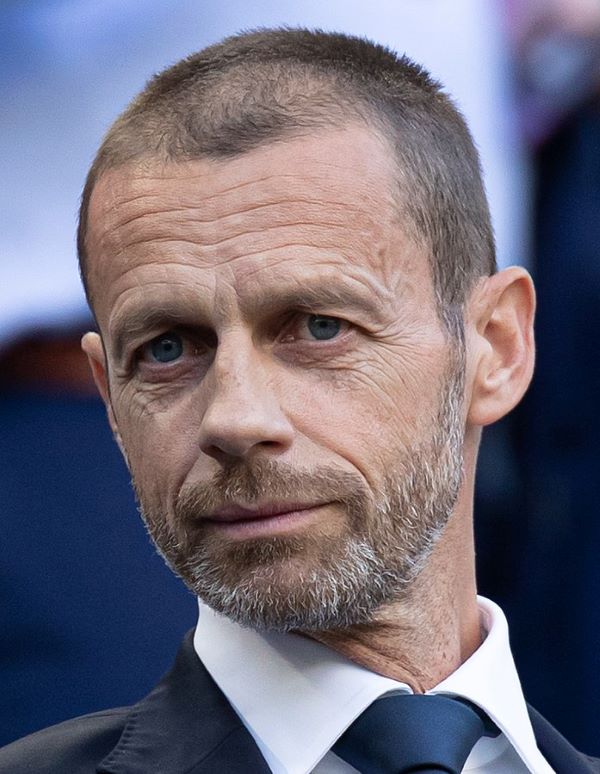
UEFA President Aleksander Čeferin. Photo: Photo.
The administration deals with the affairs of UEFA. Its responsibilities include, in particular, implementing decisions of the Congress, the EC and the President; preparing meetings of the Congress and various committees; and executing the organization's operations. The administration is headed by the Secretary General. Since 2016, this position has been held by Greek football official Theodore Theodoridis.
The main activity of UEFA is to organize football competitions at the level of national teams and club teams. The main tournament for national teams is the European Championship, which is held every 4 years. Similar tournaments are held for teams with players aged under 17, under 19 and under 21. European championships are also held in women's football.
In 2018, the UEFA League of Nations was organized. The tournament takes place every 2 years and fills the gaps in the calendar that were previously reserved for friendly matches. The competition provides an additional opportunity for national teams to qualify for the World and European Championships.
In 2021, UEFA and CONMEBOL agreed to launch a new project, the Finalissima. It is assumed that the winning countries of the European and South American championships will play a match against each other every year. In the first such match in 2022, Argentina defeated the Italians 3-0.
Among the club competitions, the UEFA Champions League attracts the most attention, but the UEFA Europa League and the UEFA Conference League are also important. The winners of the Champions League and the Europa League play for the Super Cup. A number of club competitions are held in youth and women's football.
Special mention should be made of futsal and beach soccer competitions, which are held at both national team and club level.
In 2004, UEFA launched the Hat Trick program. The program aims to distribute a significant portion of the European Championships' revenues among member states and allocate money to various football development projects.
In 2015, the UEFA Growth program was launched. The program is planned as a series of consultations and workshops aimed at the individual needs of each member country - improving the image of football in the country, increasing revenues, attracting young people to football, etc.
In 2017, the Assistance program was launched to cooperate with five other confederations. As part of the program, UEFA aims to share experience and practical knowledge, as well as support projects aimed at developing football around the world.
The UEFA Academy is a hub aimed at transferring knowledge and skills to people whose activities are professionally related to football. The project combines theory with practice and constantly improves educational and technological formats. A separate area of the Academy's work is conducting classes on combating violations of the law in football: corruption, doping, match-fixing, etc. The same goal is served by the educational program "Fighting Match-fixing" launched by UEFA together with the University of Lausanne.
The UEFA Analytical Center processes information in all areas related to football: financial activities, transfer policy, competition formats, sports results, broadcasting rights, etc. The creation of powerful databases allows influential people in European football to make informed decisions and predict possible difficulties.
UEFA is involved in the fight against the spread of doping in football. One of the ways to combat this is the athlete's biological passport, which contains the results of doping tests over a long career period and allows for instant detection of serious deviations from standard indicators. UEFA has signed cooperation agreements with 33 European national anti-doping organizations, which allows it to coordinate efforts.
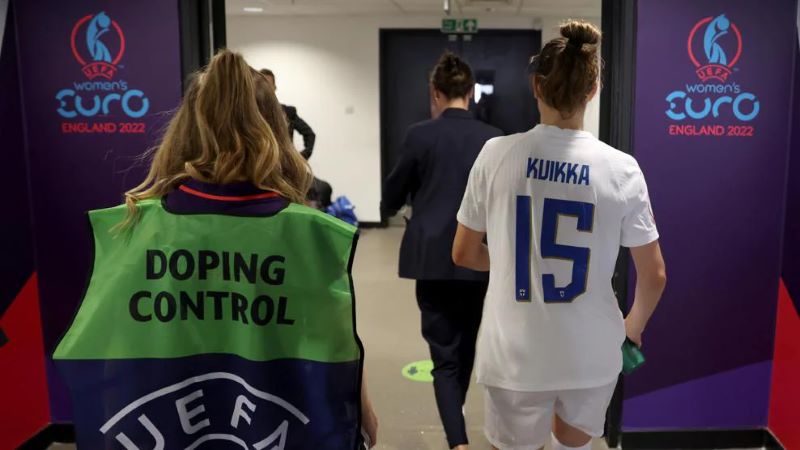
A player is escorted to a doping control. Photo: UEFA
For a long time, UEFA was not affected by scandals, but the situation changed dramatically during the tenure of the last two presidents, Michel Platini and Alexander Čeferin.
Michel Platini faced several corruption charges. In 2011, FIFA transferred 2 million Swiss francs to Platini's account. According to the Frenchman, this money was transferred to him for providing consulting services to the organization. The problem was that the services themselves were provided at the turn of the XX-XXI centuries, and the transfer itself took place on the eve of Joseph Blatter 's re-election as FIFA president.
Platini was also accused of not voting objectively for Russia and Qatar as candidates for the World Cup. In particular, it was noted that Platini received a Picasso painting as a gift for supporting Russia. As a result of the scandals, the Frenchman was forced to resign as UEFA president. In fairness, it should be noted that in July 2022, the Swiss Federal Court acquitted Michel Platini and FIFA President Joseph Blatter in the case against him.
The current UEFA president, Slovenian Alexander Čeferin, is accused of spreading nepotism within the organization. According to the British The Guardian, under Čeferin's presidency, representatives of Slovenia, the Balkans, and people who have friendly or business relations with the president have been promoted to high positions. In particular, the newspaper mentions the Slovenian president's best friend Željko Pavlica, Luka Zajec, Petra Bosniak, Ales Zavrl, Ilija Kitić, and others.
According to The Guardian, it is Željko Pavlica, who was appointed head of security at UEFA, who should be held responsible for the confrontation between fans and police that took place during the 2022 Champions League final in Paris. British MP Ian Byrne accused UEFA of poorly organizing the final and of putting people's lives at risk.
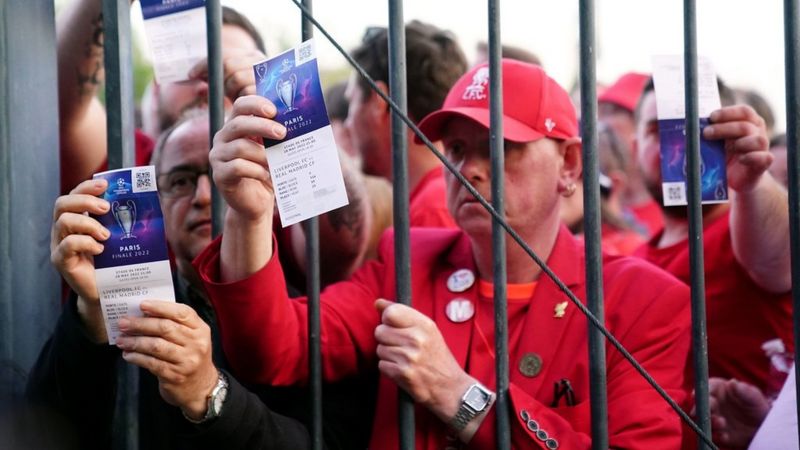
Liverpool fans at the Stade de France. Photo: bbc.com
In 2019, it was decided to hold the UEFA Europa League final in Baku. Due to the venue and security concerns, Arsenal's Armenian player Henrikh Mkhitaryan was unable to take part in the final. In 2021, former UEFA referee Younas Eriksson accused the organization of corruption in the selection of referees for decisive matches of major tournaments.
Ukraine has been a part of UEFA since the Soviet era. It became an independent member of the organization in 1991 after gaining independence. In 1992, the first UEFA championship and cup in independent Ukraine were held under the auspices of UEFA. By the way, the first champion of the country was Tavria from Simferopol, and the cup winner was Chornomorets from Odesa.
In 2004, Andriy Shevchenko became the first Ukrainian citizen to be named UEFA's European Footballer of the Year. In this way, he continued the tradition of Soviet Ukrainians Oleh Blokhin and Ihor Belanov, who received the award in 1975 and 1986.
In 2009, Shakhtar Donetsk won the UEFA Cup, defeating Werder Bremen in the final match.
In 2012, Ukraine, along with Poland, hosted the European Championships. As the host of the competition, Ukraine took part in it, but did not advance from the group. In 2016, Ukraine qualified for the European Championships for the first time, but lost all three matches in the group.
In 2018, Kyiv hosted the UEFA Champions League final, in which Real Madrid defeated Liverpool. In 2021, Ukraine reached the quarterfinals of the European Championship, where it lost to England.
In response to the full-scale invasion of Ukraine, UEFA suspended the Russian national team from playing in the qualifying playoffs for the 2022 World Cup. Spartak Moscow was also suspended from the UEFA Europa League playoffs.
In early May 2022, UEFA decided to suspend Russian clubs from all European competitions for a year. The decision included men's, women's and youth football competitions, as well as all futsal competitions. St. Petersburg was deprived of the right to host the 2022 UEFA Champions League final. At the same time, it was noted that UEFA does not plan to deprive Russia of its membership. In September 2022, the Russian national team was deprived of the opportunity to participate in the 2024 European Championships.
In January 2023, the Court of Arbitration for Sport in Lausanne rejected the Russian Football Union's appeal against its suspension from international competitions. At the end of January, UEFA decided that the 2023 Super Cup would be held in Athens instead of Kazan. In early May, UEFA President Alexander Čeferin confirmed the organization's intentions regarding Russian teams: "Until the war is over, I don't see any possibility of changing anything."
UEFA is undoubtedly one of the most authoritative sports organizations in Europe. Football is one of the most popular sports in the world, which immediately raises the status of the organization. Almost all sovereign European countries are members of UEFA. European football clubs are considered the best in the world, and European national teams are among the best. UEFA organizes many competitions of various levels. The organization actively shares its experience with other confederations around the world.
UEFA's unwavering stance on Russian teams is respectable, making life as difficult as possible for the players of the aggressor country, which creates additional pressure on the Russian authorities.
However, it must be stated that corruption has come to UEFA due to the huge profits from advertising and the sale of television broadcasts. UEFA officials have access to considerable cash flows and are able to influence global decision-making in the field of football. It is logical to assume that UEFA's profits will only grow in the near future. Under such circumstances, it is hard to believe that corruption in the organization's top echelons can be easily overcome.