Меню
Соціальні мережі
Розділи
July 9, 2023, 6:33 p.m.
The Commonwealth of Independent States - a stillborn brainchild of the Kremlin or a structure that made sense
This article also available in English10222

December 27, 2022, Putin presents rings to leaders of the CIS countries
During Russia's full-scale invasion of Ukraine, it is difficult to objectively and without emotion evaluate everything related to the aggressor country. Nevertheless, the author of the Intent took on this difficult task. We offer our readers an article about the Commonwealth of Independent States (CIS), an international organization that was conceived by the Kremlin as a replacement for the USSR.
General characteristics of the Commonwealth of Independent States
General description of the Commonwealth of Independent States
The Commonwealth of Independent States (hereinafter referred to as the CIS) is an international organization formed from a part of the former Soviet republics with the aim of maintaining cooperation in economic, political and military matters and preventing cross-border crime. In fact, the CIS is a set of bodies for discussing substantive issues and a number of treaties that should facilitate cooperation between neighboring states. The organization is headquartered in Minsk. The working language of the CIS is Russian. The organization exists on the contributions of its member states.
On December 7-8, 1991, the Chairman of the Supreme Soviet of Belarus Stanislav Shushkevich, President of Russia Boris Yeltsin, and President of Ukraine Leonid Kravchuk met in the Belovezhskaya Pushcha forest in Belarus. The meeting resulted in the signing of the Bialowieza Agreement, which recognized the collapse of the USSR and the formation of the CIS. On December 21, the leaders of Armenia, Azerbaijan, Belarus, Kazakhstan, Kyrgyzstan, Moldova, Russia, Tajikistan, Turkmenistan, Ukraine, and Uzbekistan signed the Almaty Declaration, which proclaimed the goals and principles of the CIS, and the protocol to the Belovezhskaya Agreement. The formation of the CIS was completed on January 22, 1993, when the Charter of the new organization was adopted in Minsk.
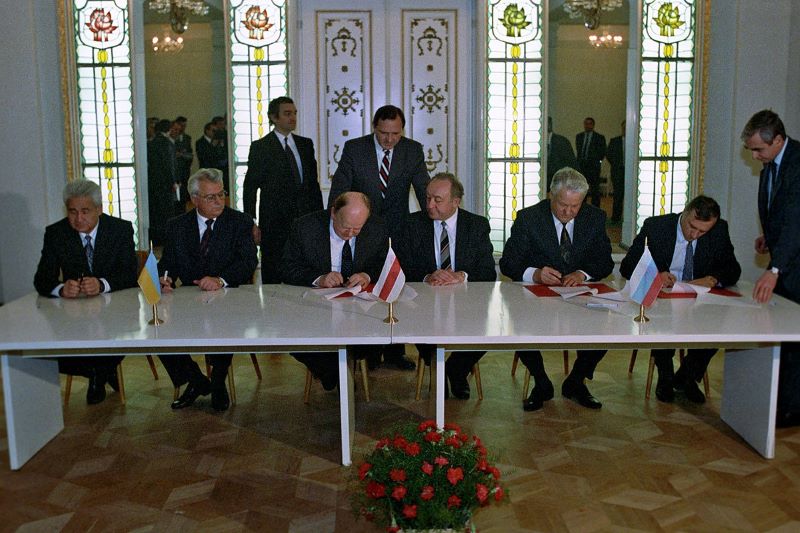
The signing of the Belovezhskaya Agreement on December 8, 1991. Photo: Wikipedia
Membership in the CIS
According to the Charter of the organization, the founding members are the states that have signed and ratified the Belovezhskaya Agreement on the Establishment of the CIS and the Protocol to this Agreement. In practice, the attitude to the status of a founding member state has been somewhat formal. For example, the Supreme Soviet of Kyrgyzstan ratified only the protocol to the Belovezhskaya Agreement, not the Agreement itself. Moreover, difficulties with ratification arose in Russia, which was a key CIS country as the successor to the USSR. On December 12, 1991, the Belovezhskaya Agreement was ratified by the Supreme Soviet of the RSFSR, but according to the Constitution of the republic, the Congress of People's Deputies of the RSFSR had to be convened for ratification. In April 1992, the Sixth Congress of People's Deputies refused to ratify the Agreement three times. In the 1990s, the question of the illegitimacy of the Belovezhskaya Agreement was repeatedly raised by various political forces in the Russian Federation. At the end of 1991, Tatarstan tried to join the CIS founding countries as a sovereign independent state, but in 1994 it became part of Russia.
- Read also: International Grains Council
Any state that ratifies the Charter and whose candidacy is approved by all full members of the organization can become a member of the CIS. Currently, the CIS has 9 members: Armenia, Azerbaijan, Belarus, Kazakhstan, Kyrgyzstan, Moldova, Russia, Tajikistan, and Uzbekistan. Georgia became a member of the CIS in 1993, but officially withdrew from the organization in 2009. In order to withdraw from the CIS, it is necessary to notify its intention 12 months in advance. In November 2022, Moldova suspended its work in the CIS bodies, and in 2023 began the process of withdrawal from the organization.
A country can join the CIS as an associate member if it wishes to participate in certain activities of the organization. Turkmenistan has this status in the CIS.
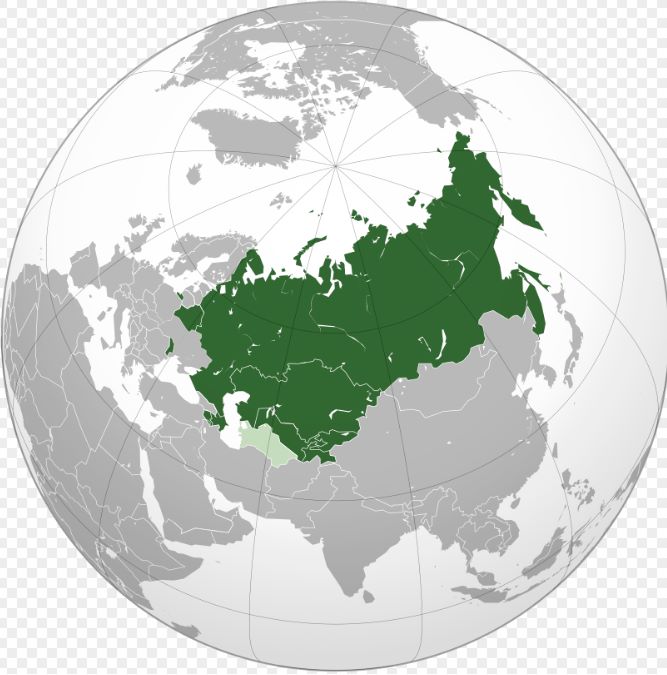
CIS countries on a world map. Image: Wikipedia
Main bodies of the CIS
The supreme body of the CIS is the Council of Heads of State (COS), which is attended by the leaders of all member states. The Council discusses and resolves issues related to the activities of the member states in the area of common interests. As a rule, the DAG meets twice a year. The chairmanship of the WGD takes place in turn according to the alphabetical list of countries and lasts for a year. Since January 1, 2023, the position of chairman has been held by the President of Kyrgyzstan, Sadyr Japarov.
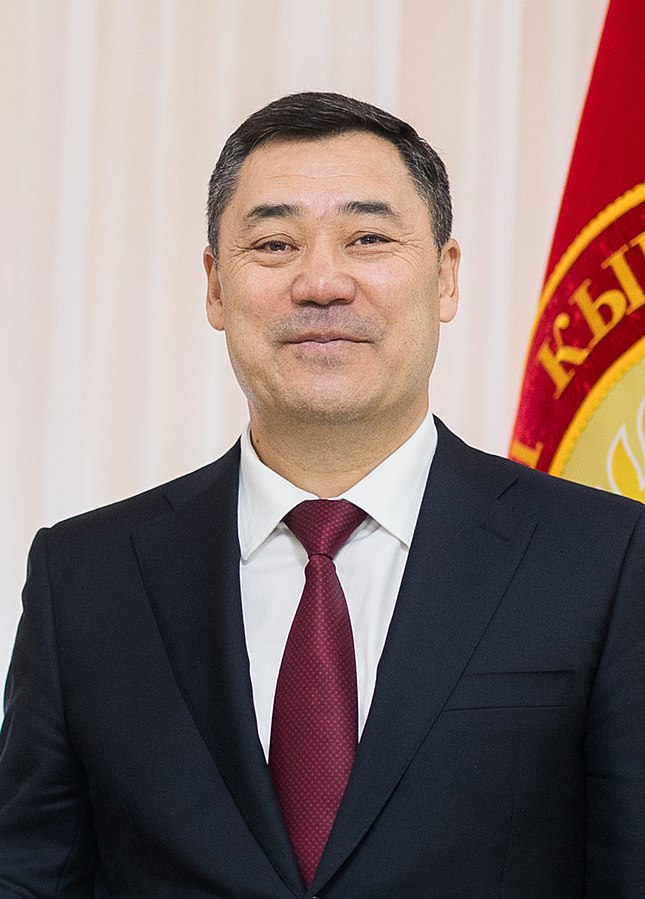
Chairman of the Council of Heads of State Sadyr Zhaparov. Photo: Wikipedia
The Council of Heads of Government (COG) coordinates the work of the executive authorities of its member states in economic, social and other areas of common interest. The competence of the Council of Heads of Government includes, in particular, the following issues: adoption of joint programs for the development of industry, agriculture and other sectors of the economy and their financing; development of transport, communication and energy systems; cooperation in tariff, credit, financial and tax policies; development of mechanisms aimed at creating a scientific and technological space, etc. The RGU meets twice a year.
The Council of Foreign Ministers (CFS) coordinates the foreign policy activities of the member states, including their activities in international organizations, and organizes consultations on world policy issues.
The Economic Council (EC) is a body that ensures the implementation of agreements adopted within the CIS, decisions of the DGD and the DGU on the formation and functioning of the free trade area and other issues of socio-economic cooperation. The Council consists of deputy heads of government of the CIS member states. Meetings of the Council are held at least once a quarter.
The Council of Defense Ministers is the body of the DG on military policy and military construction of the CIS member states. The Council is composed of all defense ministers of the CIS member states, with the exception of Moldova. Turkmenistan also does not participate in the work of this body.
The Executive Committee is a permanent executive, administrative and coordinating body. Among the main functions of the Committee are the following: ensuring the activities of the RGD, RGU, MFA and EP; developing proposals on the CIS strategy; legal processing of documents; analysis of the process of implementation of decisions and agreements; systematic informing of the supreme bodies of the CIS, etc. The Committee is headed by the Secretary General. Since 2007, this position has been held by the former director of the Russian Foreign Intelligence Service, Sergei Lebedev.
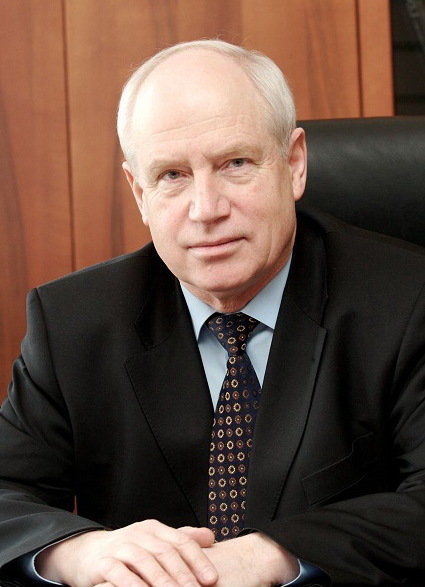
The CIS Secretary General Sergei Lebedev. Photo: Photo.
In addition to the main bodies, more than 70 sectoral cooperation bodies have been established within the CIS, whose activities relate to economic and social development, humanitarian cooperation, the fight against crime and terrorism, etc.
Activities of the CIS
In May 1992, Armenia, Kazakhstan, Kyrgyzstan, Russia, Tajikistan and Uzbekistan signed the Collective Security Treaty. In 1993, Azerbaijan, Georgia and Belarus joined the Treaty. However, already in 1999, Azerbaijan, Georgia and Uzbekistan refused to extend the Treaty, which effectively destroyed the very idea of collective security. The countries that extended the Treaty later formed a new international organization, the CSTO.
In 1993, ten CIS countries established the Interstate Bank, which was supposed to help the post-Soviet countries work together in the field of finance. In 1996, Belarus, Armenia, Kyrgyzstan, Moldova, Russia, and Tajikistan signed a protocol that allowed the bank to enter the domestic currency markets of these countries with the right to conduct banking operations and transactions.
In 2003, the heads of Belarus, Kazakhstan, Russia, and Ukraine announced their intention to create a common economic space, i.e., a territory with similar economic regulation mechanisms, common infrastructure, and coordinated tax, trade, customs, and monetary policies. Later, Ukraine refused to cooperate in this area, and further initiatives were already taking place within the Eurasian Economic Community. The Common Economic Space began operating on the territory of Belarus, Kazakhstan and Russia on January 1, 2012.
One of the biggest economic achievements of the CIS was the signing of the Free Trade Agreement in October 2011. The agreement abolished export and import duties on a number of goods and contained a list of exceptions that were to be abolished later. The agreement was signed by eight countries: Ukraine, Russia, Belarus, Moldova, Armenia, Kazakhstan, Kyrgyzstan, and Tajikistan. In 2013, Uzbekistan signed a protocol of accession. The agreement replaced more than a hundred bilateral documents that regulated the free trade regime in the post-Soviet space.
- Read also: The UN International Tribunal for the Law of the Sea: an authoritative arbitrator or a legal advisor
The CIS team took part in the 1992 European Football Championship instead of the USSR team. The team took the last place in its group and left the competition early. Before the start of the matches, the team played Beethoven's Ninth Symphony instead of the national anthem.
Within the CIS, a number of competitions in various sports were held between clubs and athletes of the organization's member states. In particular, there were competitions in football and mini-football, hockey and ice hockey, volleyball, boxing, freestyle and Greco-Roman wrestling, table tennis, etc. Probably the most popular of the tournaments was the Commonwealth Football Champions Cup, which ran from 1993 to 2016. The tournament was planned as a competition between the champions of the CIS and Baltic countries, although the champions were sometimes replaced by runners-up or youth teams.
The first CIS Games were held in Kazan from September 4 to 11, 2021. The competitions were held in 16 sports. More than 1.5 thousand athletes and officials from Armenia, Azerbaijan, Belarus, Kazakhstan, Kyrgyzstan, Moldova, Russia, Tajikistan, and Uzbekistan took part in the sporting event. Turkmenistan's delegation withdrew its application on the eve of the competition due to covid restrictions. The II CIS Games are scheduled to take place from August 5 to 14, 2023 in Belarus.
The CIS and Ukraine
Ukraine became one of the three countries that signed the Belovezhskaya Agreement on December 8, 1991, and founded the CIS. On December 10, the Verkhovna Rada of Ukraine ratified the Agreement. On December 21, Ukraine signed the Almaty Declaration and Protocol to the Belovezhskaya Agreement, gaining the status of a founding member of the CIS.
In 1993, Ukraine refused to sign the CIS Charter, thus expressing its unwillingness to become a member state of the organization. Ukraine also did not want to sign an agreement on associate membership. In 1994, the CIS Economic Court considered the status of the CIS member states. The decision stated that 11 countries (including Ukraine) that had signed and ratified the CIS Agreement had the status of member states.
In accordance with this status, Ukraine participated in the work of various CIS bodies, not being a member of certain structures (the Economic Court, the Collective Security Council) and joining others as an observer. In particular, the Verkhovna Rada's reservation to the ratification of the Belovezhskaya Agreement stated that Ukraine limits its participation in multilateral military, foreign policy, border cooperation and peacekeeping activities, prioritizing economic cooperation.
The Presidents of Ukraine have twice chaired the work of the RWG. In 2003, Leonid Kuchma became the chairman of the RGD, and on January 1, 2014, Viktor Yanukovych became the chairman. On February 24, 2014, he fled Ukraine for Russia, but remained in office until April 4, 2014.
After the start of Russian aggression in 2014, Ukraine initiated an extraordinary convocation of the Foreign Ministry on March 7 in Kyiv. However, the Foreign Ministry refrained from condemning Russian aggression. In response, Ukraine suspended its CIS chairmanship and minimized cooperation in the organization, withdrawing from a number of multilateral agreements and suspending membership in some sectoral cooperation bodies. After the Russian invasion in 2022, Ukraine is accelerating its withdrawal from various agreements within the CIS. In particular, on November 1, 2022, the Cabinet of Ministers of Ukraine began preparing a draft law on the denunciation of the Free Trade Agreement.
Conclusions.
It is not easy to evaluate the activities of the CIS because it is not similar to the vast majority of international organizations. First, international organizations have clearly defined provisions according to which the rules adopted and agreements concluded are binding on all members of the organization. On the other hand, it is sometimes difficult to understand whether an agreement between Belarus, Russia and Kazakhstan should be considered a CIS treaty, or their internal separate agreement, or an agreement within another regional organization that includes these three countries. In this respect, the CIS is more like a hub divided into numerous separate rooms, in one of which one can negotiate business or personal matters with partners. Second, international organizations attach great importance to the concept of membership. By becoming a member of an international organization, a country voluntarily assumes a number of obligations, which may not be always pleasant to fulfill. As far as the CIS is concerned, the status of a member state does not confer any rights or obligations. This misunderstanding became quite telling when Ukraine renounced this status and still took an active and equal part in the organization's work.
Perhaps it can be argued that the CIS has fulfilled its historical mission as a buffer during the transition from the collapse of the USSR to the formation of independent countries. Obviously, it would not have been easy for the interdependent republics to instantly sever all political, economic, cultural, and scientific ties. However, it quickly became apparent that the newly born countries had different development vectors, making systematic cooperation within a single structure impossible. Also, Russia's plans to dominate the CIS and, secondly, to use the organization as a means of building a new empire, became increasingly transparent. This is not to say that the ideas of economic integration within the CIS were unsuccessful. Another thing is that under the auspices of Russia, such integration looked quite dangerous in the long run.
At present, we can say that the CIS is a completely superfluous structure in terms of goals and direction of development. Obviously, Russia will continue to try to use the CIS as an ex-USSR to which it seeks to return. As for the other member states, they will try to dance over the abyss, following the example of Belarus, extracting political support and economic preferences from Russia.