Меню
Соціальні мережі
Розділи
May 28, 2023, 7:11 p.m.
OSCE - a powerful organization or just another platform for expressing concerns
This article also available in English5574

Image: OSCE
A full-scale war unleashed by the Russian Federation has been going on in Ukraine for over a year. Not only the military, but also civilians, women and children are being killed. And all this time, the aggressor country has remained a member of the OSCE, an organization that was created to prevent military conflicts. What kind of organization is it and what it does - in the article from the series of publications on the activities of regional international organizations.
General description of the Organization for Security and Cooperation in Europe
General description of the Organization for Security and Cooperation in Europe
The Organization for Security and Cooperation in Europe (hereinafter - the OSCE) is an international organization whose efforts are focused on maintaining stability and security in Europe. The OSCE is a forum for political dialogue on security issues and a platform for joint action to improve the life of society. The organization is headquartered in Vienna. The OSCE has 57 members. The vast majority of them are located in Europe, some in Asia, and the United States and Canada represent North America. The OSCE operates on contributions from member states. In 2021, the organization's budget amounted to 138 million 204 thousand 100 euros.
About the essence of the OSCE. Watch the video: OSCE
In 1973, the Conference on Security and Cooperation in Europe (hereinafter referred to as the CSCE) was convened to establish a dialogue between the East and the West and to introduce a policy of international détente. For two years, discussions and meetings took place, culminating in the signing of the Final Act, known as the Helsinki Accords, in Helsinki on August 1, 1975. The document contained a number of military, political, and economic issues, as well as environmental and human rights protection. The document also established fundamental principles of behavior in relations between states and towards their own citizens.
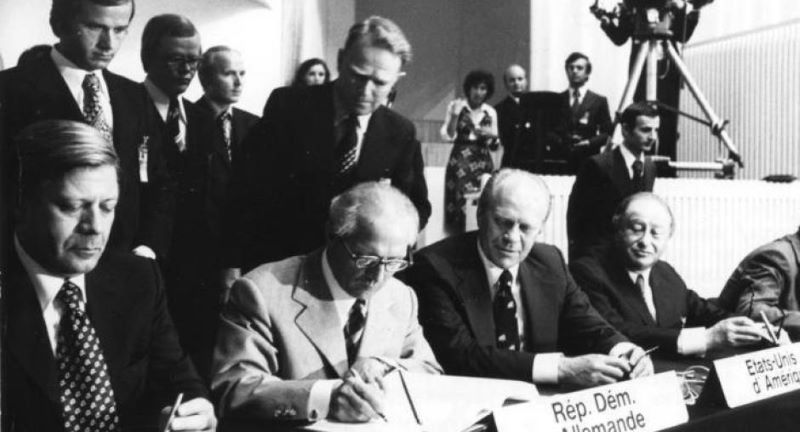
The signing of the Helsinki Accords on August 1, 1975. Photo: OSCE
Until 1990, the CSCE functioned as a series of meetings and conferences that discussed the activities of countries within the framework of the Helsinki Accords. After the end of the Cold War, the organization was forced to adapt to the new European order, which led to the emergence of permanent bodies and operational activities. In the context of the changes, the name of the organization was changed to the OSCE at the Budapest Summit in December 1994.
The summit is a meeting of heads of state and government that sets priorities for further work at the highest political level. There are no rules regarding the frequency of the Summits. Any member state can propose to host a Summit, but the decision will be made by consensus. Between Summits, the decision-making and governance of the organization is vested in the Council of Ministers.
The Council of Ministers is a decision-making body composed of the foreign ministers of the member states. The Council usually meets once a year, but additional meetings can be held at any time. In addition to making decisions, the Council has to prepare for summits, as well as implement the tasks and decisions set at such meetings.
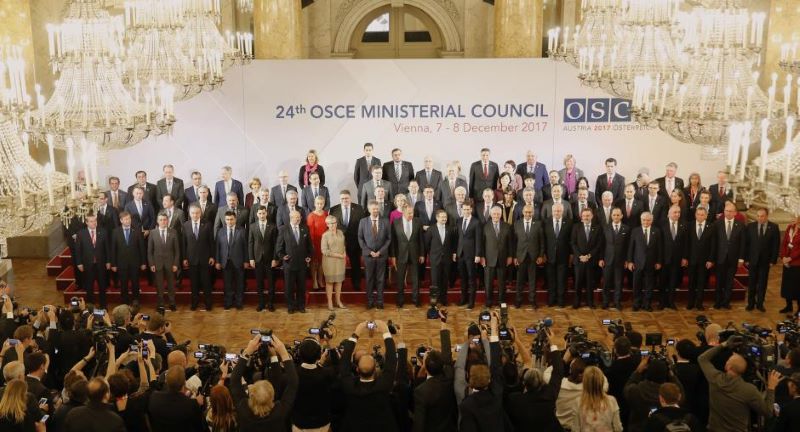
The 24th meeting of the OSCE Ministerial Council in 2017. Photo: OSCE
The Permanent Council is a decision-making body that holds regular political consultations and manages the OSCE's operational activities between meetings of the Ministerial Council. The body implements the tasks and decisions adopted by the Summit and the Ministerial Council within its competence. The Permanent Council consists of delegates from all member states. The body meets weekly.
The Forum for Security Co-operation works to enhance military security and stability in Europe and monitors compliance with several key politico-military treaties signed by OSCE members. The Forum serves to exchange military information, discuss security enhancement measures and democratic control of security forces. The Forum also develops norms and provides practical assistance to combat the proliferation of illicit weapons, as well as monitors the non-proliferation of weapons of mass destruction. The Forum meets weekly.
The Parliamentary Assembly consists of 323 representatives of the parliaments of the member states. The Assembly meets in session annually. The purpose of the Assembly is to ensure that all member states make efforts to create security in Europe. Parliamentarians discuss political and economic issues, human rights, environmental and security issues.
Learn more about the work of the OSCE Parliamentary Assembly. Video: OSCE
The Secretariat provides support for the OSCE's operational activities. The Secretariat assists the OSCE Chairperson-in-Office, supports the organization's field activities, facilitates contacts with international and non-governmental organizations, and provides various services to other OSCE bodies. The Secretariat is headed by the Secretary General, who is appointed by the Ministerial Council for a 3-year term. The Secretary General is the chief administrative officer of the OSCE. Since December 2020, this position has been held by German politician and diplomat Helga Maria Schmid. She is the first woman to hold this position.
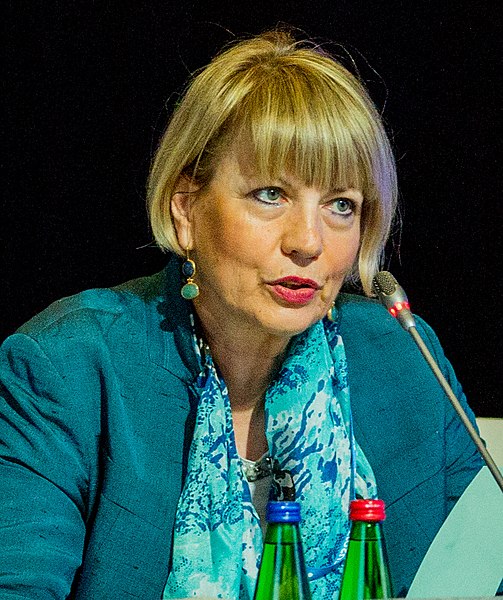
OSCE Secretary General Helga Maria Schmid. Photo: Wikipedia
Every year, one of the member states chairs the OSCE. The foreign minister of this country becomes the chairman of the organization, i.e. its chief official, for a year. The Chairperson-in-Office manages the day-to-day activities of the OSCE, coordinates the work of its bodies, represents the organization at the international level, and facilitates conflict and crisis management. Since January 1, 2023, this position has been held by a politician from North Macedonia, Bujar Osmani.
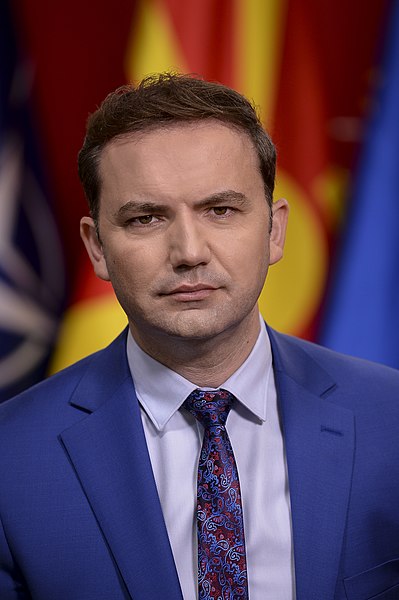
OSCE Chairperson-in-Office Bujar Osmani. Photo: Photo.
One of the key activities of the OSCE is conflict prevention and resolution. The main means on this path are the use of field operations and the Conflict Prevention Center. In particular, the Center acts as a mediator and facilitates dialogue at an early stage of a conflict. In the course of field operations, OSCE staff try to reduce the causes of conflict and remove potential threats, establish a dialogue between different segments of society, monitor the situation and help develop a conflict resolution plan. In particular, the OSCE was directly involved in attempts to resolve the conflicts in Ukraine, Transnistria and Georgia.
The OSCE's priority is to protect human rights. The organization's various activities include supporting laws to protect minorities, eliminating discriminatory laws and practices, providing technical assistance to human rights institutions, supporting the strengthening of executive, judicial and legislative institutions, conducting trainings, promoting gender equality, and more.
About the OSCE WIN. Video: OSCE
The OSCE tries to exercise arms control, which involves the exchange of information, the use of dispute resolution and arms verification tools, and various forms of military cooperation. Such activities are aimed at early prevention of conflict situations.
The OSCE helps its member states to exercise border control. In particular, the organization has created networks that allow for the rapid exchange of information and experience. When necessary, the OSCE provides its own presence at the border. Finally, the organization conducts trainings and workshops for border guards and customs officers.
To combat trafficking in human beings, the OSCE established a separate department in 2003 to provide member states with technical assistance, capacity building, research and policy development. The OSCE has also developed an action plan to combat human trafficking.
Learn more about the principles of working with victims of human trafficking. Video: OSCE
The OSCE deals with economic development issues. The organization's field operations include assisting member states with economic reforms, improving the conditions for investment in the economy, conducting trainings on economic rights and economic planning, promoting cross-border trade and free economic zones, and managing labor migration.
The OSCE pays attention to the organization of elections in its member states. The OSCE's operational activities include training for members of election commissions, journalists, and police; implementation of international standards; technical review of elections; assistance in creating voter lists, etc.
The OSCE is active in the field of environmental protection. The OSCE supports projects that ensure a balanced consumption of natural resources, including water, reduce the risks of natural disasters, and respond to climate change. The OSCE supports international energy dialogue, which includes leaders in energy production, consumption, and transit. The organization also promotes the conclusion and implementation of multilateral environmental treaties, supports the development of environmental legislation, helps to develop national environmental strategies, etc.
Ukraine became a member of the OSCE on January 30, 1992. Since 1994, the OSCE Mission to Ukraine has been operating in Ukraine, focusing on stabilizing the situation in the Autonomous Republic of Crimea. In 1999, the Mission completed its work due to the fulfillment of its tasks. In the same year, a new form of cooperation was established - the OSCE Project Coordinator in Ukraine. In July 2007, Kyiv hosted the Sixteenth Session of the OSCE Parliamentary Assembly. In 2013, Ukraine chaired the OSCE for the first time. The highest official position in the organization was taken by the Minister of Foreign Affairs of Ukraine Leonid Kozhara. Ukraine participates in the work of various OSCE bodies and works in the organization's field offices.
In response to the outbreak of Russian aggression against Ukraine in 2014, OSCE member states decided in March to send an OSCE Special Monitoring Mission to Ukraine. In July 2014, the OSCE Parliamentary Assembly adopted a resolution condemning Russia for the annexation of Crimea and contributing to the development of the armed conflict in Ukraine. With the adoption of the Minsk Agreements, the OSCE Special Monitoring Mission was tasked with monitoring the implementation of these agreements.
Also in July 2014, a decision was made to send an OSCE observer mission to Russian territory to monitor the Donetsk and Gukovo checkpoints on the Russian-Ukrainian border. Russia obstructed the activities of both missions and later completely denied them access in 2022 and 2021, respectively.
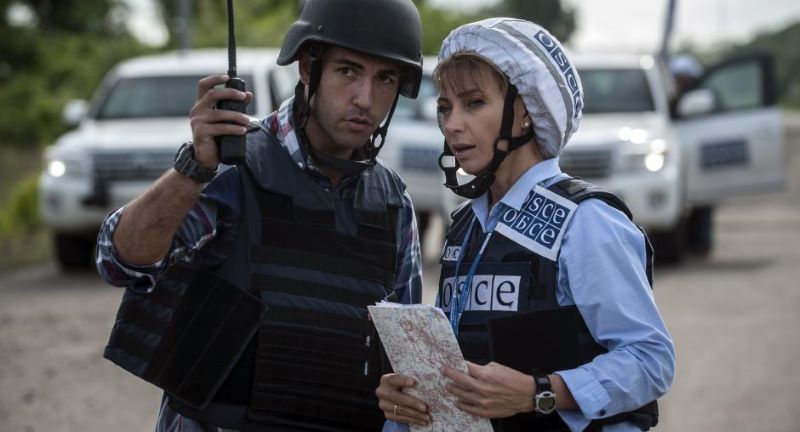
OSCE representatives in Donetsk region. Photo: OSCE
In response to the Russian invasion in 2022, the OSCE deployed a mission to monitor violations of international humanitarian law in Ukraine. In its report, the mission recognized the scale of the violations committed by Russia and documented the fact that Russia has been occupying certain areas of Donetsk and Luhansk regions since 2014. Ukraine demanded that the OSCE suspend Russia's representatives from the organization, but no positive decision was made on this issue. In response, Ukraine's MPs in the OSCE Parliamentary Assembly stopped working in the organization in November 2022. Ukrainian MPs continued to boycott the Assembly's work during the February 2023 session, to which delegates from Russia and Belarus were also invited.
The CSCE was born at a time when the East and West, having gone through the Cuban Missile Crisis and the Vietnam War, needed to détente their relations. Both poles of the world at that time felt the need for a platform where important issues could be discussed. With the collapse of the socialist camp, the bipolar world disappeared, which logically should have led to the termination of the CSCE. However, the CSCE is restructuring, changing its name and gradually turning into a powerful bureaucratic structure with a solid staff and an equally solid annual budget.
In our opinion, the main problem of the modern OSCE is that the organization does not actually have a specific goal. Today's multi-vector world has too many platforms where something can be discussed. When it comes to resolving military and political issues, we need institutions to make decisions that will be binding. As for the OSCE, it mainly monitors and condemns actions.
The OSCE cannot be accused of inaction. On the contrary, the amplitude of the organization's activities covers almost all aspects of the interests of modern man. At the same time, we believe that this once again emphasizes the lack of a specific vector for the OSCE's development. The OSCE's sphere of interest overlaps with the activities of other organizations. In particular, the Council of Europe and the European Union are also responsible for order and stability in Europe; Interpol and international courts monitor the rule of law; NATO acts as a kind of breakwater and guarantor of security in the military sphere; and finally, the UN General Assembly and the Security Council are responsible for global discussion of the most important issues. It is quite possible that the OSCE's considerable budget could be redistributed among other international organizations with greater effect.