Меню
Соціальні мережі
Розділи
Sept. 10, 2023, 6:06 p.m.
Organization of a Collective Security Treaty: a Phantom or an Additional Threat to Ukraine?
This article also available in English6626

In December 1999, Putin became president of Russia, and in 2002, the CSTO military-political bloc was created. Its foundations had been laid earlier, after the collapse of the USSR, and the establishment of the bloc looked like a way to resuscitate the Soviet space. The bloc included some former Soviet republics, with Russia at its head. In the context of a full-scale invasion of Ukraine, can this structure be considered an additional threat in the article by Intent.
General characteristics of the Collective Security Treaty Organization
Significance of Article 4 of the Collective Security Treaty
The CSTO and the Russian-Ukrainian War
General description of the Collective Security Treaty Organization
The Collective Security Treaty Organization (CSTO) is a military and political bloc created under the auspices of Russia from a part of the former Soviet republics. Rejecting the peaceful rhetoric of the CSTO Charter, the purpose of its creation is to form a power bloc similar to the Warsaw Pact Organization with its own armed forces capable of solving military tasks of varying complexity. The CSTO is headquartered in Moscow, and the official language of the organization is Russian.
In 1992, Armenia, Kazakhstan, Kyrgyzstan, Russia, Tajikistan and Uzbekistan signed the Collective Security Treaty in Tashkent. In 1993, Georgia, Azerbaijan, and Belarus joined the Treaty. At the time, the signing of the Treaty seemed reasonable, as the newly born countries did not feel confident in their abilities. The Treaty entered into force in 1994 and was intended to be extended in 5 years. However, in 1999, Azerbaijan, Georgia, and Uzbekistan refused to extend it. In 2002, the Treaty became the basis for a new organization, the CSTO. Interestingly, Uzbekistan joined the CSTO in 2006, but suspended its membership in 2012.
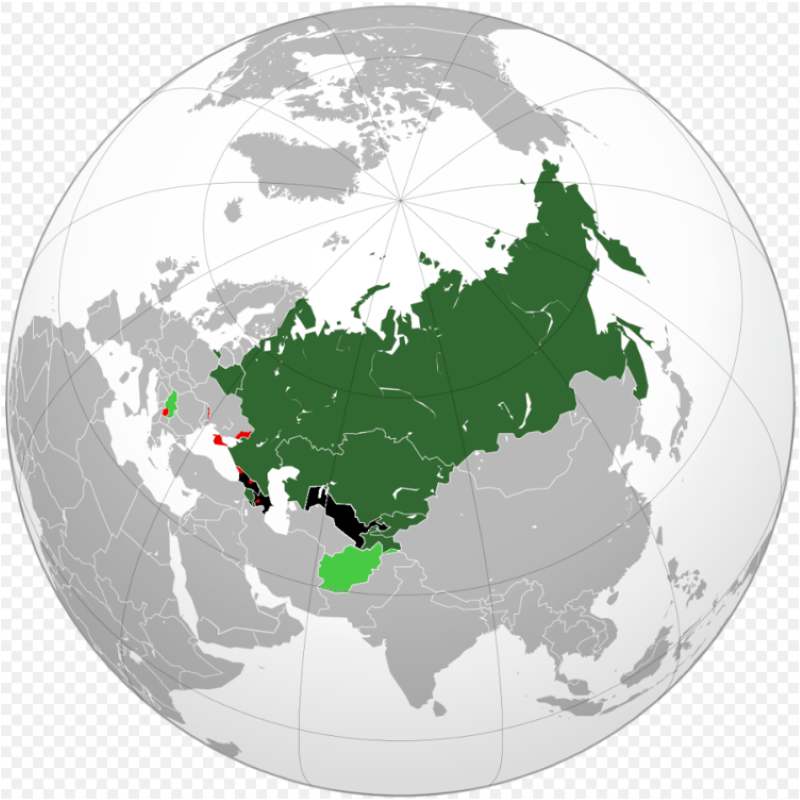
CSTO member states on the world map. Image: Wikipedia
Main CSTO bodies
The supreme body of the CSTO is the Collective Security Council (hereinafter referred to as the CSC). The CSC considers key issues and makes decisions aimed at achieving the organization's goals, as well as coordinates the activities of member states. The CSC is composed of the heads of the member states. In the period between sessions of the CSTO, the Permanent Council, which consists of plenipotentiaries of the member states, coordinates the interaction of the member states. An important place in the CSTO structure is occupied by the Council of Foreign Ministers, which discusses foreign policy issues at its level, and the Council of Defense Ministers, which coordinates the activities of member states in the field of military policy, military construction and military-technical cooperation.
The CSTO's highest administrative official is the Secretary General. He or she is appointed by the CSTO for three years and must be a citizen of one of the member states. Since January 1, 2023, this position has been held by the statesman and politician of Kazakhstan, Imangali Tasmagambetov.
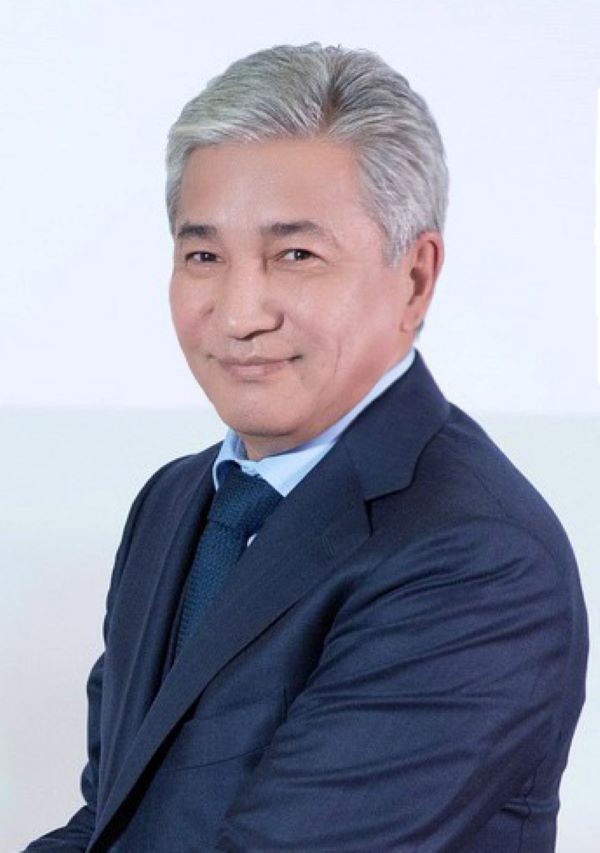
CSTO Secretary General Imangali Tasmagambetov. Photo: Wikipedia
CSTO activities
The main efforts within the CSTO are aimed at military cooperation. In 2001, the Collective Rapid Deployment Forces were formed on the basis of the Collective Security Treaty, which number about 5,000 people.
In 2007, the heads of the CSTO member states signed the Agreement on CSTO Peacekeeping Activities. According to the Agreement, the CSTO Peacekeeping Force was created, consisting of about 3,000 military personnel and about 600 representatives of the police. As the name of the formation suggests, its main purpose is to conduct peacekeeping operations similar to those of the UN peacekeeping forces. In 2015, the use of CSTO peacekeeping forces in Donbas was discussed. On January 5, 2022, during the protests, President of Kazakhstan Kassym-Jomart Tokayev asked the CSTO to send peacekeeping forces to the country to overcome the "terrorist threat." The very next day, Russian troops entered the territory of Kazakhstan.
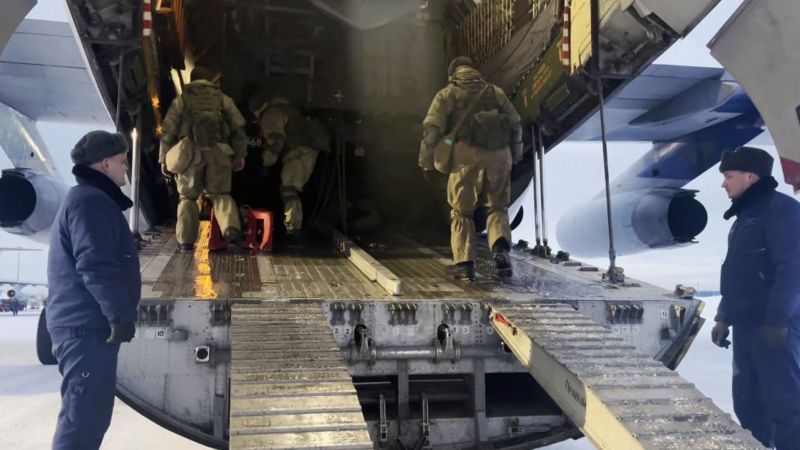
Russian troops depart for an operation in Kazakhstan on January 6, 2022. Photo: bbc.com
In 2009, the Collective Rapid Response Forces were created, which include military contingent and special forces units, allowing them to perform a variety of tasks. The total number of personnel in the force is approximately 20 thousand.
In order to establish cooperation and mutual understanding, the CSTO armed forces annually participate in business games, training and exercises. Some of these exercises have even been given their own names: "Thunder, Cobalt, Rubizh, Interaction, etc.
One of the important areas of work is military-technical cooperation, which provides for a preferential regime of mutual supply of military products between member states. Within the framework of military-economic cooperation, defense enterprises have been cooperating, and service centers for the maintenance and repair of weapons and military equipment have been established in the CSTO countries.
Since 2019, the CSTO has annually conducted a special operation "Mercenary" aimed at terrorist elements that may enter the territory of member states from the Middle East. Since 2003, the CSTO has been conducting a permanent operation "Canal" aimed at combating drug trafficking. Over the course of the operation, more than 428 tons of drugs have been seized, and 6351 drug groups have been identified and neutralized.
Since 2008, the CSTO has been conducting Operation Illegal, aimed at detecting violations of migration legislation. Since the beginning of the operation, more than 1.7 million violations of migration legislation have been detected, more than 36,000 criminal cases for organizing illegal migration and 564 criminal cases for human trafficking have been initiated, and about 6,000 people who were on the international wanted list have been detained.
The CSTO pays attention to the security of the information space. In particular, since 2008, Operation PROXI has been in place to identify and shut down Internet resources whose content may harm the national or collective security of the organization's member states. According to the CSTO website, over the years, more than 377,000 information resources and more than 1.9 million information links aimed at causing various types of information damage have been identified.
Crisis phenomena in the CSTO
The CSTO member states are characterized by misunderstandings, conflicts and armed clashes that occur both between members of the organization and other countries and within the military-political bloc.
In June 2009, there was the so-called "milk war" between Russia and Belarus. The point was that Russia imposed sanctions on Belarusian dairy producers, banning their imports into Russia. According to Minsk, the pressure from Russia was caused by Belarus' accession to the EU's Eastern Partnership program, as well as its refusal to recognize the independence of South Ossetia and Abkhazia after the 2008 Russian-Georgian war.
In 2010, a revolution took place in Kyrgyzstan, which resulted in the ouster of President Kurmanbek Bakiyev. Some time later, clashes between Kyrgyz and Uzbeks broke out in the south of the country, killing hundreds of people. Acting President Roza Otunbayeva asked the CSTO to send CSTO units into the country, but this request was ignored.
Border conflicts on the territories between Kyrgyzstan and Tajikistan have been ongoing since Soviet times. Approximately 30% of the border between the two republics was disputed territory. In addition, border residents of both republics regularly faced problems with access to water, pastures, and roads. In the twenty-first century, the countries tried to resolve border issues, but since 2012, they have turned to armed clashes, which have become increasingly violent. According to Radio Azattyk, 144 armed conflicts took place in 10 years, with more than 200 people killed.
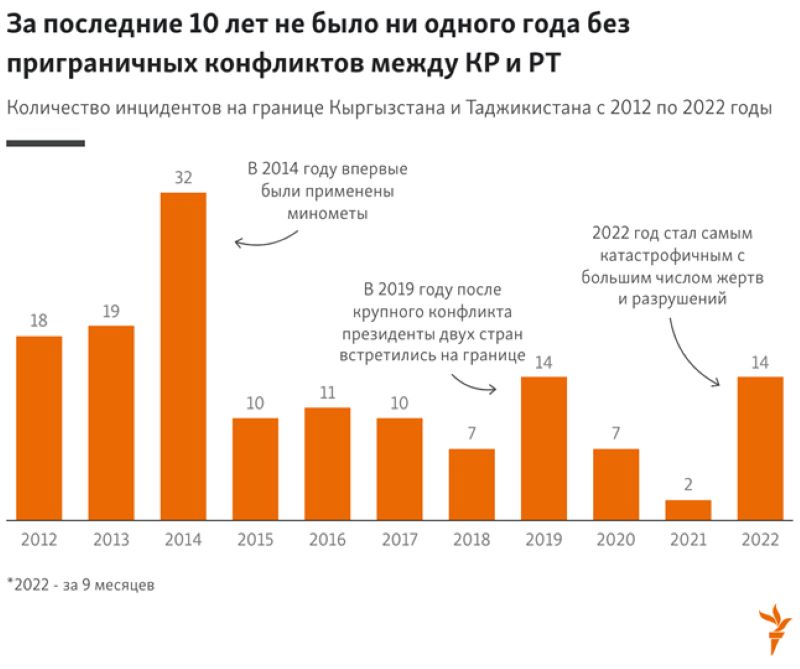
Border conflicts between Kyrgyzstan and Tajikistan from 2012 to 2022. Image: "Radio Azattyk
In 2020, the conflict between Armenia and Azerbaijan in Nagorno-Karabakh escalated. Armenia asked for CSTO assistance in 2020, 2021, and 2022, but did not receive a favorable response. Armenian Prime Minister Nikol Pashinyan has said that he does not rule out the possibility of Armenia's withdrawal from the CSTO.
The significance of Article 4 of the Collective Security Treaty
Article 4 of the Collective Security Treaty is undoubtedly the key passage of this document. This Article states that if one of the CSTO member states becomes the object of aggression, the other member states, at its request, "will immediately provide it with the necessary assistance, including military assistance". Obviously, Article 4 of the Collective Security Treaty is analogous to Article 5 of the NATO Charter. Fortunately, humanity has not yet had to test how NATO countries will respond to an armed attack on one of their member states. However, the lack of precedents also means that NATO countries are currently complying with the terms of the Charter. Instead, the CSTO member states have repeatedly violated the terms of the Collective Security Treaty by ignoring a request for assistance from one of their members. The situation of an armed conflict between two members of the organization also calls the Treaty into serious question. Therefore, Nikol Pashinyan, speaking about the possibility of Armenia's withdrawal from the CSTO, actually points to the impossibility of a military bloc that, depending on its mood or whims, sometimes agrees to fulfill its obligations to its members. At the same time, it is obvious to everyone that in this case the decision depends on the wishes of only one member - Russia.
The CSTO and the Russian-Ukrainian war
In September 2022, fictitious referendums were held in the temporarily occupied territories of Donetsk, Luhansk, Kherson, and Zaporizhzhia regions of Ukraine on the accession of these territories to Russia. The integration of the Ukrainian regions into the Russian constitution has led to an unexpected question: if Ukraine starts attacking the annexed territories, will this lead to the automatic activation of Article 4 of the Collective Security Treaty, i.e. will the CSTO member states be forced to provide Russia with "necessary assistance, including military assistance"? Formally, the answer to this question should be yes. In practice, of course, everything is much more complicated, and even Russia realizes this. On the one hand, Russia could use the help, as the aggressor country is currently offering a lot of money to mercenaries from all over the world. On the other hand, the CSTO today is an organization with a lot of problems and disagreements. First, it is obvious to everyone who is the aggressor in the Russian-Ukrainian war. So, first, we need to address the question of whether the aggressor can be the target of aggression. CSTO members will not fight for Russia simply because they are friendly. Secondly, everyone remembers that Russia, as the leader of the CSTO, actually refused to help Kyrgyzstan and Armenia, which asked for help. Third, Kyrgyzstan and Tajikistan are in a state of armed conflict. Fourth, Armenia is threatening to withdraw from the organization. In other words, Russia's pressure on CSTO members to activate Article 4 is likely to lead to the organization's collapse. In February 2023, the head of the CSTO Joint Staff, Anatoly Sidorov, said that there was simply no need for the CSTO to enter the Russian-Ukrainian war "at this stage." Despite the rhetoric of delayed action used by Sidorov, the possibility of the CSTO as a whole entering the war is unlikely.
Read also:
Conclusions
The foundations for the CSTO were laid in 1992, when six CIS countries signed the Collective Security Treaty. At that time, the signing of the Treaty could be considered expedient, as the newly born countries did not feel very confident. In the second half of the 1990s, it became clear to everyone that Russia's imperial ambitions had not disappeared, and the Treaty was one of a number of projects to reintegrate the post-Soviet countries. At this point, a number of countries withdrew from the Treaty, while others continued to cooperate with Russia, hoping to benefit from friendship with a powerful and wealthy neighbor. The problem with entering into agreements with a strong and immoral partner is that it can force partners to abide by the treaty, but it can renounce its obligations at any time. And Russia is the best illustration of this statement. I am sure that today this is obvious to all CSTO member states.
It is now a fact that the CSTO member states have different interests. Moreover, Tajikistan and Kyrgyzstan are in a state of armed conflict. A serious blow to the CSTO's credibility is the repeated violation of Article 4, which is the basis of the Collective Security Treaty, by the organization's members. And even Kazakhstan, which received assistance from the organization in 2022, could have directly asked for help from Russia, which provided the main military contingent, in the same way. In other words, the current CSTO essentially has no goal or vector of development. Of course, the existence of the CSTO makes sense for Russia, which has not abandoned its ambitions to revive the USSR. Other member states of the organization should seriously consider how dangerous it is to play geopolitics with such an aggressive partner.