Меню
Dec. 10, 2023, 7:58 a.m.
Is BRICS a hidden threat to Ukraine, or just a club we don't go to?
This article also available in English8542

Photo: tvbrics.com
Today, the BRICS is one of the most discussed international organizations in the world media. Interest in it is attracted not only by the influence of the existing members of the association, but also by information about its expansion from January 1, 2024, and the queue of countries wishing to join in the future. The article from the series of publications on the activities of international organizations discusses whether the BRICS has a chance to become the world's No. 1 political club.
General characteristics of the BRICS
Argentina's refusal to join the BRICS
BRICS and the Russian-Ukrainian war
General characteristics of the BRICS
The BRICS (Brazil, Russia, India, China, South Africa) is an intergovernmental political and economic association consisting of five countries: Brazil, Russia, India, China and the Republic of South Africa (hereinafter referred to as South Africa). The BRICS has no permanent chairman, charter, or headquarters. The association is called a "political club" and is compared to the G7.
The idea of the association came from Jim O'Neill, an economist at the American investment bank Goldman Sachs. In 2001, he identified four major economies in the world that were developing rapidly at the time: Brazil, Russia, India, and China. According to O'Neill, these countries could soon become a global economic power. The concept of the union was based on the fact that mineral-rich Russia and Brazil could become a resource base for China and India with their cheap labor and potential to become leaders in the production of mass consumer goods.
O'Neill also came up with the name of the virtual organization, forming an acronym from the first letters of the countries' names - BRIC. It is important that in English the abbreviation is consonant with the word brick. Thus, the name of the future organization could metaphorically indicate the construction of a new world order.
The economist's idea unexpectedly had a continuation. Despite significant differences, the leaders of the future BRIC saw something in common: a desire to redistribute political and economic influence in a unipolar world under the auspices of the United States. The first meetings between representatives of the four countries took place in 2006. The first BRIC summit was held in 2009. A year later, South Africa was invited to join the association, and the name was changed to BRICS.
According to the website brics2023.gov.za, the BRICS countries represent more than 42% of the world's population, cover 30% of the world's territory, produce 23% of the world's GDP, and have an 18% share in global trade.
BRICS activities
BRICS activities are segmented into three main areas: political and security cooperation, financial and economic cooperation, and intercultural communication.
Political and security cooperation
The BRICS Chair is elected annually in turn from among the member countries. The chairman sets priorities for the work and the calendar of events for the current year. The country of the elected chairman takes over the hosting of the summit, the annual meeting of the BRICS leaders. In addition to the leaders of the BRICS member states, the summit may be attended by invited leaders of other countries. Starting from the third summit, the chairman announces the theme of the summit. Decisions at BRICS summits are made by consensus.
Fifteen summits have been held so far. The last one was held in August 2023 in Johannesburg. The summit was chaired by South African President Cyril Ramaphosa. The summit decided to increase the number of members of the association. Another highlight of the summit was the fact that Russian President Putin did not attend the summit for fear of being arrested under a warrant issued by the International Criminal Court. The Russian leader joined via an online connection. Instead, Russian Foreign Minister Sergei Lavrov was present. The 2024 summit is scheduled to take place in August in Kazan.

Representatives of the BRICS countries at the summit in Johannesburg in August 2023. Photo: Wikipedia
The second meeting of the BRICS leaders in a year usually takes place during the G20 summit. There are also annual meetings at the level of foreign ministers and national security advisors.
Financial and economic cooperation
The main achievement of the BRICS is the creation of the New Development Bank in 2015. This financial institution, which has an authorized capital of $50 billion, was created to support infrastructure and climate projects in developing countries. In addition to the BRICS members, the bank's shareholders also include Bangladesh, Egypt, the United Arab Emirates (UAE), and Uruguay. To date, the bank has approved over $30 billion in loans.
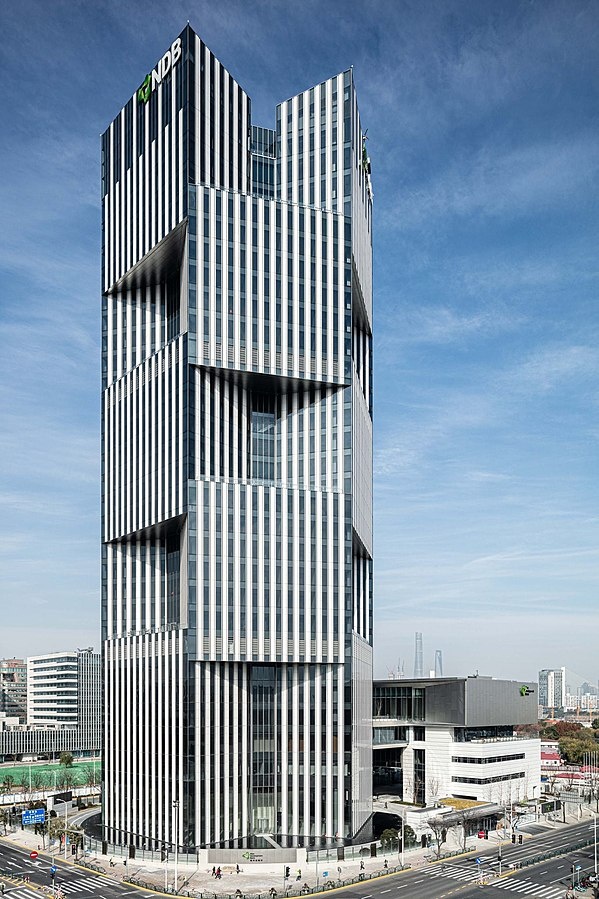
The headquarters of the New Development Bank in Shanghai. Photo: Wikipedia
The creation of a $100 billion reserve fund can be considered a significant economic step. The BRICS member countries will be able to use the fund's reserves in times of global financial disasters.
The BRICS is discussing plans to create a single currency. Given the economic power of the association's members, the creation of a new currency could have a significant impact on the dollar and its global authority. The issue of a new currency was even put on the agenda at the Johannesburg summit. However, Jim O'Neill of Goldman Sachs called the idea "ridiculous." So for now, such talk is most likely a means of putting additional pressure on the United States.
Intercultural communication
The BRICS countries have created several joint media projects. In particular, the first issue of the international business magazine BRICS Business Magazine was published in October 2012. In 2017, the international network TV BRICS was created in Russia.
The association cooperates in the field of education. In 2018, the BRICS University Network was established to share information and better understand other education systems.
In 2021, the BRICS space agencies signed an agreement to establish a satellite group for remote sensing of the Earth. The agreement provides for the creation of an information exchange mechanism. In 2022, a virtual Vaccine Research and Development Center was established to enable better response to future epidemics.
The member countries of the association regularly hold the BRICS Film Festival. The next festival will be held on December 14-16 in St. Petersburg.
Expansion of the BRICS
On the eve of the BRICS summit in Johannesburg, official applications for membership were received from 23 countries. Moreover, the total number of those expressing a desire to join the association has already reached more than 40 countries from Asia, Africa and Latin America. This popularity of the association can be explained by the fact that the BRICS actually offers the conventional "third world" countries to participate in the revision of the unipolar model. To this we should add that a number of countries are in difficult relations with the United States, i.e., they are naturally looking for an opposite vector of power. Today, such an example is the Arab world because of the Palestinian-Israeli conflict.
The idea of expanding the number of BRICS members was proposed by China back in 2017. However, this idea does not seem self-evident. First, an increase in the number of members would generally lead to more disputes and make consensus decision-making more difficult. Secondly, India has been ambivalent about the expansion of the BRICS. The country's leaders fear that China will be able to pull its partners into the union, which will increase its influence. It should also be understood that India is trying to maintain a diplomatic balance between the West and the rest of the world. The admission of sanctioned countries like Iran and Venezuela to the BRICS could worsen this balance. The idea of expanding the number of members is actively supported by Russia, which is trying to build another anti-Western bloc and attract more partners under sanctions pressure. However, Brazil, India, and South Africa do not like the idea of demonstrative opposition to the West.
The Johannesburg summit resulted in a decision to invite six countries to join the BRICS: Argentina, Ethiopia, Egypt, Iran, the UAE, and Saudi Arabia. What characterizes the invited countries? First, the list includes representatives of three regions at once - Asia, Africa, and South America. In this way, the BRICS demonstrates the global nature of its prospects and its openness to a wide range of countries. Second, four countries represent the Arab world. This step can be seen as a demonstration of their own will and ambitions toward the United States. Moreover, the four countries include Iran, with which the North American country has tense relations. Thirdly, three of the invited countries are OPEC members, which should significantly strengthen the economic and, in particular, energy authority of the association.
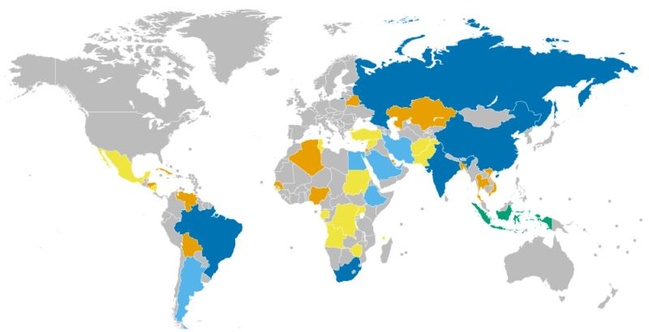
Current, future and potential BRICS members on the world map. Infographic: Wikipedia
The main economic beneficiary of the invitation of such a group of countries is likely to be China, which has strong trade relations with all of these countries. However, India's economic interests were also largely taken into account. As for the political component of the agreement, Russia and China are the main beneficiaries. Russia has good relations with countries in Africa and the Arab world. China, through its strong trade relations with the new Arab members of the BRICS, can strengthen its position in Asia.
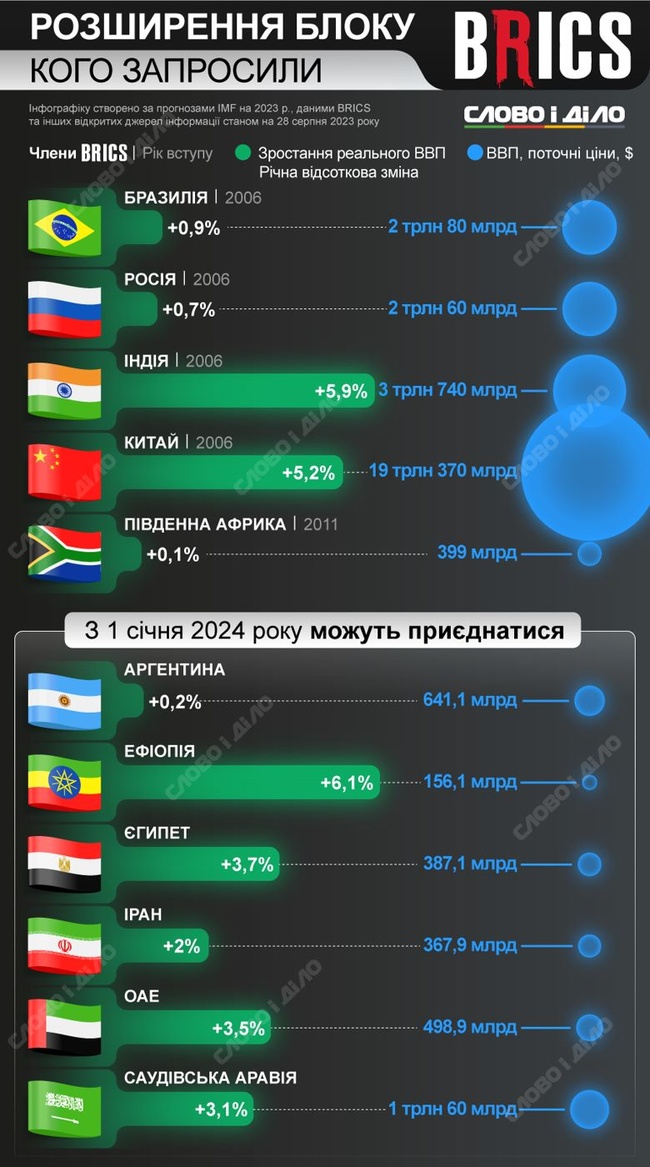
Economic performance of current and future BRICS members. Infographic: Word and deed
Argentina's refusal to join the BRICS
Upon receiving the invitation to join BRICS, former Argentine President Alberto Fernandez expressed his enthusiasm. He emphasized new opportunities, including Argentina's entry into new markets and consolidation of existing ones, increased imports, creation of new jobs, and increased investment in the country's economy. However, on November 20, 2023, elections were held in Argentina, which led to the election of a new president, Javier Milei. The new president is known for his radical statements. For example, Milei called Brazil's president an "evil communist" and compared China to a "murderer." It should be understood that both countries are Argentina's key trading partners. Moreover, Milei has stated the need to end trade relations with both countries. In the context of these statements, it can be considered consistent that in late November, Miley's team announced Argentina's refusal to join the BRICS. It is also interesting that Javier Milei is favoring political relations with the United States and condemning Russia's invasion of Ukraine.
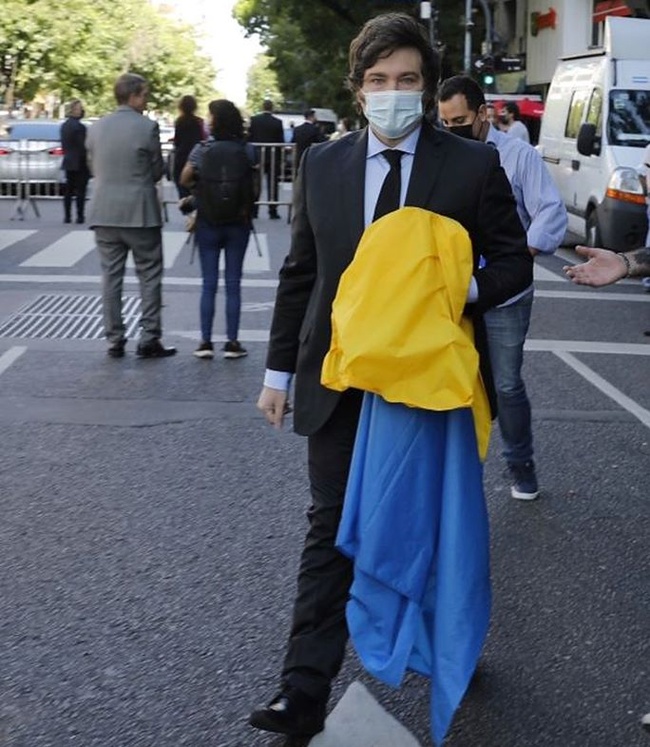
Javier Milei with the Ukrainian flag. Photo: planbnoticas.com.ar
BRICS and the Russian-Ukrainian war
In the final declaration of the BRICS member states at the end of the summit in Johannesburg on August 24, 2023, there was a place for Ukraine. The summit participants called for a peaceful resolution of the "conflict in Ukraine" through dialogue and diplomacy, i.e., they declaratively stood for all the good against all the bad. It should be emphasized that the declaration refers to the "conflict" and carefully avoids the issue of Russian aggression.
The BRICS countries demonstrated their attitude to the events at the very beginning of the full-scale Russian invasion. In particular, during the vote at the UN General Assembly's emergency session on March 2, 2022, on a resolution supporting Ukraine and condemning the aggression, India, China and South Africa abstained, and only Brazil voted in favor.
In 2023, BRICS members made several proposals for a peaceful settlement of the war in Ukraine. For example, on February 24, 2023 (the anniversary of the invasion), China proposed its peacekeeping project. Unfortunately, the document emphasizes peace talks, which should be accompanied by a reduction in pressure on Russia. At the same time, the draft does not contain a clear position on the withdrawal of Russian troops and the provision of security guarantees to Ukraine.
On April 7, 2023, Brazilian President Lula da Silva decided to try his hand at peacekeeping. The leader of the South American country noted that Ukraine should cede part of its territory for the sake of peace. He also called on Western countries to stop supplying weapons to Ukraine, as this leads to further escalation. According to the Brazilian president, both sides are to blame for the war, and he is ready to help achieve peace through negotiations.
On June 16, 2023, African leaders, including South African President Cyril Ramaphosa, visited Kyiv. The version of the peace plan proposed by African leaders was an improved version of the one they had introduced a month earlier. The improved version still provides for the withdrawal of Russian troops from Ukraine and tactical nuclear weapons from Belarus in exchange for easing sanctions against Russia, but it does not include security guarantees.
In mid-July 2023, India announced that it was working with France to develop a new peace plan.
What all the BRICS members' proposals for a peaceful settlement of the war with Russia have in common is that they are not interested in defending Ukraine's interests. Such a position is quite expected, since Russia is a member of the association. Thus, with the mediation of the BRICS countries in future peace talks, Ukraine can count on neutrality at most.
Read also:
Conclusions.
It can be argued that the BRICS is currently one of the most popular organizations in the world. This is evidenced by the fact that more than 40 countries have expressed interest in joining the association in 2023. The main attractors for those interested are the aggregate economic potential of the member countries, their political influence, and the opportunity to participate in the process of redistribution of the world order. There are likely to be many countries whose additional motivation will be based on a negative attitude toward the United States and the long-term dominance of the collective West.
It is quite obvious that the BRICS is trying to copy the G7, a political club of the most influential Western countries. Like the G7, the BRICS has no charter, no secretariat, and is not an international organization. The BRICS summits also take place once a year in turn in each of the member countries. The difference now is the impact that the decisions of both structures can have. Therefore, the BRICS will have to make significant efforts to become a worthy alternative. Today, the tangible evidence of the BRICS' activities can be seen primarily in the creation of the New Development Bank, which has allocated more than $30 billion to developing countries. For comparison, the World Bank has disbursed more than $100 billion in loans in 2022 alone.
Even the five BRICS countries cannot boast of the monolithic nature of their association. When the structure first appeared, it included countries that were characterized by the potential for strong economic growth. Today, only China and India can boast of high economic growth rates. According to Deutsche Welle, Russia and Brazil have rolled back to the level of 2001 in terms of their share of global GDP. At the same time, China's GDP is significantly higher than the total GDP of the other members of the association taken together. A significant problem is also the relationship between China and India, which fought in the 20th century and had border conflicts in 2020 and 2022. Both countries are rivals in the struggle for influence in Asia and have global ambitions. The attitude towards the West is also heterogeneous within the BRICS. While Russia and China are trying to increase tensions on the geopolitical chessboard, India, Brazil, and South Africa are currently more inclined to neutrality, which allows them to gain economic benefits in relations with both the West and the East. The accession of ambitious Iran and Saudi Arabia to the association will strengthen the political and economic authority of the structure, but will add problems with unity of interests and consensus in decision-making. It should be emphasized that the BRICS members have a common global goal.
Ukraine should be very cautious about the advice and peace proposals of the BRICS members. Within this structure, at best, we can count on a neutral attitude to the Russian-Ukrainian war, so we should not look for friends there.