Меню
Соціальні мережі
Розділи
March 19, 2023, 9:11 p.m.
International Hydrographic Organization
This article also available in English4817

Image: State Hydrographic Service
We continue our series of publications on the activities of global international organizations. We refer to such organizations as structures whose members are the vast majority of countries. An important feature of such organizations is that the rules and decisions they adopt actively influence the formation of a certain area of human interests - politics, economics, justice, sports, etc. Today we will focus on the International Hydrographic Organization.
General characteristics of the International Hydrographic Organization
General description of the International Hydrographic Organization
The International Hydrographic Organization (hereinafter - IHO) is an intergovernmental organization that works to ensure that all oceans, seas and navigable waters are explored and mapped. The IHO coordinates the activities of national hydrographic organizations and helps to develop their hydrographic capacity. The IHO promotes the unification of navigational charts and documents and develops international standards in the field of hydrography. The organization has 98 member countries. The headquarters of the IHO is located in Monaco. The official languages of the organization are English and French. IHO was founded in 1921 under the name of the International Hydrographic Bureau. The current name was adopted in 1970.
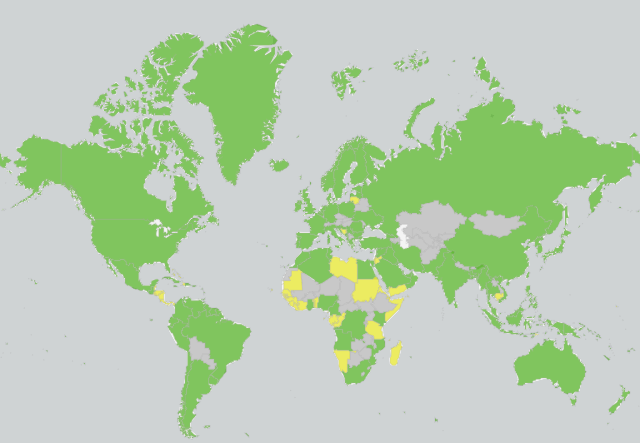
Member countries of the IHO on a world map. Image: IHO
The Assembly is the main body of the IHO, which consists of representatives of all member countries. The body meets in ordinary session every three years to develop general guidelines for the functioning and activities of the organization. The main functions of the Assembly include:
- determining its own rules of procedure, as well as the rules of procedure for the Council, the Finance Committee and other subordinate bodies
- election of the Secretary General and directors;
- determining the general policy,
- and work program of the organization;
- approve the three-year budget of the organization.
The Council coordinates the activities of the IHO in the period between the Assemblies. The Council consists of at least 30 representatives of member countries. The body meets at least once a year. The main functions of the Council include:
- Performing any duties delegated by the Assembly;
- Considering various proposals from the Secretary General and subordinate bodies;
- proposing to the Assembly the establishment of new bodies;
- reporting to the Assembly on the ongoing work of the IHO.
The Secretariat coordinates and promotes the work program of the IHO, provides advice and assistance to the member states and other stakeholders. The Secretariat consists of a Secretary General, two Directors, international experts in hydrography and navigational cartography, and local staff. The Secretary General is the head of the IHO and the Secretariat. He is appointed for a 6-year term and can be re-elected for another 3 years. Since September 1, 2017, the organization has been headed by a German functionary , Matthias Jonas.
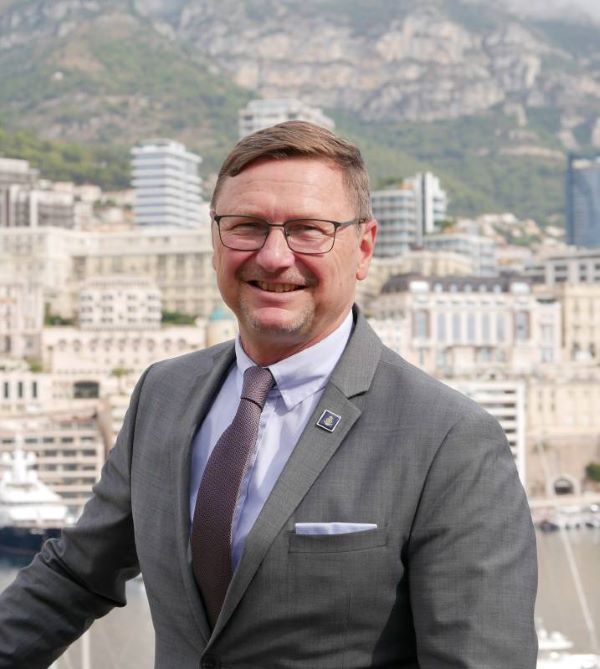
Mathias Jonas, Secretary General of the IHO. Photo: hellomonaco.com
One of the main activities of the IHO is the implementation of hydrographic and navigational cartographic standards. These standards are generally accepted and used not only by member states but also by other countries and organizations. In particular, the S-57 standard was established for the efficient exchange of digital hydrographic information between national hydrographic organizations and its further dissemination to fishermen, mariners and other stakeholders. According to the standard, the correct transfer of information should include a detailed description of the message and the objects contained in it, the format of the information encoding and the ability to update it. The S-52 specification was developed for the efficient use of information in electronic maps. The specification covers the production and updating of electronic maps, as well as the correct use of symbols and colors. In 2010, the universal S-100 standard was developed to promote the development of digital products and services for the hydrographic, marine and geographic communities.
The benefits of the S-100 standard. Video: Yong B
With the assistance of the IHO, a network of regional hydrographic commissions was established to coordinate hydrographic activities and cooperation at the regional level. The network was formed from IHO member countries and other regional states that wished to participate. The network includes 15 regional commissions. The work of the network helps to promote the program and ideas of the IHO. The commissions meet on a regular basis to discuss similar hydrographic problems, plan joint research operations, and consider work on international maps in their own region.
The IHO publishes information in the field of hydrography on a regular basis. A significant part of the information is standards, recommendations and documents. Among the publications is the scientific journal International Hydrographic Review, which was first published in 1923. It contains a variety of hydrographic information from the latest technical inventions and significant events to scientific reviews and historical memories. "The IHO Bulletin provides an overview of the latest meetings, events and other things related to the IHO.
In 1995, the Cabinet of Ministers of Ukraine issued a resolution "On Accession to the Convention of the International Hydrographic Organization". Ukraine became a full member of the IHO in 1998. Ukraine is a member of the regional Hydrographic Commission for the Mediterranean and Black Seas. In 2009, the State Hydrographic Service of Ukraine organized and held a conference of the regional commission in Odesa.
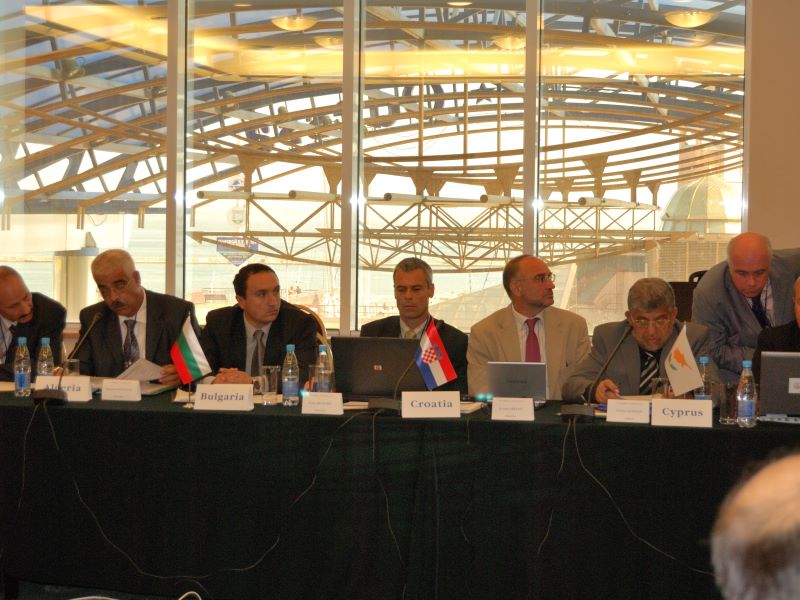
The 16th Conference of the Regional Hydrographic Commission for the Mediterranean and Black Seas in Odesa. Photo: hydro.gov.ua
In July 2019, Ukraine appealed to the IHO, the UK and Norway to withdraw Russian electronic nautical charts for Ukrainian waters from international circulation. Both countries responded favorably to Ukraine's request. Russia began producing and selling charts of water areas under Ukrainian jurisdiction in 2008. This process intensified after the seizure of Crimea. By doing so, Russia not only made a de facto political statement about the affiliation of Ukrainian territories, but also took away profits from Ukraine, which has the exclusive right to sell such maps.
At the end of 2022, the State Hydrographic Service of Ukraine addressed the IHO with an official proposal to revoke Russia's membership in the organization. There have been no such precedents in the history of the IHO, but the proposal will be considered at the next Assembly of the organization, which will take place in early May 2023.
The IHO is an international organization with vast experience and limited functionality. Undoubtedly, the main activity of the IHO is the establishment of international standards in the field of hydrography and navigational cartography. It is worth noting that excessive attention to hydrography and cartography is of great practical importance, as it directly affects the transportation of goods and international trade. For example, a properly established depth of a water route can allow a ship to be filled with several thousand additional tons of cargo.
Accurate information on ship movements minimizes the possibility of accidents. The IHO has 98 members, which is a relatively small number compared to other global international organizations. However, the list of IHO members includes all the leading countries of the world. It should be understood that poor countries that do not have developed shipping and strong maritime exports are much less interested in joining the organization. Moreover, the IHO places a significant amount of information in the public domain.
The IHO does not have access to huge cash flows like some other international organizations, which significantly limits its capabilities as a global leader in hydrography and cartography. However, it effectively fulfills its responsibilities in the field of standardization.